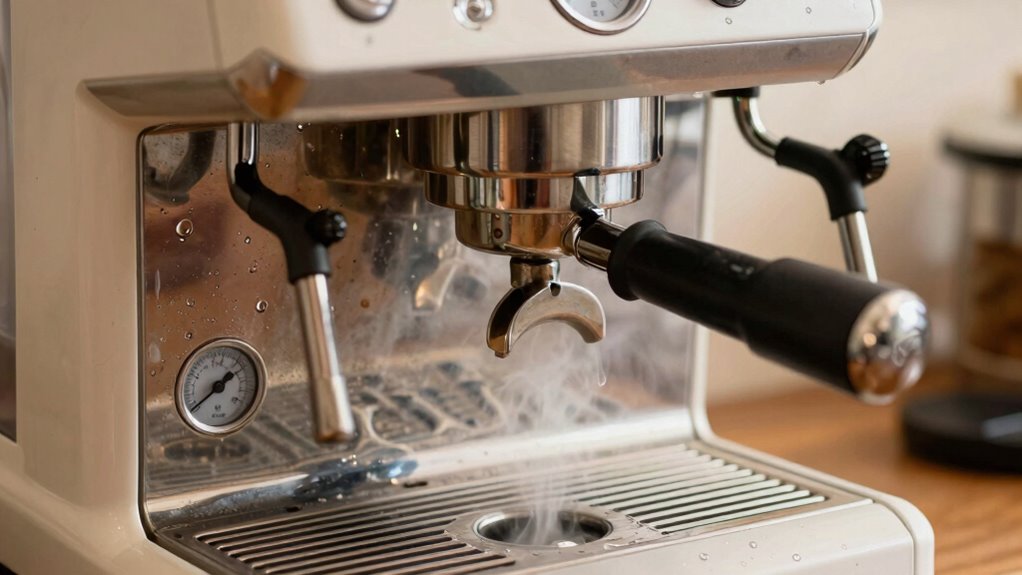

You might not realize how essential water care is for your espresso machine’s performance and lifespan. Hard water, impurities, and mineral buildup can clog internal parts, cause scale, and lead to poor flavor. Regular filtration, testing, and descaling keep your machine running smoothly and produce better coffee. Failing to maintain water quality can result in costly repairs and compromised taste. Stay tuned, as there’s more to discover to keep your machine in top shape.

Get kitchen staples and gadgets delivered free with Prime
- Fast, free delivery on millions of items
- Prime Video, Amazon Music and more included
- Member-only deals all year
Key Takeaways
- Espresso machines are highly sensitive to water quality, which directly impacts flavor and machine longevity.
- Mineral buildup from hard water causes clogs, reducing efficiency and increasing maintenance needs.
- Regular descaling and water testing prevent costly repairs and ensure consistent espresso quality.
- Poor water care can lead to internal damage, shortening the machine’s lifespan.
- Proper water filtration and monitoring are essential for optimal machine performance and beverage taste.
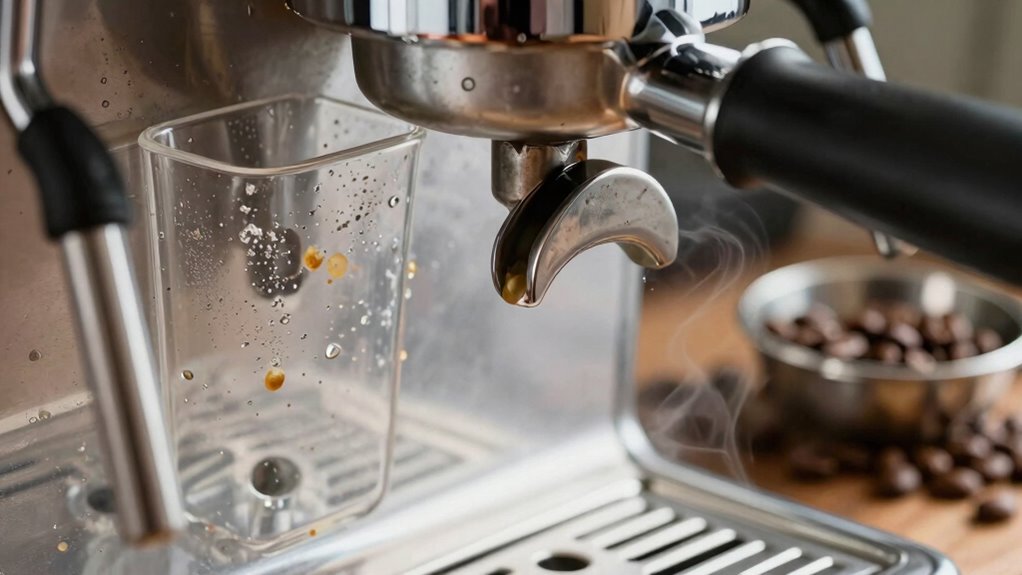
Have you ever wondered how to keep your espresso machine performing at its best? Proper water care is essential for maintaining the quality of your coffee and extending the lifespan of your machine. One of the most important steps is ensuring you use good water filtration. Tap water often contains minerals, chlorine, and other impurities that can negatively impact your espresso shots and clog internal components. Investing in a quality water filter helps remove these contaminants, providing cleaner, better-tasting coffee and reducing buildup inside the machine. It’s a simple step that can make a significant difference in the longevity and performance of your espresso maker. Additionally, understanding water hardness can help you determine how often to descale and what filtration methods are most effective for your specific water supply. Proper water care also involves monitoring your water quality regularly to prevent unexpected issues. Regularly testing your water can help identify impurities, allowing you to take proactive steps to prevent damage. Using water testing kits can help you keep track of your water’s quality more accurately.
Beyond filtration, paying attention to descaling frequency is equally critical. Over time, mineral deposits from hard water can accumulate inside your machine’s boiler and pipes, leading to clogs, inefficiency, and even potential damage. Regular descaling ensures these deposits don’t build up to problematic levels. How often you need to descale depends on your water hardness and usage, but a good rule of thumb is every three to four months. If you notice a decline in water flow, longer brewing times, or a change in the taste of your espresso, it’s probably time to descale. Skipping this step can result in costly repairs and compromised coffee quality. Maintaining proper water quality is essential for optimal machine operation and coffee flavor.
As an affiliate, we earn on qualifying purchases.
Frequently Asked Questions
How Often Should I Descale My Espresso Machine?
You should descale your espresso machine every 1 to 3 months, depending on your water quality and usage. If you have hard water, descaling more frequently is essential. Using good water filtration helps reduce mineral buildup, extending the time between descales. Regular descaling maintains peak performance and flavor, preventing clogs and damage. Keep an eye on your machine’s performance to adjust your descaling schedule accordingly.
What Type of Water Is Best for My Espresso Machine?
You should use filtered water in your espresso machine to reduce mineral buildup and prevent damage. Water filtration removes impurities and minerals that can cause scale, which affects performance and taste. Using clean, filtered water also extends your machine’s lifespan and guarantees consistent, high-quality espresso. Avoid tap water with high mineral content, as it accelerates mineral buildup, making regular descaling necessary and more frequent.
Can Mineral Deposits Damage My Espresso Machine?
Mineral buildup can seriously damage your espresso machine by clogging its internal components. For example, a coffee shop faced costly repairs after mineral deposits from unfiltered water caused valve blockages. Using proper water filtration reduces mineral deposits, preventing damage. Regular descaling and filtered water care keep your machine running smoothly and prolong its lifespan, saving you money and ensuring consistently great espresso shots.
Does Water Quality Affect the Taste of Espresso?
Yes, water quality considerably impacts the taste of your espresso. Water mineralization can introduce unwanted flavors, making your espresso taste off or dull. Using water with high mineral content reduces taste purity, while properly filtered or mineral-balanced water enhances the true flavors of your coffee. For the best espresso experience, guarantee your water has balanced mineralization to preserve the beverage’s flavor integrity and avoid unwanted aftertastes.
How Do I Know if My Water Care Routine Is Effective?
You can tell your water care routine is effective if your espresso tastes consistently rich and free of mineral or off-flavors. Check your water filtration system regularly to guarantee it’s functioning properly, and stick to a maintenance schedule for descaling and cleaning. Regularly testing your water quality and monitoring the machine’s performance helps catch issues early, ensuring your machine runs smoothly and produces top-quality espresso every time.
As an affiliate, we earn on qualifying purchases.
Conclusion
Taking care of your espresso machine’s water isn’t just about taste—it’s vital for its longevity. Did you know that mineral buildup from hard water can reduce your machine’s lifespan by up to 30%? Regular descaling and water quality checks can save you money and guarantee every shot tastes perfect. Don’t overlook water care; it’s the key to enjoying rich, smooth espresso while protecting your investment for years to come.
water testing kit for espresso machines
As an affiliate, we earn on qualifying purchases.
As an affiliate, we earn on qualifying purchases.
hard water filter for coffee machines
As an affiliate, we earn on qualifying purchases.
As an affiliate, we earn on qualifying purchases.
Halloween Picks
halloween
As an affiliate, we earn on qualifying purchases.