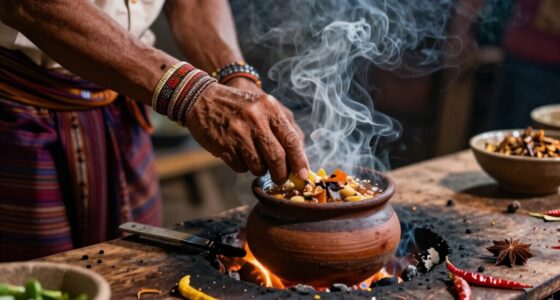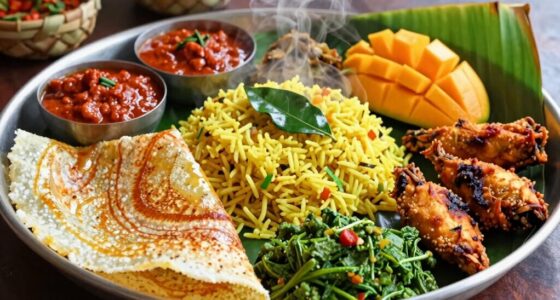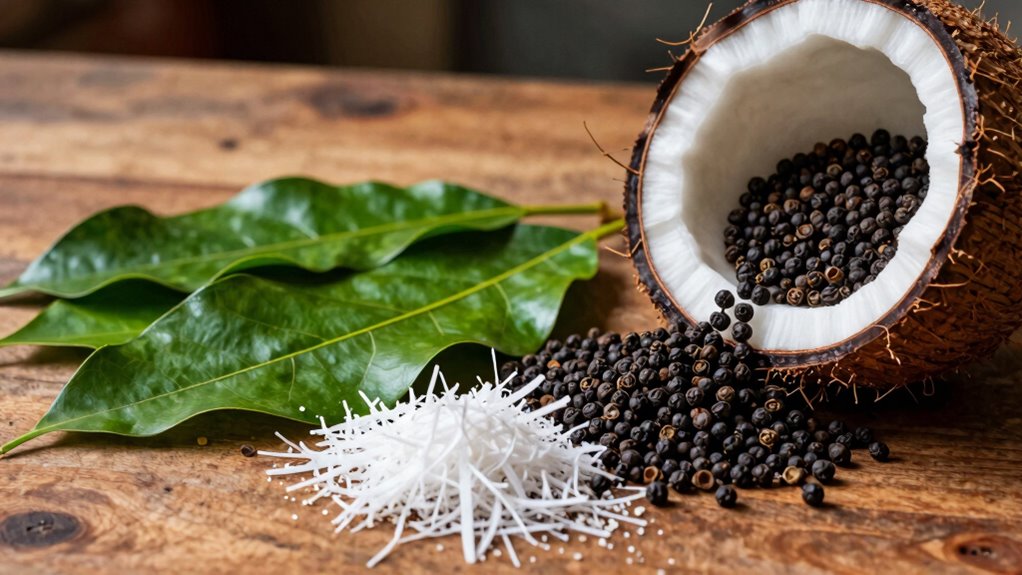

In Kerala cuisine, coconut, curry leaves, and pepper are essential because they give dishes their unique flavor, aroma, and health benefits. Coconut adds creaminess and richness, while curry leaves bring a fragrant aroma and aid digestion. Pepper provides a spicy kick and boosts immunity. These ingredients reflect Kerala’s coastal culture and culinary traditions. If you keep exploring, you’ll discover how these staples truly define the vibrant flavors and identity of Kerala’s food.

Get kitchen staples and gadgets delivered free — and shop member deals
- Fast, free delivery on millions of items
- Access to Prime Big Deal Days deals on October 6–7
- Prime Video, Amazon Music and more included
Key Takeaways
- Coconut adds richness, creaminess, and authentic flavor to Kerala dishes, symbolizing coastal culinary traditions.
- Curry leaves provide unique aroma, enhance taste, and offer health benefits like improved digestion.
- Black pepper imparts pungent heat, depth, and authentic spice complexity essential to Kerala cuisine.
- These ingredients are culturally significant, shaping Kerala’s vibrant culinary identity and regional flavors.
- Freshness and proper usage of coconut, curry leaves, and pepper maximize flavor and authenticity in dishes.
As an affiliate, we earn on qualifying purchases.
The Role of Coconut in Kerala Cuisine: Flavor, Benefits, and Uses
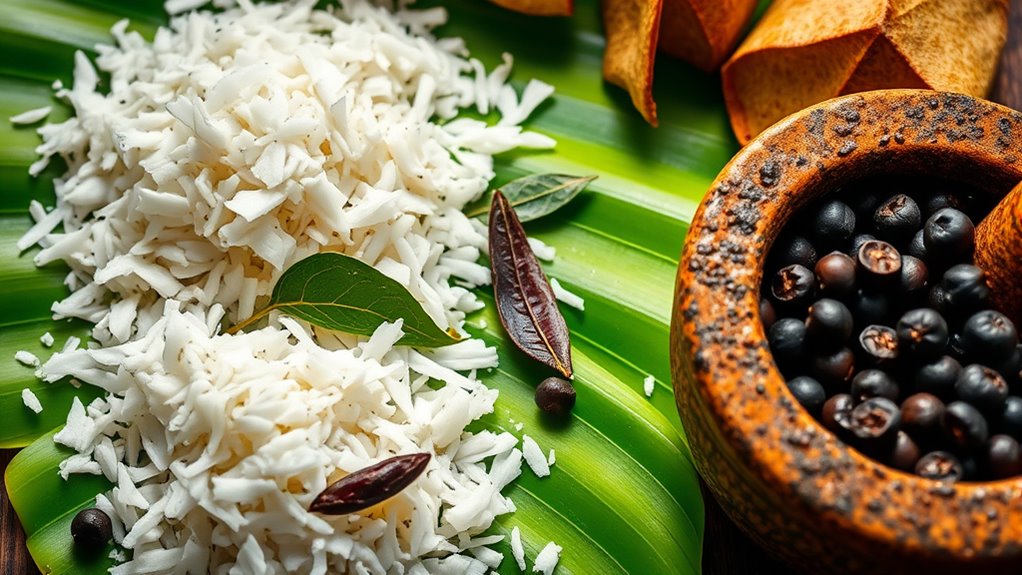
Coconuts are the cornerstone of Kerala cuisine, infusing dishes with distinct flavor and richness. You’ll notice the diverse coconut milk variations used, from thin to thick, each adding unique texture and taste to curries and desserts. Coconut milk acts as a base, enhancing the creaminess and aroma of traditional dishes. Additionally, Kerala’s coconut oil production plays a crucial role in culinary practices, with freshly pressed oil providing a fragrant, healthy fat that elevates the flavor profile. You’ll find coconut oil drizzled over rice, used in frying, and as a key ingredient in chutneys. This versatile ingredient not only enriches dishes but also offers health benefits, making it an essential part of Kerala’s culinary identity.
As an affiliate, we earn on qualifying purchases.
Curry Leaves in Kerala: The Aromatic and Health-Boosting Ingredient
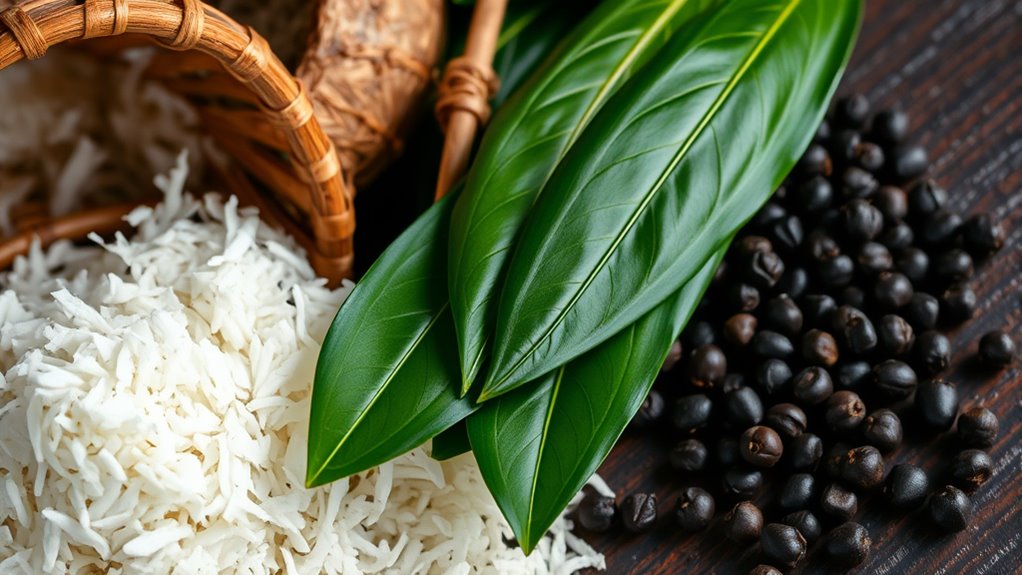
In Kerala cuisine, curry leaves are prized for their aromatic qualities and their ability to elevate the flavor of countless dishes. You’ll notice their distinctive aroma when added to curries, rice, and chutneys, creating an unmistakable fragrance. Beyond flavor, these leaves are valued in herbal remedies for their medicinal properties, helping digestion and boosting immunity. Many locals also use curry leaves in aromatic teas, harnessing their health benefits in soothing beverages. Incorporating curry leaves into your cooking not only enhances taste but also offers a natural way to support your well-being. Their versatility makes them essential in Kerala kitchens, where tradition and health go hand in hand. So, next time you cook, don’t forget to add a few curry leaves for both aroma and health benefits. Color accuracy in curry leaves can influence their visual appeal and perceived freshness. Additionally, understanding the medicinal properties of curry leaves can help you maximize their health-boosting potential. For example, their antioxidant content contributes to their reputation as a healthful addition. Recognizing the nutritional benefits of curry leaves can further encourage their regular use in healthy cooking. Incorporating essential oils like lemon or peppermint into your kitchen environment can also create a fresh and uplifting atmosphere that complements the natural qualities of curry leaves.
As an affiliate, we earn on qualifying purchases.
Pepper in Kerala Cooking: The Spicy Secret and Its Health Benefits
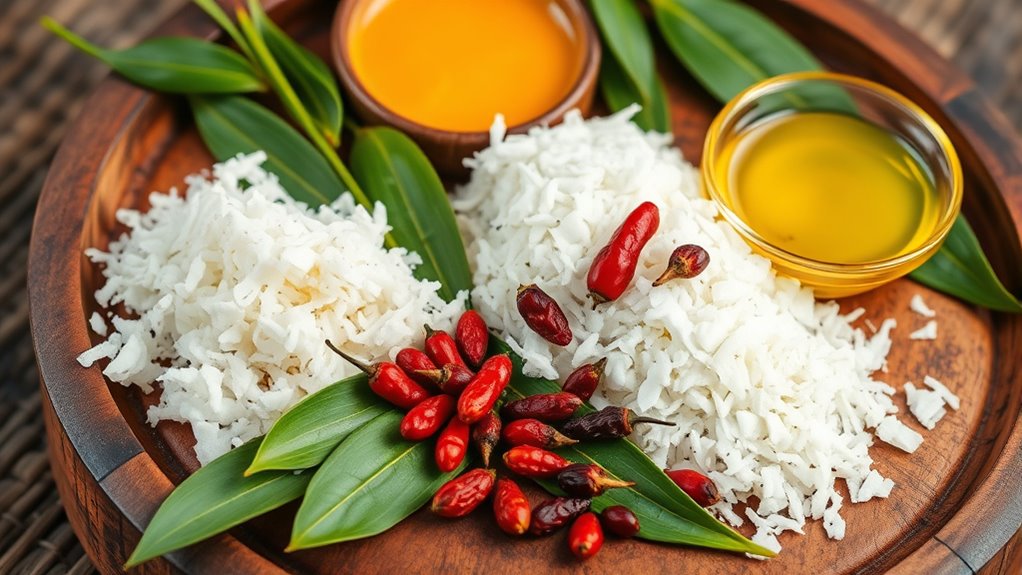
Pepper, particularly black pepper, is a cornerstone spice in Kerala cuisine, renowned for its pungent heat and depth of flavor. You’ll notice it’s indispensable in spice blending for many traditional recipes, adding a sharp kick that elevates dishes like curries and stews. Its bold flavor enhances the complexity of Kerala’s culinary profile, making it a key ingredient in both everyday cooking and special occasions. Beyond its taste, black pepper offers health benefits, such as improved digestion and antioxidant properties. When you incorporate pepper into your cooking, you’re not just adding spice—you’re embracing a crucial part of Kerala’s culinary heritage. Its versatility and health perks make it a must-have for anyone wanting authentic Kerala flavors. Spice blending techniques are essential for achieving the authentic taste of Kerala cuisine. Additionally, understanding the science of sound healing can deepen appreciation for the natural processes that influence flavor development in cooking, especially when traditional cooking methods are combined with modern insights. Incorporating natural flavor enhancement can further elevate the richness and depth of your dishes.
How Coconut, Curry Leaves, and Pepper Define Kerala’s Food Culture
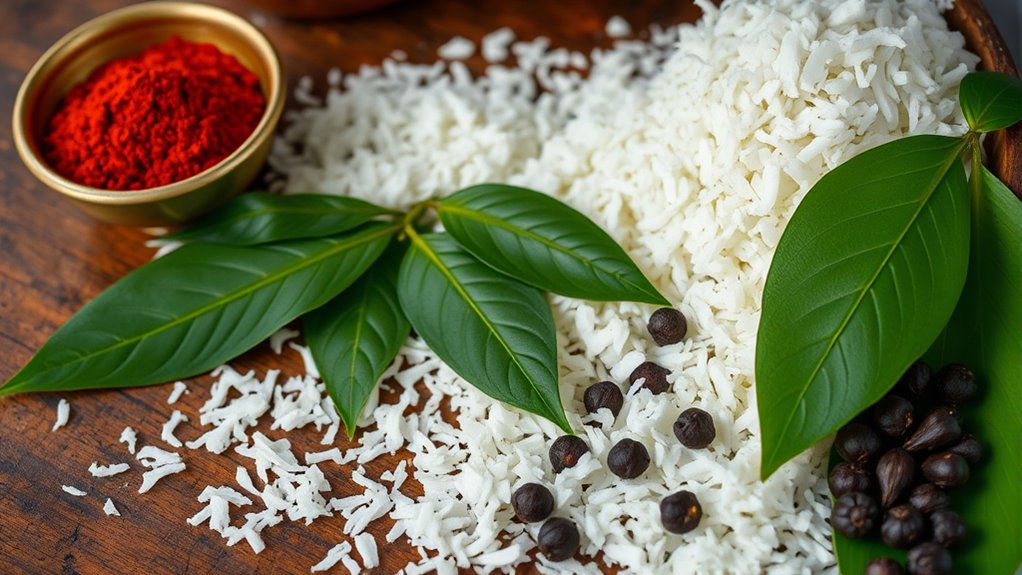
Because coconut, curry leaves, and pepper are fundamental ingredients, they shape the very essence of Kerala’s vibrant food culture. These ingredients hold deep cultural significance, symbolizing tradition and regional identity. Coconut provides a creamy texture and subtle sweetness, used in everything from curries to desserts, reflecting Kerala’s coastal roots. Curry leaves add aroma and flavor, integral to authentic dishes across the region. Pepper, known as the “King of Spices,” imparts a distinctive heat that varies in intensity across Kerala’s diverse areas. Regional variations influence how these ingredients are combined, leading to distinct culinary styles within Kerala. Whether in coastal or inland communities, these staples unify the cuisine, making Kerala’s food unique, flavorful, and deeply connected to its cultural heritage. Understanding the regional culinary differences helps appreciate how traditional ingredients adapt to local tastes and practices. The use of traditional spice blends further enhances the regional diversity and depth of Kerala’s cuisine.
Tips for Using Coconut, Curry Leaves, and Pepper in Your Cooking
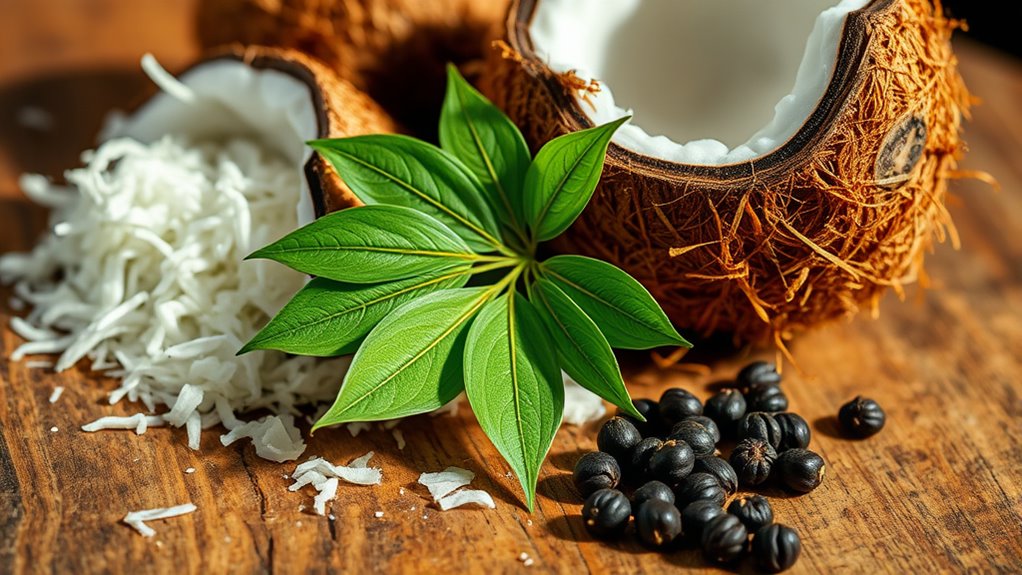
To make the most of coconut, curry leaves, and pepper in your cooking, start by understanding their flavors and best uses. Use fresh coconut for richer taste and grated dried coconut for convenience. When ingredient substitutions are needed, consider fresh versus dried options to maintain authenticity. Incorporate curry leaves early in sautéing to *free* their aromatic oils. Peppers should be added towards the end to preserve their pungency. For appealing plating techniques, layer ingredients thoughtfully and garnish with a few whole curry leaves or a sprinkle of cracked black pepper to enhance visual appeal. Remember:
Enhance dishes by layering fresh coconut, curry leaves, and pepper for richer flavor and vibrant presentation.
- Use fresh ingredients whenever possible for maximum flavor
- Adjust spice levels gradually, tasting as you go
- Focus on presentation, balancing color and texture to elevate your dish
- Understanding flavor profiles helps you combine ingredients more effectively.
Additionally, being aware of cooking techniques like tempering or sautéing can help release the full potential of these ingredients. Incorporating traditional methods can also deepen the authenticity of your dishes. Being mindful of culinary traditions ensures your dishes resonate with authentic Kerala flavors. Paying attention to ingredient freshness can significantly impact the overall taste and aroma of your Kerala cuisine.
Frequently Asked Questions
How Do Coconut, Curry Leaves, and Pepper Influence Kerala’s Traditional Dishes?
You’ll notice that coconut, curry leaves, and pepper greatly influence Kerala’s traditional dishes by enhancing flavor and adding depth. Coconut provides richness and a subtle sweetness, while curry leaves contribute a unique aromatic note. Pepper adds a spicy kick that balances flavors perfectly. These ingredients hold cultural significance, reflecting Kerala’s local produce and history, making every dish authentic and memorable. Their presence truly defines Kerala’s distinctive culinary identity.
Are There Any Sustainable Practices for Sourcing These Ingredients in Kerala?
Did you know that Kerala’s coconut and spice farms often practice sustainable farming? You can support organic cultivation by choosing local, organic sources for these ingredients. Many farmers implement eco-friendly methods like organic fertilizers and water conservation, ensuring long-term soil health. By opting for sustainably sourced coconut, curry leaves, and pepper, you’re helping protect Kerala’s environment while enjoying authentic flavors. Your choices make a difference in promoting eco-conscious agriculture.
Can Non-Vegetarian Dishes in Kerala Also Prominently Feature These Ingredients?
Yes, non-vegetarian dishes in Kerala often feature coconut, curry leaves, and pepper prominently. You’ll find these ingredients in meat marinades and seafood seasoning, adding flavor and aroma. For example, fish curry uses coconut milk and curry leaves to enhance taste, while pepper adds a spicy kick. Incorporating these ingredients elevates the dish’s authenticity and depth, making your non-vegetarian meals truly representative of Kerala’s rich culinary tradition.
What Are Some Common Substitutes if These Ingredients Are Unavailable?
When you find yourself without coconut, curry leaves, or pepper, don’t worry—there are plant-based alternatives that work well for flavor substitution. For coconut, try almond or oat milk; for curry leaves, fresh basil or bay leaves add a similar aromatic touch; and for pepper, black or white peppercorns or even a dash of paprika can provide the necessary heat. These swaps keep your dishes authentic and delicious, even when ingredients are scarce.
How Have These Ingredients Evolved in Kerala Cuisine Over Centuries?
You’ll find that coconut processing techniques and curry leaf cultivation have evolved over centuries in Kerala, enriching your cuisine’s flavors. Traditional methods of extracting coconut milk and oil have improved, allowing for richer dishes. Meanwhile, curry leaves are now cultivated on a large scale, ensuring freshness and availability. This evolution reflects how Kerala’s culinary heritage adapts, maintaining the essential role of coconut, curry leaves, and pepper in your favorite dishes.
Conclusion
So, next time you wonder why Kerala’s dishes taste so unforgettable, remember it’s all about those humble heroes—coconut, curry leaves, and pepper. They seem simple, yet they wield more influence than you’d expect, transforming everyday ingredients into culinary masterpieces. Ironically, it’s their modesty that makes their dominance so charming. Embrace these flavors, and you might just reveal Kerala’s secret to truly enchanting cuisine—proving sometimes, the smallest ingredients pack the biggest punch.
Fall Picks
fall essentials
As an affiliate, we earn on qualifying purchases.