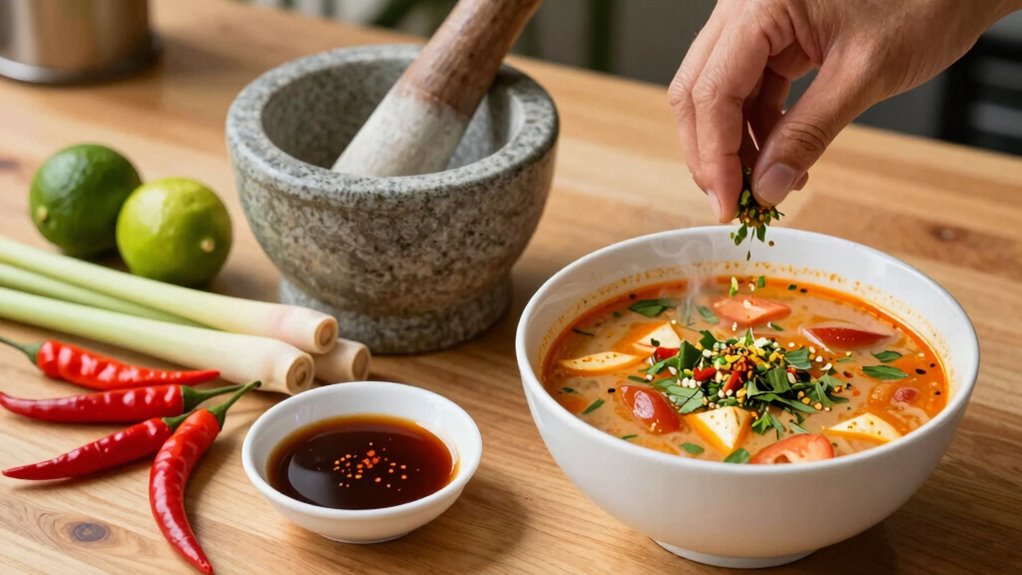

To master the Thai flavor balance rule, focus on creating harmony among sweet, sour, salty, bitter, and umami in your dishes. Use authentic ingredients or thoughtful substitutions to preserve those vibrant flavors. Adjust each element with practice until you achieve the perfect sensory balance, respecting the tradition behind each recipe. Embracing this approach helps you craft dishes that are both authentic and delicious. Keep exploring, and you’ll discover how to elevate your Thai cooking to truly capture its essence.

Get kitchen staples and gadgets delivered free with Prime
- Fast, free delivery on millions of items
- Prime Video, Amazon Music and more included
- Member-only deals all year
Key Takeaways
- Prioritize balancing sweet, sour, salty, bitter, and umami to achieve authentic Thai flavor harmony in home cooking.
- Use traditional ingredients or thoughtful substitutions that preserve the core flavor profile.
- Understand the cultural significance behind flavor combinations to enhance authenticity.
- Practice intuitive adjustments to taste, focusing on maintaining overall balance rather than exact ingredient matches.
- Embrace the flavor balance as an art that connects you to Thai culinary tradition and enhances your dishes.
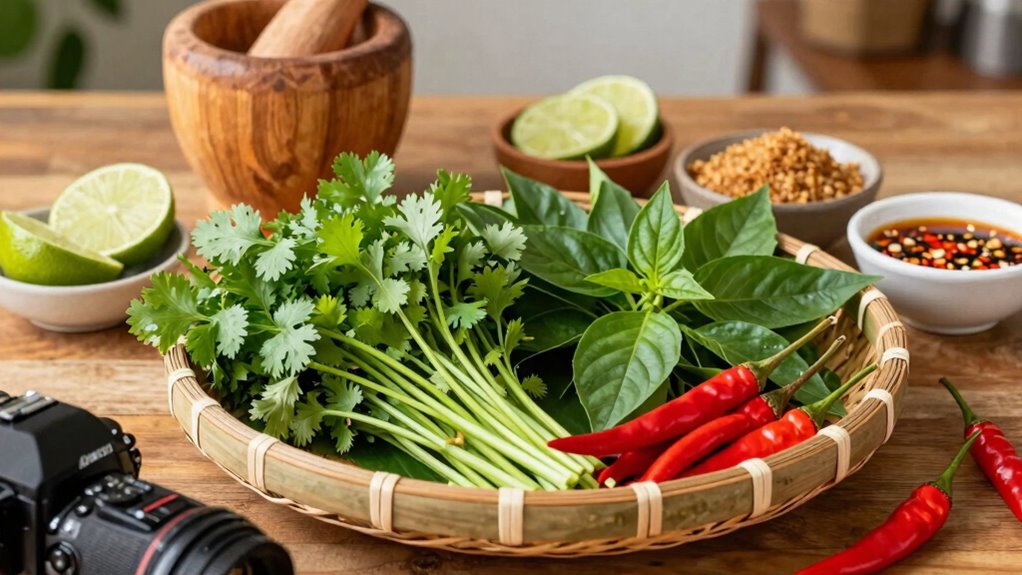
If you want to create authentic Thai dishes at home, mastering the flavor balance rule is essential. Thai cuisine is renowned for its harmonious blend of sweet, sour, salty, bitter, and umami flavors. This flavor harmony isn’t just about taste; it’s deeply rooted in the cultural significance of food in Thailand. Meals are crafted to evoke specific sensory and emotional responses, reflecting centuries of tradition and a respect for nature’s bounty. When you understand this, you realize that each ingredient plays a vital role in achieving harmony. But don’t worry—if you can’t find traditional ingredients, ingredient substitutions can help you maintain the authentic flavor profile without sacrificing authenticity. For example, if tamarind paste isn’t available, lime juice mixed with a touch of brown sugar can mimic its tangy-sweet flavor. Fish sauce can sometimes be replaced with a splash of soy sauce combined with a dash of anchovy paste, although it may alter the depth slightly. The key is to preserve the essence of the flavors rather than matching them exactly. Additionally, understanding the cultural significance behind the flavor balance guides you in respecting the cuisine’s integrity. Recognizing the importance of traditional flavor profiles can help you better recreate the authentic experience in your own kitchen.
Understanding the cultural significance behind the flavor balance also guides you in respecting the cuisine’s integrity. Thai food isn’t just about individual ingredients; it’s about creating a sensory experience that honors tradition. When you cook with this mindset, ingredient substitutions become an art rather than a compromise. Your goal is to evoke the same balance and harmony, even if some ingredients are different. With practice, you’ll develop an intuitive sense of how to adjust flavors, making your home-cooked Thai dishes taste authentic and vibrant. Ultimately, embracing the flavor balance rule helps you craft meals that are not only delicious but also culturally meaningful, bridging the gap between tradition and your own kitchen.
Products Worth Considering

Vitamix Propel Series 750 Professional-Grade Blender, 4 Programs, Black

De'Longhi Linea Classic Espresso Machine with Adjustable Milk Frother

Le Creuset Signature 6.5-Quart Deep Round Dutch Oven with Light Gold Crucible Knob, Enameled Cast Iron, Bleu Riviera
As an affiliate, we earn on qualifying purchases.
Frequently Asked Questions
Can I Adjust the Flavor Balance for Dietary Restrictions?
Yes, you can adjust the flavor balance to suit dietary restrictions. For vegan adaptations, replace fish sauce with soy sauce or mushroom-based alternatives, and use plant-based protein. For allergy considerations, avoid ingredients like peanuts or shellfish, and opt for safe substitutes. You can tweak the sweetness, saltiness, sourness, or spiciness to suit your needs, ensuring your dish remains flavorful while accommodating your dietary restrictions.
What Are Common Substitutes for Traditional Thai Ingredients?
Think of it as swapping tools in your kitchen; herbs substitution and spice alternatives let you keep the flavor alive. For Thai basil, try sweet basil or mint. Instead of fish sauce, use soy sauce or tamari. Lime juice can be replaced with white vinegar or lemon juice. Ginger can be swapped with galangal or even fresh turmeric. These tweaks help you craft authentic-tasting dishes while accommodating your pantry or dietary needs.
How Do I Measure the Perfect Balance of Flavors?
To measure the perfect balance of flavors, start by tasting your dish frequently and making small seasoning adjustments. Focus on ingredient proportions—if it’s too salty, add a touch of sugar or acid; if it’s too bland, boost the seasoning gradually. Trust your palate, and remember, balancing sour, sweet, salty, and spicy flavors is key. Keep adjusting until the harmony feels just right, and you’ll master Thai flavor balance.
Is the Flavor Balance Rule Applicable to All Thai Dishes?
Yes, the flavor balance rule applies broadly to Thai dishes, but you should consider cultural variations and regional influences. Different regions emphasize specific flavors, like spiciness or sweetness, adapting the rule to local tastes. As a home cook, you can tailor the balance to suit your preferences while respecting these regional nuances. This flexibility helps you create authentic, flavorful Thai dishes that reflect the diverse culinary landscape.
How Long Does It Take to Master the Flavor Balancing Technique?
Mastering Thai flavor balancing takes consistent practice over several months, depending on your dedication. You’ll develop your cooking techniques by experimenting with ingredients sourcing, learning how each element—sweet, sour, salty, bitter, and spicy—interacts. Regularly tasting and adjusting your dishes helps refine your skills. Patience is key; with time and experience, you’ll intuitively balance flavors like a pro, elevating your Thai cooking.
Conclusion
Now, picture your kitchen as a vibrant Thai market, spices dancing in the air, colors bursting from every dish. By mastering the flavor balance rule, you become the chef who crafts harmony in every bite—sweet, sour, salty, and spicy perfectly intertwined. With each stir and taste, you’re not just cooking; you’re creating a symphony of flavors that transports you and your loved ones straight to Thailand’s lively streets. Keep experimenting, and let your palate guide the way.