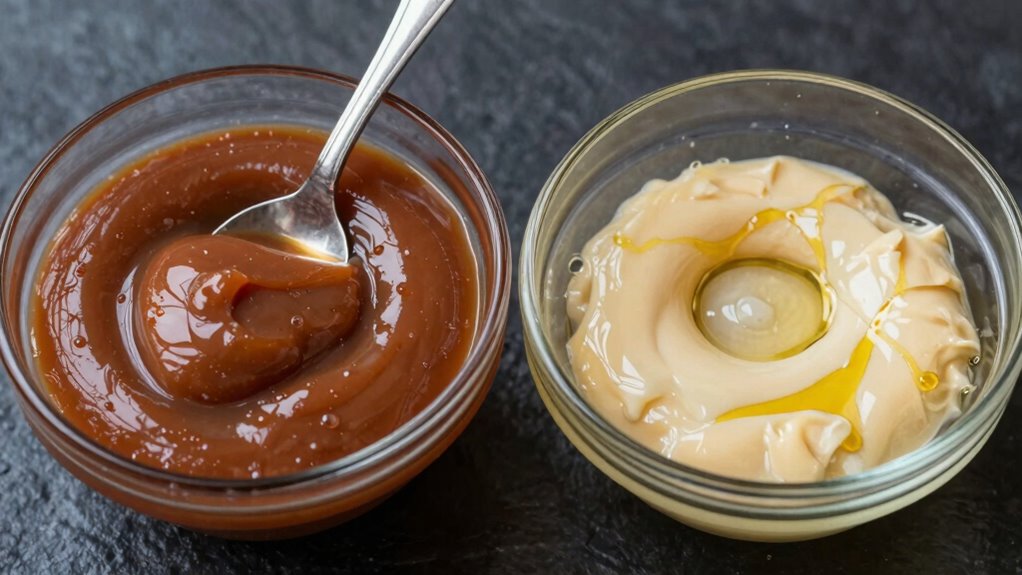

Your sauces stay silky when you carefully control ingredient interactions, temperature, and the timing of additions. If you add fats too quickly or heat too fast, they can separate, causing the sauce to break. Regular stirring, gradual heat increase, and gentle mixing help maintain emulsion and prevent curdling. By understanding these key principles, you can create smooth, stable sauces every time—if you’re enthusiastic to learn more, you’ll discover how to master these techniques further.

Get kitchen staples and gadgets delivered free — and shop member deals
- Fast, free delivery on millions of items
- Access to Prime Big Deal Days deals on October 6–7
- Prime Video, Amazon Music and more included
Key Takeaways
- Proper emulsion balance prevents fats from separating, keeping sauces smooth and stable.
- Gradual temperature changes and constant stirring avoid curdling and breakdown of delicate ingredients.
- Adding ingredients slowly during emulsification maintains stability and prevents sauce breakage.
- Overheating dairy-based sauces causes proteins to coagulate and break, disrupting silky texture.
- Using controlled heat sources and timing ensures ingredients don’t denature or separate.
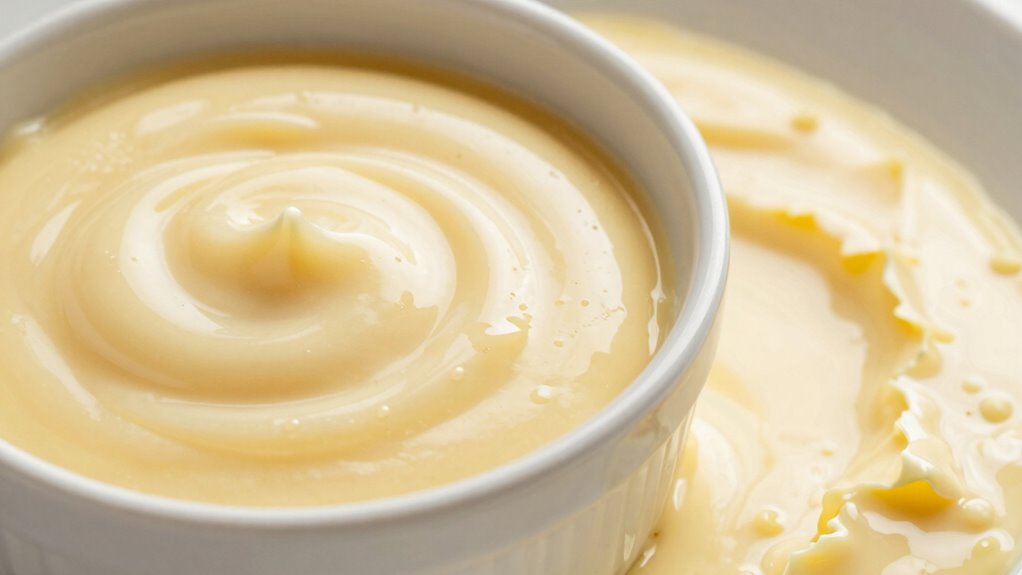
Have you ever wondered why some sauces turn grainy or separate after cooking, while others remain smooth and silky? The answer often comes down to ingredient interactions and temperature regulation. When you’re making a sauce, what’s happening at the chemical level can make all the difference. If the ingredients don’t work well together or if you don’t manage the heat properly, your sauce can break, leaving you with a disappointing texture instead of the rich, velvety consistency you’re aiming for.
Ingredient interactions play a fundamental role in the stability of your sauce. Proteins, fats, and starches all behave differently when combined. For example, dairy-based sauces like béchamel or cheese sauces can curdle if the proteins in the milk or cheese coagulate due to sudden temperature changes. Similarly, emulsions—like hollandaise or mayonnaise—rely on the right balance of fats and liquids. If the fats separate from the water, the sauce breaks, resulting in a greasy, unappealing texture. To prevent this, you need to understand the properties of each ingredient and how they interact during cooking. Recognizing ingredient behavior can help you troubleshoot and adjust techniques as needed. Additionally, understanding emulsion stability can help you better control the process to keep your sauces smooth. Paying attention to thermal sensitivity of ingredients can also help anticipate potential issues before they occur. Being aware of ingredient stability can help you select the right ingredients and methods for each sauce.
Understanding ingredient interactions is key to preventing sauces from curdling or breaking during cooking.
Temperature control is equally essential. When you cook sauces over too high heat, you risk disrupting these delicate ingredient interactions. Rapid heating can cause proteins to denature quickly or fats to separate prematurely. That’s why gentle, steady heat often produces the best results. For dairy sauces, it’s especially important to heat gradually, stirring constantly. This helps maintain a uniform temperature and prevents sudden curdling or separation. If you’re making an emulsion, adding ingredients slowly while whisking helps keep the mixture stable and prevents breakdown.
Another aspect of temperature regulation is knowing when to remove the sauce from heat. Overcooking can cause ingredients to break down, especially delicate ones like egg yolks in sauces like hollandaise. Once the sauce reaches the desired consistency, taking it off the heat immediately preserves its silky texture. Using a double boiler or a heat diffuser can also help regulate temperature, giving you more control and reducing the risk of breaking. Additionally, understanding the role of temperature in cooking can help you anticipate and prevent these issues before they happen. This understanding allows you to adapt your method based on the specific sauce you’re preparing, ensuring the best outcome every time.
In essence, the key to a smooth, silky sauce lies in understanding ingredient interactions and mastering temperature regulation. By knowing how your ingredients behave and adjusting your heat accordingly, you can prevent the common pitfalls that cause sauces to break. With practice, you’ll develop an intuitive sense of when to heat, when to stir, and how to combine ingredients carefully. This attention to detail ensures your sauces stay beautifully emulsified and velvety, elevating your cooking to a new level.
As an affiliate, we earn on qualifying purchases.
Frequently Asked Questions
Can Adding Sugar Prevent Sauces From Breaking?
Adding a small amount of sugar can help prevent sauces from breaking by promoting better sauce emulsification. Sugar encourages caramelization, which stabilizes fats and liquids, making the sauce more cohesive. However, too much sugar can cause the sauce to become overly thick or sticky. Use it sparingly to maintain a smooth, silky texture, and remember that balancing sugar and acidity is key to keeping your sauce stable and delicious.
Does Using Low-Fat Ingredients Affect Sauce Stability?
Did you know that using low-fat ingredients can increase the risk of sauces breaking? When you opt for low-fat alternatives or dairy substitutes, the stability of your sauce may decrease because fat helps emulsify and thicken. Without enough fat, sauces often split or become grainy. To prevent this, consider adding a bit of cornstarch or egg yolk, which can help maintain a silky texture even with low-fat or dairy-free ingredients.
How Does Altitude Impact Sauce Consistency?
Altitude effects can considerably impact your sauce’s viscosity. At higher elevations, the lower air pressure causes water to boil at lower temperatures, which can lead to thinner sauces if you don’t adjust your cooking process. You might notice your sauce becoming too runny or inconsistent. To counter this, try simmering longer or increasing the thickening agents. These adjustments help maintain the desired sauce viscosity despite altitude effects.
Can Freezing Cause Sauces to Break Upon Reheating?
Did you know that about 60% of sauces can break when frozen? Freezing effects often cause sauces to separate because ice crystals damage the emulsion. When reheating, use gentle techniques like low heat and stirring constantly to prevent breaking. Rapid reheating can shock the sauce, making it curdle or split. Proper reheating techniques help maintain that silky texture, even after freezing.
Are Certain Cookware Materials Better for Maintaining Sauce Texture?
Certain cookware materials are better for maintaining sauce texture because they offer excellent heat distribution and compatibility. Non-stick or copper pans prevent hot spots that can cause sauces to break, while stainless steel cookware with good heat conduction ensures even heating. You should choose cookware that distributes heat evenly and matches your stove type to prevent sudden temperature changes, which helps keep your sauce smooth and silky.
As an affiliate, we earn on qualifying purchases.
Conclusion
So, next time your sauce breaks, don’t despair—think of it as a tiny rebellion in your culinary world. It’s a reminder that even the smoothest sauces can falter when pushed too far, just like us under pressure. Master the art of gentle heat and patience, and your sauces will stay silky, almost magical. Remember, a broken sauce isn’t failure; it’s a sign you’re pushing your skills to the limit—and that’s where real magic happens.
As an affiliate, we earn on qualifying purchases.
saucepan with temperature control
As an affiliate, we earn on qualifying purchases.
As an affiliate, we earn on qualifying purchases.
NFL season / tailgating Picks
team gear
As an affiliate, we earn on qualifying purchases.