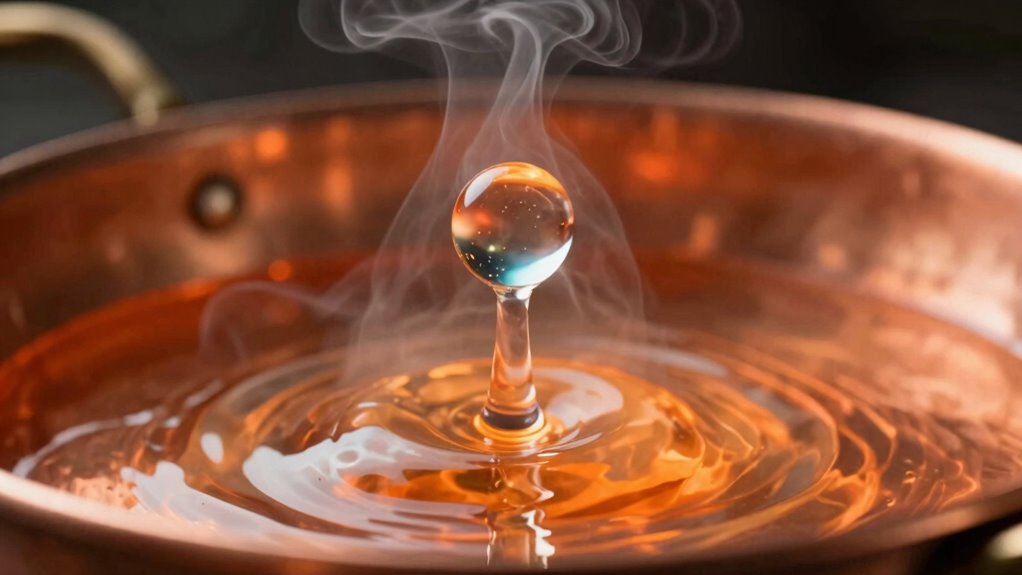

The Leidenfrost effect happens when water droplets hover and glide over a hot surface due to a vapor layer forming underneath them. As the surface temperature rises past a certain point, vapor builds up, insulates, and lifts the droplet, making it move effortlessly. This fascinating phenomenon combines phase change and heat transfer, creating the mesmerizing water drop trick. Keep exploring to discover how this cool physics trick works and why it’s so intriguing.

Get kitchen staples and gadgets delivered free — and shop member deals
- Fast, free delivery on millions of items
- Access to Prime Big Deal Days deals on October 6–7
- Prime Video, Amazon Music and more included
Key Takeaways
- The Leidenfrost effect occurs when water droplets levitate and glide on a vapor layer formed on a hot surface.
- This vapor layer acts as an insulator, preventing rapid boiling and allowing smooth droplet movement.
- Higher surface temperatures increase vapor pressure, strengthening the vapor cushion and enhancing droplet levitation.
- The effect is influenced by surface texture, material, and thermal properties, which affect vapor layer stability.
- Droplets “skitter” across the surface due to the vapor cushion, creating the water drop trick phenomenon.
Leidenfrost effect demonstration kit
As an affiliate, we earn on qualifying purchases.
As an affiliate, we earn on qualifying purchases.
What Is the Leidenfrost Effect? An Explanation of the Phenomenon
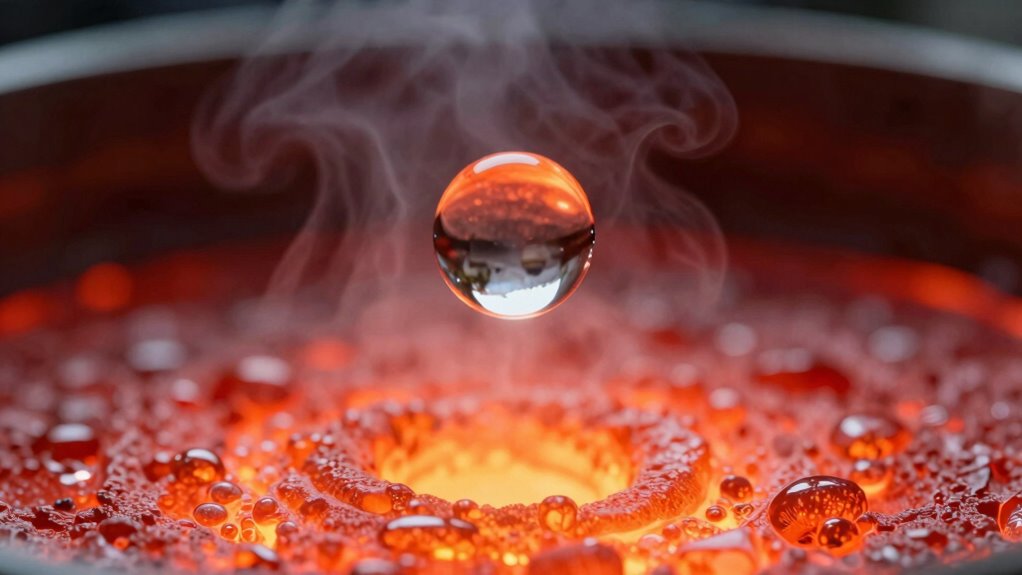
Have you ever wondered why water droplets skitter across a hot pan? That’s the Leidenfrost effect in action. When the pan’s surface reaches a high temperature, the water undergoes a phase change from liquid to vapor almost instantly. This vapor layer acts as thermal insulation, preventing direct contact with the hot surface. As a result, the droplet levitates, gliding smoothly without boiling away immediately. The vapor cushion reduces heat transfer, allowing the droplet to move effortlessly. This fascinating phenomenon demonstrates how phase transitions can create unique behaviors, like water droplets skittering across a surface. The Leidenfrost effect reveals the delicate balance between heat, vapor formation, and thermal insulation that makes water behave in such a surprising way on hot surfaces. Interestingly, understanding this effect can also inspire innovative cooling technologies in various industries. Furthermore, scientists study this phenomenon to better understand phase transitions and their applications in material science and engineering.
hot surface water levitation experiment
As an affiliate, we earn on qualifying purchases.
As an affiliate, we earn on qualifying purchases.
How Does the Leidenfrost Effect Work? The Science Behind Water’s Levitation
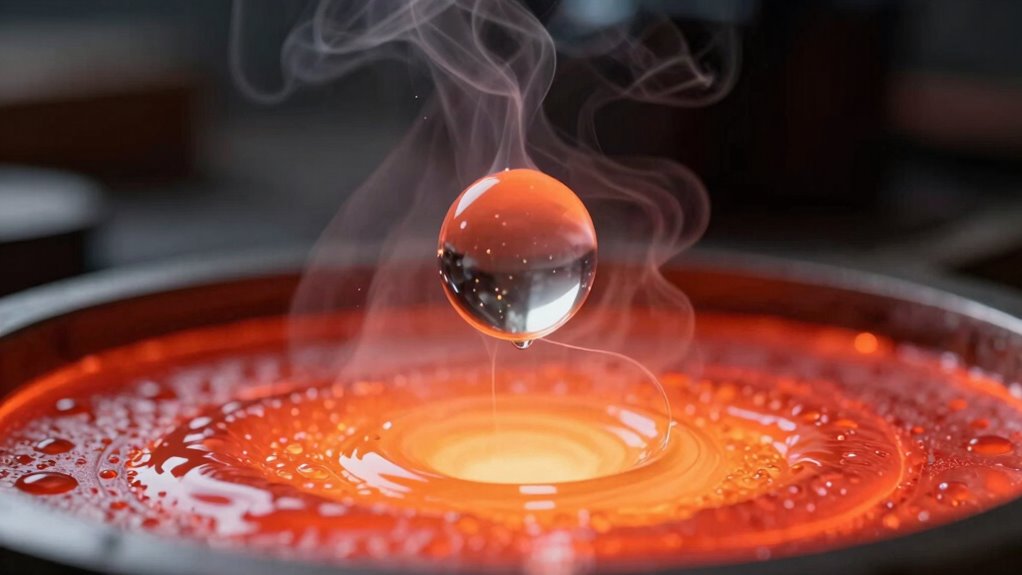
When water hits a hot surface, vapor quickly forms a layer beneath it, creating a cushion that lifts the droplet. This vapor layer insulates the water from the heat, preventing it from boiling away instantly. As a result, this delay in boiling allows the water to levitate and glide across the surface. The Leidenfrost effect is often observed in Support Breakfast scenarios, where hot surfaces are involved, demonstrating the fascinating interplay between heat and liquid behavior. Understanding the net worth of influential figures can provide insight into the diverse impacts of heat and energy, both in physical phenomena and economic contexts. Additionally, the effect showcases the importance of thermal insulation in various scientific and engineering applications, emphasizing how heat transfer processes can be manipulated. This phenomenon exemplifies how material properties influence the behavior of liquids on different surfaces, highlighting the significance of surface texture and composition in the effect’s manifestation.
Vapor Layer Formation
As a droplet of water comes into contact with a hot surface, it quickly begins to vaporize, forming a thin layer of steam that separates the liquid from the metal. This vapor layer is essential for the Leidenfrost effect, as it creates a barrier that prevents the water from directly touching the surface. On hydrophobic surfaces, this process is even more efficient because they repel water, encouraging vapor buildup beneath the droplet. The vapor pressure inside the droplet pushes outward, maintaining the gap and allowing the water to levitate. As the surface temperature rises, vapor pressure increases, generating a stable vapor cushion. This vapor layer insulates the droplet, reducing heat transfer and enabling it to glide smoothly across the hot surface. Additionally, the vapor layer formation is influenced by the surface’s texture, which can enhance or inhibit the effect. The thermal properties of the surface also play a significant role in how quickly the vapor layer develops and sustains itself.
Insulation and Delay
The Leidenfrost effect creates a powerful insulating barrier that delays heat transfer from the hot surface to the droplet. This vapor layer acts as thermal insulation, preventing rapid heating and reducing heat conduction. Because of this, the water droplet remains cooler longer and takes more time to vaporize completely. The vapor cushion minimizes contact between the hot surface and the water, leading to a significant heat delay. This insulation not only keeps the droplet levitating but also slows down boiling, allowing it to glide effortlessly. As a result, the water drop’s levitation lasts longer than it would without the vapor layer. This thermal insulation is key to understanding how the Leidenfrost effect sustains water’s levitation and delays its evaporation.
As an affiliate, we earn on qualifying purchases.
Why Do Water Droplets Hover on Hot Surfaces? The Role of Vapor Layers
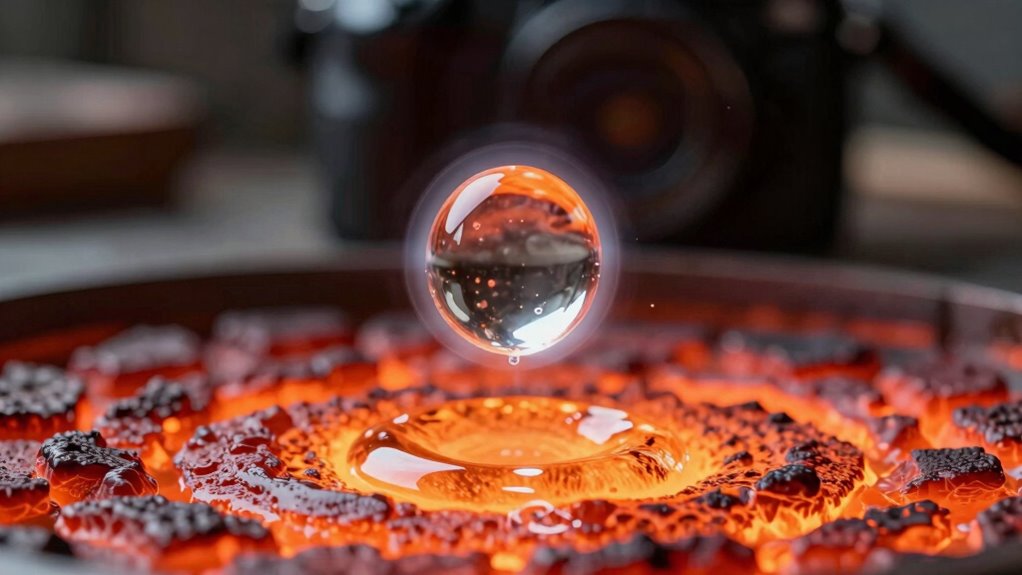
When water droplets touch a hot surface, a vapor layer quickly forms beneath them. This layer reduces direct contact, allowing the droplets to hover instead of boiling away instantly. The vapor acts as a cushion, keeping the droplet afloat and influencing how it moves across the surface. Understanding heat transfer helps explain how this phenomenon occurs at a physical level. Additionally, the wave and wind around the droplet can affect its stability and movement across the surface.
Vapor Layer Formation
On a hot surface, water droplets hover because vapor forms beneath them, creating a cushion that prevents direct contact. This vapor layer is vital because it insulates the droplet, slowing heat transfer between the hot surface and the water. As the surface heats up, the water at the bottom of the droplet vaporizes rapidly, generating a continuous supply of vapor. This vapor then accumulates, forming a thin, stable layer that lifts the droplet. The vapor layer acts like a barrier, reducing heat transfer directly to the water and allowing the droplet to glide smoothly over the surface. Its formation depends on the temperature and the properties of the surface, ensuring the droplet remains levitated through a delicate balance of vapor generation and insulation. Additionally, the temperature threshold must be reached for vapor layer formation to occur effectively. The vapor layer’s stability is also influenced by the surface texture, which can either promote or hinder its formation and maintenance. Moreover, the thermal conductivity of the surface plays a crucial role in how quickly heat is transferred, affecting vapor layer development and stability. The material composition of the surface also impacts vapor layer behavior by altering surface interactions with water.
Reduced Surface Contact
Vapor layers formed beneath hot water droplets markedly reduce their contact with the surface, preventing direct heat transfer and physical adhesion. This thin vapor barrier minimizes friction and keeps the droplet hovering. The surface tension of water maintains the droplet’s shape while the vapor layer acts as a cushion. As a result, heat transfer from the surface slows dramatically, allowing the droplet to glide effortlessly. Without direct contact, the droplet remains stable and mobile on the hot surface. This phenomenon explains why water droplets don’t immediately evaporate or stick.
- Vapor layer acts as a cushion, reducing contact
- Surface tension maintains droplet shape
- Limits heat transfer, prolonging droplet stability
- Prevents physical adhesion to hot surfaces
- Enables smooth, levitating motion
As an affiliate, we earn on qualifying purchases.
How Temperature Changes Water Droplet Behavior
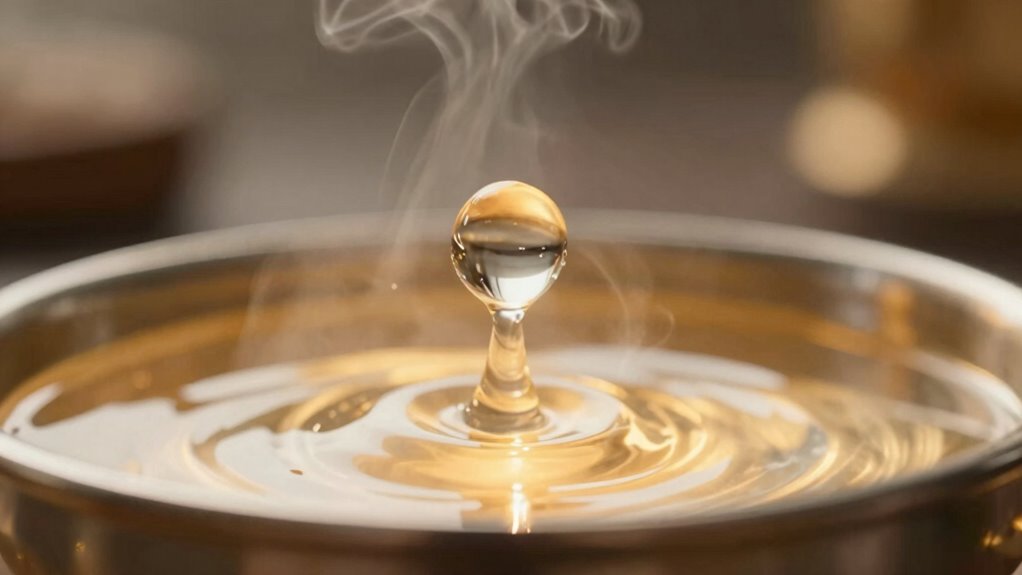
Temperature plays a crucial role in determining how water droplets behave on a hot surface. As temperature increases, the thermal conductivity of the surface influences how quickly heat transfers to the droplet. When the surface reaches a certain temperature, it triggers a phase change in the water—changing from liquid to vapor. This vapor forms a cushion that prevents direct contact, leading to the Leidenfrost effect. At lower temperatures, droplets stay in contact with the surface, moving slowly. As the temperature rises, the droplet’s behavior shifts; it levitates and skitters across the surface with minimal friction. The precise temperature at which this occurs depends on the heat transfer rate and the droplet’s properties, illustrating how temperature fundamentally alters water droplet behavior. Additionally, understanding the **phase change** process helps explain why droplets behave differently at various temperatures. Moreover, the thermal properties of both the surface and the droplet influence the onset of the Leidenfrost effect, making it a complex interplay of factors. Recognizing the importance of heat transfer mechanisms can further clarify how temperature impacts this fascinating phenomenon.
How to See the Leidenfrost Effect in Action: Easy Demonstrations
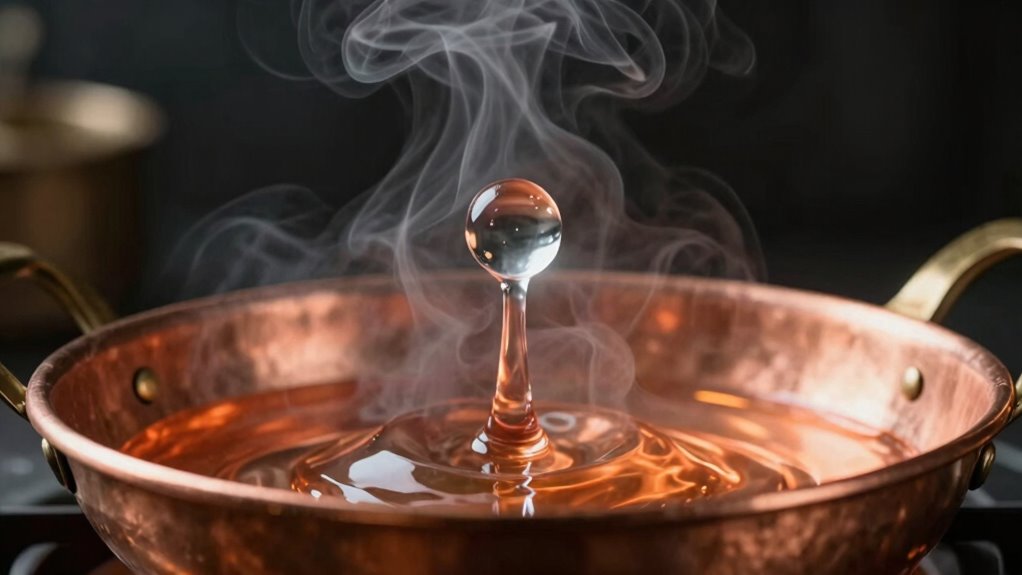
You can observe the Leidenfrost effect firsthand with simple, safe demonstrations. These activities showcase liquid dynamics and how thermal conductivity influences vapor layer formation. To get started, try these easy experiments:
- Drop a small amount of water onto a hot pan (around 300°C) to see droplets dance and skitter.
- Use a spoon to gently place water on a heated metal surface and watch the levitation.
- Drop oil on a hot skillet to observe differences in thermal conductivity and vapor layer behavior.
- Place a few drops of alcohol on a heated glass and observe rapid vaporization.
- Use a heated metal plate and carefully pour water to witness the formation of a vapor cushion.
- Understanding the imaging-scale involved in observing these effects can help better visualize the vapor layers and droplet behaviors. Recognizing the importance of thermal conductivity in these demonstrations allows for a deeper comprehension of how heat transfer impacts droplet behavior and the fascinating liquid dynamics of the Leidenfrost effect.
- Exploring these demonstrations can deepen your appreciation for liquid dynamics and their role in natural phenomena, including how heat transfer influences everyday processes.
Practical Uses of the Leidenfrost Effect in Industry and Safety
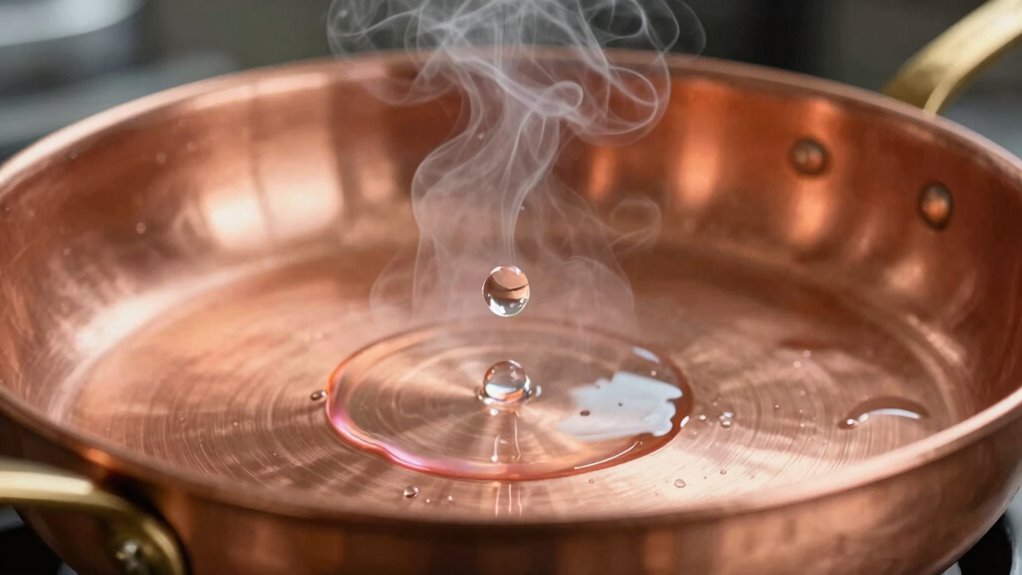
The Leidenfrost effect offers valuable applications in industry and safety by reducing friction and preventing damage during high-temperature processes. For example, it helps create superhydrophobic surfaces that repel water and reduce corrosion, improving durability. In manufacturing, the effect minimizes heat transfer through thermal conductivity, protecting equipment from overheating. This principle also enhances safety by enabling the safe handling of extremely hot liquids; a vapor layer prevents direct contact, reducing burn risks. Additionally, the effect can be harnessed in lubrication systems to decrease wear on moving parts exposed to high temperatures. By controlling the vapor layer’s stability, industries can improve efficiency and safety, making processes smoother and less hazardous. The Leidenfrost effect’s ability to manipulate heat and surface interactions proves invaluable across multiple industrial and safety applications, especially by leveraging thermal insulation properties to improve overall process safety. Its capacity to create a self-regulating cooling layer exemplifies how understanding heat transfer mechanisms can lead to innovative safety solutions.
Common Myths About Water, Heat, and the Leidenfrost Effect
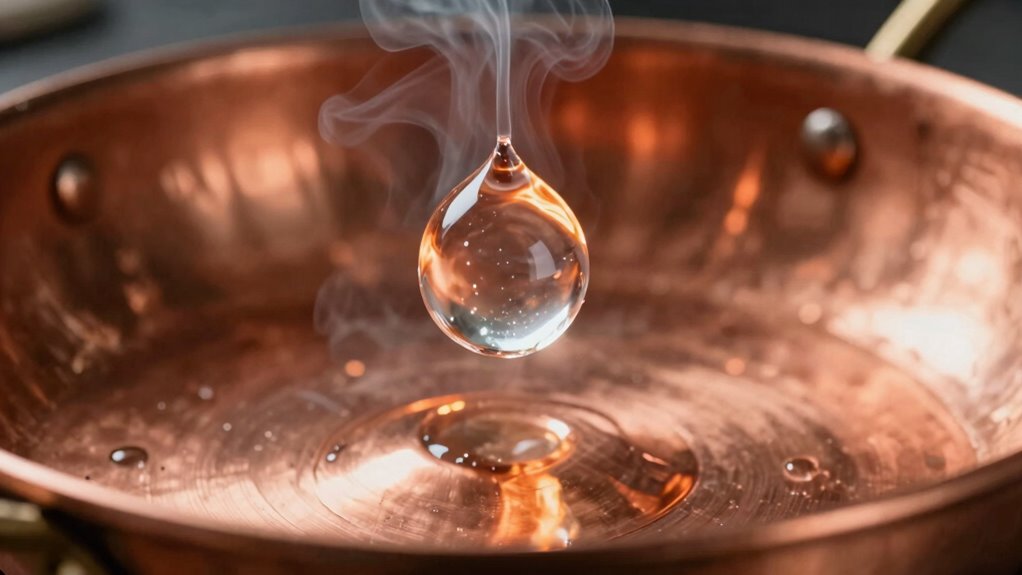
Many popular beliefs about water, heat, and the Leidenfrost effect aren’t quite accurate. It’s easy to fall for common misconceptions, but myth debunking helps clarify the science. For example, some think water instantly vaporizes at a certain temperature, but it gradually shifts to vapor. Others believe the Leidenfrost effect only occurs with extremely hot surfaces, which isn’t true; it can happen at lower temperatures too. People also assume the effect is a safety hazard, when actually, it’s a fascinating physics phenomenon. Additionally, some believe the water drop isn’t touching the surface at all, but it’s actually supported by a vapor layer. These myths cloud understanding, so knowing the facts helps you better appreciate this intriguing effect.
What Makes the Leidenfrost Effect Such a Fascinating Physics Phenomenon?
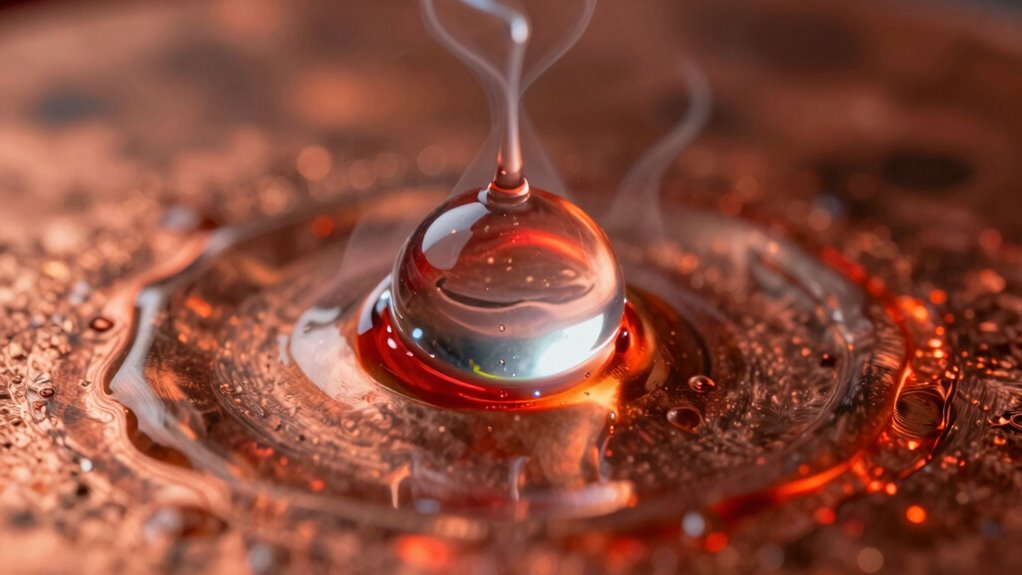
What makes the Leidenfrost effect such a fascinating physics phenomenon is its ability to cause a liquid droplet to levitate and glide effortlessly over a hot surface, creating a striking display of nature’s complexity. This occurs because the intense heat triggers a phase transition, transforming the liquid into vapor beneath the droplet. The vapor layer acts as thermal insulation, preventing direct contact with the surface and allowing the droplet to move smoothly. This dynamic process showcases how phase transition can produce unexpected behavior, revealing the delicate interplay between temperature, fluid properties, and surface interactions. The effect’s ability to sustain a stable vapor cushion makes it a mesmerizing example of how physics governs everyday phenomena in surprising ways.
Frequently Asked Questions
Can the Leidenfrost Effect Occur With Liquids Other Than Water?
Yes, you can see the Leidenfrost effect with alternative liquids, not just water. It occurs when the liquid reaches its specific temperature threshold, creating an insulating vapor layer that prevents rapid boiling. Different liquids have varying boiling points and properties, so you’ll need to adjust the temperature accordingly. As long as the liquid is heated above its threshold, you’ll observe the effect, regardless of whether it’s water or another fluid.
How Does Surface Material Impact the Leidenfrost Phenomenon?
Sure, surface material totally influences the Leidenfrost effect. You might think a slick, low surface energy material like Teflon would prevent it, but it actually makes the effect more dramatic by creating a stable vapor layer. Meanwhile, high thermal conductivity surfaces like metal quickly transfer heat, intensifying the effect. So, your choice of surface can turn a simple water drop into a fiery show or a quick slip-and-slide.
Is the Leidenfrost Effect Dangerous or Harmful?
The Leidenfrost effect isn’t inherently dangerous, but it does pose health risks if you’re not careful. You could suffer accidental burns if you touch superheated surfaces or hot droplets that are levitating. Always exercise caution around hot liquids and surfaces, especially when experimenting. While the effect itself isn’t harmful, mishandling or accidental contact can lead to serious burns, so stay attentive and avoid direct contact with hot areas.
Can the Effect Be Sustained Indefinitely on a Hot Surface?
You can’t sustain the Leidenfrost effect indefinitely on a hot surface. As the water droplet interacts with the surface, a vapor layer forms, maintaining a thermal equilibrium that keeps the droplet levitating. However, over time, the vapor layer dissipates due to heat transfer, causing the droplet to eventually evaporate or make contact with the surface again. So, it’s a temporary state, not a permanent phenomenon.
What Are the Limitations of Observing the Leidenfrost Effect at Home?
Imagine trying to tame a fiery dragon in your kitchen; that’s what observing the Leidenfrost effect at home feels like. You face limitations in temperature control and safety precautions, making it tricky to find the right heat level without risking burns or accidents. Precise temperature control is essential, and safety precautions are a must. Otherwise, you might end up with a splashy mess or a dangerous situation, not the magical water drop dance.
Conclusion
As you watch a droplet dance on a hot pan, it’s no coincidence that science and everyday life collide in this mesmerizing phenomenon. The Leidenfrost effect reminds you how simple moments—like a splash of water—can reveal complex physics at play. Next time you see water hover effortlessly, remember it’s a rare, fascinating coincidence of temperature and vapor layers working in perfect harmony—an everyday miracle waiting to be noticed.
NFL season / tailgating Picks
team gear
As an affiliate, we earn on qualifying purchases.