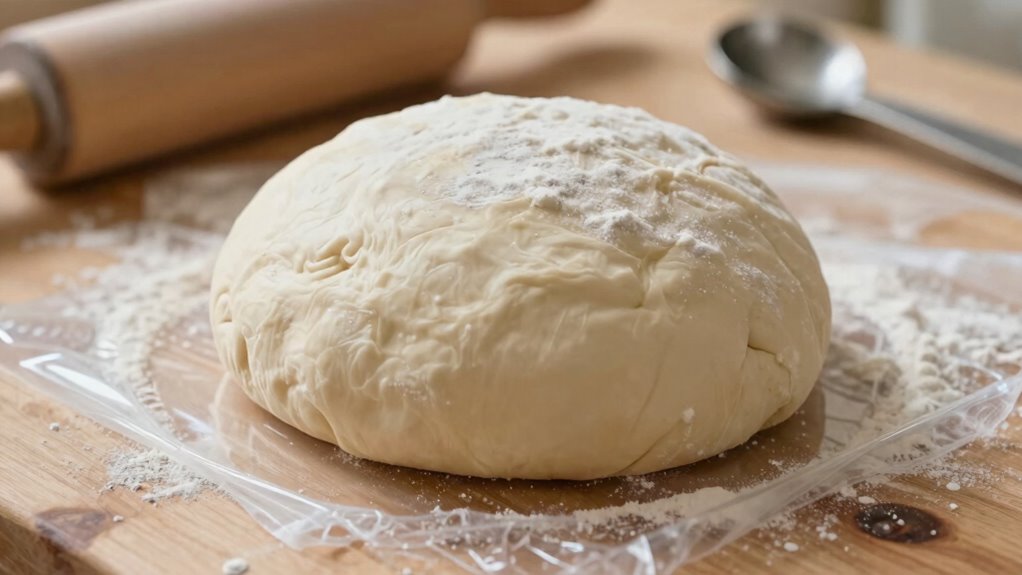

Resting dough makes it easier to handle because it relaxes the gluten network you’ve developed during kneading, reducing elasticity and stretchiness. It also redistributes moisture evenly, which improves the dough’s texture and pliability. As the gluten relaxes, the dough becomes less sticky and easier to shape without tearing or shrinking. If you keep exploring, you’ll discover how these processes contribute to a better rise and overall baking results.

Get kitchen staples and gadgets delivered free — and shop member deals
- Fast, free delivery on millions of items
- Access to Prime Big Deal Days deals on October 6–7
- Prime Video, Amazon Music and more included
Key Takeaways
- Resting relaxes gluten strands, reducing elasticity and making dough less sticky and easier to shape.
- It decreases dough tension, preventing shrinkage or snapping during handling.
- Resting allows moisture redistribution, improving dough pliability and consistency.
- It decreases dough elasticity, making rolling out and shaping more manageable.
- Resting enhances overall dough elasticity and strength, facilitating smoother handling.
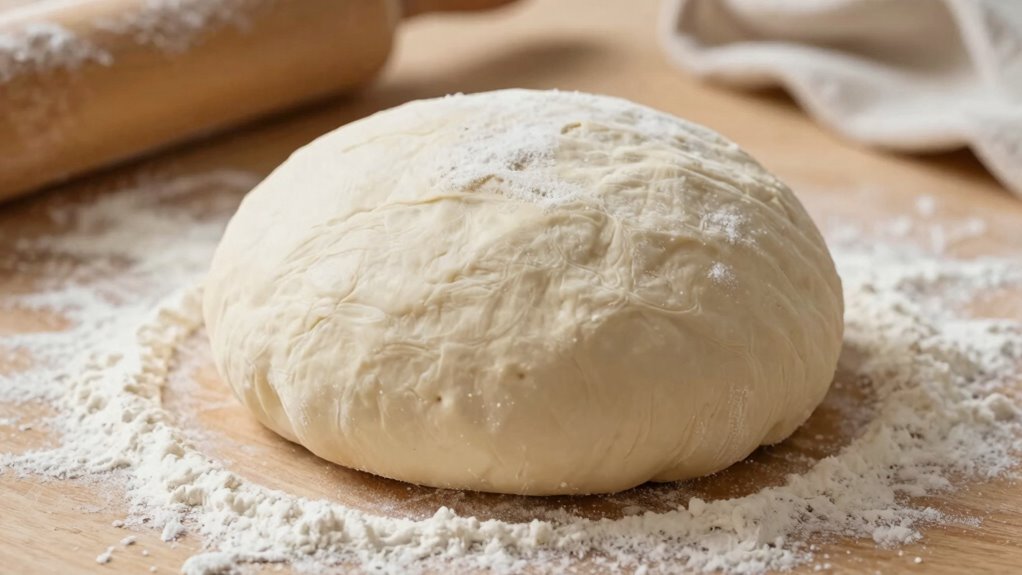
Resting dough might seem like a simple step in baking, but it plays a essential role in developing the final product. When you let your dough rest, you’re allowing the fermentation process to unfold. During fermentation, yeast consumes sugars in the dough, producing carbon dioxide and alcohol. This not only helps the dough rise but also enhances flavor and texture. The fermentation process creates a more complex taste profile and guarantees your bread or pastry isn’t dense or tough. It’s a key phase that influences the aroma, crumb structure, and overall quality of your baked goods.
Resting dough allows fermentation to develop flavor, improve texture, and ensure a lighter, more even final bake.
As the dough rests, gluten development continues to improve. Gluten is the protein network that gives dough its elasticity and strength. When you knead or mix your dough, you start forming gluten strands, but they need time to fully develop and align. Resting allows these gluten strands to relax and strengthen, making the dough easier to handle. This relaxation phase reduces elasticity, so your dough becomes less sticky and more manageable. You’ll find that after resting, stretching and shaping the dough feels much smoother and less resistant. gluten development is further supported by proper resting, which allows the proteins to fully bond and form a resilient network. Additionally, proper resting periods help regulate moisture distribution, which is crucial for achieving a uniform crumb.
Proper resting periods also help distribute moisture evenly throughout the dough. This moisture redistribution further enhances gluten development and creates a more uniform crumb structure. When the dough is rested, the gluten network becomes more resilient, which means your final baked product will have a better rise and a lighter texture. Without adequate resting, you might struggle to shape the dough or end up with a dense, uneven loaf. Resting fundamentally gives the gluten a chance to fully form, making your dough easier to handle and shape without tearing. Additionally, resting dough reduces the tension built up during kneading. This relaxation makes it easier to roll out or shape the dough without it shrinking back or snapping. The process also allows flavors to develop more deeply, thanks to ongoing fermentation. Understanding fermentation is essential to appreciate how resting enhances both flavor and structure. All these factors combined mean that your dough is more pliable, easier to work with, and yields a superior final product.
As an affiliate, we earn on qualifying purchases.
Frequently Asked Questions
How Long Should I Let Dough Rest for Optimal Results?
You should let your dough rest for about 30 minutes to 1 hour for ideal results. This allows the fermentation process to develop flavors and improve dough elasticity, making it easier to handle. Resting also relaxes the gluten, reducing shrinkage and stickiness. If you have more time, refrigerate it overnight for even better flavor and texture. Proper resting guarantees your dough becomes more manageable and yields better baking results.
Does Resting Dough Improve Flavor or Texture More?
Think of it like a minstrel’s song settling in a cozy tavern. Resting dough mainly enhances flavor, thanks to the fermentation process that develops complex tastes. It also improves texture, making it easier to handle and shape. While both benefits are significant, flavor enhancement is the star, as resting allows yeast to work its magic, creating richer, more nuanced flavors that elevate your baked goods.
Can Over-Resting Dough Negatively Affect the Final Product?
Yes, over-resting dough can negatively affect your final product. If you wait too long during fermentation timing, the dough may become overly elastic and lose its ideal texture. This can lead to a dense or overly airy crust, affecting how it bakes. To avoid this, monitor the fermentation process carefully, and rest your dough just enough to improve handling without compromising its structure and flavor.
Is Refrigeration Necessary During the Resting Period?
Did you know that cold fermentation can improve dough elasticity by slowing yeast activity? Refrigeration isn’t always necessary during resting, but it benefits your dough by developing flavor and structure. Resting in the fridge allows enzymes to work gradually, making dough easier to handle later. If you have time, refrigerate your dough; if not, resting at room temperature still helps, but cold fermentation enhances texture and taste.
Does Resting Dough Help With Gluten Development?
Resting dough definitely helps with gluten development, making it more elastic and easier to handle. During resting, gluten strands relax and form stronger networks, enhancing dough elasticity. This process allows the dough to stretch without tearing, improving its texture. As a result, your baked goods turn out better, with a finer crumb and improved structure. So, giving your dough time to rest is essential for ideal gluten formation and handling.
As an affiliate, we earn on qualifying purchases.
Conclusion
So, next time your dough resists your touch, remember it’s just taking a little nap to become your best friend in the kitchen. Resting isn’t laziness; it’s science doing its magic, making your dough easier to handle and way more delicious. Who knew that giving your dough some downtime could turn you into a baking hero? So go ahead, give it a rest—your future self will thank you, and your baked goods will never know what hit them.
As an affiliate, we earn on qualifying purchases.
As an affiliate, we earn on qualifying purchases.
NFL season / tailgating Picks
team gear
As an affiliate, we earn on qualifying purchases.