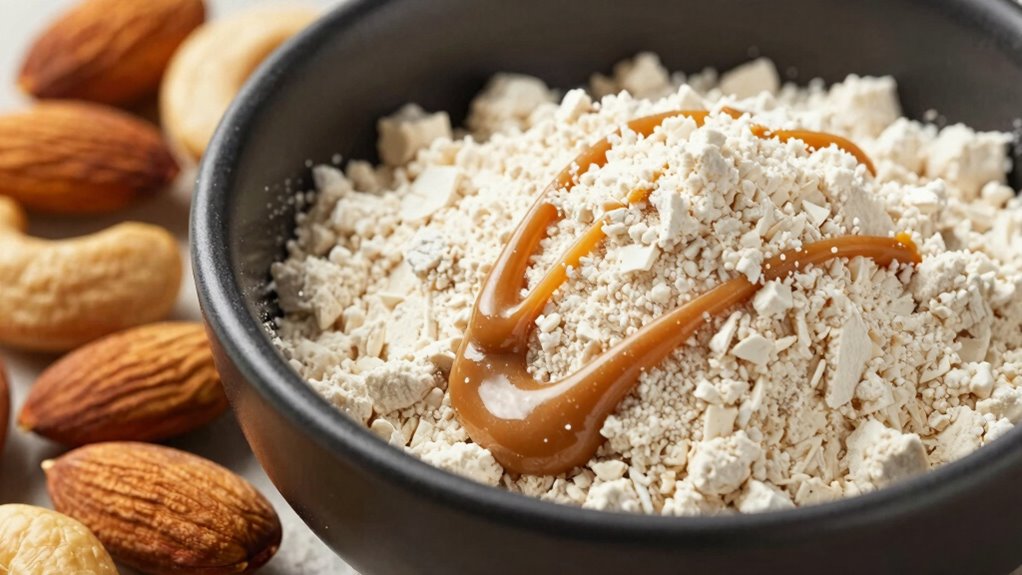

Nut flours turn into nut butter because the natural oils inside the nuts migrate and release, creating a sticky, creamy texture over time. This process speeds up with warmth and high humidity, which cause fats to break down and oil to separate. To prevent this, store your nut flour in a cool, dry place in airtight containers and control moisture levels. Keep going to discover how to keep your nut flour fresh longer.
Key Takeaways
- Natural oils in nuts migrate and concentrate during storage, creating a creamy, butter-like consistency in nut flour.
- Elevated temperatures accelerate fat oxidation, causing nut flour to turn into nut butter more quickly.
- Moisture absorption causes clumping and oil pooling, promoting the formation of nut butter.
- Proper airtight, cool, and dark storage prevents excessive oil migration and oxidation.
- Baking or drying clumpy or oily nut flour reduces moisture and delays the conversion into nut butter.

PrepSolutions Flour Keeper – Airtight Storage Container for Flour, Sugar & Dry Goods, 5 lb Capacity, BPA-Free, Easy Pour Design
- Product Includes: Contains 1 Flour Keeper
- Capacity: Holds up to 5 lbs of dry goods
- Size: 3.8 qt (3.6 L) capacity
As an affiliate, we earn on qualifying purchases.
As an affiliate, we earn on qualifying purchases.
What Is Nut Flour and Why Does It Turn Into Nut Butter?
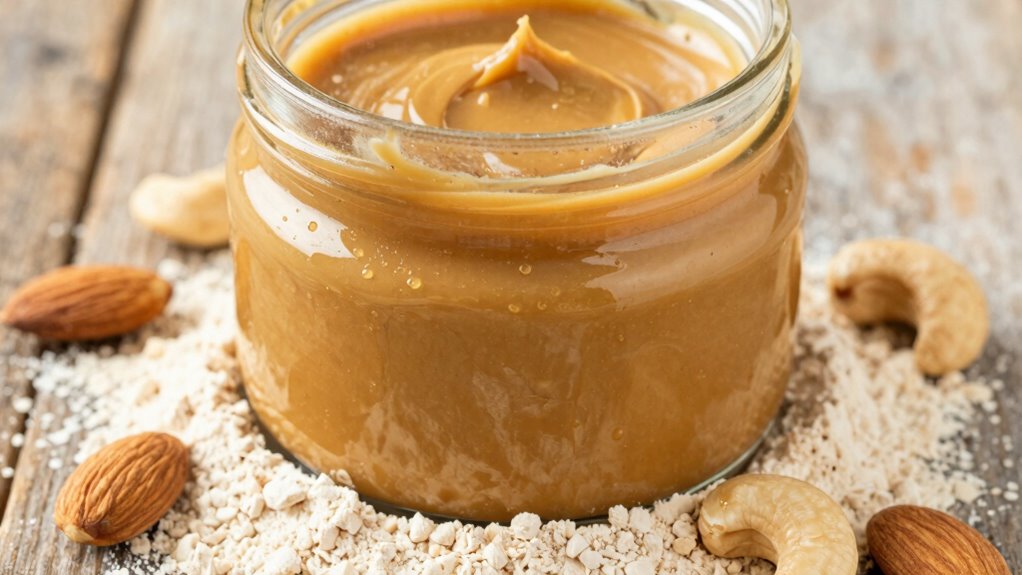
Nut flour is made by grinding nuts into a fine powder, often used as a gluten-free alternative in baking. Understanding nut flour basics helps you see why it’s popular, especially for those with dietary restrictions. When nuts are processed, their natural oils are released, which can lead to nut butter formation if stored improperly or for too long. This transformation happens because the oils migrate and gather, creating a sticky, creamy consistency similar to nut butter. Factors like temperature and storage conditions influence how quickly this change occurs. Additionally, high oil content in certain nuts accelerates the process of turning nut flour into nut butter. The oil migration process is natural and influenced by the nut’s fat composition, which varies among different types of nuts. While nut flour works well in many recipes, knowing how and why it can turn into nut butter helps you prevent spoilage and maintain its desired texture for longer.
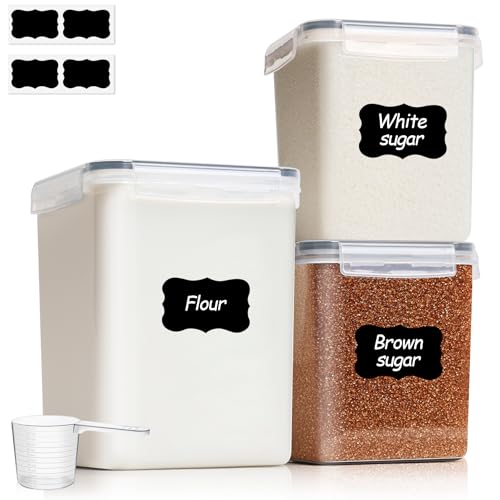
3 PCS Airtight Flour and Sugar Container for Pantry – 5lb Flour Capacity – 7.1 Inch Extra Wide Mouth Square Pantry Storage – Set of 3 (5.2L/5.5Qt) (2.5L/2.6Qt*2) – Stackable Baking Supplies Organizer
- Ideal for Flour and Sugar: Holds 5 lb flour and 2 lb sugar
- Airtight Food Preservation: Strong side-locking lids keep food fresh
- Includes Labels and Measuring Cup: 4 labels and 120 mL measuring cup included
As an affiliate, we earn on qualifying purchases.
As an affiliate, we earn on qualifying purchases.
Why Do Fat and Temperature Affect Nut Flour’s Shelf Life?
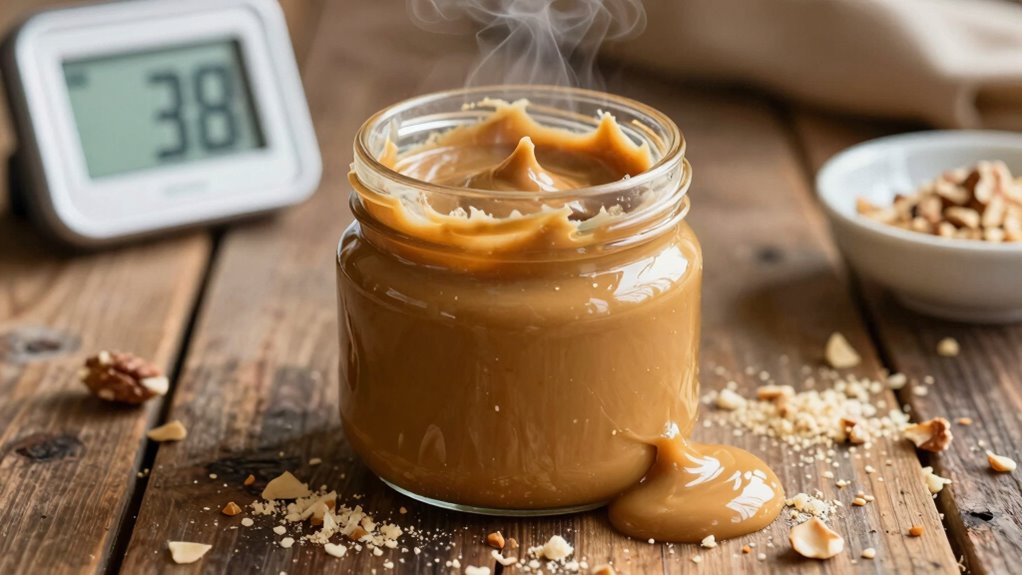
Because fat content in nut flour is high, it plays an essential role in how quickly the product spoils. Elevated temperatures accelerate fat oxidation, which leads to nut butter formation and rancidity. When exposed to heat, the fats break down faster, reducing shelf life and compromising flavor and quality. This process is similar to how Gold IRA markets emphasize the importance of proper storage to maintain asset value; in this case, proper storage extends the freshness of nut flour. Keeping nut flour cool slows down this process, preserving its freshness and preventing it from turning into nut butter prematurely. Avoiding temperature fluctuations is key, as repeated heating and cooling can speed up oxidation. Proper storage in airtight containers in a cool, dark place is your best defense. Additionally, humidity control helps prevent moisture from accelerating spoilage. By controlling temperature, you minimize fat oxidation, extending your nut flour’s shelf life and maintaining its intended texture and taste. Proper storage conditions are crucial for maintaining freshness and preventing spoilage over time.
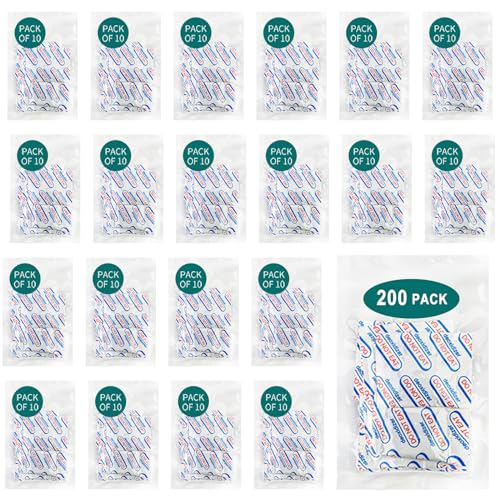
Hombao 200 Packs 100CC Food Grade Oxygen Absorbers (10 Packs x 1 Vacuum Bag) Oxygen Absorbers for Food Storage, Oxygen Packets for Long Term Food Storage – O2 Absorbers for Food Grade
- Preserves Food Quality: Retains flavor, taste, color, and nutrition
- Wide Food Compatibility: Suitable for nuts, spices, meat, grains, pet food
- Vacuum Packaged: 10 packs per vacuum bag for freshness
As an affiliate, we earn on qualifying purchases.
As an affiliate, we earn on qualifying purchases.
How Moisture and Humidity Make Nut Flour Clump and Go Oily?
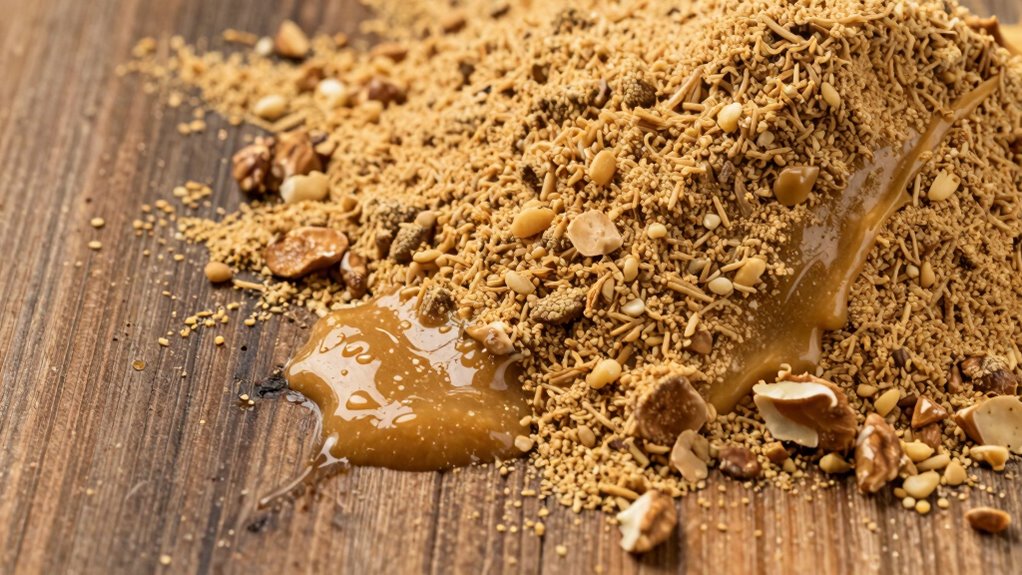
Moisture and humidity are major factors that cause nut flour to clump and become oily over time. When exposed to moisture absorption, nut flour draws in water from the environment, which leads to clumping and an uneven texture. High humidity impact accelerates this process, making the flour sticky and difficult to handle. As nut particles absorb moisture, the oils in the nuts begin to separate more readily, causing the flour to turn greasy or oily. This process is especially common in humid climates or if the storage container isn’t airtight. To prevent clumping and oiliness, keep your nut flour in a sealed, moisture-proof container and store it in a cool, dry place. Managing humidity exposure is key to maintaining quality and freshness. Additionally, utilizing smart storage solutions with humidity sensors can help monitor and control moisture levels effectively. Proper storage techniques can significantly extend the shelf life and quality of your nut flour. Being aware of clumping prevention methods can also help you maintain optimal texture and flavor over time. Understanding how environmental factors influence shelf stability is crucial for long-term storage success.

Squirrel's Nut Butter Anti Chafing Stick | All Natural Chafe Prevention & Skin Care for Athletes, Runners & Adventurers | Thighs, Arms, Pack Straps & More | 1.7 oz
- Trusted by Athletes: Proven chafe prevention for athletes
- Mess-Free Waterproof: Easy application during training or races
- All Natural Ingredients: Coconut oil, cocoa butter, beeswax, vitamin E
As an affiliate, we earn on qualifying purchases.
As an affiliate, we earn on qualifying purchases.
Signs Your Nut Flour Is Starting to Spoil or Turn Rancid?
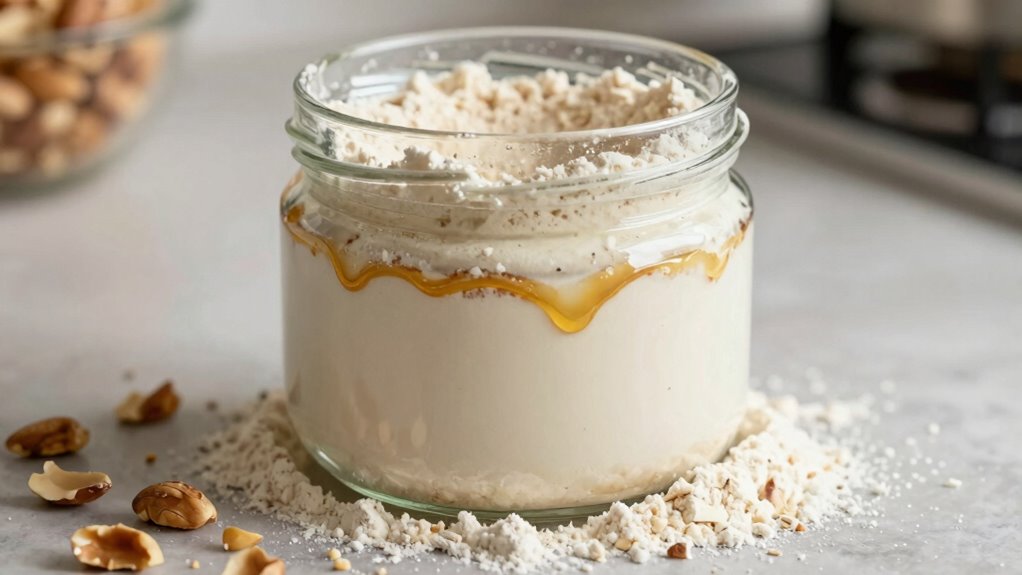
As nut flour begins to spoil or turn rancid, subtle changes in smell, appearance, and texture become noticeable. You might detect a sour or bitter odor, indicating oxidation that can trigger nut allergy concerns. Visually, the flour may appear darker, clump together, or develop a greasy sheen. Texture-wise, it could feel sticky or oily rather than dry and powdery.
To understand these signs better:
- Unpleasant smell signals oxidation and possible spoilage.
- Discoloration hints at deterioration since nut harvesting conditions impact freshness.
- Oily or clumpy texture suggests the fats are going rancid, risking allergic reactions.
Recognizing these signs helps prevent consuming spoiled nut flour, especially when sensitivities or nut allergies are involved.
Storage Tips to Keep Nut Flour Fresh and Dry
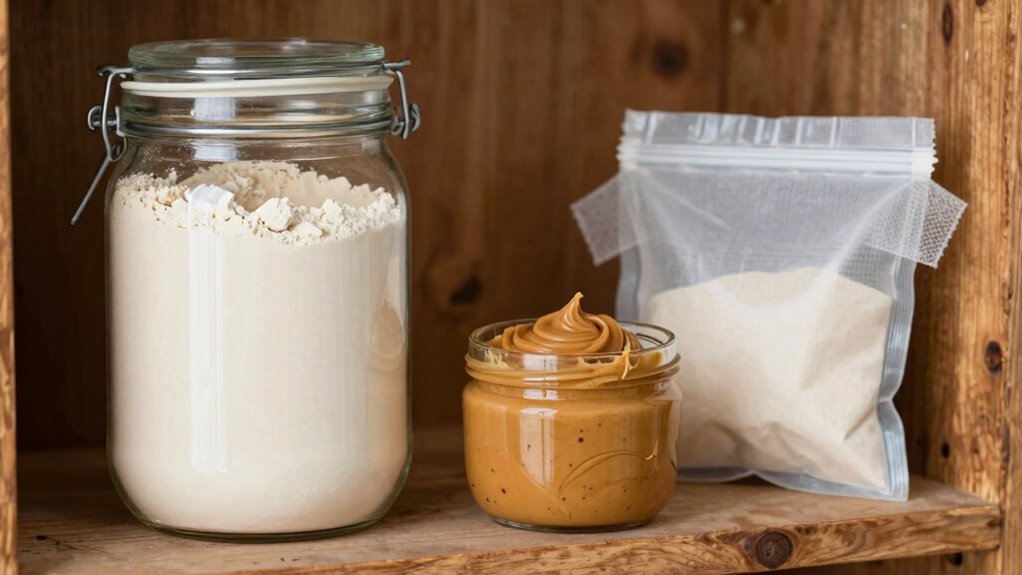
To keep your nut flour fresh and dry, make sure to store it in an airtight container. Placing it in a cool, dark spot helps prevent moisture and heat from compromising quality. Proper storage will extend its shelf life and maintain its flavor. Additionally, choosing storage environments with good air quality can help prevent spoilage caused by airborne pollutants or humidity. Maintaining the right temperature and avoiding exposure to sunlight further preserves its freshness. Ensuring proper ventilation in your storage area can also help reduce humidity levels and keep your nut flour dry over time. Incorporating moisture control techniques is essential for maintaining the optimal conditions for your nut flour. Proper airflow and moisture control are essential for maintaining the optimal conditions for your nut flour.
Use Airtight Containers
Using airtight containers is essential for keeping your nut flour fresh and dry. These containers prevent exposure to air and humidity, which can lead to moisture buildup and clumping. To maximize moisture control, consider these tips:
- Choose containers with tight-sealing lids to prevent air leaks.
- Keep containers away from humid environments or direct sunlight.
- Regularly check for any signs of moisture or spoilage and reseal tightly after each use.
- Embracing artistic expression in your storage practices can make the process more engaging and help you develop new, creative ways to organize your kitchen. Additionally, incorporating traditional preservation techniques rooted in Indigenous wisdom can enhance the longevity of your stored ingredients.
- Understanding proper storage methods can further improve the effectiveness of your airtight containers and protect your nut flour from deterioration. Being aware of nut flour properties can also guide you in choosing the best storage options to prevent spoilage. For example, selecting appropriate container materials that do not react with fats in nut flour can help maintain freshness longer.
Store in Cool Place
Storing your nut flour in a cool place helps prevent spoilage and extends its shelf life. Cool storage slows down the oxidation process, keeping the oil in the flour from turning rancid. To achieve best freshness, maintain a consistent temperature and avoid areas exposed to heat or sunlight. Temperature control is key—aim for a storage environment below 70°F (21°C). Use an airtight container and keep it in a pantry or cupboard away from heat sources. If your kitchen tends to get warm or humid, consider storing the nut flour in the refrigerator or freezer, which offers better temperature control and moisture protection. Proper storage in a cool, dry spot ensures your nut flour stays fresh, dry, and ready for your next baking or cooking project. Additionally, choosing appropriate storage containers can help maintain freshness and prevent exposure to air.
How to Prevent Nut Flour From Turning Into Nut Butter During Storage?
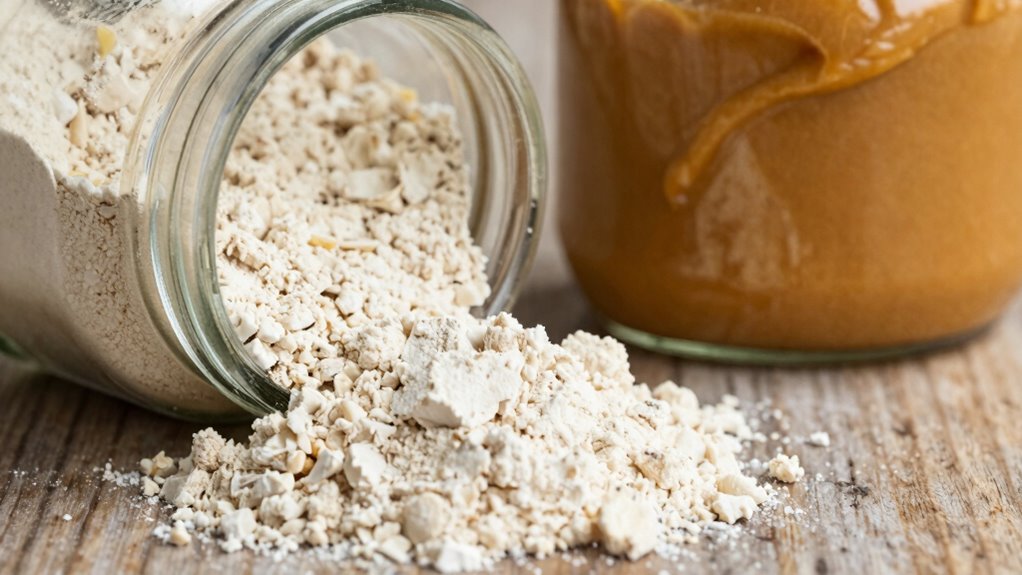
If you want your nut flour to stay dry and scoopable, maintaining a moisture-free environment in the package is essential. Moisture accelerates the natural oils‘ tendency to turn into butter, especially if you’re concerned about nut allergies or have sourced your nuts from different harvesting seasons. To prevent this, consider these tips:
Keep nut flour dry and scoopable by storing in an airtight, cool, dry spot away from sunlight.
- Store your nut flour in an airtight container to block humidity.
- Keep it in a cool, dry place away from sunlight, which can cause moisture buildup.
- Use desiccants or silica gel packs to absorb residual moisture.
Proper storage helps preserve nut flour’s texture and prevents it from turning into nut butter. This is especially important if you’re sensitive to nut allergy reactions or want to maintain the quality from nut harvesting to your pantry.
How to Revive or Reset Clumpy, Oily Nut Flour?
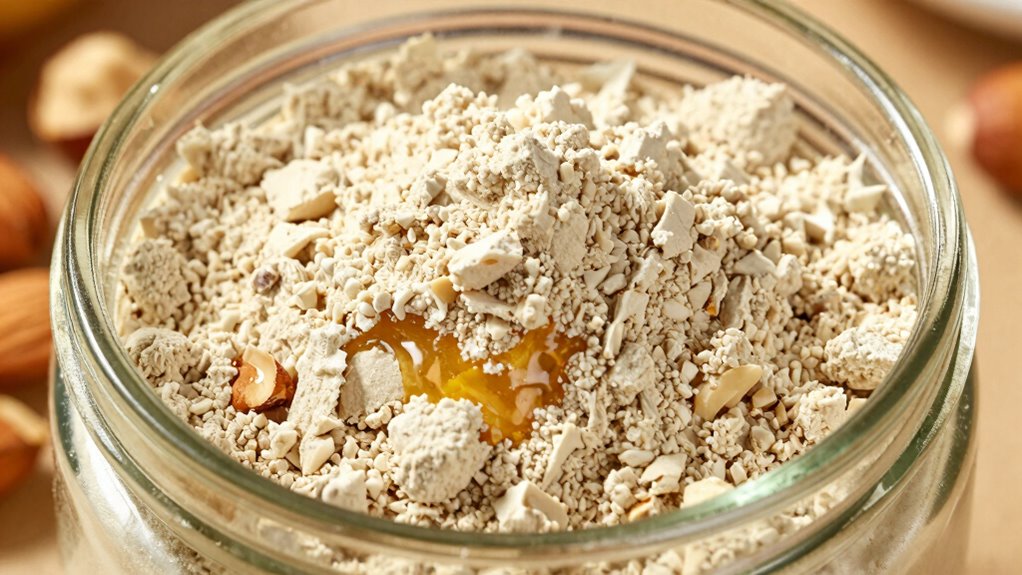
When your nut flour becomes clumpy and oily, it’s often a sign that the natural oils have separated and pooled together. To restore its nut flour consistency, spread the flour on a baking sheet and bake at 150°F (65°C) for 10-15 minutes, stirring occasionally. This gentle heat helps evaporate excess oils and rebalances moisture, improving texture. Allow it to cool completely before storing it in an airtight container. You can also mix in a small amount of dry, unflavored starch or powder to absorb excess oil if needed. These steps help maintain shelf stability, preventing further clumping and oil separation. Regularly stirring and storing your nut flour properly will keep it fresh and functional for longer, preserving its quality and usability. Understanding natural oil separation can also help you identify when natural separation occurs, allowing for better management of your nut flour. Proper storage conditions such as a cool, dark place can slow down the oxidation process, helping to extend the lifespan of your nut flour. Additionally, being aware of environmental factors like humidity can further impact the quality and longevity of your nut flour.
When to Replace Nut Flour and How to Pick Fresh Batches?
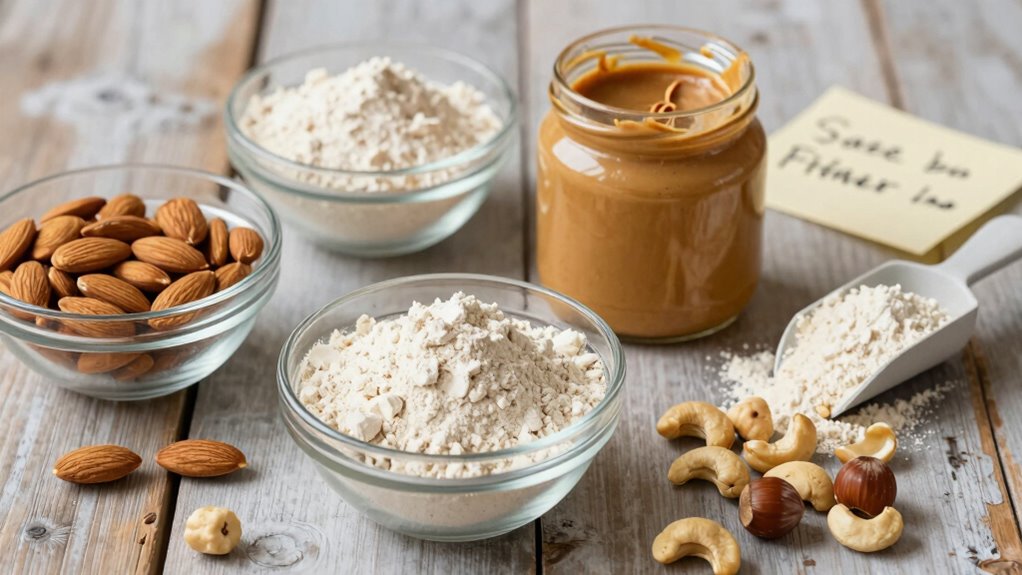
To guarantee your nut flour remains fresh and safe to use, pay close attention to its appearance, smell, and texture over time. If it develops a sour odor, shows mold, or feels sticky or overly oily, it’s time to replace it. When selecting a new batch, consider these key points:
- Check the packaging date to ensure maximum freshness.
- Opt for reputable brands known for quality batch selection.
- Inspect the nut flour visually for any discoloration or clumping.
These steps help maintain nut flour freshness and prevent it from turning into nut butter prematurely. Fresh batches will have a light, nutty aroma and dry, fine texture, ensuring your recipes turn out just right. Don’t overlook these signs—your baked goods depend on it.
Frequently Asked Questions
Can I Use Nut Flour That Has Turned Into Nut Butter in Recipes?
Yes, you can use nut flour that has turned into nut butter in recipes. It can work as a nut butter substitution in baking with nut butter, adding richness and moisture. Keep in mind that the texture and moisture content change, so adjust your recipe as needed—perhaps by reducing other fats or liquids. Experimenting with your recipe will help you find the perfect balance when substituting nut flour with nut butter.
Does Roasting Nuts Before Grinding Prevent Nut Flour From Turning Into Butter?
Roasting nuts before grinding can help prevent nut flour from turning into butter by reducing moisture content. For example, Emily roasted almonds to eliminate surface moisture, resulting in a stable flour that didn’t turn into butter during storage. By controlling moisture through roasting, you minimize natural oils’ release, maintaining the flour’s texture. This simple step enhances shelf life and consistency, ensuring your nut flour stays dry and suitable for baking or other recipes.
How Long Does Nut Flour Typically Stay Fresh Before Turning Oily?
Nut flour typically stays fresh for about 1 to 2 months if stored properly. Keep it in an airtight container in a cool, dark place to maximize shelf life. Over time, you might notice oil separation, which indicates the nut flour is nearing the end of its freshness. To extend its shelf life, consider refrigerating or freezing it, and be mindful of any off smell or taste before use.
Are There Specific Storage Containers That Help Prevent Nut Flour Clumping?
You can prevent nut flour from clumping by storing it in airtight containers, which block moisture and air exposure. Silicone storage options are also excellent because they seal tightly and are durable. Make sure the container is completely dry before filling, and keep it in a cool, dark place. Regularly check for moisture or oil separation, and stir or shake before use to maintain freshness and prevent clumping.
Can Adding Preservatives Extend the Shelf Life of Nut Flour?
Adding preservatives can help extend the shelf life of nut flour, but their effectiveness varies. While preservatives may slow down spoilage and rancidity, natural options like vitamin E or antioxidants often work best. Keep in mind, proper storage is essential for shelf life extension. Always check label instructions and use preservatives sparingly to maintain freshness without compromising quality. Proper storage combined with preservatives maximizes your nut flour’s longevity.
Conclusion
To keep your nut flour fresh, think of it as a delicate treasure in your kitchen. Store it in a cool, dry place, like a cozy pantry shelf, away from warm sunlight and humidity. Imagine each spoonful as a burst of fresh, nutty flavor, not oily or clumpy. With proper care, your nut flour will stay vibrant and ready to elevate your baked creations, turning every recipe into a delightful, wholesome experience.