Understanding the smoke point of cooking oils tells you the temperature at which your oil will start to smoke and break down, indicating it’s time to stop heating to avoid burnt flavors. It helps you choose the right oil for frying, searing, or low-heat cooking, but it doesn’t reflect the oil’s overall quality or nutritional value. To make smarter choices and improve your cooking, keep exploring what influences smoke points and proper oil use.
Open a free Amazon Business account
Business pricing, bulk buying and tax-exempt orders.
As an affiliate, we earn on qualifying purchases.
Key Takeaways
- The smoke point is the temperature at which oil begins to produce visible smoke, signaling fat breakdown.
- A higher smoke point indicates better stability at high temperatures, suitable for frying or searing.
- Smoke point does not reflect oil quality, flavor, or nutritional value; some low smoke point oils may be more nutritious.
- Refinement level influences smoke point: refined oils generally tolerate higher temperatures than unrefined ones.
- Proper storage and use matching the oil’s smoke point prevent smoking, burning, and flavor degradation during cooking.
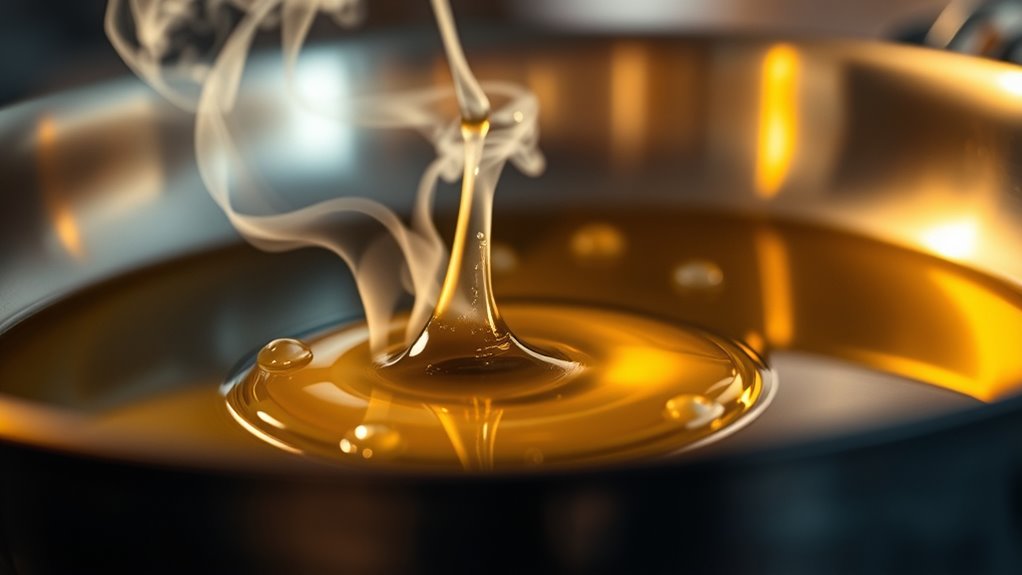
Have you ever wondered why some cooking oils start to smoke at certain temperatures while others stay stable? It all comes down to oil stability and the smoke point. When you’re cooking, understanding these factors helps you choose the right oil for your dish and avoid burnt flavors or dangerous fumes. The smoke point is the temperature at which an oil begins to produce visible smoke, signaling that its fats are breaking down and releasing volatile compounds. Oils with higher smoke points are more stable at elevated temperatures, making them ideal for frying or searing. On the other hand, oils with lower smoke points tend to degrade quickly, leading to undesirable flavors and potential health risks. Understanding the composition of the oil can help you select the best option for your cooking needs. The reason behind this difference lies in the oil’s composition, specifically its fatty acid profile and refinement level. Refined oils generally have higher smoke points because many impurities and free fatty acids have been removed during processing. These impurities can lower the oil’s stability, causing it to smoke earlier. Consequently, refined oils like canola, vegetable, or peanut oil can withstand higher temperatures without breaking down, preserving the flavor integrity of your food. In contrast, unrefined or extra-virgin oils contain more natural compounds and antioxidants that, while beneficial for flavor and nutrition, lower the oil’s stability at high heat. This means they are better suited for dressings or low-temperature cooking, where flavor retention is more important than high-temperature stability. It’s tempting to think that a higher smoke point means an oil is better overall, but that’s not always true. While a high smoke point indicates better oil stability under heat, it doesn’t necessarily mean the oil will enhance flavors during cooking. Some oils with lower smoke points offer richer, more nuanced flavors that contribute to the dish’s overall appeal. The key is to match the oil’s smoke point with your cooking method: use oils with high smoke points for frying and searing, and those with lower smoke points for dressings or finishing touches where flavor retention is prioritized. Additionally, oil stability can be affected by storage conditions and age, which may influence the smoke point over time. Proper storage in a cool, dark place can help maintain the oil’s quality and smoke point longevity, ensuring safer and tastier cooking. Being aware of how refinement level influences smoke points can also help prevent accidental smoking or burning during your culinary endeavors. Moreover, understanding the fatty acid profile of your oils can further inform your choices for different cooking techniques.
As an affiliate, we earn on qualifying purchases.
Frequently Asked Questions
Does the Smoke Point Affect the Oil’s Nutritional Value?
Yes, the smoke point can affect the oil’s nutritional value. When you heat oil past its smoke point, it can cause nutritional degradation, especially breaking down beneficial fatty acids and reducing antioxidant levels. This process compromises fatty acid stability, meaning your oil loses some health benefits and may produce harmful compounds. To maximize nutrition, choose oils with higher smoke points for high-heat cooking and avoid overheating.
Can I Reuse Oil After It Reaches Its Smoke Point?
You shouldn’t reuse oil after it reaches its smoke point because it’s unsafe. When oil smokes, it indicates breakdown and potential formation of harmful compounds, risking smoke point safety. Discard the oil properly to avoid health hazards and environmental harm. Reusing oil beyond its smoke point can also degrade flavor and quality, so always monitor your oil and dispose of it when it starts to smoke for safe cooking.
How Does the Smoke Point Vary Between Different Oil Brands?
You’ll find that different oil brands can have varying smoke points due to quality and processing methods. Brand consistency matters because some brands maintain more uniform smoke points, while others may fluctuate. Always check the label or product details for specific smoke point info, and don’t assume all oils of the same type from different brands will perform equally at high heats. This way, you avoid overheating and maintain safe cooking practices.
Is There a Smoke Point Threshold for Deep Frying?
Imagine you’re deep frying chicken, and the oil reaches 375°F. That’s close to the smoke point for many oils like vegetable or canola. Typically, a temperature threshold of 375-400°F is safe for deep frying, but going beyond risks smoke, fire hazards, and health issues. Always monitor your oil’s temperature to stay within safe limits, ensuring safety considerations are met and your food cooks perfectly without risking danger.
Does the Smoke Point Change Over Time With Repeated Heating?
Yes, the smoke point changes over time with repeated heating. As you reuse oil, oil degradation occurs, breaking down its chemical structure and producing impurities. This degradation lowers the smoke point, making the oil more likely to smoke at lower temperatures. To avoid burning and health risks, it’s best to monitor your oil’s condition and replace it when signs of degradation appear, ensuring safe and effective cooking.
refined vegetable oil for frying
As an affiliate, we earn on qualifying purchases.
As an affiliate, we earn on qualifying purchases.
Conclusion
Knowing the smoke point helps you choose the right oil for your culinary adventures, ensuring your dishes turn out perfect without turning your kitchen into a scene from a 1950s smokehouse. Remember, it’s not just about avoiding smoke but also about maintaining flavor and health. So, next time you’re frying or sautéing, keep an eye on that temperature—think of it as your secret ingredient to a delicious, smoke-free meal. Happy cooking!
extra virgin olive oil for low heat
As an affiliate, we earn on qualifying purchases.
As an affiliate, we earn on qualifying purchases.
As an affiliate, we earn on qualifying purchases.
NFL season / tailgating Picks
team gear
As an affiliate, we earn on qualifying purchases.