More layers in cookware, like in 5-ply compared to tri-ply, generally improve heat distribution, stability, and durability, making them ideal for delicate sauces, precise temperature control, and high-heat tasks. If you cook frequently or need consistent results, investing in 5-ply can be worthwhile despite the higher cost and weight. For everyday quick meals, tri-ply often suffices. To uncover which option suits your cooking style best, keep exploring these differences further.
Key Takeaways
- More layers improve heat distribution and retention, making 5-ply ideal for delicate or precise cooking techniques.
- 5-ply cookware offers better resistance to warping and longer durability, suitable for frequent, high-heat use.
- Additional layers increase weight and cost, which may be unnecessary for quick, everyday meals with less demanding heat control.
- 5-ply excels in multi-step recipes and simmering sauces due to its enhanced stability and even heat spread.
- Tri-ply is lighter and more affordable, making it suitable for casual cooking where ultra-fine temperature control is less critical.
What Are the Main Differences Between Tri-Ply and 5-Ply Cookware?

The main difference between tri-ply and 5-ply cookware lies in the number of layers used to construct the pots and pans. With tri-ply, you get three layers—usually an outer stainless steel, a core aluminum or copper, and an inner stainless steel cooking surface. In contrast, 5-ply cookware includes five layers, often adding extra aluminum or copper layers for enhanced performance. This increased layer composition results in more complex manufacturing processes, making 5-ply pieces generally more intricate and costly to produce. The additional layers can improve durability and potentially influence heat conduction, but the core difference remains in how many layers are built into each piece. layer composition and manufacturing complexity define how these cookware types perform and their price points.
Do More Layers Mean Better Heat Distribution?

Adding more layers to cookware often aims to improve heat distribution, but does it really make a noticeable difference? Not necessarily. While additional layers can help spread heat more evenly, the key factors are layer thickness and material quality. Thicker layers tend to enhance heat retention, maintaining consistent heat during cooking. However, simply increasing the number of layers doesn’t automatically mean better heat distribution if those layers aren’t designed for efficient heat flow. In fact, overly thick layers can sometimes hinder responsiveness, causing delays in heat adjustment. Ultimately, the benefit depends on how well the layers are engineered for ideal heat transfer, rather than just the quantity of layers. Layer engineering plays a crucial role in determining how effectively heat is distributed across the cookware. So, more layers don’t always equate to better heat distribution—quality and design matter more.
When Is 5-Ply Worth the Extra Cost?

If you need precise control over your cooking, 5-ply cookware can make a difference. It offers better temperature stability, which is essential for techniques like searing or delicate sauces. Consider whether your recipes demand this level of accuracy before investing extra money. Additionally, for tasks like free floating cooking, the enhanced thermal response can significantly improve results. When selecting cookware, it’s also important to evaluate reliable whole-home backup power options to ensure consistent performance and safety during critical moments. Proper insulation and wave and wind considerations can further optimize your cookware’s efficiency and safety in various environments. Incorporating thermal conductivity principles into your cookware choice can help maximize heat distribution and energy efficiency. Understanding auditory processing can also inform your kitchen setup, ensuring a quieter environment that minimizes distractions during cooking.
Cooking Precision and Control
While 5-ply cookware often comes with a higher price tag, it offers noticeably better heat responsiveness and stability, making it worth considering if you prioritize precise cooking control. With improved temperature control, you can maintain consistent heat levels, reducing the risk of overcooking or undercooking your dishes. This results in better cooking consistency, especially for delicate recipes. The multiple layers quickly respond to temperature changes, giving you more control over your process. Here’s a quick comparison:
| Feature | 3-Ply | 5-Ply |
|---|---|---|
| Heat responsiveness | Good | Excellent |
| Cooking consistency | Moderate | Superior |
| Temperature control | Adequate | Precise |
| Stability during cooking | Moderate | High |
| Cost | Lower | Higher |
If precision matters, 5-ply cookware’s enhanced responsiveness makes it a worthwhile investment.
Specific Cooking Techniques
You should consider investing in 5-ply cookware when you frequently prepare delicate dishes that require precise temperature control, such as sauces, custards, or melting chocolates. The enhanced layer construction in 5-ply cookware offers superior heat retention, ensuring even and stable heat distribution. This consistency is vital for recipes that demand careful temperature management, preventing hot spots that can ruin your dish. The multiple layers work together to maintain a steady heat, allowing you to cook with greater confidence and finesse. If your cooking involves techniques that benefit from gentle, uniform heating, then the extra investment in 5-ply cookware can make a noticeable difference in your results. Additionally, layered construction in 5-ply cookware often results in better durability and resistance to warping over time, making it a worthwhile investment for serious home chefs. For those who value consistent heat, 5-ply cookware delivers reliable performance that can elevate your culinary creations. Moreover, heat distribution in multi-ply cookware can help reduce energy consumption by cooking more efficiently, and the multiple layers can also improve thermal responsiveness, allowing for quicker adjustments to temperature changes.
Which Cooking Tasks Benefit Most From 5-Ply Construction?
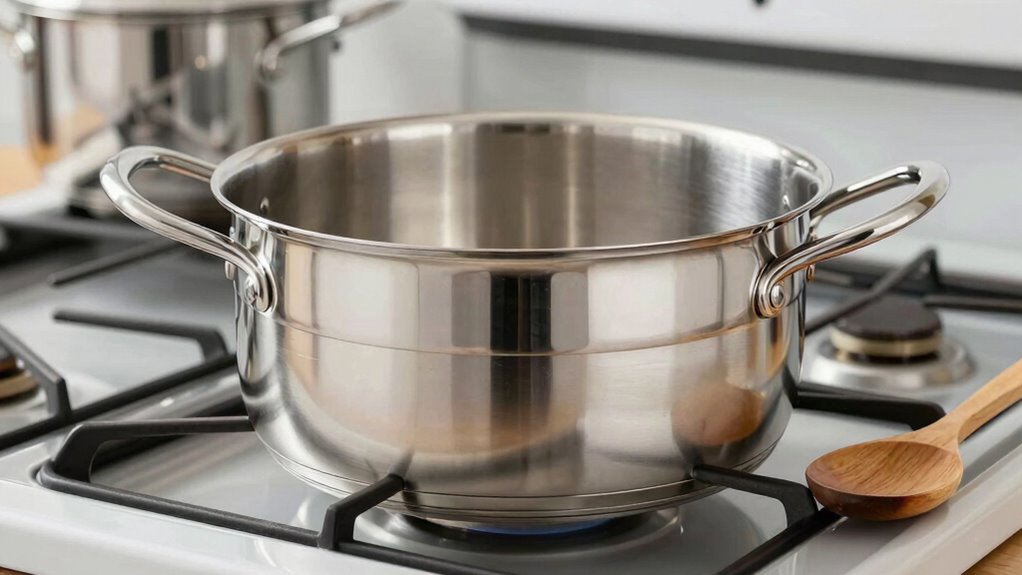
Certain cooking tasks, especially those requiring precise temperature control and even heat distribution, benefit the most from 5-ply cookware. The multiple layers enhance cooking efficiency by maintaining consistent heat, which is essential for delicate dishes. Plus, the sleek design of 5-ply cookware improves aesthetics, making it a stylish addition to your kitchen. Tasks that see the greatest benefits include:
- Simmering sauces for uniform consistency
- Cooking delicate eggs or fish that need gentle heat
- Reducing hot spots during caramelization
- Preparing multi-step recipes requiring temperature stability
- Searing meats evenly without hot spots
With 5-ply construction, you get better control and an improved cooking experience, especially when precision matters most. This makes it ideal for tasks where even heat and aesthetic appeal are key.
Is Durability and Longevity Significantly Better With 5-Ply?
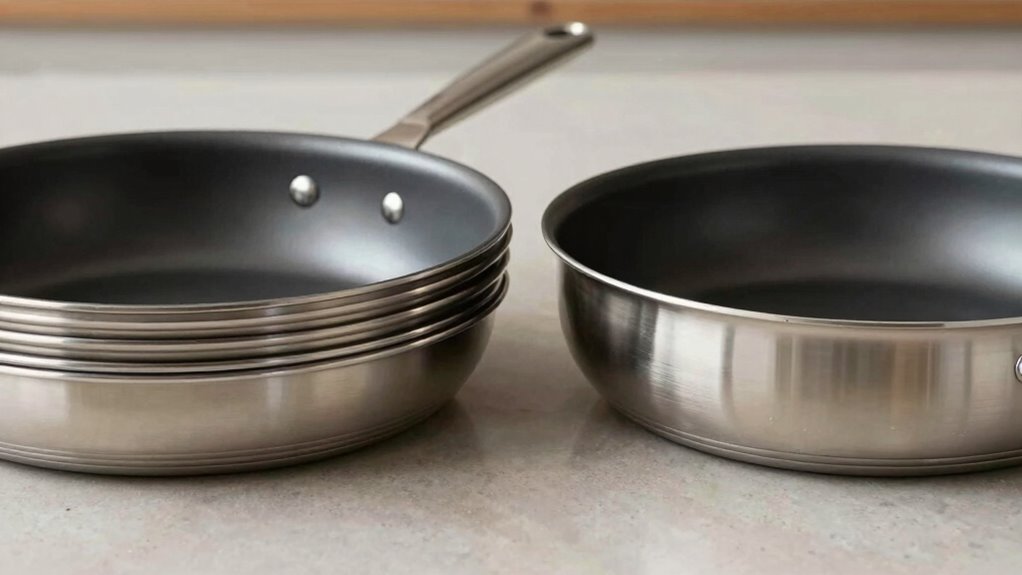
You might wonder if 5-ply cookware truly lasts longer and stays intact better over time. Its material integrity and resistance to warping are often highlighted as key advantages. Let’s explore whether these qualities make 5-ply considerably more durable for your kitchen needs.
Material Integrity Over Time
While both tri-ply and 5-ply cookware are designed to withstand regular use, 5-ply options generally offer superior durability over time. The extra layers enhance layer durability and material longevity, making your cookware more resistant to wear and tear. Additionally, key brands recognized for quality often produce 5-ply options that feature advanced bonding techniques, further extending their lifespan. With 5-ply, you benefit from:
- Improved resistance to warping and dents
- Stronger bonding between layers
- Less risk of delamination
- Better heat distribution maintaining integrity
- Longer-lasting performance despite frequent use
Furthermore, layer bonding techniques used in premium 5-ply cookware contribute significantly to its overall strength and durability. These factors ensure your cookware maintains its integrity longer, reducing the need for replacements. The layering process involved in manufacturing 5-ply cookware creates a more robust structure, which translates into better material longevity over years of cooking. Additionally, selecting cookware with proper heat conduction ensures consistent cooking results and minimizes stress on the layers, further enhancing durability. Regular use can also cause wear and tear, but high-quality 5-ply cookware is designed to withstand such stresses better than tri-ply options. Ultimately, 5-ply cookware is built to guarantee its material integrity over a longer lifespan.
Resistance to Warping
Because of its additional layers, 5-ply cookware generally resists warping better than tri-ply options, especially under high heat or sudden temperature changes. The increased material thickness provides enhanced structural stability, reducing the risk of deformation. This structural stability is particularly important when cooking with high temperatures or rapid temperature fluctuations. The extra layer helps distribute heat more evenly, preventing hot spots that can cause warping. Additionally, the surface finish of 5-ply cookware is often more durable and resistant to scratching, which maintains its integrity over time. The Layered construction of 5-ply cookware not only contributes significantly to its durability and longevity but also helps it withstand the stresses of regular cooking. Furthermore, the connected technology used in some 5-ply cookware can offer insights into optimal cooking conditions, enhancing performance and lifespan. A thicker, multi-layered construction also helps mitigate the effects of thermal expansion, which can cause warping in thinner materials.
How Do Prices Compare for Tri-Ply and 5-Ply Cookware?
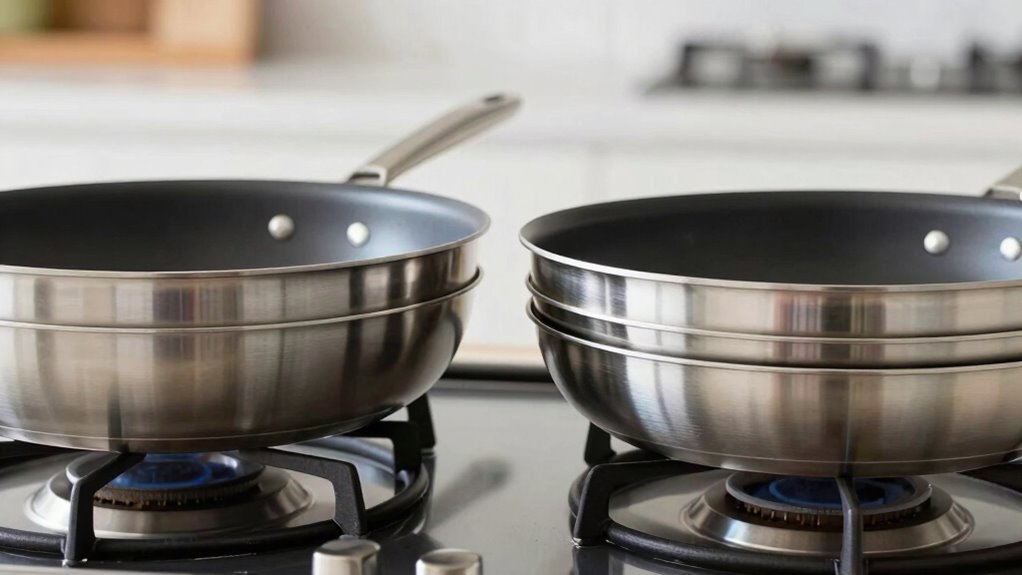
Generally, 5-ply cookware tends to be more expensive than tri-ply options due to its additional layers and enhanced construction. When doing a price comparison, you’ll notice that 5-ply sets often come with a higher upfront cost. However, this can be justified by their durability and better heat retention, potentially improving cost effectiveness over time.
5-ply cookware costs more upfront but offers greater durability and heat retention for long-term value.
Consider these points:
- 5-ply cookware usually costs 20-50% more than tri-ply.
- Premium brands and materials can increase prices further.
- Heavier construction may require more shipping fees.
- Long-lasting durability may reduce replacement costs.
- Some retailers offer bundles at different price points.
Which Materials and Brands Make 5-Ply Worth It?
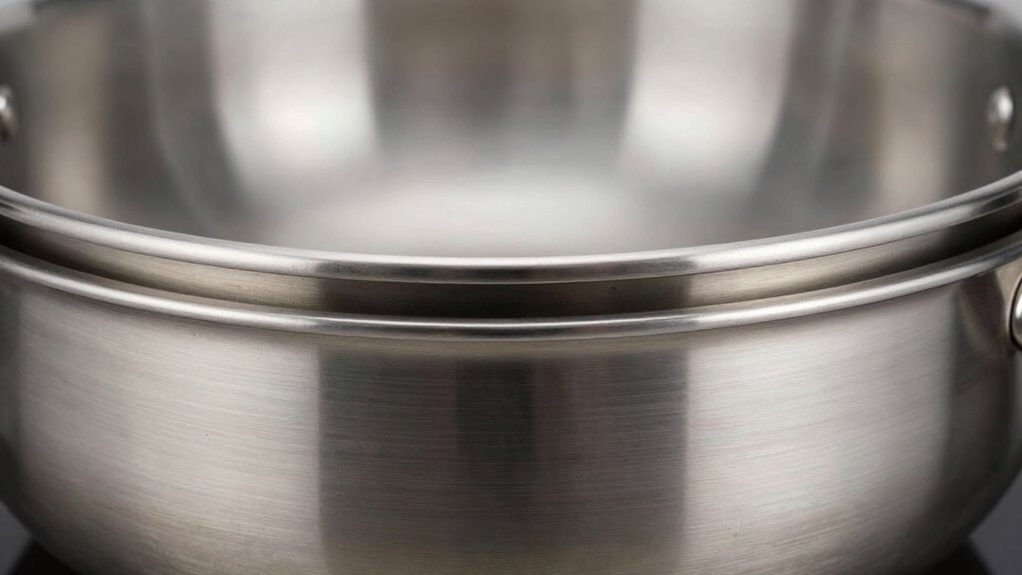
What materials and brands make 5-ply cookware truly worth the investment? High-quality 5-ply options combine stainless steel with aluminum or copper cores, enhancing heat distribution and cooking aesthetics. Brands like All-Clad, Demeyere, and Viking lead the market with durable, well-designed pieces that justify their higher price and heavier cookware weight. These brands focus on superior craftsmanship, ensuring even heating and longevity. The choice of materials affects not just performance but also ease of handling; thicker layers mean more weight but better heat retention. Here’s a quick comparison:
| Brand | Material Focus | Notable Feature |
|---|---|---|
| All-Clad | Stainless steel + aluminum layers | Excellent heat distribution |
| Demeyere | Multi-layer stainless steel + copper | Lightweight for its class |
| Viking | Heavy-duty stainless steel + aluminum | Durable, professional-grade |
Choosing these brands guarantees a blend of style, durability, and cooking performance.
What Should You Consider When Choosing Cookware for Your Kitchen?

Selecting the right cookware for your kitchen involves considering several key factors that influence both your cooking experience and your budget. First, think about cooking aesthetics—do you prefer sleek, modern designs or classic looks that match your kitchen decor? Next, consider storage considerations; choose cookware that fits well in your cabinets or drawers without taking up too much space. Durability is also important, so evaluate materials based on how often you’ll use them. Compatibility with your stove type and ease of cleaning matter too. Finally, assess your budget to find options that balance quality and affordability. Keep these points in mind to select cookware that not only meets your functional needs but also complements your kitchen’s style.
Does Your Cooking Style Affect Whether You Need Tri-Ply or 5-Ply?
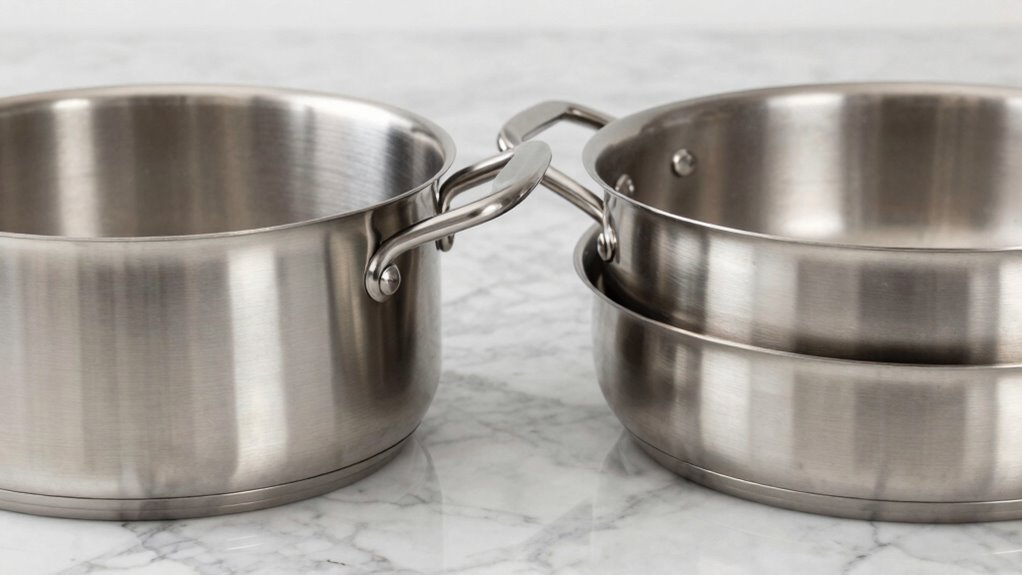
Your cooking style plays a significant role in determining whether you should opt for tri-ply or 5-ply cookware. If you often cook delicate sauces or need precise temperature control, 5-ply offers better heat distribution and cooking safety. For quick, everyday meals, tri-ply may suffice and enhance your kitchen aesthetics with its lighter design. Consider how you prioritize performance versus appearance:
| Cooking Style | Recommended Cookware |
|---|---|
| Focus on even heat & safety | 5-ply |
| Casual, aesthetic cooking | Tri-ply |
| Precision in temperature control | 5-ply |
Matching your cooking habits ensures you get the right layers, balancing safety and style without unnecessary complexity.
Frequently Asked Questions
How Do I Identify if My Cookware Is Tri-Ply or 5-Ply?
To identify if your cookware is tri-ply or 5-ply, check the material composition and manufacturing marks. Look for labels or engravings on the bottom or handle that specify the layers, such as “tri-ply” or “5-ply.” You can also examine the sides; more layers usually mean a thicker, multi-colored edge. If unsure, consult the manufacturer’s website or packaging for detailed info about the construction.
Are There Specific Cooking Techniques That Favor 5-Ply Cookware?
If you want to maximize layered heat and culinary precision, opt for 5-ply cookware during high-heat searing or delicate sauces. For example, when searing steak, the extra layers distribute heat more evenly, preventing hotspots. This guarantees consistent results and better control. Techniques demanding precise temperature management, like caramelizing onions or deglazing, benefit from 5-ply’s superior heat responsiveness, making it ideal for professional-grade cooking.
Can I Use 5-Ply Cookware on Induction Stoves?
Yes, you can use 5-ply cookware on induction stoves if it’s induction compatible. To guarantee this, check the cookware identification—look for a magnetic base or specific induction symbols. Induction stoves require cookware with a magnetic layer, often found in high-quality 5-ply options. Always verify the manufacturer’s details to confirm induction compatibility, so you get the best performance and safety when cooking.
Does the Weight of 5-Ply Cookware Affect Ease of Handling?
The weight of 5-ply cookware can affect handling comfort, making it more challenging to lift and maneuver, especially when fully loaded. You might find it less easy to handle compared to lighter options. Consider weight considerations if you have limited strength or prefer easier handling. To manage this, use both hands and lift with your legs to reduce strain, ensuring safer and more comfortable use during cooking.
Are There Health or Safety Concerns With Multi-Ply Cookware Materials?
You might worry about health or safety concerns with multi-ply cookware materials, but most reputable brands use food-grade stainless steel and bonded metals, which are safe. Investigate material safety, and you’ll find that toxic chemical concerns are minimal if you choose cookware from trusted manufacturers. Always check for certifications like FDA approval, and avoid non-stick coatings with potentially harmful chemicals. Proper use and quality materials keep your cookware safe and healthy.
Conclusion
Choosing between tri-ply and 5-ply cookware is like selecting the right gear for a journey—you want the best tools to match your path. If you cook often and need precise heat control, 5-ply can be your reliable map. But for everyday tasks, tri-ply may be enough. Consider your cooking style and budget, and you’ll find the perfect match to help your culinary adventures flourish like a well-tended garden.