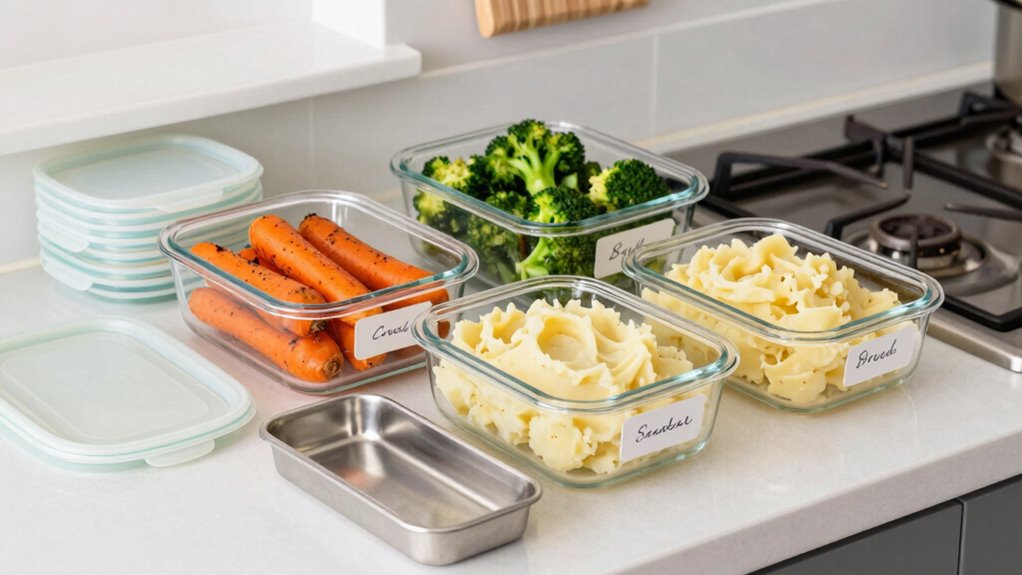
Leftovers typically last 3-4 days in the fridge if stored properly in airtight containers and cooled quickly. Reheat leftovers to at least 165°F (74°C) for safety, and avoid leaving them at room temperature for over 2 hours. For longer storage, freeze leftovers in airtight containers or freezer bags, labeling them with dates. Proper storage and reheating help prevent bacteria growth. To guarantee your leftovers stay fresh and safe, keep exploring this practical storage guide.

Get kitchen staples and gadgets delivered free with Prime
- Fast, free delivery on millions of items
- Prime Video, Amazon Music and more included
- Member-only deals all year
Key Takeaways
- Leftovers are safest to consume within 3-4 days when stored properly in airtight containers.
- Freeze leftovers for longer storage, ideally consuming them within a few months to maintain quality.
- Always reheat leftovers to at least 165°F (74°C) to ensure safety before eating.
- Avoid leaving hot leftovers at room temperature for over 2 hours to prevent bacterial growth.
- Label stored leftovers with dates to track storage duration and prevent consuming spoiled food.
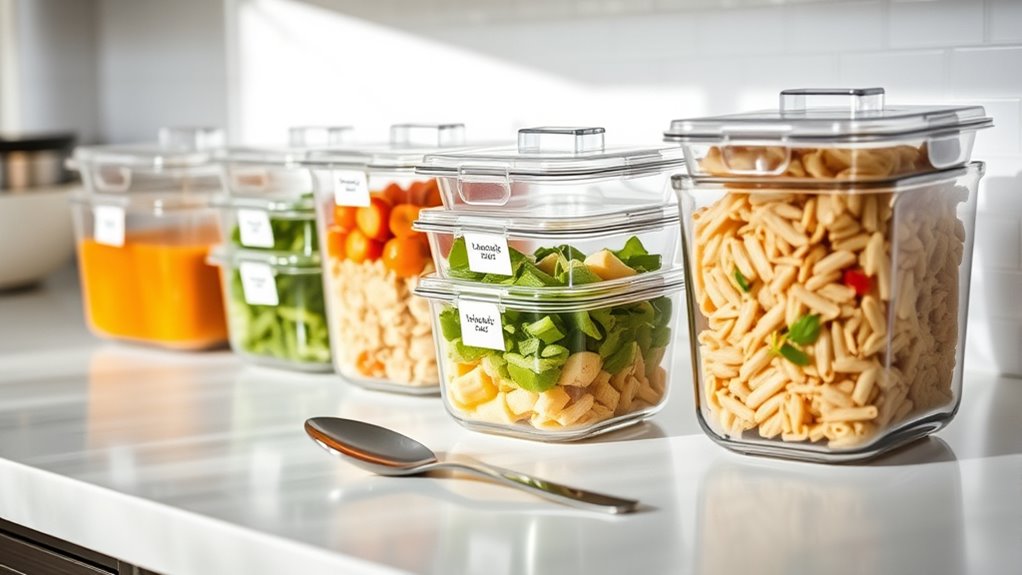
Leftovers can be a great way to save time and reduce food waste, but knowing how to store them properly is vital to keep them fresh and safe. Proper storage starts with understanding how long different foods last and how to handle portions. When you package leftovers, consider using portion control to divide large amounts into smaller, airtight containers. This not only makes reheating easier but also minimizes the risk of repeatedly opening the same container, which can introduce bacteria. Smaller portions cool more quickly and evenly, helping to preserve flavor and texture. Plus, portion control makes it easier to grab a single serving without having to reheat the entire batch, reducing waste and keeping leftovers fresher longer.
Reheating tips are essential in keeping leftovers safe to eat and maintaining their quality. Always reheat leftovers to at least 165°F (74°C) to kill any bacteria that may have grown during storage. Use a microwave, oven, or stovetop, and stir or rotate the food during reheating to ensure even heat distribution. Covering leftovers with a microwave-safe lid or microwave-safe plastic wrap helps retain moisture and heat, preventing them from drying out. When reheating in the microwave, let the food sit for a minute or two after heating to allow heat to distribute evenly. If you’re reheating multiple small portions, do so in separate containers to ensure each piece reaches the proper temperature, especially for foods like rice, meats, or casseroles that are more prone to bacterial growth.
It’s also important to cool leftovers quickly before storing them. Transfer hot food into smaller containers or shallow dishes to speed up cooling. Avoid leaving leftovers out at room temperature for more than two hours, as bacteria can multiply rapidly. Once cooled, label your containers with dates so you know exactly how long they’ve been stored. Generally, leftovers are best consumed within three to four days for safety and ideal taste. For longer storage, consider freezing leftovers in airtight containers or freezer bags, but remember to remove as much air as possible to prevent freezer burn.
airtight food storage containers
As an affiliate, we earn on qualifying purchases.
As an affiliate, we earn on qualifying purchases.
Frequently Asked Questions
Can Leftovers Be Frozen Indefinitely Without Spoilage?
Leftovers can’t be frozen indefinitely without spoilage, even if you maintain a proper storage temperature. Over time, freezer burn can develop, affecting texture and flavor, while bacteria can still grow if temperature control isn’t consistent. To maximize freshness, store leftovers in airtight containers and keep your freezer at 0°F (-18°C). Regularly check for signs of freezer burn, and consume leftovers within recommended time frames for safety and quality.
How Can I Tell if Leftovers Are Still Safe to Eat?
You can tell if leftovers are still safe to eat by checking for food poisoning risks and visual spoilage indicators. Look for any strange odors, mold, or discoloration. If the food smells off or has a slimy texture, discard it. Even if it looks fine, avoid eating leftovers that have been stored beyond recommended times, as bacteria can grow and cause illness. When in doubt, it’s safer to throw it out.
Are There Specific Containers Best for Storing Leftovers?
Use airtight containers or microwave-safe options to store leftovers, as they keep food fresh, prevent spills, and make reheating easier. Choose containers that fit your fridge space and are durable enough for repeated use. Clear lids or bodies help you identify contents quickly, reducing waste. When you prioritize airtight and microwave-safe containers, you guarantee your leftovers stay safe, tasty, and ready for your next meal.
Should I Reheat Leftovers Multiple Times?
You should avoid reheating leftovers multiple times because it jeopardizes reheat safety and flavor preservation. Each reheating increases the risk of bacterial growth and can degrade taste and texture. To stay safe and enjoy your leftovers at their best, reheat only once and make certain the food reaches an internal temperature of 165°F. This way, you protect your health and enjoy flavorful, fresh-tasting leftovers.
How Does Leftover Storage Time Vary by Food Type?
Leftover longevity varies vividly by food type, so you should store seafood and poultry securely in the fridge, following proper refrigeration techniques. Dairy and cooked vegetables stay safe for a few days, while hearty meats and soups last longer with solid food preservation methods like airtight containers. Always aim to apply appropriate refrigeration techniques, label leftovers with dates, and consume perishable foods promptly to prevent spoilage and guarantee safety.
As an affiliate, we earn on qualifying purchases.
Conclusion
Remember, proper storage is your secret weapon against waste—think of it as guarding a treasure chest. By following these simple tips, you’ll keep your leftovers fresh and delicious, just like a chef’s prized recipe. Don’t let your efforts go to waste; instead, treat your leftovers like a valuable story waiting to be retold. With a little care, you’ll enjoy tasty bites long after the meal has ended—proof that good things truly last when stored well.
As an affiliate, we earn on qualifying purchases.
As an affiliate, we earn on qualifying purchases.
Halloween Picks
halloween
As an affiliate, we earn on qualifying purchases.