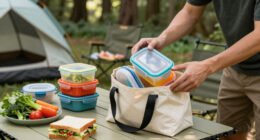
Choosing pantry containers depends on your priorities: glass offers excellent food safety, is non-reactive, and looks stylish, but it can break easily. Plastic containers are lightweight and affordable but may contain chemicals like BPA and stain over time. Metal is durable and pest-resistant, yet it may react with acidic foods. To find the best fit for your needs and style, discover more about each material’s benefits and drawbacks.

Get kitchen staples and gadgets delivered free — and shop member deals
- Fast, free delivery on millions of items
- Access to Prime Big Deal Days deals on October 6–7
- Prime Video, Amazon Music and more included
Key Takeaways
- Glass containers are non-reactive, odor-free, and highly recyclable, making them safe and environmentally friendly options.
- Plastic containers are lightweight and affordable but may contain BPA and absorb odors or stains over time.
- Metal containers are durable and pest-resistant, ideal for dry goods, but can react with acidic foods and dent easily.
- Glass offers excellent visibility for monitoring contents, while plastic and metal may require labels or additional transparency features.
- Consider safety, durability, environmental impact, and aesthetic preferences when choosing between glass, plastic, and metal pantry containers.
BPA-free glass pantry containers
As an affiliate, we earn on qualifying purchases.
As an affiliate, we earn on qualifying purchases.
How to Choose the Best Pantry Container Material for Your Needs
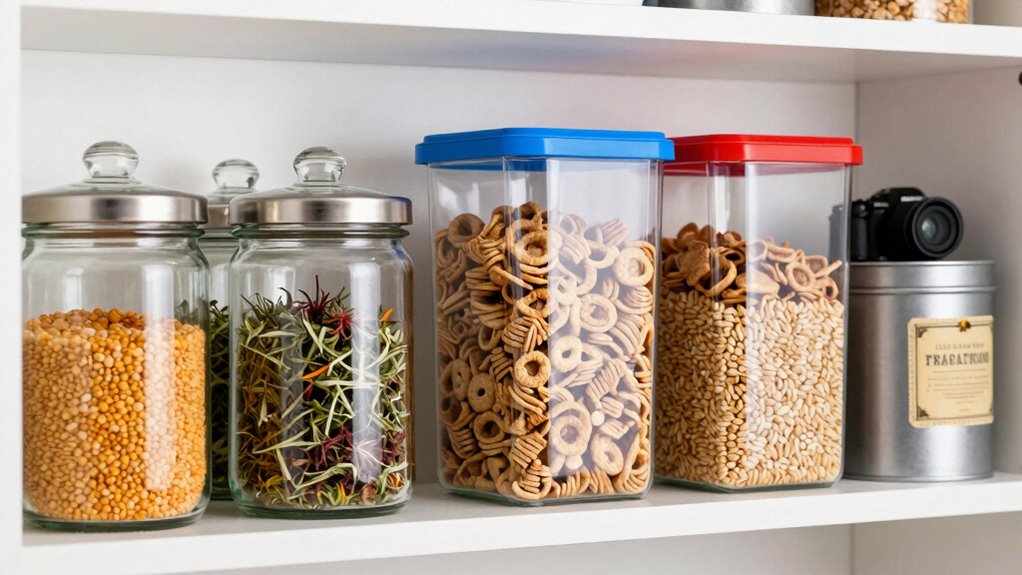
Choosing the right pantry container material depends on your specific needs and preferences. You want to prioritize food safety, ensuring that the material won’t leach harmful chemicals or absorb odors. For storage efficiency, consider how well the container stacks or fits into your space. Glass containers are excellent for food safety because they’re non-toxic and don’t stain or retain odors. Plastic options are lightweight and versatile, making them easy to handle and store, but check for BPA-free labels to guarantee safety. Metal containers offer durability and a sleek look, but may not be ideal for all food types due to potential corrosion. Additionally, material safety is a crucial consideration to prevent any chemical leaching into your food. By evaluating these factors, you can select a pantry container material that balances safety, convenience, and the best storage efficiency. Properly choosing these materials can also contribute to reducing plastic waste and environmental impact.
airtight plastic food storage containers
As an affiliate, we earn on qualifying purchases.
As an affiliate, we earn on qualifying purchases.
What Are the Main Types of Pantry Containers?

Understanding the main types of pantry containers can help you make better choices for your storage needs. The most common types include glass, plastic, and metal containers. Each offers different benefits for food safety and container maintenance. Glass containers are durable, non-reactive, and easy to clean, making them ideal for preserving food freshness. Plastic containers are lightweight and affordable but require careful handling to prevent stains and odors. Metal containers are sturdy and often used for dry goods, offering excellent protection against pests. Additionally, selecting the right material can influence food safety and overall storage longevity. Proper material selection can also impact the ease of cleaning and the longevity of your storage solutions. When choosing pantry containers, considering their resistance to corrosion and staining can help maintain their appearance and functionality over time. Here’s a quick comparison:
| Material | Food Safety | Maintenance | Best Use |
|---|---|---|---|
| Glass | High | Easy | Spices, grains |
| Plastic | Moderate | Moderate | Snacks, dried foods |
| Metal | High | Easy | Flour, sugar |
As an affiliate, we earn on qualifying purchases.
How Do Glass Containers Help Keep Food Fresh?
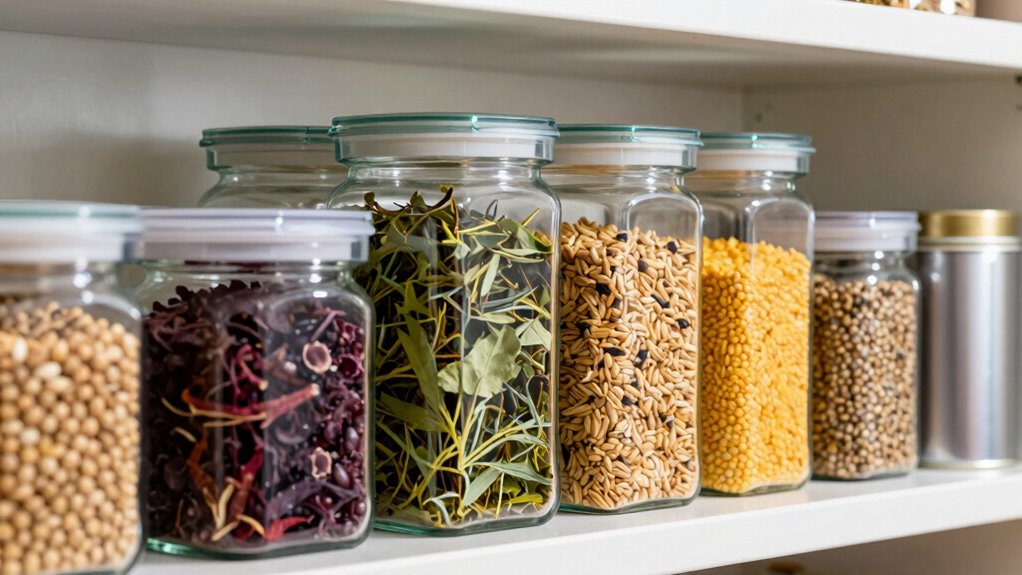
Glass containers create an airtight seal that keeps air and moisture out, preserving your food’s freshness. They also help maintain a consistent temperature, slowing down spoilage. Plus, their transparency makes it easy to see and monitor what’s inside without opening them. Additionally, easy tips can help you maximize their effectiveness and ensure your food stays fresh longer. Proper lid sealing techniques can further enhance the benefits of using glass containers. Incorporating vintage-inspired storage solutions can also add a nostalgic touch to your pantry while keeping your food fresh. Using airtight seals made from quality materials can further improve freshness and prevent leaks.
Airtight Seal Benefits
Because airtight seals are essential for preserving freshness, glass containers are particularly effective at keeping your food from spoiling. The tight seal prevents air and moisture from entering, which are primary factors in food degradation. This air and moisture barrier enhances food preservation by slowing down spoilage and maintaining flavor, texture, and aroma longer. Additionally, the secure seal improves storage efficiency by reducing the risk of leaks and spills, making it easier to stack containers neatly in your pantry. Unlike some plastic or metal options, glass containers with airtight lids create a reliable barrier that keeps out pests and contaminants. Proper sealing also contributes to overall food safety by preventing contamination and spoilage. Furthermore, the material durability of glass ensures long-term use without degradation of the container itself. Overall, the airtight seal in glass containers helps you extend shelf life, minimizes waste, and ensures your stored food stays fresh and flavorful for as long as possible.
Temperature Regulation Impact
Airtight seals in glass containers not only keep out air and moisture but also help stabilize temperature fluctuations that can accelerate food spoilage. Glass’s thermal properties allow it to resist rapid temperature changes, reducing the risk of material expansion that can compromise food safety. Unlike plastic, which can expand and contract with temperature shifts, glass remains more stable, maintaining a consistent environment inside. This stability minimizes the chances of condensation forming, which bacteria and mold thrive on. By resisting temperature fluctuations, glass containers preserve food freshness longer. Plus, their inert nature means they won’t absorb or transfer heat as quickly, helping to keep contents cooler or warmer as needed. Additionally, the regulatory advantages of glass—such as its non-reactive nature—further support its effectiveness in maintaining food quality over time. Furthermore, thermal conductivity plays a key role in how effectively glass manages internal temperatures, contributing to its reputation as a reliable storage material. The energy efficiency of glass is also notable, as it can help reduce the need for additional cooling or heating. Moreover, glass’s ability to resist chemical corrosion ensures that stored foods do not interact with leaching substances, thereby maintaining their purity and safety. In addition, the reusability and recyclability of glass make it an environmentally friendly choice for food storage.
Visibility and Monitoring
Have you ever struggled to identify what’s inside your pantry containers without opening them? Glass containers offer excellent visibility, making monitoring food freshness simple. You can easily spot whether flour, pasta, or snacks are running low. With clear surfaces, you don’t need to rely solely on labeling options, though those help for quick identification. Plus, their stackability features make organizing your pantry neater, allowing you to see everything at a glance. Imagine:
- Transparent walls revealing contents instantly
- No need for guesswork or opening multiple jars
- Easier expiration date checks
- Streamlined, tidy shelves with uniform containers
This clarity helps keep food fresh longer since you’re less likely to forget about older items. Support Breakfast Glass containers simplify monitoring, reducing waste and maintaining freshness effortlessly. Incorporating food storage best practices and understanding food preservation techniques can further enhance your pantry organization and food storage efficiency. Additionally, the durability of glass makes it a sustainable choice that minimizes plastic waste over time.
As an affiliate, we earn on qualifying purchases.
What Are the Pros and Cons of Plastic Pantry Containers?
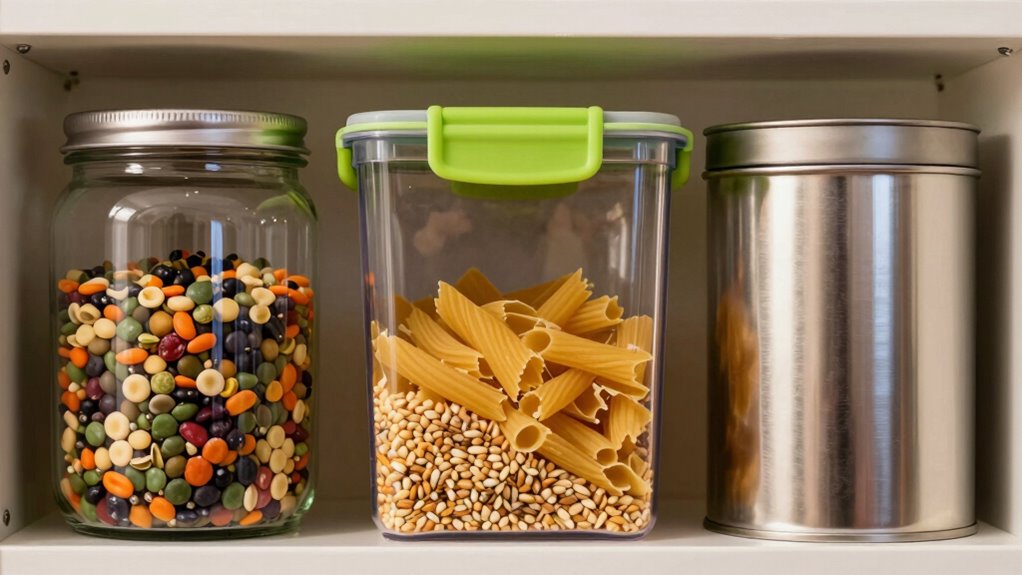
Are plastic pantry containers a smart choice for your storage needs? They’re lightweight and affordable, making them a popular option. Plastic is generally cost-efficient, allowing you to buy in bulk and save money over time. However, consider food safety; some plastics may contain chemicals like BPA, which can leach into your food if not BPA-free. Look for containers labeled as food-safe and BPA-free to ensure your pantry remains healthy. Plastic also resists breaking, reducing the risk of accidents, but it can stain or absorb odors over time. Additionally, clear plastic containers help you see contents easily, saving you time and effort. Overall, plastic offers convenience and affordability, but you should choose high-quality, food-safe options to maximize benefits.
Are Metal Containers a Good Choice for Your Pantry?

Metal containers can be an excellent option for your pantry because they’re durable and provide a sleek, modern look. Their metal durability guarantees they withstand daily use without cracking or breaking, making them a reliable choice. Plus, they enhance pantry aesthetics with their clean, polished appearance. Picture:
Metal containers are durable, sleek, and perfect for modern, organized pantries.
- Shiny, reflective surfaces that add brightness
- Streamlined shapes fitting neatly on shelves
- Rust-resistant finishes for longevity
- Compact designs saving space
These features not only keep your space organized but also elevate its style. Metal containers are lightweight yet sturdy, making them easy to handle. They also resist pests and moisture better than some other materials. Additionally, sound design can be incorporated into the manufacturing process to enhance the auditory experience of handling these containers. Overall, they combine practicality with a contemporary vibe that suits any pantry.
Which Material Is Safer for Food Storage and Preservation?

When choosing materials for food storage, safety and preservation should be top priorities. Glass containers excel in food safety because they are non-reactive, preventing chemical leaching that could contaminate your food. They are also easy to clean and don’t absorb odors or stains, maintaining the integrity of stored items. Plastic containers, while lightweight and convenient, can sometimes contain BPA or other chemicals that pose health risks, especially if damaged or improperly labeled. Metal containers are durable but may react with acidic foods, affecting safety and flavor. Regarding material sustainability, glass is highly recyclable and long-lasting, making it an eco-friendly choice. Ultimately, for safest food storage and better sustainability, glass containers often come out on top.
How Durable Are Different Pantry Container Materials?
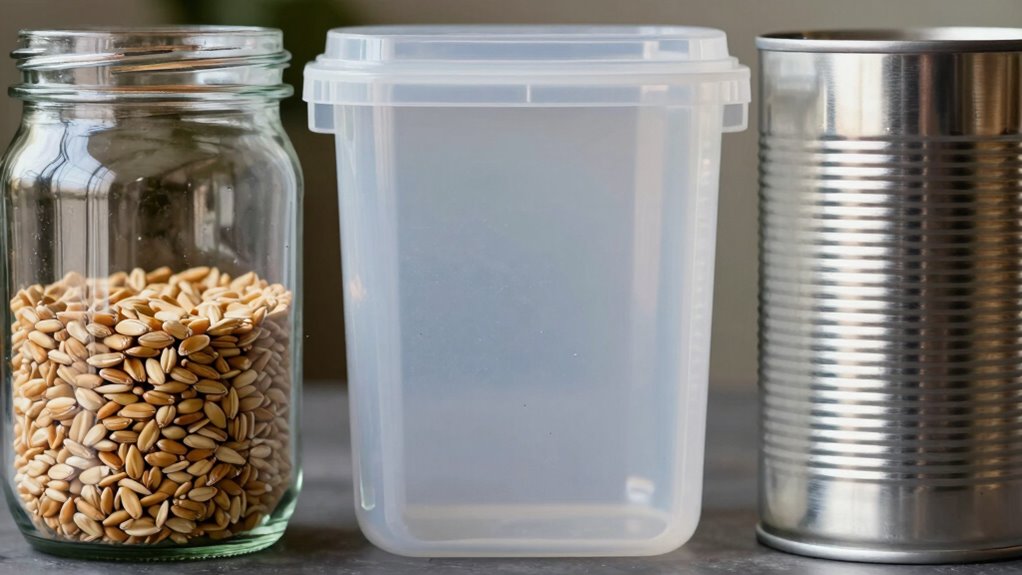
You want your pantry containers to withstand everyday use without cracking or breaking. Different materials vary in impact resistance, meaning some can handle drops better than others. Over time, wear and tear also affect their durability, so it’s important to choose wisely.
Impact Resistance Levels
Understanding the impact resistance of pantry container materials is essential for choosing durable storage options. Different materials vary in their breakage potential and scratch resistance, affecting how well they withstand accidental drops or knocks. Glass containers are fragile; a fall can lead to shattering, making their breakage potential high. Plastic options are more resilient but can crack under strong impact, especially if thin or old. Metal containers are highly durable, resisting most impacts without damage. Visualize dropping a container:
- Glass shattering into shards
- Plastic denting or cracking
- Metal denting but remaining intact
- Plastic or glass scratching easily
Impact resistance levels determine how well your containers withstand everyday accidents, helping you select the right material for your pantry’s durability.
Material Wear Over Time
Different pantry container materials age and degrade at varying rates, impacting their long-term durability. Over time, plastic may develop surface scratches that weaken its appearance and, in some cases, compromise its integrity. These scratches can also harbor bacteria, making cleaning more challenging. Glass containers resist surface scratches better but can chip or crack if mishandled, leading to material degradation. Metal containers are highly durable but can corrode or dent with repeated use. As materials wear, their protective coatings or surfaces may deteriorate, reducing their effectiveness in preserving food. Regular use accelerates this process, so choosing a container with high resistance to surface scratches and minimal material degradation ensures longevity. Ultimately, understanding how each material ages helps you select the most durable pantry containers for long-term use.
What Do Aesthetics and Kitchen Style Have to Do With Container Choice?
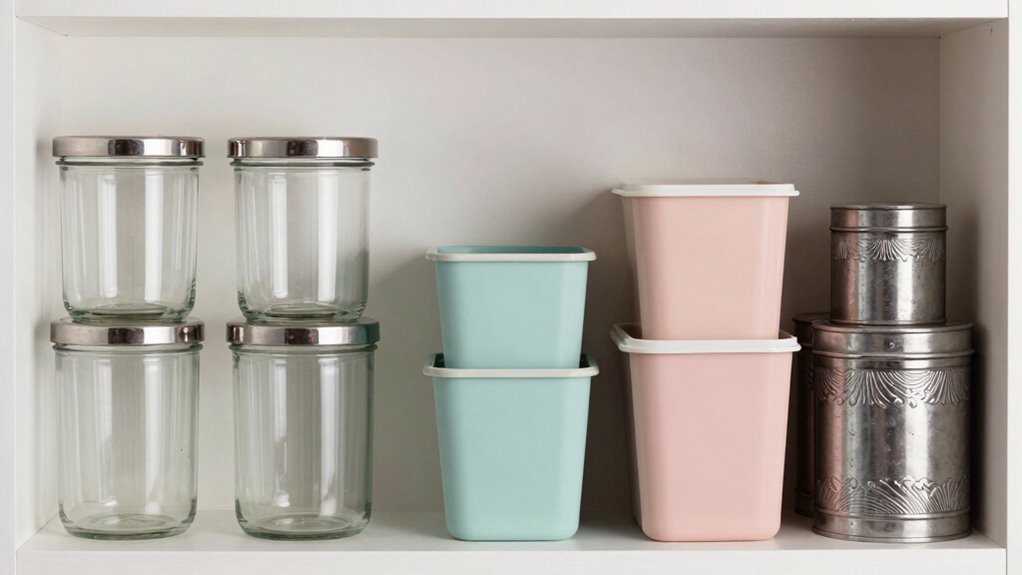
Have you ever considered how the look and feel of your kitchen influence your choice of pantry containers? Your decor and color scheme play a big role in creating a cohesive style. For a modern, minimalist kitchen, sleek glass jars with clean lines might suit best. If your decor leans toward warm, rustic charm, metal containers with vintage touches could complement the space. Bright, colorful kitchen decor might call for vibrant plastic containers that add a pop of color. Visual harmony depends on matching container style with your overall design. Think about:
- Clear glass for transparency and elegance
- Matte metal for industrial or vintage vibe
- Bright plastic to energize a playful kitchen
- Coordinated colors to unify the decor
Choosing containers that fit your kitchen style elevates both function and aesthetics.
Are Glass, Plastic, or Metal Containers Better for the Environment?

When choosing pantry containers, considering their environmental impact is essential, as some materials are more sustainable than others. Glass containers are highly eco friendly because they are made from natural materials and are 100% recyclable with proper recycling practices. They can be reused endlessly, reducing waste. Plastic containers often use less energy during manufacturing but may contain eco unfriendly materials like BPA or other chemicals. Although some plastics are recyclable, their recycling practices are less efficient, and many still end up in landfills. Metal containers, especially stainless steel, are durable and recyclable, making them a sustainable choice. They typically require more energy to produce but last longer. Overall, glass and metal containers tend to be better options for the environment than most plastics.
Frequently Asked Questions
Can Pantry Containers Be Safely Used in the Microwave or Oven?
Yes, you can safely use some pantry containers in the microwave or oven, but it depends on their material. Glass containers are generally microwave-safe and oven-suitable, making them versatile. Plastic containers may be microwave-safe if labeled as such, but avoid using them in the oven. Metal containers are unsafe for microwave use and should never go in the oven. Always check the manufacturer’s guidelines for microwave safety and oven suitability before heating.
How Do Different Materials Affect the Storage of Liquids or Oily Foods?
Different materials impact liquid preservation and oil separation in your pantry. Glass containers are ideal because they don’t absorb odors or stains, keeping liquids fresh and preventing oil separation. Plastic can sometimes be prone to staining and retaining smells, which affects liquid quality. Metal containers, often used for dry goods, aren’t suitable for liquids as they can corrode or impact flavor. Choose glass for better preservation of liquids and minimal oil separation.
Are There Any Health Risks Associated With Plastic Leaching Into Food?
Yes, there are health risks associated with plastic leaching into food due to plastic chemicals like BPA or phthalates. When you store food in plastic containers, especially if heated or scratched, these chemicals can migrate into your food, potentially impacting your health. To guarantee food safety, choose BPA-free plastics, avoid heating plastic containers, and opt for glass or metal when possible, reducing your exposure to harmful plastic chemicals.
What Are the Best Practices for Cleaning and Maintaining Each Material?
Don’t let cleaning slip through your fingers. For glass, wash with warm soapy water and avoid sudden temperature changes to prevent cracks. Plastic containers should be scrubbed with non-abrasive brushes and air-dried thoroughly. Metal containers need gentle wiping and periodic polishing to prevent tarnish. Follow regular maintenance routines, like checking for damage, to keep your pantry containers in top shape. A little upkeep goes a long way!
How Do Container Materials Impact Pantry Organization and Space Utilization?
Choosing container materials affects your pantry organization and space use. Glass offers durability and aesthetic appeal, making your shelves look sleek while being easy to see inside. Plastic is lightweight and versatile, helping you maximize space with stackable options. Metal containers are sturdy and compact, ideal for heavy items. Your choice impacts not just durability but also how neatly your pantry appears, influencing overall space efficiency and visual appeal.
Conclusion
Choosing the right pantry container depends on your needs, preferences, and values. While glass offers excellent preservation and aesthetics, plastic provides affordability and versatility, and metal boasts durability. remarkably, some experts argue that glass might be the most sustainable option long-term because it’s reusable and recyclable without degradation. Ultimately, your choice balances safety, durability, and eco-friendliness—so trust your instincts and select the material that fits your lifestyle best.
Fall Picks
fall essentials
As an affiliate, we earn on qualifying purchases.