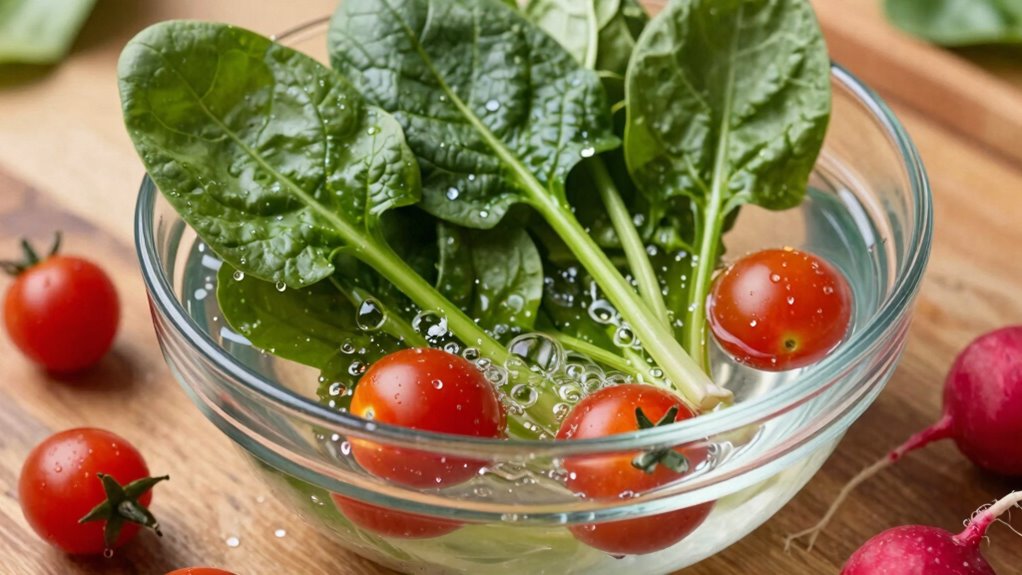
To wash produce without overdoing it, rinse most items under cold, running water and gently use a soft brush or your hands for sturdier vegetables like carrots or potatoes. For delicate fruits or greens, stick to a gentle rinse and avoid soaking or harsh scrubbing. Organic produce may need less cleaning, just a quick rinse. Proper handling and storage help keep your produce fresh longer. Keep exploring to learn more tips for maintaining your fruits and veggies in top condition.
Key Takeaways
- Rinse produce under cold, running water without soaking to prevent moisture damage.
- Use a soft brush or your hands for sturdier vegetables, and gentle rinsing for delicate items.
- Avoid scrubbing or excessive handling to preserve texture and flavor.
- Limit washing time, especially for delicate greens and berries, to prevent spoilage.
- Consider vinegar water quick rinses for extra cleaning without over-soaking.
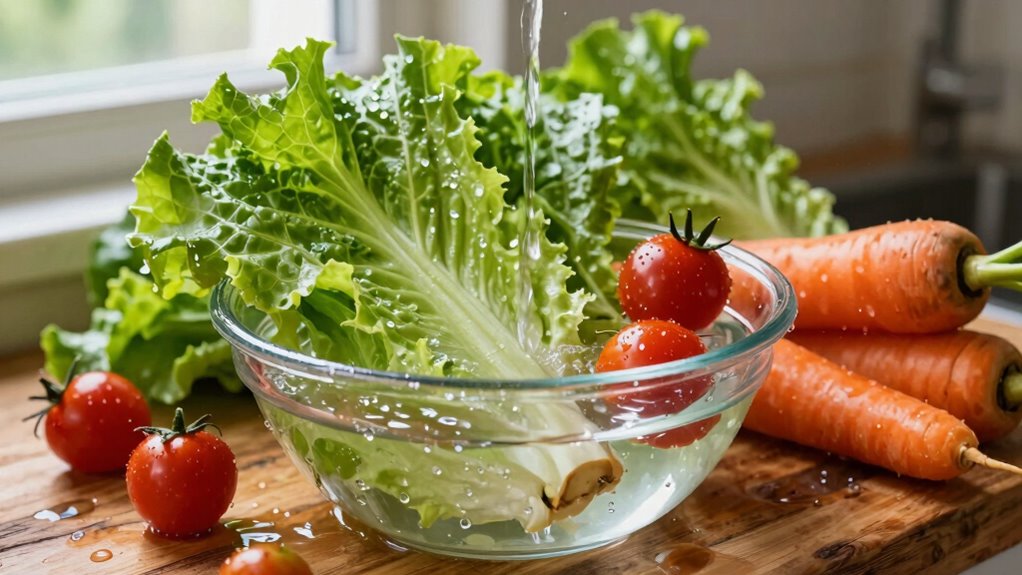
Washing produce properly is essential for removing dirt, bacteria, and pesticides, but overdoing it can damage delicate fruits and vegetables. You want to strike a balance: cleaning thoroughly without causing bruising or loss of flavor. One way to do this is by choosing organic alternatives when possible, which often have fewer chemical residues. Organic produce typically requires less aggressive washing, but it still benefits from gentle rinsing to remove soil and natural residues. If you’re unsure whether a fruit or vegetable is organic, you can opt for a softer approach, using minimal water and avoiding harsh scrubbing.
When it comes to washing, start by rinsing your produce under cold, running water. This simple method is effective for most items and helps rinse away surface contaminants. For sturdier vegetables like carrots or potatoes, you can use a soft brush or your hands to gently scrub away dirt. For more delicate items like berries or leafy greens, a gentle rinse is enough—avoid soaking them for too long, as excess moisture can cause spoilage. In some cases, especially with produce that’s been stored for a while, a quick soak in water with a splash of vinegar can help remove bacteria and pesticides, but don’t leave them submerged for extended periods to prevent damage. Additionally, proper storage plays a critical role in maintaining freshness and reducing the need for excessive washing. Proper storage not only extends the shelf life but also minimizes the need for repeated washing, preserving the produce’s quality. Using appropriate storage techniques can further reduce spoilage and the necessity of frequent washing, ensuring your produce stays fresher longer. Being mindful of biodiversity and choosing sustainable storage methods supports both your health and the environment. Incorporating proper handling practices, such as avoiding unnecessary contact or rough handling, can also help keep produce in optimal condition.
As an affiliate, we earn on qualifying purchases.
Frequently Asked Questions
Is It Necessary to Use Soap or Special Cleaners?
You don’t need soap or special cleaners to wash produce. Chemical cleaning isn’t necessary and can leave residues. Instead, you can rely on natural rinsing by scrubbing produce under cold, running water. Gently rubbing fruits and vegetables helps remove dirt and bacteria effectively. If you’re extra cautious, use a brush for tougher skins. This simple method keeps your produce safe and clean without risking chemical contamination.
Can Washing Remove All Pesticides and Bacteria?
Washing produce helps reduce pesticide residue and bacterial contamination, but it doesn’t remove everything. Rinsing produce thoroughly under cold running water can substantially lower these risks, especially when you gently scrub the surface. Avoid using soap or special cleaners, as they aren’t necessary and might leave residues. While washing improves safety, it’s best to buy organic or peel produce when possible for extra protection against pesticides and bacteria.
Should I Peel Produce After Washing?
You might think peeling is the quick fix, but it’s not always necessary. Peeling benefits include removing residual pesticides and bacteria, but it also strips away nutrients and skin preservation. If the produce has a thick, inedible skin, peeling can be a good idea. However, for fruits with edible skins, washing thoroughly often suffices, letting you enjoy the full range of vitamins without losing the benefits of the skin.
How Long Should I Soak Produce?
You should soak produce for about 5 to 10 minutes to effectively remove dirt and bacteria without harming its produce preservation. Use gentle washing techniques, like swishing produce in a bowl of clean water, rather than prolonged soaking. If you’re dealing with leafy greens or delicate items, shorter times work better. Remember, over-soaking can lead to nutrient loss and spoilage, so keep it brief and gentle for the best results.
Is Cold Water Enough for Washing All Types of Produce?
Cold water is generally enough for washing most produce and helps preserve their freshness by maintaining ideal water temperature. It effectively removes dirt and surface bacteria without damaging delicate fruits or vegetables. For sturdier produce like melons or root vegetables, you might consider slightly warmer water, but cold water usually works well for overall produce preservation. Always rinse thoroughly and gently to avoid bruising or over-washing.
vegetable and fruit cleaning spray
As an affiliate, we earn on qualifying purchases.
As an affiliate, we earn on qualifying purchases.
Conclusion
Now that you know how to wash your produce properly, you can enjoy your healthy snacks without worry. Just remember, sometimes less is more, so don’t go overboard with scrubbing or soaking. A gentle rinse and a quick scrub will do the trick, keeping your fruits and veggies fresh and safe. Keep it simple, and you’ll reap the benefits of clean produce — it’s a win-win for your health and your kitchen routine.
As an affiliate, we earn on qualifying purchases.
As an affiliate, we earn on qualifying purchases.