To keep food safer at home, follow the cooling rule: refrigerate leftovers within two hours of cooking, or within one hour if it’s above 90°F. Cool large portions quickly by dividing them into shallow containers for better airflow. Store raw meats on the bottom shelf and label leftovers with dates for rotation. Proper organization, airflow, and temperature control help prevent bacteria growth. Stick with these practices, and you’ll discover more tips for safe food storage and handling.

Get kitchen staples and gadgets delivered free with Prime
- Fast, free delivery on millions of items
- Prime Video, Amazon Music and more included
- Member-only deals all year
Key Takeaways
- Refrigerate leftovers within 2 hours of cooking, or 1 hour if temperatures exceed 90°F (32°C).
- Divide large portions into shallow containers for quick cooling.
- Avoid overloading the fridge to ensure proper airflow and consistent temperature.
- Store raw meats on the bottom shelf to prevent cross-contamination.
- Regularly monitor refrigerator temperature to maintain safe storage conditions.
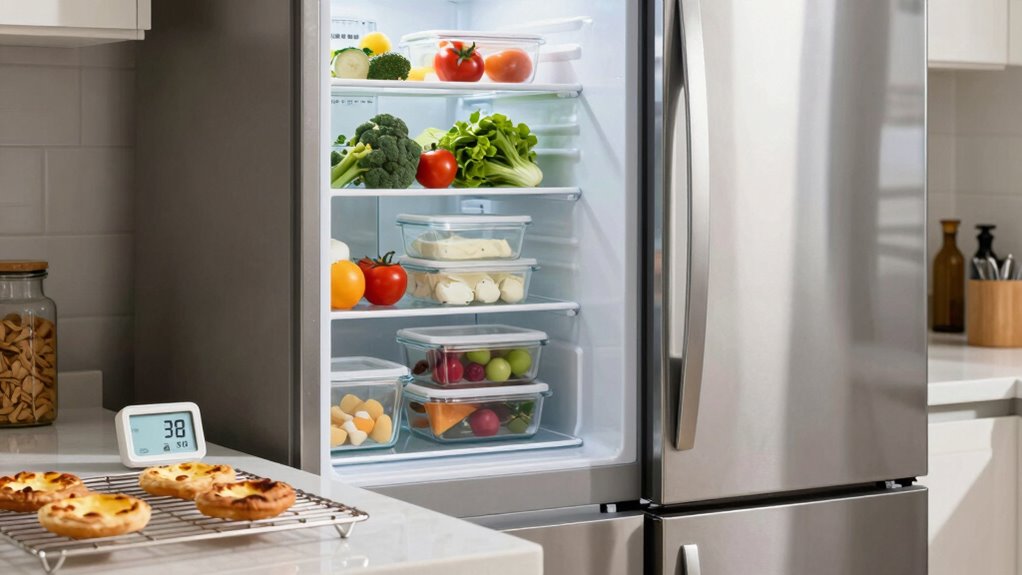
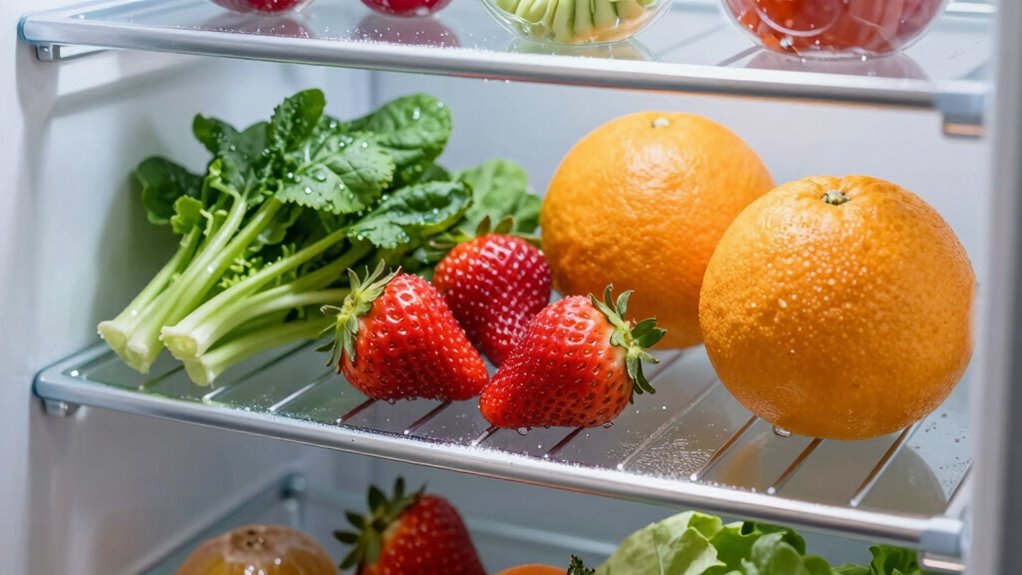
Understanding the cooling rule means knowing how quickly you should get hot foods into the fridge after cooking. The general guideline is to refrigerate leftovers within two hours of cooking. If the room temperature exceeds 90°F (32°C), that window shrinks to just one hour. This prevents the food from lingering in the temperature danger zone, which is between 40°F and 140°F (4°C and 60°C). In this range, bacteria can multiply rapidly, turning safe food into a health hazard. To make this process easier, divide large portions into smaller, shallow containers before refrigeration. This speeds up cooling and helps the entire dish reach a safe temperature faster. Proper food cooling techniques can further ensure that bacteria do not have an opportunity to grow during the cooling process. Proper food storage isn’t just about the fridge temperature; it’s also about how you organize your food. Keep raw meats on the bottom shelf to prevent juices from dripping onto other foods. Store leftovers in airtight containers to prevent contamination and dehydration. Label everything with dates so you use older items first, reducing waste and the chance of consuming spoiled food. When cooling hot foods, avoid stacking or overloading your fridge, as this can block airflow and make it harder for the temperature to stay consistent. Maintaining good airflow helps keep all stored foods at a safe, *preferable* temperature. Additionally, understanding food safety principles can further help you prevent foodborne illnesses. Being aware of temperature control techniques during storage is also crucial for optimal food safety, and regularly monitoring fridge temperatures ensures proper food storage conditions.
airtight food storage containers
As an affiliate, we earn on qualifying purchases.
As an affiliate, we earn on qualifying purchases.
Frequently Asked Questions
How Long Can Food Stay in the “Danger Zone” Before Spoiling?
You should not leave food in the danger zone—between 40°F and 140°F—for more than two hours, as bacteria can grow rapidly and compromise food safety. If the temperature is above 90°F, cut that time to just one hour. Proper temperature control is essential to prevent spoilage and foodborne illnesses. Always refrigerate or keep food hot to maintain safety and preserve its freshness.
Does the Cooling Rule Apply to All Types of Leftovers?
Yes, the cooling rule applies to all types of leftovers to guarantee food safety. Proper cooling techniques help prevent bacteria growth, which can cause foodborne illnesses. You should divide leftovers into smaller portions, use shallow containers, and refrigerate promptly within two hours. This simple step is essential for maintaining the safety and quality of your leftovers, no matter the type of food, by keeping it out of the danger zone.
What’s the Best Method to Cool Large Pots Quickly?
To cool large pots quickly, remove the lid to let heat escape. Then, place the pot in an ice bath, making sure the water reaches up to the level of the food. Stir occasionally to release heat evenly. This method speeds up cooling, prevents bacteria growth, and keeps your leftovers safe. Always monitor the temperature and refrigerate promptly once cooled to 41°F or below.
Can Cooling Be Skipped if Food Is Reheated Thoroughly?
You might think reheating thoroughly makes cooling unnecessary, but refrigeration myths suggest otherwise. Cooling techniques are essential to prevent bacterial growth, which can thrive even after reheating if food has been left out too long. Skipping proper cooling risks food safety, as harmful bacteria may survive reheating. Always cool leftovers promptly, then reheat to the proper temperature, ensuring your food remains safe to eat and reducing the risk of foodborne illness.
How Do Different Storage Containers Affect Cooling Times?
Different storage containers considerably impact cooling times. Materials like metal or shallow, wide containers promote faster cooling because they increase surface area and conduct heat efficiently. In contrast, thick or deep containers, such as glass or plastic, slow down cooling by trapping heat. Choosing the right container type for leftovers helps you cool food safely and quickly, reducing bacteria growth and ensuring your food stays fresh longer.
As an affiliate, we earn on qualifying purchases.
Conclusion
Think of the cooling rule as your personal lighthouse, guiding your food safely through the stormy seas of bacteria. Just as a lighthouse keeps ships from crashing, proper cooling keeps food from spoiling or causing harm. By wielding this rule like a steadfast beacon, you protect your home and loved ones from unseen dangers. Embrace it as your culinary compass—ensuring every meal stays fresh and safe, steering clear of trouble with confidence and care.
As an affiliate, we earn on qualifying purchases.
As an affiliate, we earn on qualifying purchases.
Fall Picks
fall essentials
As an affiliate, we earn on qualifying purchases.