
Washing raw chicken can cause bacteria like Salmonella and Campylobacter to splash onto your kitchen surfaces, utensils, and other foods. This spreads germs everywhere and increases the risk of cross-contamination, which can make everyone sick. Instead, focus on cooking chicken thoroughly to the right temperature. If you want to understand how washing spreads germs and the best food safety practices, you’ll find useful tips if you keep exploring.

Get kitchen staples and gadgets delivered free with Prime
- Fast, free delivery on millions of items
- Prime Video, Amazon Music and more included
- Member-only deals all year
Key Takeaways
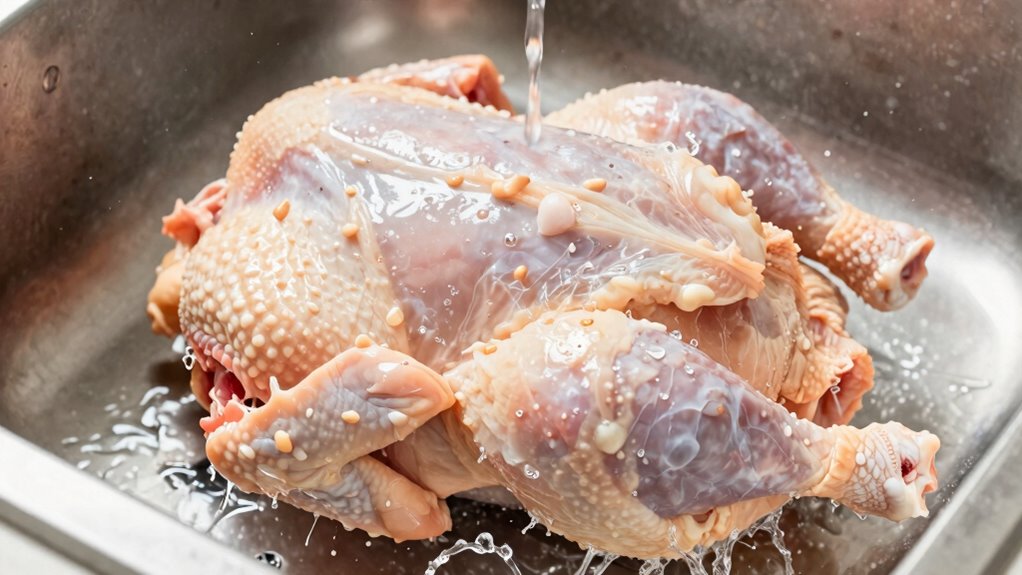
- Rinsing raw chicken causes water splashes that spread bacteria like Salmonella across kitchen surfaces.
- Water droplets contaminated with bacteria can land on utensils, countertops, and other foods, increasing cross-contamination risk.
- Washing raw chicken does not eliminate bacteria; proper cooking to 165°F is necessary for safety.
- Handling raw chicken without cleaning surfaces and utensils spreads germs throughout the kitchen.
- Proper hygiene, including cleaning after raw chicken contact, prevents bacteria from lingering and spreading.
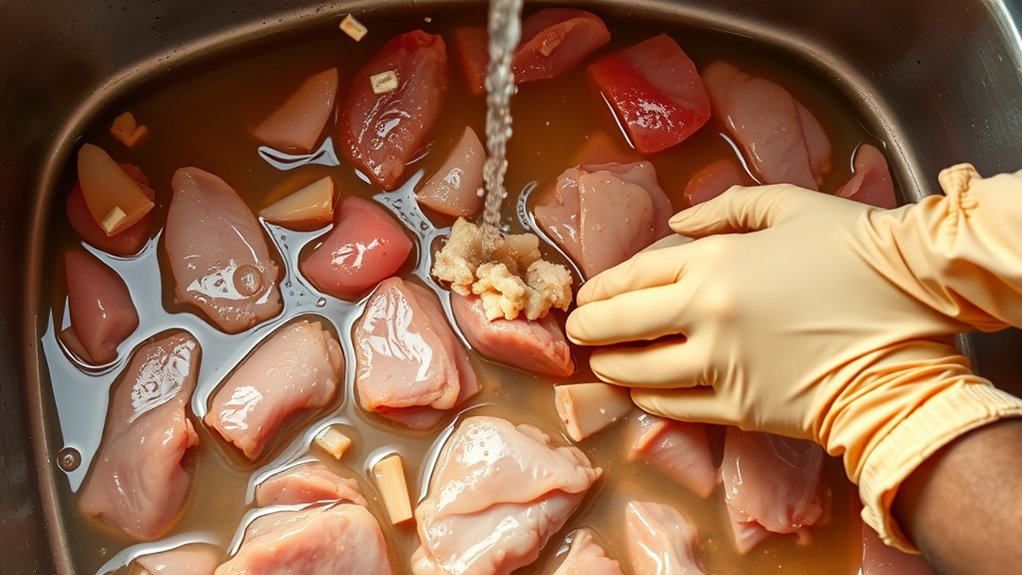
Washing raw chicken before cooking might seem like a quick way to clean it, but it can actually spread harmful bacteria around your kitchen. Many people believe rinsing chicken reduces germs, but in reality, it poses a significant risk to your food safety and kitchen hygiene. When you wash raw chicken, water can splash bacteria like Salmonella and Campylobacter onto countertops, utensils, and other surfaces. These bacteria are microscopic, and even a small splash can contaminate areas where you prepare other foods, increasing the chance of cross-contamination. This practice undermines food safety because it creates a hazardous environment where bacteria can thrive and spread easily.
Washing raw chicken spreads bacteria and increases cross-contamination risk in your kitchen.
Maintaining proper kitchen hygiene is essential to prevent foodborne illnesses. Instead of washing chicken, focus on cooking it thoroughly to kill any bacteria present. Cooking chicken to an internal temperature of 165°F (74°C) effectively eliminates germs without risking the spread of bacteria through water splashes. This approach is safer and aligns with recommended food safety guidelines, helping you avoid unnecessary health risks. Remember, the goal is to cook chicken properly, not to rinse it in hopes of cleaning it, which can do more harm than good.
Proper kitchen hygiene also involves washing your hands, utensils, and surfaces immediately after handling raw chicken. Use hot, soapy water to clean cutting boards, knives, and countertops to remove any bacteria that may have been transferred during preparation. Avoid using the same utensils or plates for raw chicken and cooked foods without washing them thoroughly first. This minimizes cross-contamination, which is a primary concern in food safety. Maintaining a clean workspace ensures that bacteria don’t spread to other ingredients, reducing the risk of foodborne illnesses.
Additionally, storing raw chicken separately from other groceries is critical. Keep it in a sealed container on the bottom shelf of your refrigerator to prevent juices from dripping onto other foods. This simple step helps keep your kitchen hygienic and reduces the chance of bacterial transfer. Remember, bacteria from raw chicken can survive on surfaces for hours or even days if not properly cleaned, so consistency in cleaning and storage practices is key to maintaining a safe environment.
As an affiliate, we earn on qualifying purchases.
Frequently Asked Questions
Can I Wash Chicken With Soap or Detergent Safely?
No, you shouldn’t wash chicken with soap or detergent because of soapy dangers. These cleaning myths suggest that washing removes germs, but in reality, it spreads bacteria around your sink and kitchen. Instead, you can safely cook chicken to the right temperature to kill germs. Rinsing with soap or detergent isn’t necessary and can make your kitchen less safe. Trust proper cooking methods over cleaning myths for food safety.
What Are the Best Alternatives to Washing Raw Chicken?
Ever wondered if there’s a safer way to handle raw chicken? Instead of washing, you should rely on proper cooking, which kills germs effectively. Using safe alternatives like avoiding rinsing and focusing on thorough heating guarantees your chicken is safe to eat. Proper cooking at the right temperature is your best defense against bacteria, preventing cross-contamination. So, skip the rinse, cook thoroughly, and enjoy your meal confidently.
How Long Do Germs Survive After Washing Chicken?
Germs can survive on surfaces for hours to days after washing raw chicken, depending on the bacteria type and environment. Bacteria longevity varies, but many pathogens like Salmonella and Campylobacter can persist for up to 48 hours or more if not properly cleaned. You should avoid washing chicken to prevent spreading germs, as washing often spreads bacteria onto your hands, sink, and kitchen surfaces, increasing the risk of cross-contamination.
Does Rinsing Chicken Reduce the Risk of Foodborne Illness?
Rinsing chicken is like opening Pandora’s box, spreading germs everywhere. It doesn’t reduce your risk of foodborne illness; instead, it raises cross-contamination risks in your kitchen. To stay safe, skip rinsing altogether and focus on proper cooking techniques—cooking chicken to the right temperature kills bacteria effectively. Keep your hands, surfaces, and utensils clean, and you’ll avoid unnecessary health hazards lurking in raw poultry.
Are There Any Bacteria That Are Killed by Washing Chicken?
Washing chicken doesn’t effectively eliminate bacteria, and it actually increases cross-contamination risks. Bacteria like Salmonella and Campylobacter aren’t eradicated through rinsing, and splashing water spreads germs to your sink, countertops, and hands. Instead, cooking chicken to a safe internal temperature of 165°F is the best way to kill bacteria and ensure safety. Avoid washing chicken to prevent unnecessary cross contamination and rely on proper cooking for bacteria removal effectiveness.
As an affiliate, we earn on qualifying purchases.
Conclusion
So, next time you wash raw chicken, remember you’re not just cleaning—it’s spreading germs everywhere. You might think you’re avoiding bacteria, but instead, you’re inviting it to dance all over your kitchen. Ironically, your efforts to keep things clean actually make things dirtier. Maybe it’s time to skip the rinse and trust proper cooking to do the real cleaning. After all, sometimes the best way to stay safe is to stop doing silly things that put you at risk.
kitchen surface disinfectant spray
As an affiliate, we earn on qualifying purchases.
As an affiliate, we earn on qualifying purchases.
refrigerator storage containers for raw meat
As an affiliate, we earn on qualifying purchases.
As an affiliate, we earn on qualifying purchases.
Halloween Picks
halloween
As an affiliate, we earn on qualifying purchases.