
To sun-dry foods safely, select ripe, blemish-free produce and cut them evenly for uniform drying. Wash and dry the items thoroughly, then pre-treat fruits with lemon juice to prevent browning. Choose a sunny, well-ventilated spot with good airflow, cover foods with mesh to keep insects away, and turn slices regularly. Confirm foods are fully dried, firm, and free of moisture before storage. Keep dried foods in cool, dark containers, and discover more tips for safe drying techniques below.
Play games included with Prime
Start a Prime free trial and play with Amazon Luna on your devices.
As an affiliate, we earn on qualifying purchases.
Key Takeaways
- Select ripe, undamaged produce and wash thoroughly before slicing uniformly for even drying.
- Pre-treat fruits with lemon juice and blanch vegetables to prevent spoilage and microbial growth.
- Dry foods in a sunny, well-ventilated area with good airflow, using screens to keep insects away.
- Turn slices regularly, check for dryness, and ensure foods are leathery or brittle before storage.
- Store dried foods in airtight, cool, dark places to prevent moisture reabsorption and mold development.
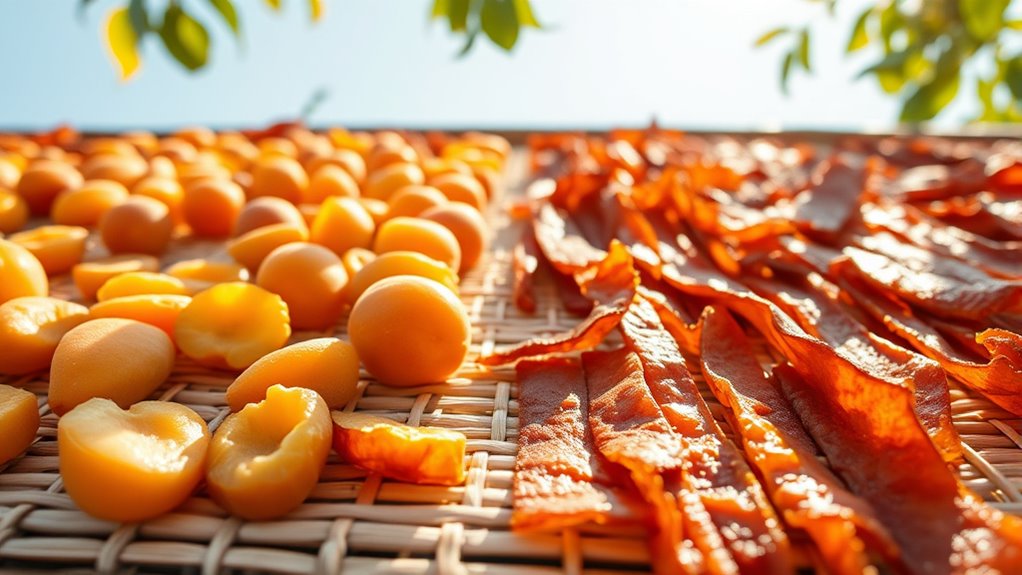
Sun-drying foods is an ancient preservation method that harnesses natural sunlight to remove moisture and extend shelf life. While it’s a simple and cost-effective way to preserve your harvest, it’s vital to follow proper procedures to guarantee your dried foods are safe to eat. The key to successful sun-drying lies in understanding food safety tips and maintaining ideal drying conditions. If you ignore these, you risk mold growth, bacterial contamination, or spoilage, which can compromise your health.
First, choose the right foods for sun-drying. Fruits like apples, apricots, and peaches, and vegetables such as tomatoes and peppers, dry well under the sun. However, always inspect your produce thoroughly, discarding any that are bruised or damaged, as they’re more prone to spoilage. Wash your fruits and vegetables thoroughly to remove dirt and potential pesticides. Pat them dry to remove excess water, as lingering moisture can hinder the drying process and encourage bacteria growth.
Choose ripe, blemish-free produce; wash thoroughly; pat dry before sun-drying for best safety and quality.
Next, prepare your produce properly. Slice fruits and vegetables uniformly to ensure even drying, which is vital for achieving consistent results. Thinner slices dry faster and more evenly, reducing the risk of mold or bacterial growth. For fruits, consider pre-treating with lemon juice or a citric acid solution to prevent browning and inhibit microbial activity. For vegetables, blanching briefly before drying can deactivate enzymes that cause spoilage, contributing to better food safety and longer shelf life.
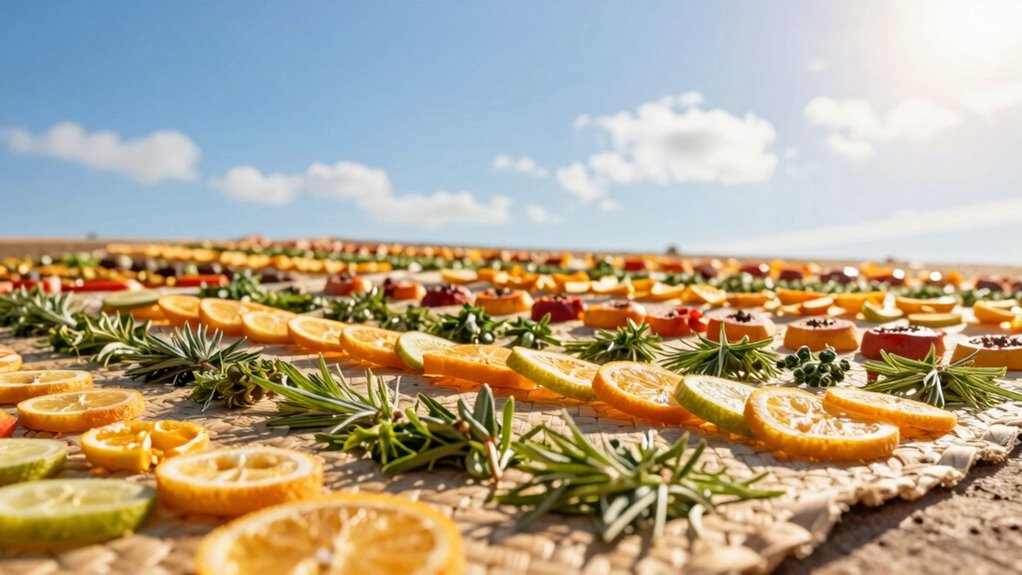
The environment where you sun-dry plays a decisive role in maintaining ideal drying conditions. Choose a spot with direct sunlight, good air circulation, and low humidity. Elevated racks or screens allow air to circulate around the produce, speeding up drying and preventing moisture buildup. Cover your items with a fine mesh or cheesecloth to keep insects and debris away while still allowing airflow. Avoid drying on damp or shaded surfaces, as these conditions can promote mold growth and spoilage.
Monitoring the drying process is essential. Turn slices regularly to promote even drying, especially if the sunlight shifts during the day. Check for dryness by feeling the texture—foods should be leathery or brittle, with no residual moisture. Properly dried foods should be stored in airtight containers in a cool, dark place to prevent reabsorption of moisture and spoilage. Remember, if your dried foods feel sticky or look moist, they need more drying time.
Following these food safety tips and maintaining ideal drying conditions will help you produce safe, high-quality dried foods. Sun-drying can be a rewarding method that preserves your harvest naturally, but it requires attention to detail and vigilance to prevent contamination. With careful preparation and ongoing monitoring, you can enjoy flavorful, nutritious dried foods that last and retain their quality.
As an affiliate, we earn on qualifying purchases.
Frequently Asked Questions
Can Sun-Dried Foods Be Stored Long-Term Without Preservatives?
Yes, sun-dried foods can be stored long-term without preservatives if you use proper preservation techniques. You need to control moisture levels carefully, ensuring foods are thoroughly dried to prevent mold and spoilage. Store them in airtight containers in a cool, dark place, and check periodically for signs of moisture or mold. Proper moisture control and preservation techniques help extend shelf life naturally, making preservatives unnecessary.
What Are the Best Climates for Sun-Drying Foods Effectively?
Imagine the sun’s warmth as a gentle hand guiding your drying process. The best climates for sun-drying foods are hot, dry, and with low humidity—think arid landscapes where air moves freely. Climate considerations like consistent sunshine and minimal rain make your drying techniques more effective. In these conditions, foods dry evenly and quickly, preserving flavors and nutrients while you let nature do its work, turning freshness into lasting goodness.
How Do I Prevent Mold Growth on Sun-Dried Foods?
To prevent mold growth on sun-dried foods, you need to control moisture and guarantee proper airflow. Make sure your foods are evenly sliced to dry uniformly and avoid overcrowding your drying surface. Cover the foods with a breathable cloth to protect them from dust and insects while allowing air circulation. Check your dried foods regularly, and store them in airtight containers once fully dried to keep moisture out and prevent mold.
Are There Specific Foods That Shouldn’T Be Sun-Dried?
In the age of dial-up internet, you should avoid sun-drying foods with high moisture or those prone to spoilage, like meats and dairy. These foods can harbor bacteria and mold easily, making them unsafe without proper preservation. Fruits and vegetables generally dry well, but always consider their moisture content. If unsure, use alternative methods like dehydrators or oven drying for foods that don’t tolerate sun-drying well.
What Are the Signs of Spoilage in Sun-Dried Foods?
You should watch for mold indicators like fuzzy white, green, or black spots on your sun-dried foods, as these signal spoilage. Discoloration signs, such as darkening or unusual spots, also suggest your foods may no longer be safe to eat. If you notice any of these signs, it’s best to discard the food to avoid the risk of foodborne illness. Always store sun-dried items properly to prevent spoilage.
As an affiliate, we earn on qualifying purchases.
Conclusion
Now that you know how to sun-dry foods safely, are you ready to try it yourself? With proper techniques, you can enjoy delicious, preservative-free snacks straight from the sun. Just remember to follow the guidelines carefully to avoid spoilage or health risks. Isn’t it rewarding to turn simple ingredients into tasty treats using nature’s own methods? Start today and embrace the natural way to preserve food—your taste buds (and the environment) will thank you.
citric acid for food preservation
As an affiliate, we earn on qualifying purchases.
As an affiliate, we earn on qualifying purchases.
airtight storage containers for dried foods
As an affiliate, we earn on qualifying purchases.
As an affiliate, we earn on qualifying purchases.
Fall Picks
fall essentials
As an affiliate, we earn on qualifying purchases.