
When your ferment smells like sulfur or rotten eggs, it’s usually a sign that active microbes are producing gases like hydrogen sulfide, which is normal during fermentation. This smell often occurs in the early stages as microbes break down sulfur-containing compounds in ingredients. It’s a temporary part of the process and usually fades as fermentation stabilizes. If you want to understand when sulfur odors are a good sign versus a problem, keep exploring further.
Key Takeaways
- Sulfur smells in fermenting foods are caused by natural microbial production of sulfur gases like hydrogen sulfide.
- These odors are most common during early fermentation stages and typically diminish over time.
- Active microbes breaking down sulfur-containing amino acids release gases that can create a rotten egg smell.
- Factors like temperature, pH, and ingredients influence the amount of sulfur gases produced.
- Persistent or very strong sulfur odors may indicate spoilage, but mild smells are usually normal and harmless.

Ferments that smell like sulfur can be startling, but they are often a natural part of the fermentation process. When you notice that your ferment has a rotten egg or matchstick aroma, it’s usually due to sulfur compound formation. These sulfur compounds, such as hydrogen sulfide, are byproducts created when microorganisms break down sulfur-containing amino acids during fermentation. While the smell might seem unpleasant, it doesn’t necessarily mean your ferment has gone bad. Instead, it’s a sign that certain microbial activities are actively taking place, producing gases that can escape from the mixture.
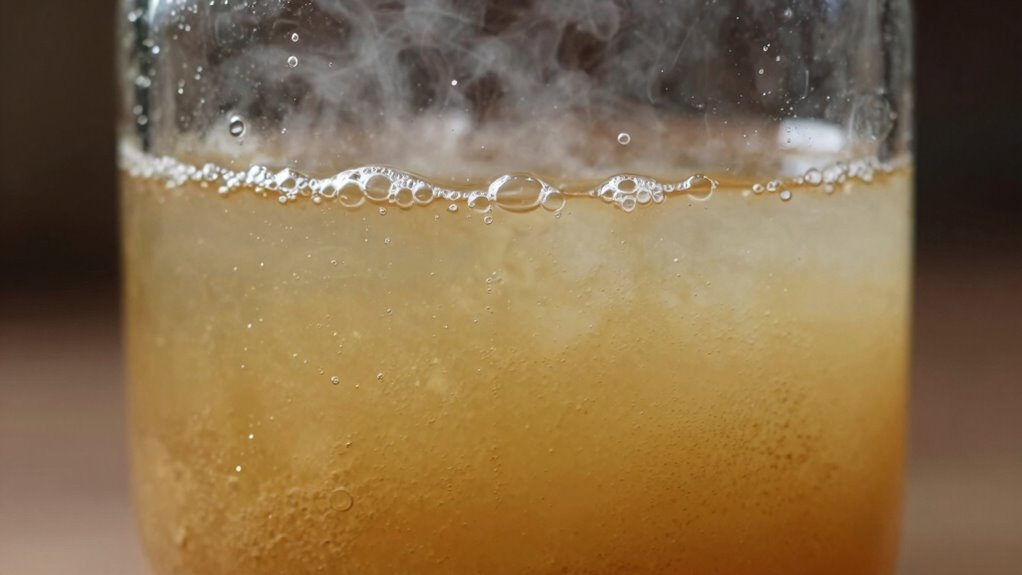
Fermentation gas emissions are a key factor here. As microbes consume sugars and other nutrients, they release various gases, including carbon dioxide and sulfur gases. Hydrogen sulfide, in particular, has a distinctive rotten egg smell and is often associated with fermentation gases escaping from the jar or fermenting vessel. These emissions tend to be more noticeable during active fermentation, especially in the early stages when microbial activity peaks. The presence of sulfur gases isn’t inherently harmful; in fact, they’re a natural byproduct of the fermentation process. However, their intensity can vary depending on the ingredients used, the microbial populations involved, and the fermentation conditions.
Fermentation gases like hydrogen sulfide signal active microbial activity and are usually harmless.
The formation of sulfur compounds is influenced by factors such as temperature, pH, and the availability of sulfur-rich nutrients. If the environment favors the growth of certain bacteria—particularly those that produce hydrogen sulfide—you’ll notice that characteristic smell more prominently. This is common in fermentations like sauerkraut, kimchi, or fermented vegetables, where sulfur-rich ingredients are present. It’s also worth noting that these sulfur gases are more likely to be released if your fermentation isn’t sealed tightly or if it’s bubbling vigorously.
Understanding when this smell is normal can help you avoid unnecessary concern. Typically, sulfur smells are strongest during the initial fermentation stages and tend to diminish as the microbial balance shifts and fermentation stabilizes. If the smell persists for a long period or is accompanied by mold, sliminess, or other signs of spoilage, you should inspect your ferment more carefully. But in most cases, a sulfur smell is simply a sign that your microbes are doing their job—producing gases and transforming your ingredients into delicious, fermented food. So, while it might be unpleasant at first, remember that it’s often just a natural marker of active fermentation and sulfur compound formation in progress.
![Airlocks for Fermenting[6Pack],Fermentation Airlock Kit,High TransparencyTwin Bubble S Shape with 12pcs Grommets Drilled 3/8’’ Hole for Preservation,Brewing,Beer, Wine, Sauerkraut, Kimchi](https://m.media-amazon.com/images/I/41kKwJw+JSL._SL500_.jpg)
Airlocks for Fermenting[6Pack],Fermentation Airlock Kit,High TransparencyTwin Bubble S Shape with 12pcs Grommets Drilled 3/8’’ Hole for Preservation,Brewing,Beer, Wine, Sauerkraut, Kimchi
- Complete Fermentation Set: 6 airlocks and 12 grommets included
- High Transparency Material: Clear, durable, and easy to monitor fermentation
- Universal Compatibility: Fits 3/8'' drilled holes on lids or buckets
As an affiliate, we earn on qualifying purchases.
As an affiliate, we earn on qualifying purchases.
Frequently Asked Questions
Can Sulfur Smell Indicate Harmful Bacteria in My Ferment?
A sulfur smell in your ferment doesn’t always mean harmful bacteria are present. It often indicates bacterial overgrowth during early fermentation stages, which is usually normal. However, if the smell is strong, persistent, or accompanied by mold or sliminess, it could signal contamination. Trust your senses—if it smells off or unpleasant beyond typical sulfur notes, discard it to stay safe. Always monitor fermentation closely for signs of spoilage.
How Long Should a Ferment Smell Like Sulfur Before It’s Spoiled?
You should notice the sulfur odor in your ferment for about a week or two during the fermentation timeline. If the smell persists beyond this period or worsens, it could indicate spoilage. Typically, a mild sulfur smell is normal early on, but if it lingers or intensifies, trust your senses and check for other signs like sliminess or off-colors. When in doubt, taste cautiously or discard to stay safe.
Are There Safe Ways to Reduce Sulfur Smell in Ferments?
You can reduce sulfur odor in your ferment through sulfur odor mitigation by adjusting fermentation techniques. Increase air circulation and reduce anaerobic conditions, as these help sulfur compounds dissipate. Adding a small amount of salt or sugar can also balance flavors and reduce odors. Additionally, ferment at slightly warmer temperatures to encourage healthy bacteria that outcompete sulfur-producing microbes. These steps help make your ferment smell more appealing without compromising safety.
Does the Sulfur Smell Affect the Nutritional Quality of the Ferment?
The sulfur smell doesn’t considerably impact the nutritional quality of your ferment. While sulfur compounds can influence aroma, they generally don’t affect the nutrient content or health benefits. Your main concern should be ensuring proper fermentation to prevent spoilage. If the smell is strong and persistent, it might indicate issues, but in most cases, a mild sulfur odor is normal and doesn’t pose nutritional concerns.
Is Sulfur Smell Common in All Types of Fermented Foods?
Imagine a symphony with varied instruments—some notes are sharp, others soft. Sulfur smell isn’t present in all fermentation variations; it primarily originates from specific microbial activity. You’ll notice it more in certain fermented foods like sauerkraut or kimchi, but many other ferments remain odorless. This smell indicates microbial processes at work, which are normal in some cases, but not a sign of spoilage.

Masontops Complete Mason Jar Fermentation Kit – Easy Small/Regular Mouth Jars Vegetable Fermenting Set – DIY Equipment Essentials
- Complete Fermentation Kit: Includes all essential tools for home fermentation
- Fits Small Mouth Jars: Converts 4 jars into fermenters for small batches
- 9-Piece Set: Includes airlock tops, glass weights, tamper, and recipe book
As an affiliate, we earn on qualifying purchases.
As an affiliate, we earn on qualifying purchases.
Conclusion
So, next time your ferment smells like sulfur, remember it’s often normal—about 80% of homemade ferments produce this aroma due to natural sulfur compounds. It’s a sign your beneficial microbes are hard at work. Don’t worry, it usually dissipates with time or proper aeration. Embrace the process, and you’ll soon enjoy delicious, healthy ferments without any worries. Your kitchen’s microbial magic is more common than you think!

Inkbird ITC-308 Digital Temperature Controller 2-Stage Outlet Thermostat Heating and Cooling Mode Carboy Homebrew Fermenter Greenhouse Terrarium 110V 10A 1100W
- Display Units: Supports °C/°F display
- Dual Relay: Controls heating and cooling devices
- Dual Display: Shows measured and set temperatures
As an affiliate, we earn on qualifying purchases.
As an affiliate, we earn on qualifying purchases.

Fermentaholics Kombucha & Fermentation pH Test Strips – Instant Read pH Strips Dispenser for Brewing & Fermentation, pH Range 0–6
- Designed for Home Brewers: Accurately test pH of various liquids
- Easy and Instant Testing: Dip and compare with color chart
- 100 Test Strips Included: No chemicals or calibration needed
As an affiliate, we earn on qualifying purchases.
As an affiliate, we earn on qualifying purchases.