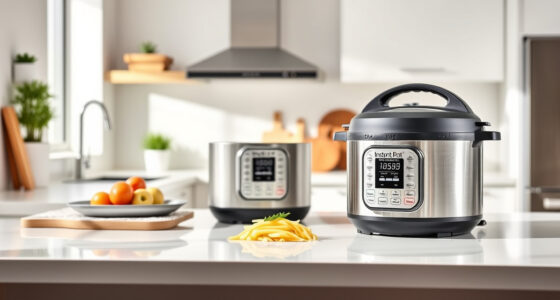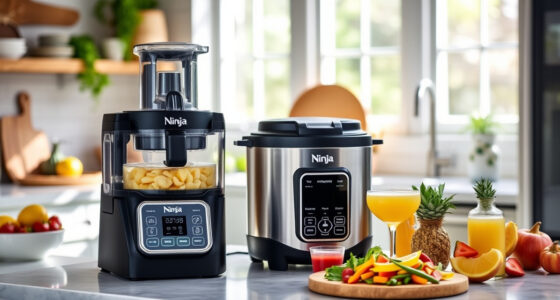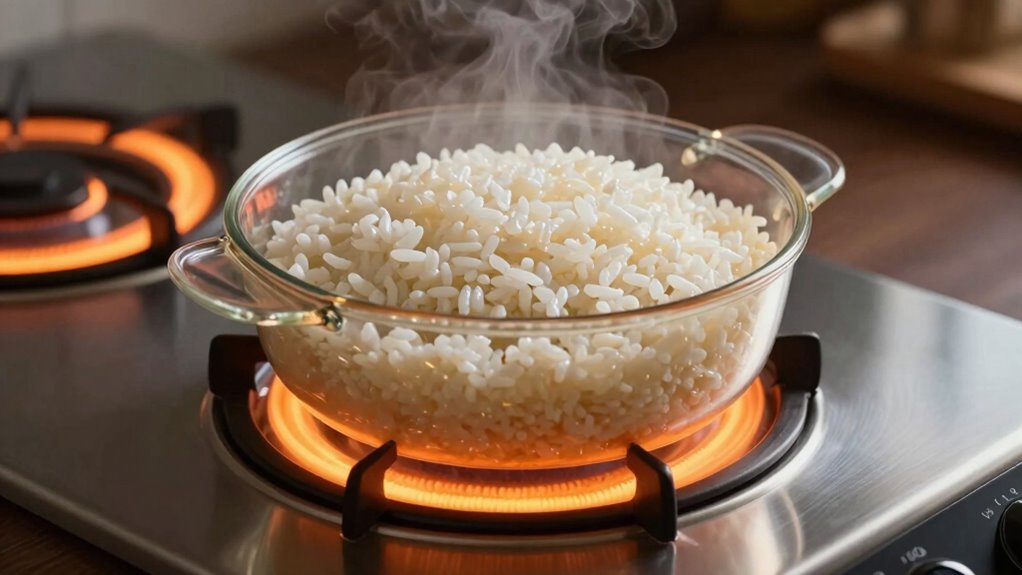

Induction heating changes rice texture because it heats cookware directly through electromagnetic fields, giving you precise and quick temperature control. This guarantees even water absorption and avoids overheating, making your rice tender and fluffy, whether you prefer it firm or soft. With rapid adjustments and consistent heat, you prevent mushiness or burning. Upgrading to induction improves heat distribution and calibration, helping you achieve high-quality results every time. Want to discover more about how this tech impacts your rice?

Get kitchen staples and gadgets delivered free — and shop member deals
- Fast, free delivery on millions of items
- Access to Prime Big Deal Days deals on October 6–7
- Prime Video, Amazon Music and more included
Key Takeaways
- Induction heating provides precise temperature control, preventing overcooking or undercooking rice, which affects its texture.
- Rapid response to temperature adjustments ensures consistent heat, leading to evenly cooked, fluffy rice.
- Even heat distribution from induction prevents uneven cooking and sticky or mushy textures.
- Energy-efficient, direct heating minimizes water and heat loss, promoting ideal water absorption and grain tenderness.
- Well-calibrated induction stoves allow for tailored settings, enhancing control over rice texture for different varieties.
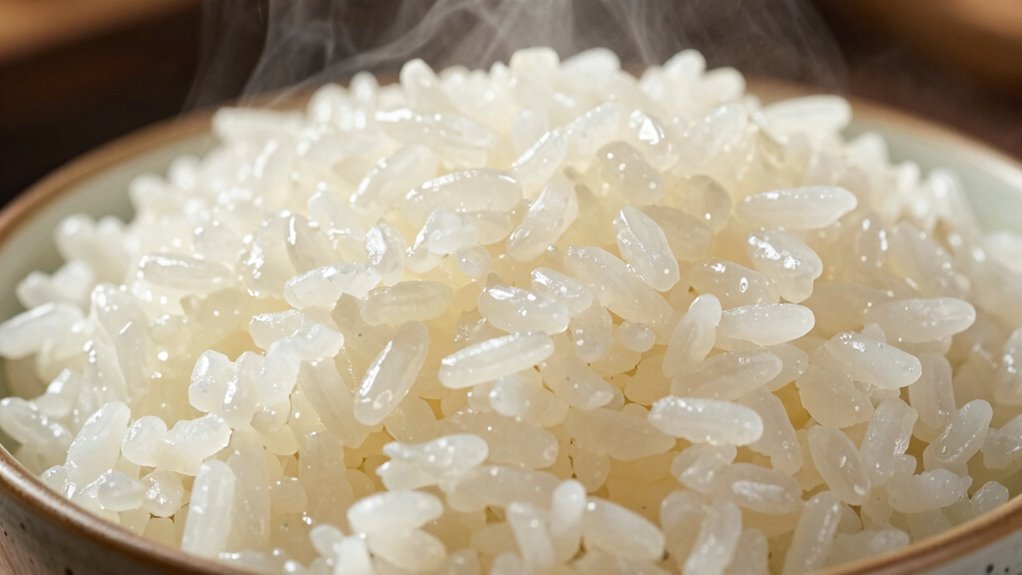
Have you ever wondered how induction heating can transform the texture of your rice? When you cook rice with induction technology, you’re tapping into a method that offers precise temperature control. Unlike traditional stovetop methods, induction heats the cookware directly through electromagnetic fields, allowing you to dial in the exact temperature needed. This precision means you can avoid overheating or undercooking, which directly impacts the rice’s final texture. When heat is consistent and controlled, the rice absorbs water evenly, resulting in grains that are perfectly tender and fluffy, without becoming mushy or overly sticky. This level of control helps you achieve a uniform texture every time, whether you prefer your rice slightly firm or soft.
Beyond temperature control, induction heating is also highly energy efficient. Because it heats the cookware directly rather than the surrounding air, there’s minimal energy wastage. This efficiency means less heat escapes into your kitchen, and you use less power overall. As a result, your rice cooks faster and more evenly, minimizing the risk of uneven textures caused by inconsistent heating. The energy efficiency also guarantees that the heat remains constant, which is vital for delicate processes like rice cooking. When the heat stays steady, the grains absorb water at the right rate, leading to a more desirable, consistent texture. This reliability can make a noticeable difference, especially if you cook rice regularly or in larger quantities. Using induction also emphasizes the importance of precise temperature control, which is key to achieving optimal rice texture. The combination of precise temperature control and energy efficiency in induction heating means you have a lot more oversight over the cooking process. You can easily adjust the heat to suit different types of rice—whether you’re preparing jasmine, basmati, or short-grain varieties—and trust that the texture will come out just right. The rapid response of induction stoves also allows you to make quick adjustments if needed, preventing overcooking or burning. Consistent heat distribution is another advantage that ensures each grain is cooked evenly, leading to better overall results. Additionally, the ability to maintain a steady temperature helps prevent common issues like sticking or uneven cooking. A well-calibrated induction stove further enhances these benefits by providing more accurate temperature settings. This control over both heat and energy consumption results in rice that is not only cooked efficiently but also with a superior, consistent texture. So, when you switch to induction, you’re not just upgrading your kitchen; you’re enhancing your ability to produce perfectly textured rice every time, with less waste and more precision.
As an affiliate, we earn on qualifying purchases.
Frequently Asked Questions
Does Induction Heating Affect Rice Nutritional Content?
Induction heating does not substantially affect rice’s nutritional content because it provides quick, efficient heat distribution that preserves nutrients. You benefit from better nutritional preservation since induction heats evenly, reducing the risk of overcooking or nutrient loss. Unlike traditional methods, induction minimizes heat fluctuations, helping retain vitamins and minerals. So, when you use induction, your rice stays nutritious, tasty, and healthful, thanks to precise heat control and even heat distribution.
Can Induction Heating Be Used for Other Grains?
Yes, induction heating can be used for other grains, thanks to its precise temperature control. Did you know that induction technology has a 95% energy efficiency rate? This makes it ideal for cooking a variety of grains like quinoa, barley, or oats. Its grain versatility and cooking precision guarantee you get evenly cooked, flavorful results every time, reducing cooking time and preserving nutrients better than traditional methods.
How Does Induction Heating Compare to Traditional Rice Cookers?
Induction heating offers faster cooking speed and precise temperature control compared to traditional rice cookers. You’ll notice that induction heats more evenly, reducing cooking time and preventing burning or sticking. Traditional cookers rely on resistive heating, which can be slower and less accurate. With induction, you get quick adjustments and consistent results, making it ideal for perfectly cooked rice every time.
Is Induction Heating Energy-Efficient for Rice Cooking?
Yes, induction heating is energy-efficient for rice cooking because it minimizes energy consumption by directly transferring heat to the pot. Its precise heat distribution guarantees uniform cooking, reducing waste and overuse of energy. Unlike traditional methods, induction heats quickly and responds instantly to temperature adjustments. This efficient process saves energy while delivering consistent results, making it an excellent choice for those looking to cook rice more sustainably and effectively.
Does Induction Heating Change Rice Flavor or Aroma?
You’ll notice that induction heating preserves rice flavor better and enhances its aroma. As the gentle, even heat distributes warmth evenly through the pot, it locks in the rice’s natural scent and taste. Unlike traditional methods, this heating style prevents aroma loss and flavor degradation, making each bite more fragrant and flavorful. With induction, your rice becomes a sensory experience, rich in aroma and taste, elevating your overall dining experience.
As an affiliate, we earn on qualifying purchases.
Conclusion
So, next time you cook rice with induction heating, remember it’s like conducting a symphony—each pulse of heat carefully orchestrating the perfect texture. This technology transforms simple grains into a tender, fluffy masterpiece, turning ordinary cooking into an art form. Embrace the magic behind the scenes, and you’ll see that induction heating isn’t just a method—it’s the maestro shaping every bite, making your rice not just food, but an experience worth savoring.
As an affiliate, we earn on qualifying purchases.
energy-efficient induction stove
As an affiliate, we earn on qualifying purchases.
As an affiliate, we earn on qualifying purchases.
NFL season / tailgating Picks
team gear
As an affiliate, we earn on qualifying purchases.