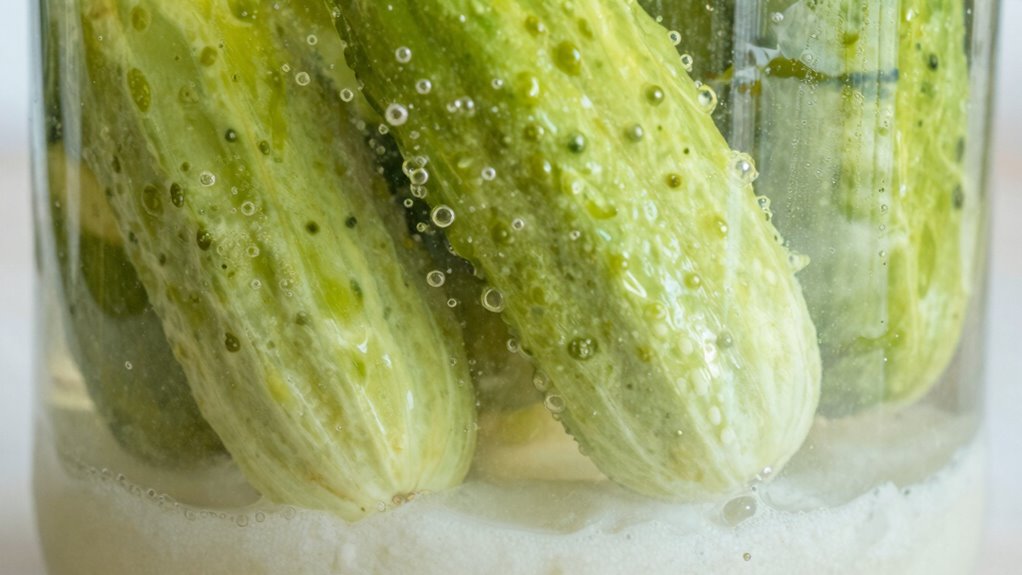

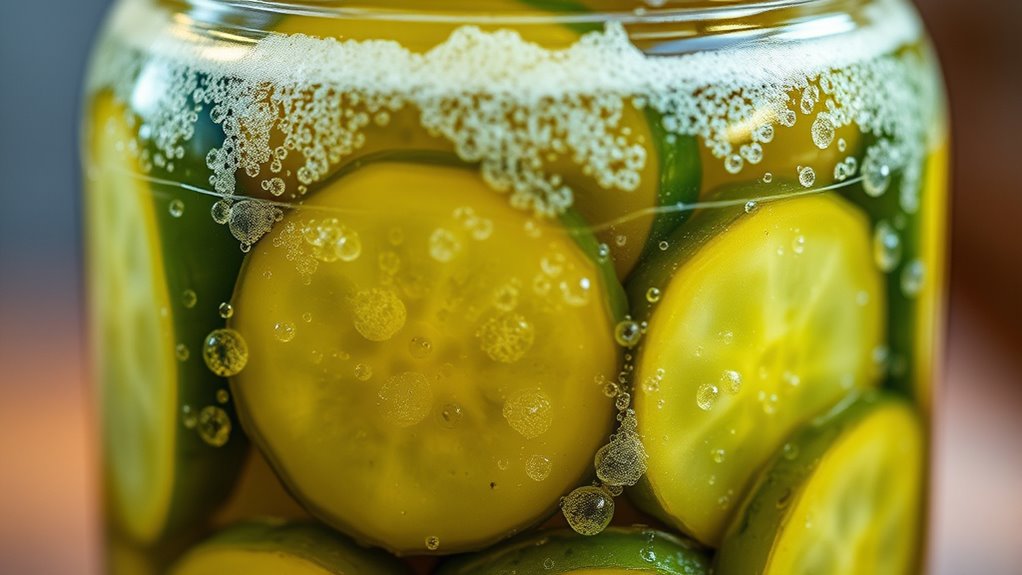
Fermented pickles bubble because beneficial bacteria produce carbon dioxide while consuming sugars during fermentation. This bubbling is a sign of healthy activity, especially in the first week, and usually indicates the pickles are on the right track. Steady, light bubbling signals a safe and proper process, but vigorous bubbling with foul odors can mean spoilage. Keep an eye on these signs, and you’ll find out when your pickles are just right for storage.
Key Takeaways
- Bubbling indicates active fermentation caused by beneficial bacteria producing carbon dioxide.
- Steady, light bubbling over days is normal; vigorous bubbling with foul smell signals spoilage.
- Bubbling is most vigorous in the first week and slows as fermentation stabilizes.
- Properly submerged cucumbers in saltwater and clean jars promote healthy bubbling.
- Persistent foul odors or discoloration mean it’s time to discard the pickles for safety.
Fermented pickles are a delicious and healthy way to enjoy cucumbers with a tangy, complex flavor. When you’re making your own, understanding pickling techniques is vital to guarantee both great taste and safety. The process involves submerging cucumbers in a brine made from salt and water, allowing natural bacteria to do the work of fermentation. This method not only preserves the pickles but also enhances their probiotic qualities. However, because fermentation relies on natural bacteria, it’s essential to follow proper procedures to guarantee fermentation safety. Using the right salt concentration, keeping everything clean, and monitoring the process help prevent unwanted microbial growth, such as mold or harmful bacteria, which can compromise your batch.
When you see your pickles bubbling during fermentation, it’s usually a good sign. The bubbles result from carbon dioxide produced by the beneficial bacteria consuming the sugars in the cucumbers. This natural activity is a sign that fermentation is happening as it should. But it’s important to know when bubbling indicates healthy fermentation versus when it signals a problem. Light, steady bubbling that continues over several days is typical and shows your pickles are fermenting properly. If you see vigorous bubbling accompanied by foul odors, discoloration, or slimy textures, you should be cautious. These signs can point to spoilage or contamination, and it’s safer to discard the batch rather than risk consuming unsafe pickles.
You should also pay attention to the timing of the bubbling. During the first week, bubbling may be more noticeable as fermentation kicks into high gear. As the process stabilizes, the bubbles often slow down, and the flavor deepens. Once fermentation slows, you can taste your pickles to check their flavor and texture. If they taste tangy and crisp, they’re ready to be stored in the fridge to halt fermentation. If you notice a persistent, foul smell or unusual appearance, it’s best to discard the batch. Maintaining proper fermentation safety means keeping your jars in a clean environment, avoiding contamination, and using appropriate containers like glass with a loose lid or fermentation airlock.
fermentation airlock for pickles
As an affiliate, we earn on qualifying purchases.
As an affiliate, we earn on qualifying purchases.
Frequently Asked Questions
Can Bubbling in Pickles Indicate Spoilage or Mold Growth?
Bubbling in your pickles doesn’t always mean spoilage, but it can be a sign of mold growth or spoilage if accompanied by foul odors or slimy textures. You should check for these spoilage signs, like unusual colors or mold patches. If the bubbles are persistent and the pickles smell off or look abnormal, it’s best to discard them to avoid health risks. Always trust your senses and safety first.
How Long Does It Take for Fermented Pickles to Fully Ferment?
It typically takes about 1 to 3 weeks for fermented pickles to fully ferment, depending on factors like temperature and the pickling duration. During this fermentation timeline, you’ll notice bubbling as natural gases form. You should taste the pickles after a week to check their flavor development. Once they reach your desired tanginess, transfer them to the fridge to slow fermentation and preserve their flavor and crunch.
Is It Safe to Eat Pickles That Are Still Bubbling After Several Weeks?
You might think a bubbling pickle is an alien invasion, but it’s usually safe to eat if it smells fresh and has a firm texture. Bubbling indicates ongoing fermentation, which can be normal even after several weeks, aligning with the typical fermentation timeline. However, if it develops a foul odor or slimy texture, it’s best to discard. Trust your senses, and remember, safety always comes before curiosity.
What Environmental Factors Influence the Bubbling Process in Fermentation?
Environmental factors like temperature fluctuations and salt concentration influence the bubbling process during fermentation. You’ll notice more active bubbling when the temperature stays steady around 65-75°F, promoting healthy fermentation. If temperatures swing wildly, fermentation slows or becomes inconsistent. Additionally, maintaining the right salt concentration—typically 2-3%—is essential; too much salt can inhibit bubbles, while too little can lead to spoilage. Keep these factors stable for ideal fermentation activity.
How Can I Prevent Over-Fermentation and Excessive Bubbling?
Think of fermentation like a gentle simmer on a stove—too hot, and it boils over. To prevent over-fermentation and excessive bubbling, keep an eye on temperature control, ideally around 65-72°F. Also, guarantee proper salt concentration; too little salt speeds fermentation, causing overproduction of gases. Regularly check your jars, release excess bubbles, and adjust conditions to keep your pickles crisp and safe.
As an affiliate, we earn on qualifying purchases.
Conclusion
So, savor the subtle science behind your salty, bubbling brine. When your fermented pickles bubble beyond the norm, don’t panic—pause and probe. Proper precautions prevent problems, and patience pays off. By understanding the signs, you can confidently continue your crunchy, cultured journey. Remember, a little awareness and attentive action assure your pickles stay pristine and perfect. Keep curious, keep caring, and enjoy the delicious, bubbling benefits of your beautifully balanced brine!
As an affiliate, we earn on qualifying purchases.
As an affiliate, we earn on qualifying purchases.