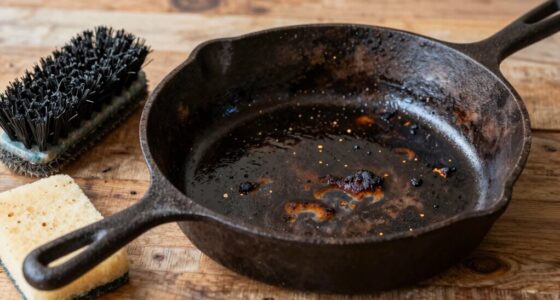
To keep your cast iron performing well, you should regularly clean it with warm water, avoid harsh soaps, and dry it thoroughly to prevent rust. After each use, apply a thin coat of high-smoke-point oil like vegetable or flaxseed oil, then bake it to build up a strong seasoning layer. Consistent oiling and proper storage help maintain a natural non-stick surface and protect against rust, ensuring longevity — there’s more to learn to master its care.
Key Takeaways
- Consistently apply a thin layer of oil after each cleaning to maintain a strong seasoning layer.
- Bake the skillet at high temperature (around 375°F) to polymerize the oil and enhance the seasoning.
- Regularly inspect and re-season to repair any rust spots and reinforce the protective coating.
- Use high smoke point oils like flaxseed or vegetable oil for optimal seasoning results.
- Ensure the skillet is thoroughly dried and stored in a dry, ventilated area to prevent moisture and rust buildup.

Cleaning techniques play a big role in maintaining your cast iron’s seasoning and preventing rust. After each use, you should clean your skillet thoroughly, but avoid harsh soaps or steel wool that can strip away the seasoning. Instead, opt for warm water and a brush or sponge to remove food debris. If stubborn residue remains, you can scrub with coarse salt and a little water, which acts as an abrasive cleaner without damaging the seasoning. Always dry your cast iron thoroughly after washing—moisture is the enemy when it comes to rust. You can do this by towel drying or placing the skillet over low heat for a few minutes, which helps evaporate any lingering water. Proper drying is a critical seasoning maintenance step to ensure your skillet stays rust-free and well-seasoned. Additionally, some enthusiasts recommend applying a light coat of oil immediately after drying to further enhance the seasoning layer and protect the surface from moisture. Using a high smoke point oil helps ensure the seasoning polymerizes properly and creates a durable, non-stick surface. Once dry, it’s important to apply a thin layer of oil before storing. This step not only enhances the seasoning but also fortifies the cast iron against rust. Use a neutral oil with a high smoke point, like flaxseed or vegetable oil. Spread it evenly with a paper towel, and bake the skillet in the oven at around 375°F for an hour to polymerize the oil. This routine keeps the surface smooth and prevents rust from forming over time. Remember, the key to good seasoning is consistency; the more you use and care for your cast iron, the better it performs. Proper seasoning routine is essential for maintaining its non-stick properties and durability. In addition to regular cleaning and seasoning, be mindful of storage conditions. Keep your cast iron in a dry place, and consider placing a paper towel or cloth inside to absorb moisture. If you notice any rust spots, don’t panic—scrub them with steel wool and re-season your pan. Regular inspections can help catch problems early and prolong the lifespan of your skillet. To further safeguard your cast iron, consider seasoning your skillet periodically to restore the protective coating. With proper cleaning techniques and a disciplined seasoning routine, your cast iron will stay rust-free and will develop a seasoned surface that improves with age. Stick to this rule, and your cast iron will serve you well for decades, providing reliable, non-stick cooking and lasting durability.
As an affiliate, we earn on qualifying purchases.
Frequently Asked Questions
How Often Should I Re-Season My Cast Iron Skillet?
You should re-season your cast iron skillet whenever food starts sticking or the surface looks dull, usually every few months or after frequent use. When cooking, keep the temperature moderate to avoid damaging the seasoning. Store it in a dry place, with a paper towel inside to absorb moisture. Regular re-seasoning maintains a natural non-stick surface, ensuring your skillet stays well-seasoned and performs beautifully over time.
Can I Use Soap to Clean Seasoned Cast Iron?
Yes, you can use dish soap to clean seasoned cast iron, but do so sparingly. Soap helps remove cooking stains and grease effectively without damaging the seasoning if you rinse thoroughly afterward. Just avoid harsh scrubbing, and dry your skillet promptly to prevent rust. Regularly cleaning with a gentle soap keeps your cast iron in top shape while maintaining its seasoned surface for better non-stick performance.
What’s the Best Oil for Seasoning Cast Iron?
Choosing the best oil for seasoning cast iron is like selecting the perfect brush for a masterpiece; it sets the tone for years of performance. Flaxseed oil, vegetable oil, and shortening are popular options. During the seasoning process, apply a thin layer of your preferred oil, then bake at high heat to create a durable, non-stick surface. Your cast iron will thank you with a seasoned, well-protected finish.
How Do I Remove Rust From a Cast Iron Pan?
To remove rust from a cast iron pan, start by scrubbing the rust with steel wool or a stiff brush. Rinse and dry the pan thoroughly. Apply a thin layer of oil, like vegetable or flaxseed oil, and bake it in the oven at 350°F for an hour to restore the seasoning. Regular cast iron maintenance, including proper cleaning and seasoning, keeps rust at bay and guarantees your pan stays in top shape.
Is It Okay to Cook Acidic Foods in a Seasoned Cast Iron?
Cooking acidic foods in a seasoned cast iron isn’t a disaster waiting to happen, but it can cause some acid reactions that may strip away your seasoning faster than you’d expect. While occasional use is okay, frequent cooking of acids like tomatoes or citrus can weaken the seasoning’s durability. To keep your pan in top shape, avoid prolonged acidic cooking, and re-season regularly to maintain that perfect non-stick surface.
high smoke point cooking oil for cast iron
As an affiliate, we earn on qualifying purchases.
As an affiliate, we earn on qualifying purchases.
Conclusion
By regularly seasoning your cast iron, you’ll keep it non-stick and rust-free for years. Remember, a well-seasoned pan can last for generations—some even say they improve with age. Did you know that seasoned cast iron cookware can last over 100 years with proper care? So, stick to the seasoning rule, and you’ll enjoy perfectly cooked meals and a trusty kitchen companion that stands the test of time.
As an affiliate, we earn on qualifying purchases.
cast iron rust removal steel wool
As an affiliate, we earn on qualifying purchases.
As an affiliate, we earn on qualifying purchases.