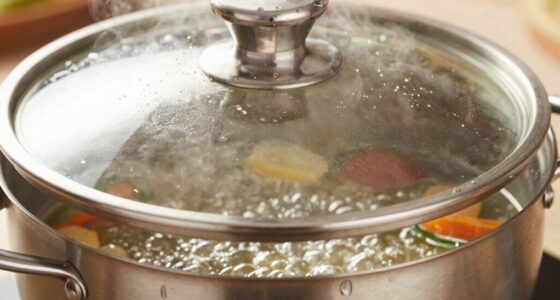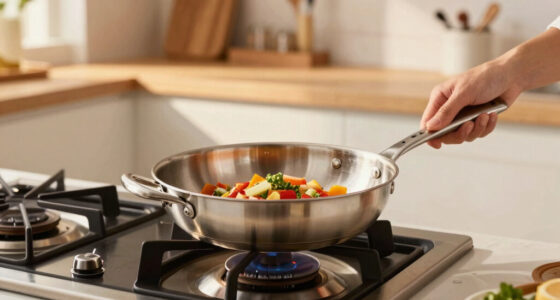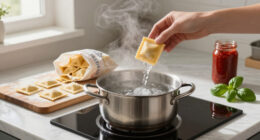
The main difference between a Dutch oven and a braiser is their shape and typical use. A Dutch oven has tall sides and a rounded lid, perfect for slow cooking, baking, and frying, creating a moist environment. A braiser features low sides and a broad opening, ideal for browning, reducing sauces, and slow braising meat. Both are versatile but suited to different techniques—continue exploring to see which fits your cooking style best.

Get kitchen staples and gadgets delivered free — and shop member deals
- Fast, free delivery on millions of items
- Access to Prime Big Deal Days deals on October 6–7
- Prime Video, Amazon Music and more included
Key Takeaways
- Dutch ovens have tall sides and a rounded lid, ideal for moisture retention and versatile cooking methods.
- Braisers feature low sides and a wide opening, promoting evaporation and browning for slow braising.
- Dutch ovens are typically made of cast iron, suitable for baking, roasting, and frying; braisers are often enameled or glazed for specific slow-cooking tasks.
- Dutch ovens excel in moist heat dishes like stews, while braisers are optimized for tenderizing meats with sauce reduction.
- The shape and design differences influence their suitability for various cooking techniques and dishes.
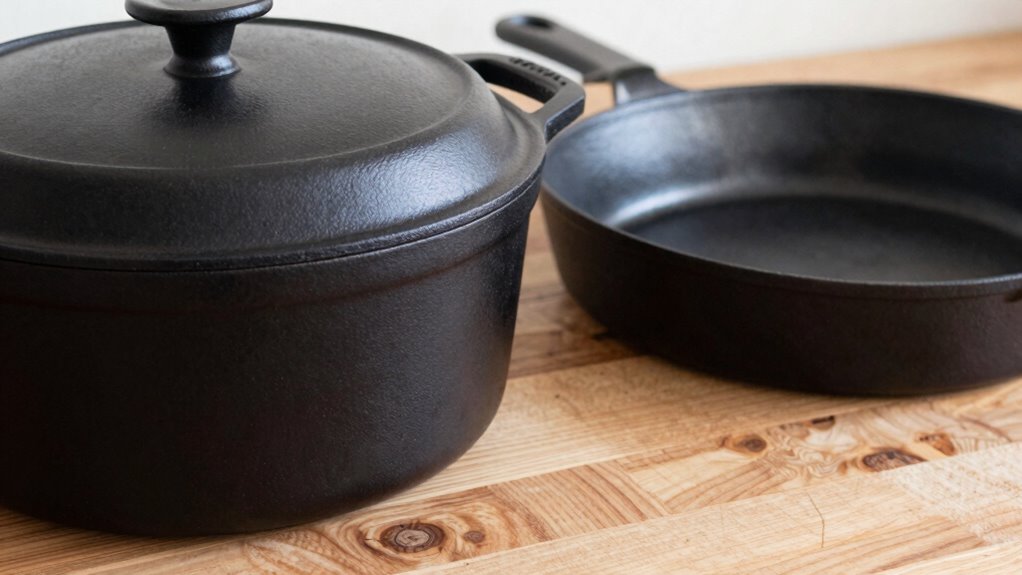
Have you ever wondered what sets a Dutch oven apart from a braiser? It’s a common question, especially when you’re trying to choose the right cookware for your kitchen. The main differences lie in their design, cooking techniques, and the materials they’re made from, all of which influence how you cook and what dishes turn out best.
Dutch ovens and braisers differ in design, materials, and cooking styles, shaping how you prepare and enjoy your dishes.
When it comes to cooking techniques, a Dutch oven is incredibly versatile. You can use it for everything from slow braising and roasting to baking bread and even frying. Its heavy lid traps moisture, making it perfect for dishes that benefit from moist heat, like stews and casseroles. A braiser, on the other hand, is designed primarily for braising—cooking meat or vegetables slowly in a small amount of liquid. While a braiser can handle other cooking methods, its shape and size are optimized for low-and-slow cooking, which helps tenderize tougher cuts of meat and develop rich flavors. Additionally, the heat retention properties of the materials used in both types of cookware are essential for achieving consistent results. The ability of cast iron to maintain temperature even when adding cold ingredients is another reason for its popularity in both styles. Moreover, the way each piece distributes heat can significantly impact cooking outcomes, especially when preparing delicate dishes.
Material differences are crucial in understanding how these two pieces of cookware perform. Dutch ovens are traditionally made from cast iron, which retains heat incredibly well and distributes it evenly. Many Dutch ovens are enameled, preventing rust and making cleanup easier, but the core material remains cast iron. This heavy metal construction ensures consistent cooking temperatures and durability. Braisers are often made from similar materials, such as enameled cast iron or sometimes glazed ceramic, but they tend to be lighter and have a more shallow, wide shape. The design influences heat distribution and how heat is transferred to your food, with the shallow sides allowing for better evaporation and browning.
The shape of each piece also impacts how you cook. A Dutch oven’s tall sides and rounded lid create a tight environment that traps steam, making it ideal for slow-cooked dishes that need moisture. A braiser’s low sides and broad opening encourage evaporation, which is perfect when you want your dish to develop a thicker sauce or crust. So, while both are excellent for braising, a Dutch oven’s design lends itself to a broader range of cooking techniques, thanks to its ability to hold in heat and moisture for long periods. Understanding these differences can help you better select the right cookware for your culinary needs.
Additionally, understanding the material properties of these cookware items can help you better appreciate their performance and maintenance needs. For instance, how well a material resists corrosion or retains heat can influence how you care for it over time. Proper seasoning and cleaning can extend the lifespan of your cookware, especially when it’s made from cast iron.
In essence, understanding these differences helps you decide which piece best suits your cooking style. If you want a multi-purpose, durable piece that can handle everything from bread baking to stews, a Dutch oven is your go-to. But if you’re focused on slow-cooked, tender meats with a focus on sauce reduction, a braiser’s shape and material might be just what you need.
As an affiliate, we earn on qualifying purchases.
Frequently Asked Questions
Can I Use a Dutch Oven as a Braiser?
Yes, you can use a Dutch oven as a braiser. Its cast iron maintenance guarantees durability, and its excellent heat retention properties help cook food evenly with gentle heat, ideal for braising. Just make sure the lid fits well to keep moisture in. While a dedicated braiser typically has a wider, shallower design, your Dutch oven works well for slow-cooked dishes, making it a versatile kitchen tool.
Which Cookware Is Better for Frying: Dutch Oven or Braiser?
When it comes to frying, a Dutch oven is your trusty frying partner, thanks to its unmatched heat retention and cooking versatility. It heats evenly, like a calm sea, ensuring your oil reaches the perfect temp for crispy delights. A braiser, with its low sides, isn’t as ideal for frying, but it’s perfect for slow-cooking. So, for sizzling, bubbling, frying magic, choose a Dutch oven—your kitchen’s versatile hero.
Are Braisers Suitable for Baking Bread?
Yes, braisers are suitable for bread baking because they create a similar environment to a Dutch oven, trapping steam for a crispy crust. Just make certain your braiser is oven-safe at high temperatures, and always follow manufacturer guidelines for oven safety. Preheat it properly, and you’ll get great results in bread baking, with the added benefit of versatile, multi-use cookware.
How Do I Clean and Maintain a Dutch Oven Versus a Braiser?
Think of your Dutch oven and braiser as loyal gardening tools. To keep them thriving, you need to care for their cast iron seasoning. For cleaning, avoid soap and harsh scrubbers—simply rinse with warm water and gently scrub if needed. After drying, apply a thin layer of oil to preserve the seasoning. Regular maintenance ensures they stay rust-free and ready for your next culinary adventure.
Can Both Types of Cookware Be Used on Induction Stoves?
Yes, both Dutch ovens and braisers can be used on induction stoves, provided they’re made from compatible materials like cast iron or enameled cast iron. These materials guarantee excellent heat distribution and efficient cooking. Just double-check that your cookware has a flat bottom and is labeled induction-compatible. This way, you’ll enjoy even heat and peak performance, whether you’re simmering, braising, or roasting.
As an affiliate, we earn on qualifying purchases.
Conclusion
Ultimately, choosing between a Dutch oven and a braiser is like selecting a trusted companion or a refined partner—you’ll find each has its own unique rhythm and charm. The Dutch oven, with its sturdy, all-weather resilience, symbolizes steadfastness and tradition. Meanwhile, the braiser, sleek and specialized, embodies elegance and finesse. By understanding their differences, you’re not just selecting cookware—you’re inviting a timeless dance of flavors into your kitchen, each tool a partner in your culinary journey.
As an affiliate, we earn on qualifying purchases.
As an affiliate, we earn on qualifying purchases.
NFL season / tailgating Picks
team gear
As an affiliate, we earn on qualifying purchases.