TL;DR

Get kitchen staples and gadgets delivered free — and shop member deals
- Fast, free delivery on millions of items
- Access to Prime Big Deal Days deals on October 6–7
- Prime Video, Amazon Music and more included
A chef has revealed that brushing oyster sauce onto steak during searing creates a glossy, flavorful glaze. This simple, affordable method enhances steak’s taste and appearance. The technique is gaining popularity for its ease and impressive results.
A chef has introduced a simple, one-ingredient method to enhance steak: brushing oyster sauce onto the meat during searing. This technique creates a glossy, caramelized glaze that elevates flavor and appearance, making it a popular choice for home cooks seeking restaurant-quality results with minimal effort.
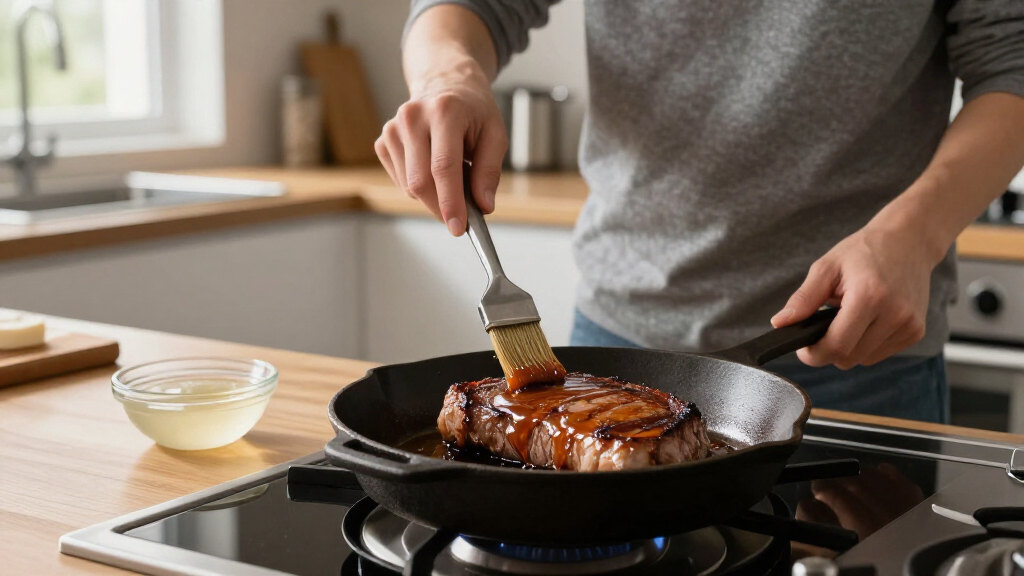
The method involves patting boneless ribeye steaks dry, searing them in a hot skillet with neutral oil, then lowering the heat and brushing oyster sauce onto the steaks as they cook. The sauce caramelizes quickly, forming a rich, umami-rich glaze that adds both flavor and visual appeal. The process takes about 2-3 minutes per side after the initial sear, with the final step being a last brush of oyster sauce for a glossy finish.
This technique is versatile; it can be adapted for grilling or other cuts of steak. Oyster sauce, known for its savory, slightly sweet, and umami-rich profile, is available at most grocery stores and is inexpensive. It can also be used in stir-fries, marinades, and noodles, making it a handy pantry staple. The method is praised for its simplicity, requiring no additional ingredients beyond the sauce itself, and for producing a restaurant-quality crust and flavor.
The Cheap 1-Ingredient Glaze That Completely Transforms Steak
Brush oyster sauce onto steak during searing and its savory sweetness rapidly caramelizes into a glossy, umami-rich crust—an affordable shortcut to restaurant-style flavor and presentation.
Four moves from plain steak to glossy crust
The timing matters: establish the sear before adding the sauce, then lower the heat so its sugars caramelize without scorching.
Dry the steak
Pat a boneless ribeye thoroughly dry. A dry surface browns more efficiently and prevents steaming.
Before heatBuild the sear
Heat a skillet, add neutral oil, and sear until the first deep-brown crust begins to form.
High heatBrush & turn
Lower the heat, brush on a thin coat of oyster sauce, and continue cooking both sides.
2–3 min / sideFinish glossy
Add one final light brush as the steak finishes, then rest before slicing to preserve its juices.
Thin final coatOyster sauce arrives ready to perform
It combines several jobs normally handled by separate seasonings, turning a minimal method into a high-impact finish.
Deep umami
A concentrated savory profile amplifies the steak’s natural beefiness.
Fast caramelization
Natural sweetness helps create a dark, lacquered exterior under controlled heat.
Restaurant gloss
The thick sauce clings to the surface and finishes with a polished sheen.
Pantry versatility
The same bottle works in stir-fries, marinades, noodles, meats, and vegetables.
A shortcut with unusually broad payoff
The oyster-sauce glaze compresses seasoning, sweetness, color, and body into one readily available ingredient.
| Cooking finish | Oyster sauce glaze | Plain sear | Multi-ingredient glaze | Butter baste |
|---|---|---|---|---|
| Single added ingredient | ✓ Yes | ✓ Yes | ✗ No | ~ Usually not |
| Glossy finish | ✓ Strong | ✗ Minimal | ✓ Strong | ~ Moderate |
| Built-in umami | ✓ High | ~ Beef only | ~ Recipe dependent | ~ Moderate |
| Low preparation effort | ✓ Very low | ✓ Very low | ✗ More steps | ~ Moderate |
| Burn risk at high heat | ~ Manage heat | ✓ Lower | ~ Varies | ~ Manage heat |
Ribeye to flank
Try sirloin, fillet, or flank steak; adjust timing for thickness, fat, and desired doneness.
Skillet or grill
The principle transfers to grilling, but direct flames make thin coats and close attention essential.
A useful bottle
Use leftovers in noodles, marinades, stir-fries, roasted vegetables, and other meat glazes.
One ingredient, five connected effects
The technique succeeds because each stage supports the next—from adhesion to heat-driven caramelization and the final visual payoff.
Traditional oyster sauce contains shellfish and is unsuitable for people with shellfish allergies or for vegan diets. Formulas may also contain gluten or other additives, so check the label. Vegetarian alternatives are commonly made with mushrooms.
What home cooks should know
The core technique is simple, but steak thickness, heat source, and sauce formulation can change the result.
Can other steak cuts work?
Yes. Sirloin, fillet, and flank can all take the glaze, though cooking time and crust formation vary with thickness and marbling.
Should the steak be pre-brushed?
No. Apply the sauce during cooking after the initial sear. Adding it too early increases the chance of scorching before the steak browns.
Is special gear required?
No. A standard heavy skillet or grill and a heat-safe brush are enough. Heat control matters more than specialized equipment.
What remains uncertain?
Exact results across every cut, thickness, grill setup, and sauce brand need further testing. Treat the 2–3 minute guidance as a starting point.
The bottom line
Oyster sauce is a low-cost, high-impact glaze: sear the steak first, lower the heat, brush on a thin layer, and finish with one last coat for a deeply savory, caramelized sheen.
Why This Simple Glaze Changes Steak Cooking
This technique offers a cost-effective, easy way to elevate home-cooked steak, providing a rich, caramelized crust that rivals restaurant dishes. It appeals to home cooks seeking quick, impressive results without complicated recipes or ingredients. The use of oyster sauce as a glaze leverages its natural umami and sweetness, making it an accessible flavor enhancer that can be incorporated into various dishes beyond steak.
By adopting this method, cooks can achieve a more flavorful and visually appealing steak with minimal effort, potentially changing how people prepare steak at home. It also highlights the versatility of oyster sauce, which can be used in multiple cuisines and dishes, broadening its culinary utility.
As an affiliate, we earn on qualifying purchases.
The Rise of Simple, Flavor-Boosting Techniques
In recent years, home cooks have increasingly looked for easy, quick ways to improve everyday meals. Techniques like brushing sauces during cooking or using pantry staples for flavor enhancement have gained popularity. Oyster sauce, traditionally used in Asian cuisine, has become more mainstream as a flavor booster for meats and vegetables. This recent revelation builds on the trend of minimal-ingredient, high-impact cooking methods that deliver restaurant-quality results with less effort.
The method aligns with broader culinary trends emphasizing speed, simplicity, and flavor depth, especially as more people cook at home due to lifestyle changes. It also reflects a growing appreciation for Asian ingredients and techniques among Western home cooks.
“Brushing oyster sauce onto steak during searing creates a glossy, flavorful glaze that elevates the dish to restaurant quality.”
— an anonymous chef
As an affiliate, we earn on qualifying purchases.
Details Still Emerging on Technique Variations
While the basic method is clear, it is not yet confirmed whether this technique works equally well with all steak cuts or in outdoor grilling scenarios. Specific cooking times and temperatures may vary based on equipment and steak thickness. Additionally, the long-term flavor impact and potential variations with different sauces or seasonings remain to be explored.
As an affiliate, we earn on qualifying purchases.
Expected Adoption and Recipe Development
Home cooks and chefs are likely to experiment further with this simple glaze, adapting it for different meats and cooking methods. Food writers and culinary experts may develop variations or provide detailed guides for optimal results. As the technique gains popularity, it could become a standard step in quick, flavorful steak preparations, with more recipes incorporating oyster sauce glazes.
As an affiliate, we earn on qualifying purchases.
Key Questions
Can I use this glaze on other types of steak?
Yes, the technique can be applied to various cuts, including sirloin, fillet, or flank steak, but results may vary based on thickness and marbling.
Is oyster sauce suitable for all diets?
Oyster sauce contains shellfish and is not suitable for vegan or shellfish-allergic diets. Check labels for added ingredients or gluten content if needed.
Can I prepare this glaze ahead of time?
Oyster sauce can be stored at room temperature, but brushing it onto steak during cooking produces the best flavor and texture. Pre-brushing is not recommended.
Does this method require special equipment?
No, it can be done with a standard skillet or grill, making it accessible for most home cooks.
Source: rss
NFL season / tailgating Picks
team gear
As an affiliate, we earn on qualifying purchases.