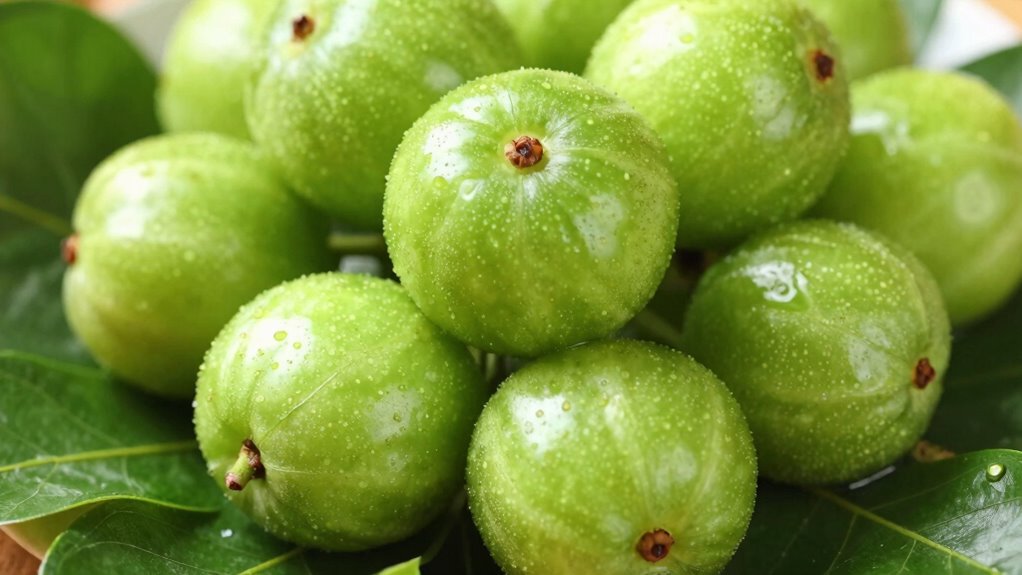

Amla, or Indian gooseberry, is a small, bright green fruit known for its tangy taste and impressive health benefits. It’s rich in vitamin C, antioxidants, and essential nutrients that boost immunity, improve skin health, and fight free radicals. You can enjoy it fresh, as chutney, or in juices and powders for added nutrition. Discover how this pucker punch of flavor also supports overall wellness—there’s more to uncover about its many uses and benefits.
Key Takeaways
- Amla, also known as Indian gooseberry, is a small, bright green fruit renowned for its tangy flavor and health benefits.
- Rich in vitamin C and antioxidants, amla helps boost immunity, improve skin health, and reduce inflammation.
- Its distinctive sour taste makes it popular in chutneys, pickles, and herbal teas, adding a pucker punch to dishes.
- Amla can be consumed raw, as juice, dried slices, or powdered for versatile culinary and medicinal use.
- Known for anti-aging and wellness properties, amla supports overall health and enhances nutritional variety in diets.

Amla, also known as Indian gooseberry, is a small, bright green fruit renowned for its tangy flavor and impressive health benefits. When you first taste it, you’ll notice its sharp, sour punch that can be both invigorating and revitalizing. This fruit has been prized for centuries in traditional medicine and cuisine alike, thanks to its rich nutrient profile. Its health benefits are extensive, making it a popular choice for boosting immunity, improving digestion, and supporting overall wellness. Packed with vitamin C, antioxidants, and other essential nutrients, amla helps combat free radicals, reduces inflammation, and enhances skin health. Many people use amla to strengthen hair, prevent aging signs, and promote a healthy immune system. Its ability to regulate blood sugar levels and improve liver function further underscores its value as a natural remedy. Additionally, its high antioxidant content plays a crucial role in neutralizing harmful free radicals in the body. This antioxidant richness is a key factor in its anti-aging properties, making it favored in beauty routines. Incorporating amla into a balanced diet can also provide additional nutritional benefits that support overall health. Furthermore, the traditional use of amla in Ayurveda highlights its significance in holistic wellness practices. Understanding how amla interacts with various bodily systems can help you appreciate its full potential.
Beyond its health advantages, amla’s culinary uses are equally versatile. You can enjoy it fresh, where its tartness adds a zing to salads and fruit bowls. Many enjoy making amla chutney, a tangy condiment that pairs beautifully with rice, bread, or grilled dishes. Dried amla slices are often used in teas and herbal infusions, providing a natural energy boost with every sip. In Indian cooking, amla is frequently incorporated into pickles, giving a distinctive flavor that balances spice and sourness. You might also find powdered amla, which can be sprinkled into smoothies or mixed into yogurt for an added nutritional punch. Chefs and home cooks alike appreciate its ability to elevate both sweet and savory recipes, thanks to its unique taste profile. Its popularity in traditional recipes highlights its significance in cultural culinary practices. Incorporating amla into everyday meals can also introduce nutritional variety, making your diet more balanced and flavorful.
Using amla in your daily diet is easy once you understand its culinary potential. You might start by trying fresh amla, simply biting into it for its intense flavor, or blending it into juices and smoothies. If you prefer more traditional preparations, making amla chutney or adding it to curries can deliver both flavor and health benefits. It’s also common to dry the fruit and turn it into powder, which can be stored for long periods and incorporated into various dishes or beverages. Whether consumed raw, cooked, or as a supplement, amla’s tangy flavor adds a distinctive character to your meals, while its health benefits give you an extra reason to include it regularly. Embracing this small, vibrant fruit can transform your approach to nutrition and culinary creativity, offering a delightful combination of taste and wellness in every bite.

Organic Amla Powder – 1.1 lbs or 17.54oz | Amalaki, USDA Organics, Non-GMO, Kosher, Halal – 100% Raw and Natural, by SHOPOSR
- Organic Amla Powder: Pure Amalaki from India
- Pure and Non-GMO: 100% Organic, Vegan, Gluten-Free
- Customer Satisfaction Guarantee: We Promise Quality or Make It Right
As an affiliate, we earn on qualifying purchases.
As an affiliate, we earn on qualifying purchases.
Frequently Asked Questions
What Are the Traditional Medicinal Uses of Amla?
You can use amla for its traditional medicinal benefits, like boosting immunity and improving digestion. It also promotes healthy skin, offering amla skin benefits by reducing signs of aging and clearing blemishes. For hair, try amla haircare tips such as applying amla oil to strengthen roots and prevent hair fall. Incorporate amla into your routine to enjoy these natural remedies, enhancing your overall health and beauty.
How Can I Incorporate Amla Into My Daily Diet?
Imagine infusing your day with a burst of tangy significance. You can add amla to your routine by blending it into delicious Amla smoothie recipes or sipping on soothing Amla infused teas. These options make it easy to enjoy amla’s health benefits while tantalizing your taste buds. Just toss some amla into your blender or steep slices in hot water, and you’re all set for a nutritious boost every day.
Are There Any Side Effects of Consuming Amla Excessively?
Consuming too much amla can lead to overconsumption risks like stomach upset, diarrhea, or acidity. You might also experience potential allergies such as skin rashes or itching. It’s best to enjoy amla in moderation and pay attention to how your body reacts. If you notice any adverse effects, cut back or consult a healthcare professional. Moderation helps you reap its benefits without risking unwanted side effects.
What Are the Different Varieties of Amla Available?
You can find different varieties of amla, such as Indian gooseberry, wild amla, and hybrid types, each with unique characteristics. When exploring amla cultivation techniques, consider soil quality and climate for ideal growth. The Amla nutritional benefits, including high vitamin C and antioxidants, make these varieties valuable for health. Choosing the right type can enhance your health benefits while ensuring successful cultivation and enjoying its tangy, nutritious qualities.
How Does Amla Compare to Other Superfruits?
Think of amla as a resilient knight in the domain of superfruits. Its nutritional comparison reveals high vitamin C content and impressive antioxidant capacity, rivaling and often surpassing other superfruits like acai or goji berries. You’ll find it boosts immunity and fights oxidative stress effectively. While each superfruit offers unique benefits, amla’s tangy punch packs a powerful punch, making it a versatile and potent addition to your health arsenal.

Indian Gooseberry and Plum Slices-8.81oz Seedless 1mm Thin Fruit Snack
- Unique Sour-Sweet Flavor: Sour then sweet taste experience
- Rich Vitamin C Content: Up to 1841mg per 100g
- Digestive and Bloating Relief: Cleanses taste buds and reduces greasiness
As an affiliate, we earn on qualifying purchases.
As an affiliate, we earn on qualifying purchases.
Conclusion
So, next time you encounter amla, remember its vibrant, tangy punch that’s more than just a flavor—it’s a burst of health. Embrace its pucker power, and let it invigorate your wellness journey. Think of amla as nature’s little secret, waiting to awaken your senses and boost your vitality. Don’t just taste it—experience it. After all, isn’t life too short not to savor the zest that keeps you thriving?

Basic Ayurveda Amla (Gooseberry) Juice | 16.23 Fl Oz (480ml) | Rich in Natural Vitamin C for Immunity, Skin Glow & Hair Health | Herbal Detox & Daily Ayurvedic Wellness Drink | No Added Sugar
- Natural Vitamin C Boost: Supports immunity and overall wellness
- Enhances Skin & Hair: Promotes glow, hair growth, and strength
- Aids Digestion & Detox: Supports metabolism and body cleansing
As an affiliate, we earn on qualifying purchases.
As an affiliate, we earn on qualifying purchases.

As an affiliate, we earn on qualifying purchases.