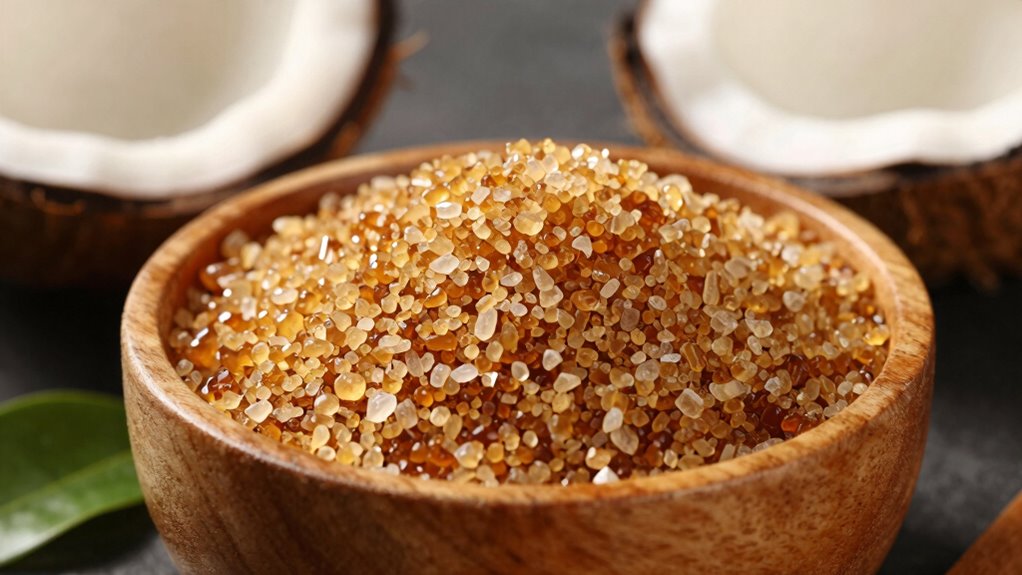

Coconut sugar has a rich, caramel-like flavor with nutty hints, making it a versatile sweetener. You can use it as a one-to-one substitute for regular sugar in baking, coffee, or tea, adding depth and a natural caramel note. It’s great in recipes that benefit from its warm flavor, like cookies or sauces. If you want to uncover more about its taste and best ways to incorporate it into your cooking, there’s plenty more to discover.

Get kitchen staples and gadgets delivered free with Prime
- Fast, free delivery on millions of items
- Prime Video, Amazon Music and more included
- Member-only deals all year
Key Takeaways
- Coconut sugar has a rich, caramel-like flavor with nutty hints, adding depth to recipes and beverages.
- It can replace regular sugar in baking, coffee, tea, smoothies, and sauces for a natural sweetness.
- Its lower glycemic index promotes steady energy levels and is a healthier alternative to refined sugar.
- Harvested sustainably from coconut palms, it supports eco-friendly farming practices and small-scale farmers.
- Use it to enhance flavor and moisture in baked goods or sprinkle on oatmeal and yogurt for added sweetness.
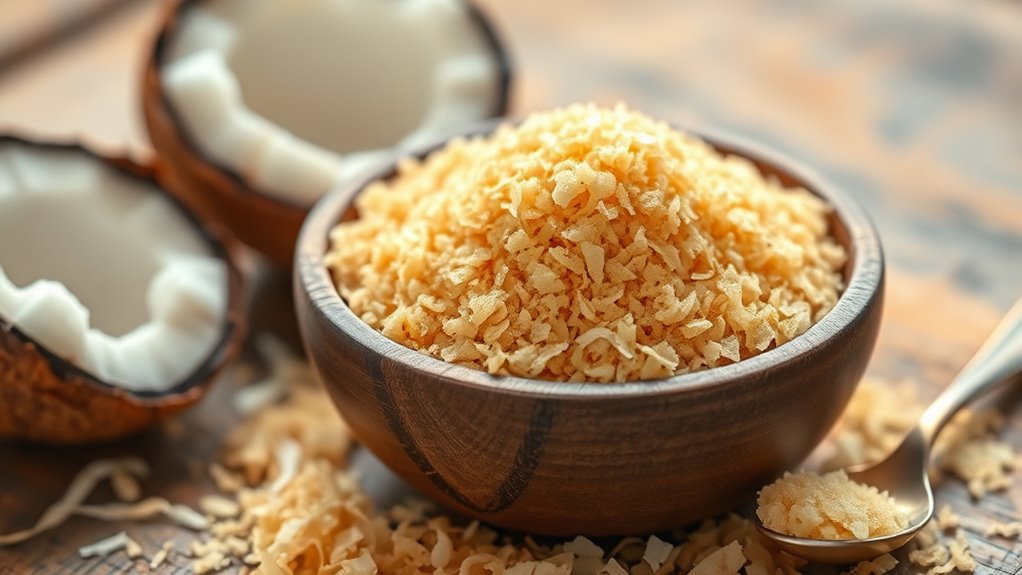
Have you ever wondered if there’s a healthier alternative to regular sugar? Coconut sugar might just be the answer you’re looking for. Derived from the sap of coconut palm trees, this natural sweetener is gaining popularity not only for its unique flavor but also for its connection to sustainable farming practices. Unlike refined white sugar, coconut sugar is minimally processed, which helps preserve its natural nutrients. This means that when you choose coconut sugar, you’re supporting sustainable farming methods that promote environmental balance and help small-scale farmers thrive. Many farmers harvest the sap without damaging the coconut palms, ensuring a steady supply of this sweetener without harming the trees or the ecosystem. As a result, coconut sugar has a lower environmental footprint, making it a more eco-friendly choice for conscious consumers.
In terms of health benefits, coconut sugar offers a few advantages over traditional sugar. It contains small amounts of vitamins and minerals such as iron, zinc, calcium, and potassium, which are often lacking in refined sugars. Additionally, it has a lower glycemic index, meaning it causes a slower rise in blood sugar levels, helping you maintain steadier energy and reduce sugar crashes. While it still adds sweetness, you’re not exposing your body to the rapid spikes associated with white sugar, which can be beneficial if you’re watching your blood sugar or trying to manage diabetes. That said, it’s still a form of sugar and should be used in moderation, but it’s a better alternative when you’re looking to cut back on refined options.
When it comes to taste, coconut sugar offers a rich, caramel-like flavor with subtle hints of nuttiness. It’s versatile enough to replace regular sugar in many recipes, from baked goods to beverages. If you add it to your coffee or tea, you’ll notice a lovely depth of flavor that pairs well with spices like cinnamon or vanilla. Baking with coconut sugar can give your treats a slightly moist texture and a complex sweetness that’s different from the sharp sweetness of white sugar. You can also sprinkle it over oatmeal or yogurt for an added touch of flavor. Its natural caramel notes make it a delightful addition to smoothies, sauces, and marinades.
As an affiliate, we earn on qualifying purchases.
Frequently Asked Questions
Is Coconut Sugar Keto-Friendly?
Coconut sugar isn’t considered keto-friendly because it contains about 17 grams of carbs per tablespoon, which can easily spike your blood sugar and disrupt ketosis. If you’re looking for sugar alternatives that fit a keto diet, focus on low-carb options like stevia or erythritol. Always consider health considerations and how each sweetener affects your body, making mindful choices that support your goals and overall well-being.
Can Coconut Sugar Be Used in Baking?
Baking with coconut sugar is like adding a warm hug to your treats. Yes, you can use it as a substitute for regular sugar in most recipes. Coconut sugar can be a great coconut sugar substitute, offering a richer flavor. When baking with coconut sugar, keep in mind it may change the texture slightly, so adjust liquids if needed. It’s an easy way to make your baked goods a bit more wholesome.
How Does Coconut Sugar Affect Blood Sugar Levels?
Coconut sugar has a moderate blood sugar impact because of its lower glycemic index compared to regular sugar. When you use it, your blood sugar levels rise more slowly, helping you avoid spikes. However, it still contains carbs that can affect your blood sugar, so moderation is key. If you’re watching your blood sugar, consider monitoring your intake and combining coconut sugar with fiber or protein to stabilize levels.
Is Coconut Sugar Sustainable and Environmentally Friendly?
Sustainability and environmental friendliness matter, and coconut sugar tends to tip the scales toward eco-friendliness. Its production generally boasts a lower carbon footprint compared to conventional sugars, thanks to minimal processing and eco-friendly farming practices. While some concerns exist about deforestation and resource use, responsibly sourced coconut sugar often supports sustainable agriculture. By choosing organic and fair-trade options, you help reduce environmental impact and promote greener, greater growth.
How Does Coconut Sugar Compare to Maple Syrup?
You’ll find coconut sugar has a milder, caramel-like flavor compared to the rich, maple syrup’s distinctive sweetness. In culinary versatility, coconut sugar works well in baking and beverages, offering a granular texture and subtle taste. Maple syrup adds moisture and a robust flavor, ideal for drizzling or mixing into recipes. While coconut sugar provides a less intense sweetness, maple syrup delivers a liquid consistency and bold flavor, making each suited for different culinary uses.
As an affiliate, we earn on qualifying purchases.
Conclusion
Like Alice tumbling down the rabbit hole, exploring coconut sugar opens a world of sweet possibilities. Its rich, caramel-like flavor invites you to experiment in your kitchen, transforming everyday recipes into something extraordinary. Just as the curious cat led Alice into wonderland, let this natural sweetener inspire your culinary adventures. Embrace coconut sugar’s unique taste and versatility—you might just find your new go-to ingredient, turning ordinary dishes into delightful, memorable experiences.
coconut sugar for coffee and tea
As an affiliate, we earn on qualifying purchases.
As an affiliate, we earn on qualifying purchases.
As an affiliate, we earn on qualifying purchases.
Columbus Day / Indigenous Peoples' Day Picks
long weekend sales
As an affiliate, we earn on qualifying purchases.