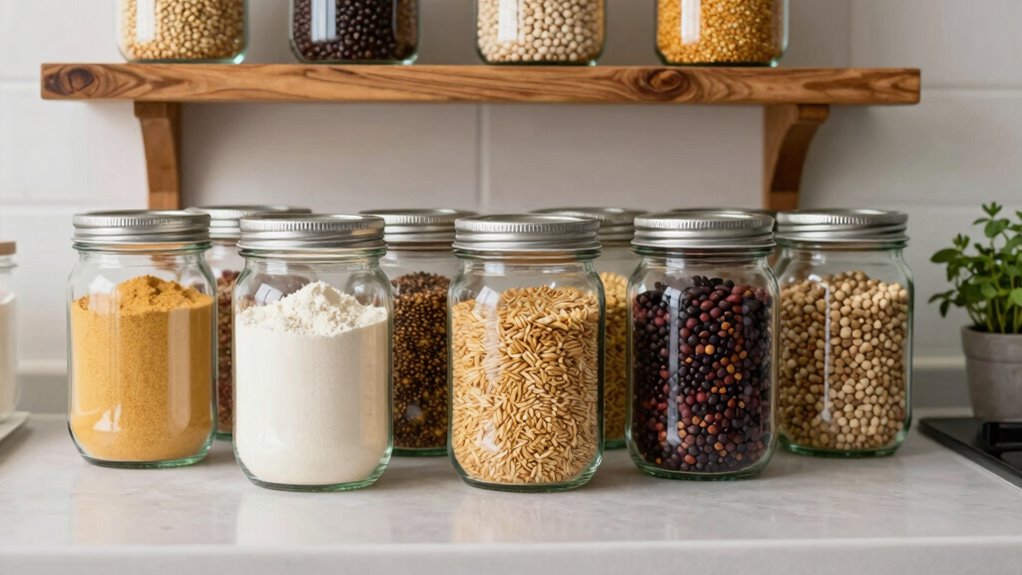

Store flour, grains, and beans in airtight containers made of glass, metal, or heavy-duty plastic to keep out moisture and pests. Keep them in a cool, dry place away from sunlight, and regularly check for signs of spoilage or pests. Label containers with dates and rotate stock often. For long-term storage, consider freezing grains and beans in sealed bags. Follow these tips consistently for freshness and pest prevention—more helpful advice awaits if you keep exploring.

Get kitchen staples and gadgets delivered free with Prime
- Fast, free delivery on millions of items
- Prime Video, Amazon Music and more included
- Member-only deals all year
Key Takeaways
- Store flour, grains, and beans in airtight containers made of glass, metal, or heavy-duty plastic to prevent pests and moisture entry.
- Keep stored items in a cool, dry place away from sunlight, and use moisture absorbers in humid environments.
- Label containers with purchase or storage dates and rotate stock regularly to reduce waste and maintain freshness.
- Inspect stored goods frequently for signs of pests or mold, and discard affected items immediately.
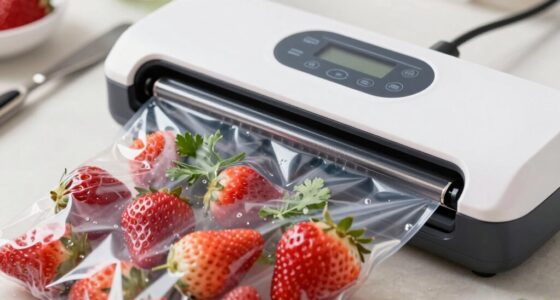
- For long-term storage, freeze grains and beans in airtight or vacuum-sealed bags to kill pests and extend shelf life.
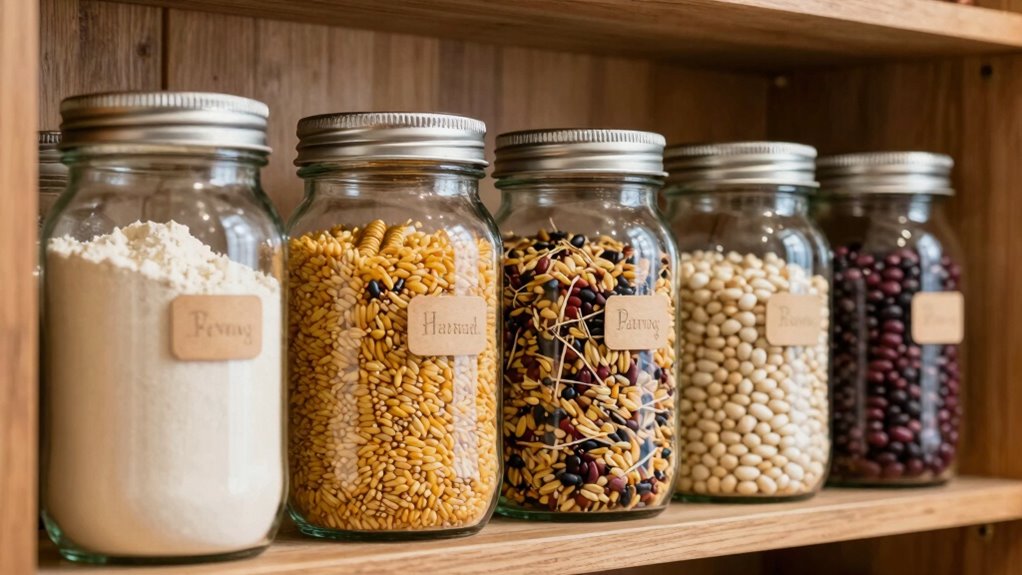
Storing flour, grains, and beans properly is essential to keeping them fresh and preventing pests from invading your pantry. Storing flour, grains, and beans correctly can significantly extend their shelf life and maintain their quality. When pests like pantry moths or beetles find their way in, they can quickly ruin your food supplies, so pest prevention should be a top priority. To start, choose airtight containers made of glass, metal, or heavy-duty plastic. These containers block out moisture and pests, helping your food stay fresh longer. Avoid using flimsy or porous bags that let air, humidity, and bugs in. Once your food is transferred, make sure the lids seal tightly every time.
Proper storage with airtight containers keeps flour, grains, and beans fresh and pest-free.
Temperature and humidity control are also key factors in maintaining the quality of flour, grains, and beans. Store them in a cool, dry place away from direct sunlight. Heat and humidity accelerate spoilage and provide perfect conditions for pests to thrive. A pantry or cupboard that maintains a consistent temperature is ideal. If you live in a humid climate, consider adding a moisture absorber or desiccant packets to your containers. This extra step prevents mold growth and keeps your food dry. Proper storage not only extends shelf life but also minimizes the risk of attracting pests, which are often drawn to moisture and warmth. Additionally, understanding food storage best practices can help you optimize your pantry organization and preservation efforts. Regularly rotating your stock and checking for signs of spoilage can further help prevent waste.
Labeling your containers with the date of purchase or storage can help you keep track of how long your items have been stored. This way, you can rotate your stock and use older items first, reducing waste and ensuring your pantry remains fresh. Incorporating storage organization tips can make it easier to keep track of your supplies and maintain a tidy pantry. If you notice any signs of pests or mold, discard the affected items immediately. Regularly inspecting your stored food helps catch issues early before they spread. Maintaining proper storage conditions is crucial for preserving food quality and preventing pest infestations. Furthermore, using airtight containers can prevent contamination and spoilage caused by air exposure. For long-term storage, consider freezing grains and beans in airtight containers or vacuum-sealed bags. Freezing kills any potential pests or eggs and can extend shelf life significantly. Just make sure to allow the items to come to room temperature before opening to prevent condensation. Remember, the key to effective storage is not just choosing the right containers but also maintaining a clean, dry, and cool environment. Consistent pest prevention practices, like cleaning your pantry regularly and keeping food sealed tightly, go a long way in protecting your food supply. Proper food storage techniques can further boost your efforts in maintaining a pest-free pantry and ensuring your ingredients stay fresh for months. With these strategies, you’ll maximize shelf life, keep pests at bay, and enjoy fresh, nutritious ingredients whenever you need them.
Products Worth Considering
Vitamix 5200 Professional-Grade Blender, 64 oz. Container, Black

Cuisinart Portable Tabletop Propane Patio Heater, 11,000 BTU, Red

De'Longhi Dinamica Plus Fully Automatic Espresso Machine
As an affiliate, we earn on qualifying purchases.
Frequently Asked Questions
Can I Store Flour and Grains Together in the Same Container?
You can store flour and grains together in the same container if it’s airtight and made of suitable material, like glass or plastic. Just make certain the container is clean and dry to prolong shelf life and prevent pests. Use separate compartments or layers if possible, and label them clearly. Proper container types help maintain freshness and prevent cross-contamination, ensuring your flour and grains stay fresh longer and retain their quality.
How Long Can I Store Flour Before It Goes Bad?
You can typically store flour for about 6 to 8 months, but its shelf life depends on storage conditions. To maximize flavor preservation and prevent spoilage, keep flour in an airtight container in a cool, dark place. If stored properly, whole wheat or specialty flours might last only 3 to 6 months. Regularly check for signs of spoilage like off smell or discoloration to guarantee quality.
Are Plastic Containers Better Than Glass for Storage?
Plastic containers are often more durable and lightweight, making them easier to handle for storage. They resist breaking if dropped, unlike glass, which can shatter easily. However, glass containers generally offer better protection against odors and stains, preserving the freshness of flour, grains, and beans. Your choice depends on your storage needs—if durability matters most, plastic might be better; for longevity and flavor preservation, glass is a solid option.
Should Beans Be Stored in the Refrigerator or Pantry?
Storing beans in the pantry keeps them accessible and maintains their shelf life, much like a dependable toolbox ready for use. However, if you live in a humid or pest-prone area, refrigerating beans helps prevent pests and extends their freshness. Proper storage, like using airtight containers, is key for pest prevention and preserving quality, ensuring your beans stay delicious and safe for months, whether on a shelf or in the fridge.
How Do I Prevent Pests From Contaminating Stored Grains?
To prevent pests from contaminating your stored grains, use pest-resistant packaging like airtight containers or Mylar bags with oxygen absorbers. Incorporate natural deterrents such as bay leaves, dried chili peppers, or garlic cloves inside storage areas. Keep your storage in a cool, dry place, and check regularly for signs of pests. These steps help create an environment that pests find unappealing, keeping your grains safe and fresh.
Conclusion
Storing your staples securely guarantees your supplies stay fresh, pest-free, and perfect for your pantry. By choosing airtight containers, keeping them cool and dry, and labeling lovingly, you lock in longevity and minimize mess. Maintain your mastery by regularly checking your collection, cleaning containers, and rotating supplies. With this simple, strategic system, you safeguard your grains, beans, and flour, transforming your kitchen into a well-organized, worry-free wonderland where wonderful, wholesome meals wait to be made.