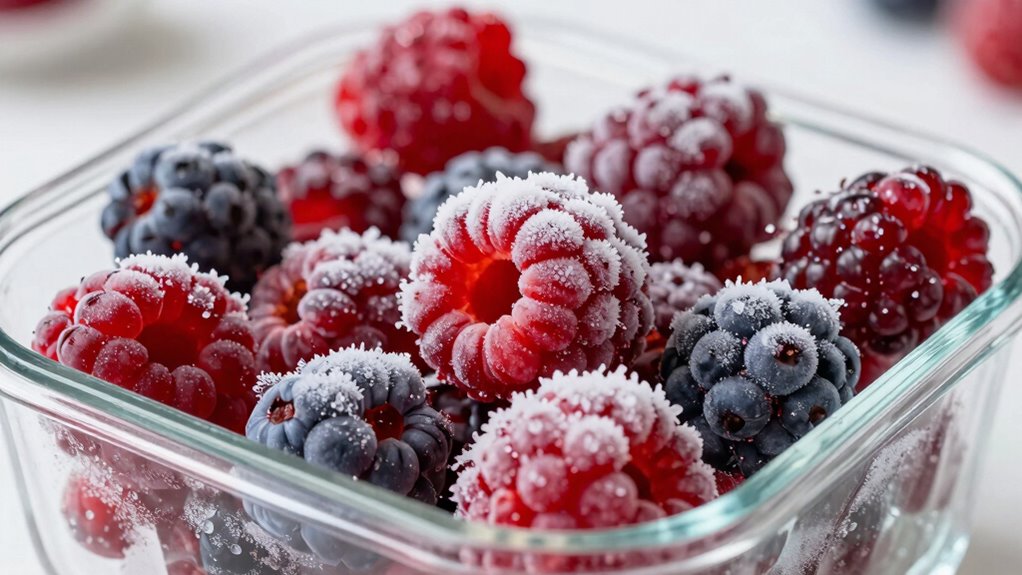

To protect flavor and texture, make sure you properly seal your foods using airtight containers or vacuum sealing to eliminate air and prevent freezer burn. Keep your freezer at or below 0°F (-18°C) and avoid opening the door unnecessarily to maintain a consistent temperature. Organize your items to reduce door openings and freeze foods promptly. These habits help prevent ice crystal damage and preserve quality, so keep these tips in mind to improve your freezing results. If you want to learn more, there’s plenty to discover.

Get kitchen staples and gadgets delivered free with Prime
- Fast, free delivery on millions of items
- Prime Video, Amazon Music and more included
- Member-only deals all year
Key Takeaways
- Use airtight containers or vacuum sealing to prevent air and moisture exposure.
- Maintain a consistent freezer temperature at or below 0°F (-18°C).
- Freeze foods promptly and consume within 3 to 6 months for optimal quality.
- Organize freezer contents to reduce door openings and temperature fluctuations.
- Properly wrapping and sealing foods minimizes ice crystal formation and freezer burn.
Have you ever wondered how to keep your favorite foods tasting fresh and tasting their best? The key lies in developing a good freezer habit that protects both flavor and texture. One of the most common issues in freezing food is ice crystal formation, which can damage the delicate cells of your produce, meats, and baked goods. When ice crystals form and grow inside the food, they puncture cell walls, leading to freezer burn and a loss of moisture. To prevent this, you need to minimize ice crystal formation by controlling how your food freezes and is stored.
Develop good freezer habits to protect flavor, texture, and prevent ice crystal damage.
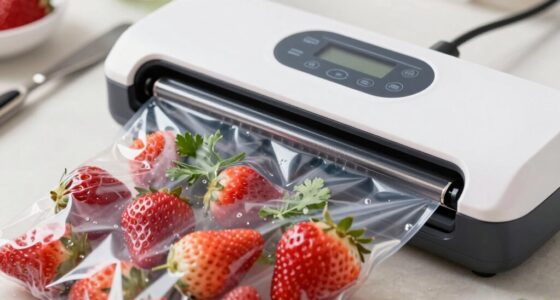
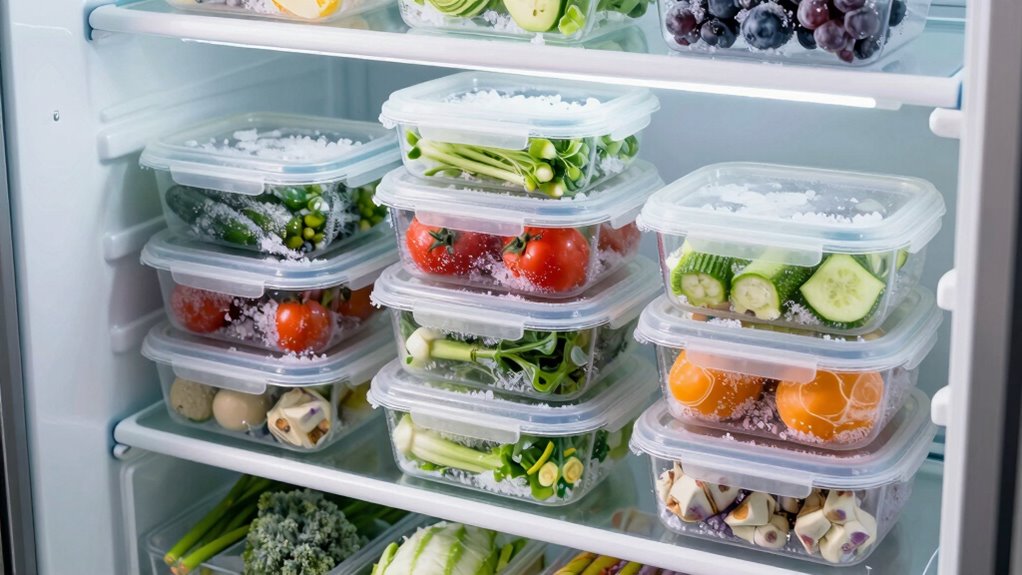
The first step is to guarantee your foods are properly wrapped and sealed. Use airtight containers or heavy-duty freezer bags that remove as much air as possible before sealing. Vacuum sealing is even better if you have the equipment, as it eliminates air entirely, reducing the chance for ice crystals to form. When moisture is trapped inside, ice crystals are more likely to develop, so removing excess air creates a barrier against this. Additionally, wrapping foods tightly with plastic wrap or foil before placing them in storage containers can add an extra layer of protection, preventing exposure to air and moisture. Proper storage techniques help preserve food quality and reduce freezer burn.
Another vital aspect of freezer habit is maintaining a consistent temperature. Fluctuations in your freezer’s temperature can cause partial thawing and refreezing, which encourages ice crystal growth and accelerates freezer burn. Keep your freezer at or below 0°F (-18°C) and avoid opening it unnecessarily. If you regularly stock up on perishables, consider organizing your freezer so that frequently used items are at the front, reducing the time the door stays open and temperature fluctuations. Proper storage techniques are essential for maintaining optimal food quality during freezing. Additionally, understanding freezer temperature control can help you fine-tune your habits to better preserve food. Ensuring your freezer maintains a stable environment is crucial because temperature fluctuations can lead to ice crystal formation, which damages food quality.
Timing also plays a role in freezer protection. The sooner you freeze foods after purchasing or preparing them, the better your chances of preserving their quality. Freeze items promptly, and try to consume them within recommended periods—generally 3 to 6 months for most foods—to maintain ideal flavor and texture. Labeling packages with dates helps you keep track and ensures you use older items first.
Products Worth Considering
Vitamix 5200 Professional-Grade Blender, 64 oz. Container, Black

Instant Pot Duo Crisp Ultimate 6.5-Quart 13-in-1 Pressure Cooker and Air Fryer

Ninja PossibleCooker Plus 6-in-1 8.5 Qt Black (MC1010)
As an affiliate, we earn on qualifying purchases.
Frequently Asked Questions
How Long Can I Store Different Foods in the Freezer Without Quality Loss?
You can store most foods in the freezer for 3 to 12 months without significant quality loss, depending on the item. To prevent freezer burn, guarantee proper packaging and airtight sealing. For example, meats last around 6-12 months, while fruits and vegetables stay good for 8-12 months. Proper storage duration and avoiding freezer burn help maintain flavor and texture, so check recommended times for each food type.
Does Freezing Affect the Nutritional Value of Fresh Produce?
Freezing is like hitting pause on nutrients, so it generally preserves the nutritional value of produce. Proper freezing techniques, like blanching before freezing, help maximize nutrient retention by stopping enzyme actions that cause spoilage. While some loss of vitamins like C and B may occur, most essential nutrients stay intact, making frozen produce a nutritious choice. So, you can enjoy healthy, fresh-tasting fruits and veggies straight from your freezer.
What’s the Best Way to Thaw Frozen Foods Safely?
To thaw frozen foods safely, you should use proper thawing methods and safe defrosting techniques. The best way is to plan ahead and thaw in the refrigerator, which keeps the food at a safe temperature. Alternatively, you can use the microwave’s defrost setting or submerge items in cold water, changing the water every 30 minutes. Avoid leaving food out at room temperature to prevent bacterial growth.
Can Improper Freezer Habits Cause Food Cross-Contamination?
Improper freezer habits can unleash chaos like an uncontrollable wildfire, leading to cross contamination. If you don’t follow cross contamination prevention strategies, raw and cooked foods might mingle, spreading bacteria. Always designate freezer safe zones, keeping raw meats separate from ready-to-eat items. Seal foods tightly, and avoid overloading the freezer. Staying vigilant helps prevent cross contamination, ensuring your food stays safe and delicious without risking harmful bacteria spreading throughout your freezer.
How Does Freezer Temperature Impact Food Preservation Quality?
Your freezer temperature greatly impacts food preservation quality. Keep it at 0°F or below to prevent freezer burn, which damages texture and flavor. Avoid temperature fluctuations, as they cause condensation and ice crystal formation, leading to spoilage. Consistent freezing maintains the quality of your food, preserving taste and texture. Proper temperature management guarantees your frozen items stay fresh longer and retain their original quality.
Conclusion
Think of your freezer as a guardian of memories, preserving the vibrant flavors and tender textures you cherish. When you adopt this simple habit, you’re safeguarding your culinary treasures against time’s relentless march. Like a steadfast lighthouse guiding ships safely home, your freezer shields your food’s essence, ensuring each bite remains as delightful as the first. Embrace this ritual, and let your kitchen become a sanctuary where flavor and texture are forever preserved, waiting to be rediscovered.