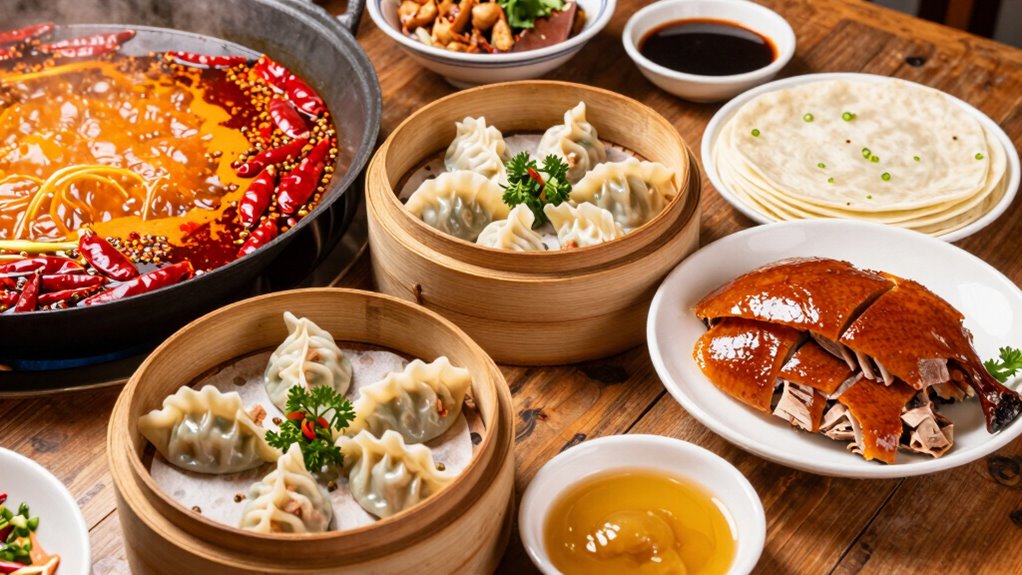

Chinese regional cooking isn’t just one flavor story; it’s a vibrant mix shaped by history, climate, and local culture. From Sichuan’s bold spiciness to Jiangsu’s sweet-salty dishes, each region offers unique ingredients and techniques. Guangdong’s light, fresh flavors contrast with hearty northern cuisines. This diversity keeps Chinese food dynamic and exciting. Exploring these regional differences reveals a rich culinary landscape—there’s much more to discover if you keep exploring each tradition’s story.

Get kitchen staples and gadgets delivered free — and shop member deals
- Fast, free delivery on millions of items
- Access to Prime Big Deal Days deals on October 6–7
- Prime Video, Amazon Music and more included
Key Takeaways
- China’s diverse climates and cultures lead to distinct regional flavors and ingredients, creating a varied culinary landscape.
- Different regions emphasize unique tastes, such as Sichuan’s spiciness or Guangdong’s light, fresh dishes.
- Modern fusion techniques blend traditional and international influences, showcasing the adaptability of regional cuisines.
- Culinary innovation maintains regional identity while making dishes more accessible and relevant globally.
- Each regional dish reflects specific local history, resources, and cultural practices, emphasizing their unique stories.
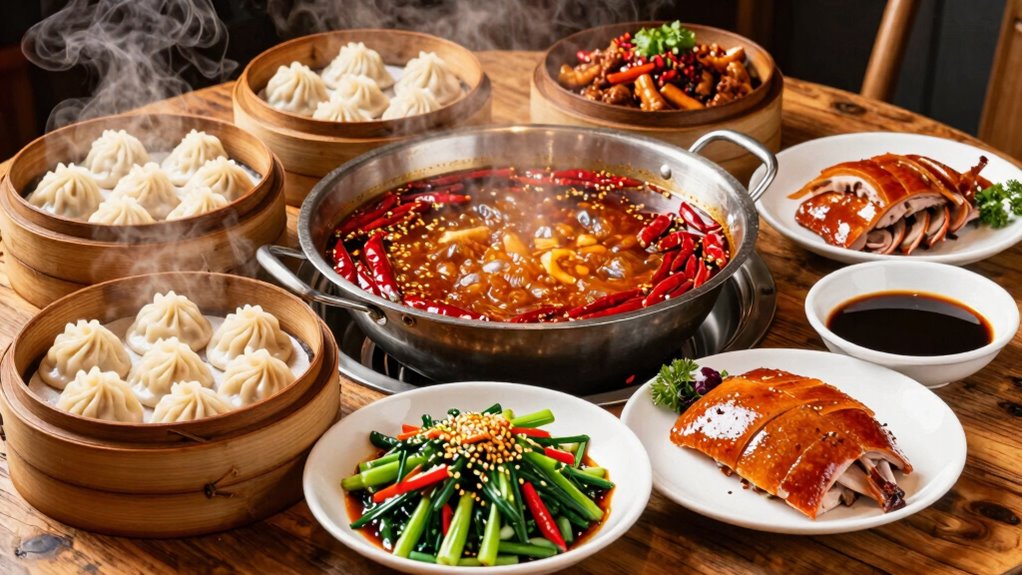
Have you ever wondered why Chinese cuisine varies so much across different regions? It’s because each area has its own history, climate, and cultural influences that shape its culinary traditions. These factors lead to distinct flavors, ingredients, and cooking styles, making Chinese regional cooking far from a single, uniform story. Instead, it’s a vibrant tapestry woven from diverse practices that reflect local tastes and resources.
Chinese regional cuisine is a colorful tapestry shaped by history, climate, and culture.
In recent years, chefs and food enthusiasts have embraced fusion techniques to blend traditional flavors with modern interpretations. This approach introduces innovative twists that appeal to contemporary palates while respecting the roots of regional dishes. For example, a chef might incorporate international ingredients into classic Sichuan stir-fries or reinterpret Cantonese dim sum with a modern presentation. These fusion techniques don’t erase tradition; they enhance it by creating exciting new experiences that highlight the richness and adaptability of Chinese cuisine.
Modern interpretations also play a vital role in how Chinese regional cooking evolves. Chefs experiment with plating, textures, and flavor combinations, making dishes more accessible to global audiences. For instance, traditional Peking duck might be served in a more refined, minimalist style, emphasizing presentation and flavor balance. Similarly, street foods from different regions are transformed into gourmet dishes that retain their authentic spirit but appeal to contemporary tastes. This blending of old and new keeps Chinese regional cuisine dynamic and relevant in a world where culinary borders are increasingly blurred. Incorporating culinary innovation helps ensure that regional dishes continue to thrive and adapt over time.
Understanding the diversity within Chinese regional cooking helps you appreciate that each dish is rooted in its specific context. Whether it’s the spicy, bold flavors of Sichuan, the sweet and savory balance of Jiangsu, or the light, fresh ingredients of Guangdong, each region’s cuisine tells a unique story. Recognizing how regional culinary traditions are influenced by local ingredients and history further enriches your appreciation of Chinese food. The use of fusion techniques and modern interpretations doesn’t diminish these stories; instead, it brings them to life in new ways, making the cuisine more versatile and exciting.
Chinese regional cuisine cookbook
As an affiliate, we earn on qualifying purchases.
As an affiliate, we earn on qualifying purchases.
Frequently Asked Questions
How Do Regional Ingredients Influence Chinese Cooking Styles?
Regional ingredients greatly influence Chinese cooking styles by shaping flavors and techniques. You’ll notice fusion influences where local ingredients blend traditional methods with modern adaptations, creating unique dishes. For example, coastal regions use seafood, while inland areas favor hearty grains and meats. These ingredients inspire chefs to innovate, ensuring each region’s cuisine reflects its environment and history, making Chinese food richly diverse and continually evolving through regional influences.
What Are the Key Spices Unique to Each Region?
Imagine you’re scrolling through a vintage recipe app—regional spice blends define each area’s unique flavor profile. In Sichuan, you’ll find bold Sichuan peppercorns and chili flakes. Cantonese cuisine highlights ginger and five-spice powder. Northern regions favor cumin and garlic, while Jiangsu emphasizes sweet, aromatic spices like star anise. These spices shape local cooking styles, making each region’s dishes distinct and unforgettable.
How Does Climate Affect Regional Chinese Cuisine?
Climate shapes regional Chinese cuisine by influencing ingredients and cooking methods. In warm, humid areas, you’ll find dishes with cooling ingredients like mint and cucumber, rooted in ancient culinary traditions. Cooler regions favor hearty, warming foods like stews. Modern fusion influences blend these climate-based traditions with new flavors, creating diverse dishes. You adapt your cooking by considering climate’s impact, respecting ancient roots while embracing contemporary tastes.
Are There Regional Cooking Techniques Exclusive to Certain Areas?
Ever wonder if some regional Chinese cooking techniques are exclusive? Absolutely. In places like Sichuan, you’ll find methods like dry-frying and complex spice blends that are unique. Modern methods blend traditional techniques with fusion fusion influences, creating innovative dishes. These techniques often develop to suit local ingredients and climate. So, yes, certain regions have distinct methods, but chefs also adapt and innovate, making Chinese cuisine endlessly fascinating.
How Do Cultural Exchanges Shape Regional Chinese Dishes?
Cultural exchanges influence regional Chinese dishes by introducing fusion flavors that blend local ingredients with external culinary techniques. You’ll notice how these exchanges shape unique culinary identities, making dishes more diverse and dynamic. As you explore regional cuisines, you see how trade, migration, and cultural interactions enrich traditional recipes, creating vibrant flavors that reflect a history of openness and adaptation. This blending celebrates China’s rich, interconnected culinary landscape.
As an affiliate, we earn on qualifying purchases.
Conclusion
You’ve just tasted a tapestry woven with vibrant threads from China’s far-flung kitchens. Each region’s flavor is a unique brushstroke on the grand culinary canvas, bursting with history and culture. Don’t let one spoonful fool you into thinking the story ends there—each bite is a chapter waiting to be explored. So, keep your fork ready, and let the diverse flavors of Chinese regional cooking continue to surprise and delight your palate, one delicious story at a time.
Cantonese dim sum steamer baskets
As an affiliate, we earn on qualifying purchases.
As an affiliate, we earn on qualifying purchases.
As an affiliate, we earn on qualifying purchases.
NFL season / tailgating Picks
team gear
As an affiliate, we earn on qualifying purchases.