
Dehydrators work best for more than fruit because they offer versatile temperature controls and even airflow, making them ideal for drying meats, herbs, vegetables, and snacks. You can customize settings to suit different foods, ensuring nutrition, flavor, and color are preserved. They also help prevent spoilage and extend shelf life while reducing waste. If you keep exploring, you’ll discover how their multifunctionality makes them a valuable tool in your kitchen for all kinds of dried foods.
Open a free Amazon Business account
Business pricing, bulk buying and tax-exempt orders.
As an affiliate, we earn on qualifying purchases.
Key Takeaways
- Dehydrators can preserve a variety of foods, including meats, herbs, vegetables, and snacks, beyond just fruit.
- They offer adjustable temperature controls suitable for different food types, ensuring optimal drying conditions.
- Even airflow and heat circulation ensure uniform drying, making them effective for meats, herbs, and vegetables.
- Proper dehydration techniques reduce bacteria growth, spoilage, and food waste across diverse foods.
- They are energy-efficient and promote culinary versatility, enabling homemade snacks, preserved herbs, and seasonal harvests.
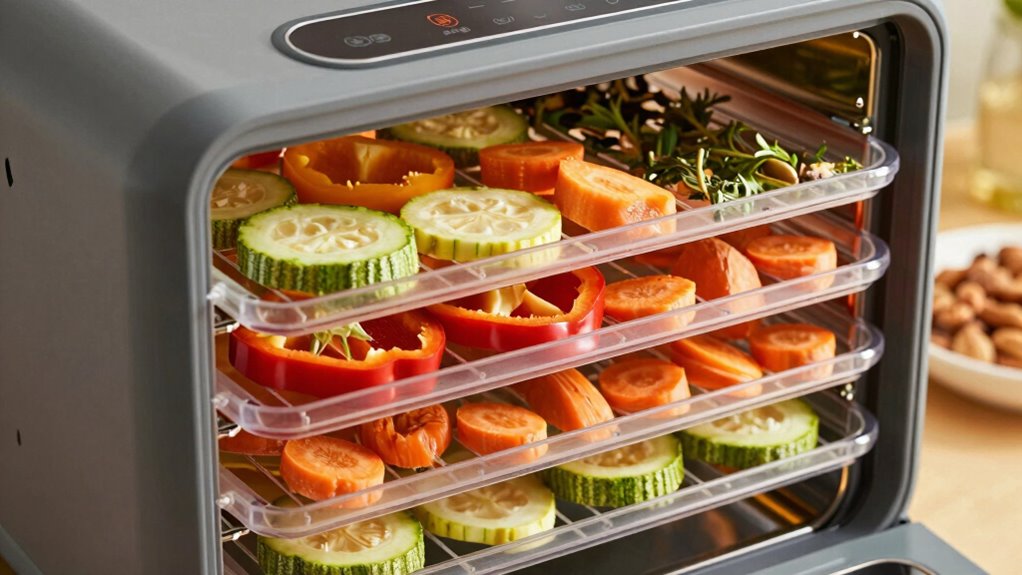
Dehydrators are often associated with drying fruit, but their versatility extends far beyond that. When you invest in a dehydrator, you liberate a powerful tool that can help you preserve a variety of foods efficiently. For example, meat preservation is one area where dehydrators excel. Instead of relying on traditional curing methods or freezing, you can make your own beef jerky or dried sausage at home. This process not only preserves the meat but also concentrates flavors and extends shelf life, making it a practical choice for stocking up for long trips or emergencies. Using a dehydrator for meat is straightforward—you simply slice the meat thin, season it as desired, and let the machine do the work. The even heat circulation ensures consistent drying, reducing bacteria growth and preventing spoilage. As a result, you get a nutritious, portable snack that’s free from added preservatives often found in store-bought options.
Herb drying is another popular application that highlights the flexibility of dehydrators. If you grow your own herbs or buy in bulk, drying them with a dehydrator preserves their flavor, aroma, and medicinal qualities much better than air drying or oven drying. You’ll find that using a dehydrator allows you to retain the vibrant color and essential oils that make herbs such as basil, oregano, or mint so appealing in your cooking. Plus, it’s quick and easy—just spread the herbs on trays, set the temperature, and let the machine do its thing. Once dried, you can crush the herbs into powders or store them whole in airtight containers for future use. This method guarantees you always have fresh-tasting herbs on hand, regardless of the season. Additionally, the controlled environment of a dehydrator helps maintain the nutritional value of your herbs and other foods during drying. Proper temperature control is crucial for preserving delicate nutrients and flavors during dehydration. Understanding the food safety aspects of dehydration can help prevent contamination and spoilage, making it a reliable preservation method. Incorporating dehydration techniques into your food storage routines can significantly reduce waste and extend the usability of seasonal harvests. Furthermore, the energy efficiency of dehydrators can make them a sustainable choice compared to other preservation methods.
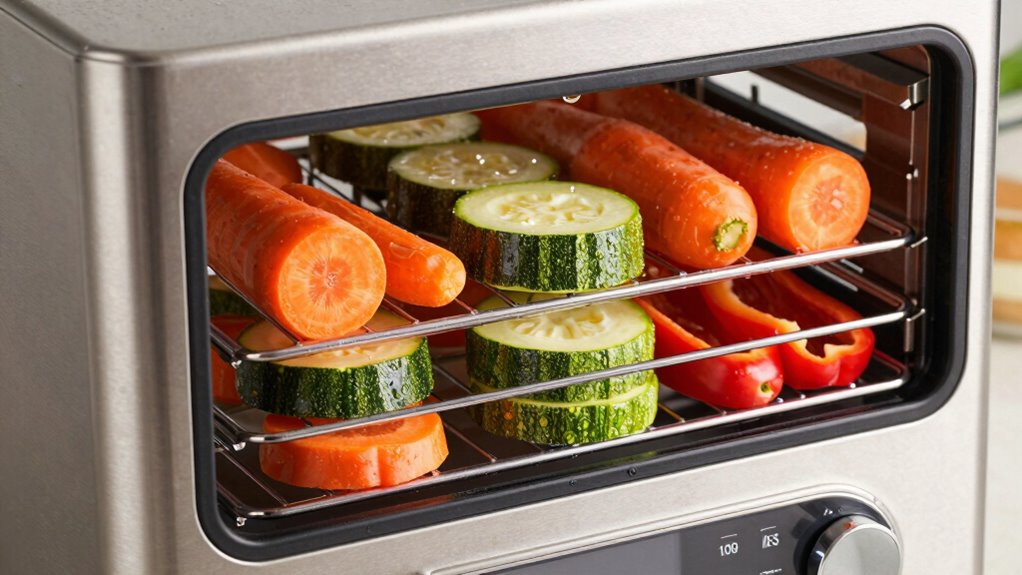
Beyond just fruit, meat, and herbs, dehydrators are also excellent for making trail mixes, drying vegetables, or even creating homemade snacks like fruit leather. Their even airflow and adjustable temperature controls give you precise management over the drying process, which is vital for different foods. The ability to customize settings means you can dry delicate items gently or speed up the process for thicker or more fibrous foods. When you consider how much food you can preserve and how many different types of foods you can prepare, it’s clear that a dehydrator is a versatile kitchen appliance that works well for much more than just drying fruit. Its multifunctionality makes it a smart investment for anyone interested in food preservation, culinary experimentation, or reducing waste.
As an affiliate, we earn on qualifying purchases.
Frequently Asked Questions
Can Dehydrators Preserve Herbs and Spices Effectively?
Yes, dehydrators preserve herbs and spices effectively. They’re ideal for herb preservation and spice drying because they gently remove moisture without losing essential oils or flavor. You can set the right temperature to prevent overheating, ensuring your herbs stay vibrant and tasty. Using a dehydrator makes it easy to store herbs and spices for long-term use, maintaining their aroma and potency much better than other methods.
Are Dehydrators Suitable for Drying Meats or Jerky?
Yes, dehydrators are suitable for drying meats or jerky, but you must prioritize meat safety to prevent bacteria growth. Using a dehydrator guarantees even drying, which enhances jerky quality and reduces spoilage risks. Proper temperature control is essential, typically around 145°F (63°C). With the right techniques, your homemade jerky will be safe, flavorful, and tender—making dehydrators a great choice for meat preservation.
How Do Dehydrators Compare to Oven Drying Methods?
Dehydrators outperform oven drying because they offer precise temperature control and better drying uniformity. You can set consistent temperatures, preventing over-drying or uneven dehydration. Unlike ovens, which have hot spots and fluctuating heat, dehydrators circulate air evenly, ensuring all items dry at the same rate. This makes dehydrators ideal for preserving a variety of foods, from fruits to meats, with better quality and longer shelf life.
Can Dehydrators Be Used for Making Homemade Pet Treats?
Yes, you can definitely use dehydrators for making homemade pet treats. They’re great for creating healthy pet snacks because you control the ingredients, ensuring treat safety. Just make sure to use pet-safe ingredients and avoid anything toxic. Dehydrators dry treats evenly and retain nutrients, making your pet snack both tasty and healthy. Always check for any specific ingredient restrictions for your pet’s health before dehydrating homemade treats.
What Are the Energy Consumption Differences Among Dehydrator Models?
Think of dehydrators as energy-efficient engines, silently powering your food preservation. Some models use less power, making them more energy-efficient, while others consume more to expedite drying. When choosing, consider power consumption to save on energy bills and protect the environment. Higher-end models often balance better energy efficiency with performance, ensuring you get ideal dehydration without overloading your electricity use. Your choice impacts both your wallet and the planet.
As an affiliate, we earn on qualifying purchases.
Conclusion
Remember, a dehydrator isn’t just for fruit — it’s a versatile tool that can preserve herbs, make jerky, and even craft crunchy snacks. By investing in one, you’re embracing smarter food storage and reducing waste. As the saying goes, “Don’t put all your eggs in one basket.” With a dehydrator, you’re diversifying your food options and making the most of every ingredient, proving that sometimes, the best tools have the broadest uses.
As an affiliate, we earn on qualifying purchases.
food dehydrator with adjustable temperature
As an affiliate, we earn on qualifying purchases.
As an affiliate, we earn on qualifying purchases.
Evergreen bestsellers Picks
bestsellers
As an affiliate, we earn on qualifying purchases.