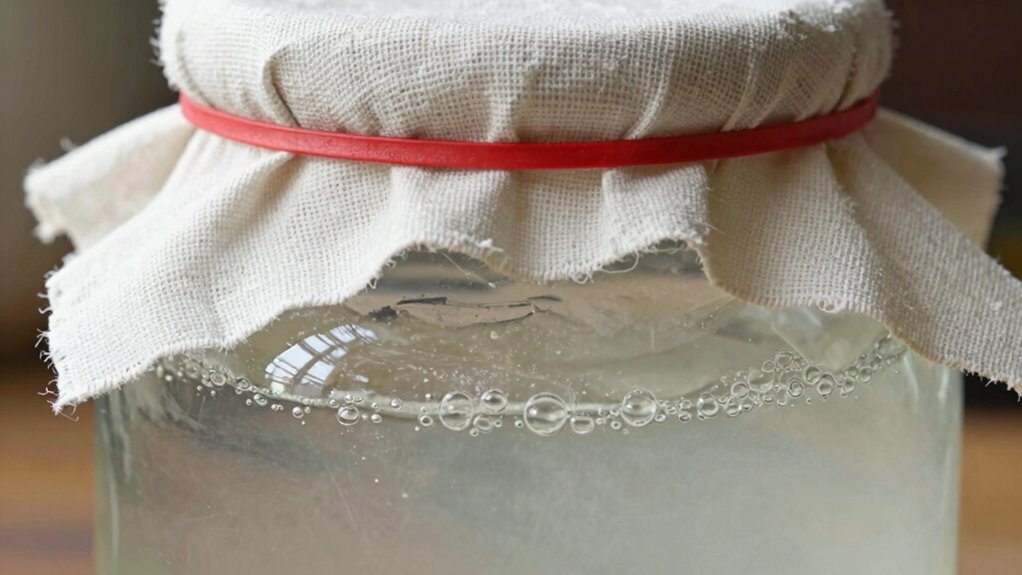

To keep mold away from your fermentation jar, focus on the lid’s sealing mechanism and venting system. An airtight or semi-airtight lid with silicone gaskets prevents airborne mold spores from entering, while a proper vent allows gases to escape without letting in contaminants. These features work together to create a stable, mold-free environment. Keep exploring to discover more tips that help guarantee your ferment stays safe and delicious.
Key Takeaways
- Airtight or semi-airtight lid seals prevent airborne mold spores from contaminating the ferment.
- Silicone gaskets or rubber seals ensure a snug fit, minimizing air leaks and mold growth risk.
- Venting and airlock systems allow gases to escape while blocking mold spores from entering.
- High-quality, moisture-resistant materials inhibit mold development on jar surfaces.
- Design features that facilitate easy cleaning and inspection prevent unnoticed mold formation.
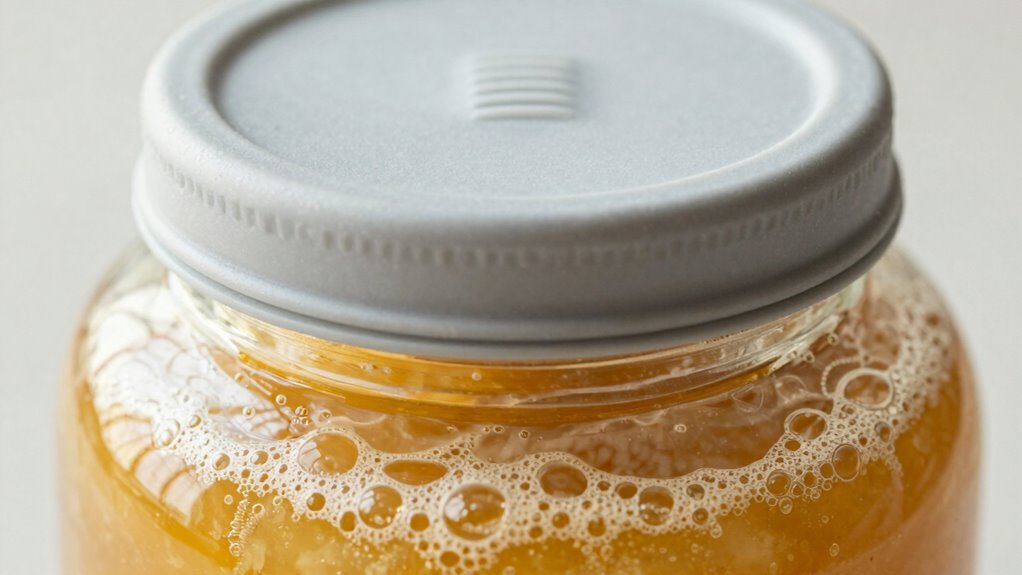
Have you ever wondered what makes a fermentation jar truly stand out? It’s not just about the size or material; it’s about the thoughtful features that guarantee your fermenting process is smooth and free from unwanted mold. One key aspect is the fermentation jar design, which plays a vital role in maintaining the right environment for your ferment. A well-designed jar often includes features that promote airflow while preventing contaminants from sneaking in. This balance helps keep mold at bay and ensures your fermented goods develop the flavors you want without spoilage.
Another essential feature is the lid sealing mechanism. A good lid isn’t just about keeping dust out; it’s about creating an airtight or semi-airtight seal that regulates pressure and gases during fermentation. Many jars now come with specialized lids that incorporate silicone gaskets or rubber seals, which fit snugly to prevent air leaks. When you use a jar with a reliable lid sealing mechanism, you minimize the risk of mold growth caused by excess oxygen or contaminated air entering the jar. This seal also allows gases like carbon dioxide to escape, preventing pressure buildup that could compromise the jar or lead to spoilage.
A reliable lid seal prevents air leaks, controls pressure, and keeps mold at bay during fermentation.
The design of the lid often includes a small vent or airlock system, which is a game-changer. These features allow gases to escape without letting in airborne mold spores or bacteria. This airtight yet breathable environment is essential for successful fermentation. It’s a simple yet effective way to keep mold from taking hold. Plus, a well-designed fermentation jar often features a wide opening, making it easier to clean and check on your ferment, reducing the chances of mold developing unnoticed. Incorporating a properly designed lid can significantly improve the overall environment for your ferment by balancing airflow and sealing. Additionally, the quality of materials used in the jar and lid can influence how well it resists mold and bacterial growth over time. Using high-quality materials can further enhance durability and safety during fermentation. Properly considering these design elements can also help prevent moisture buildup that fosters mold growth, ensuring a cleaner fermentation process. When you pay attention to these design elements, you’re taking a proactive step toward successful fermentation. It’s not just about the jar itself but how its features work together to create the perfect environment for your ferment, helping you enjoy delicious, mold-free results every time.
fermentation jar with airtight lid
As an affiliate, we earn on qualifying purchases.
As an affiliate, we earn on qualifying purchases.
Frequently Asked Questions
Can the Mold-Resistant Feature Be Replaced or Repaired?
You can’t typically replace or repair the mold-resistant feature on a fermentation jar, as it’s usually integrated into the jar’s design. For better repair longevity, consider handling your jar carefully and following the manufacturer’s maintenance instructions. If the mold-resistant coating wears out or gets damaged, replacing the entire jar might be your best option. Always check with the manufacturer for specific replacement options and guarantee your jar stays effective for future ferments.
Does the Feature Affect the Fermentation Process or Flavor?
Think of this mold-resistant feature as a guardian angel for your fermenting vessel. It doesn’t interfere with the symphony of flavors or slow down your process; instead, it preserves flavor and enhances fermentation efficiency. You’ll notice no bitter or off tastes, only the pure essence of your ingredients. Your fermentation stays vibrant and effective, with the feature silently working in the background to guarantee your jar’s environment remains ideal for perfect results.
Is the Mold-Resistant Coating Safe for All Types of Ferments?
The mold-resistant coating is generally safe for all types of ferments, but you should always check the specific product’s safety guidelines. For fermentation safety and mold prevention, make certain the coating is food-grade and non-toxic. While it helps prevent mold, it doesn’t interfere with fermentation processes or flavors. Always monitor your ferments closely and follow recommended practices to keep your fermentation safe and tasty.
How Long Does the Mold-Resistant Feature Last?
The mold-resistant feature typically lasts for several months to a year, depending on usage and care. Its mold longevity is designed to withstand regular fermentation processes, but exposure to moisture and cleaning agents can impact feature durability. To maximize its effectiveness, avoid harsh scrubbing and keep the jar in a cool, dry place. Regular inspections will help guarantee the mold-resistant coating continues to protect your ferments effectively.
Are There Any Cleaning Restrictions Related to the Feature?
You can clean the fermentation jar with mild cleaning chemicals, but avoid harsh abrasives that might damage the mold-resistant feature. Regular user maintenance involves gentle washing and guaranteeing no residue remains, which helps sustain the mold prevention properties. Always rinse thoroughly after cleaning and dry the jar completely before reuse. Following these simple steps ensures the mold-resistant feature stays effective and your fermentation process remains safe and hygienic.
As an affiliate, we earn on qualifying purchases.
Conclusion
With this innovative fermentation jar feature, you’re wielding a shield against mold like a seasoned warrior guarding your probiotic treasures. It’s your secret weapon to guarantee your fermenting journey stays smooth sailing, free from unwanted mold invasions. Think of it as a trusty lighthouse, guiding your fermentation safely through foggy waters. Embrace this feature and watch your jars stay pristine, turning your fermenting efforts into a bubbling success story you can be proud of.
silicone gasket fermentation lid
As an affiliate, we earn on qualifying purchases.
As an affiliate, we earn on qualifying purchases.
fermentation jar with venting system
As an affiliate, we earn on qualifying purchases.
As an affiliate, we earn on qualifying purchases.