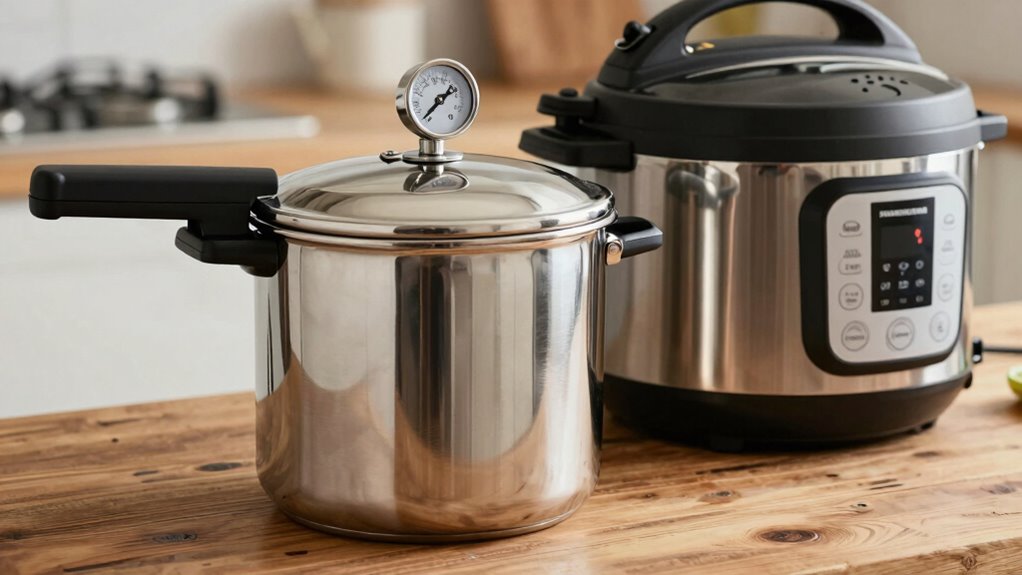

Pressure canners are built specifically for food preservation, with safety features like gauges and venting systems to control pressure precisely, ensuring low-acid foods are processed safely for long-term storage. Pressure cookers, on the other hand, are designed for quick cooking and don’t have the necessary safety mechanisms for canning. Using the right device is essential to prevent safety issues, and you’ll find out more about these important differences if you keep exploring.

Get kitchen staples and gadgets delivered free — and shop member deals
- Fast, free delivery on millions of items
- Access to Prime Big Deal Days deals on October 6–7
- Prime Video, Amazon Music and more included
Key Takeaways
- Pressure canners have safety features like gauges and venting systems for precise pressure control essential for food preservation.
- They are designed to process low-acid foods safely for long-term storage, unlike pressure cookers intended for quick meals.
- Canners maintain consistent internal pressure during processing, ensuring food reaches safe temperatures and spores are eliminated.
- Pressure cookers lack the necessary safety mechanisms and pressure regulation for proper canning and preservation.
- Using a pressure cooker for canning can lead to under-processing and food safety risks due to inadequate pressure control.
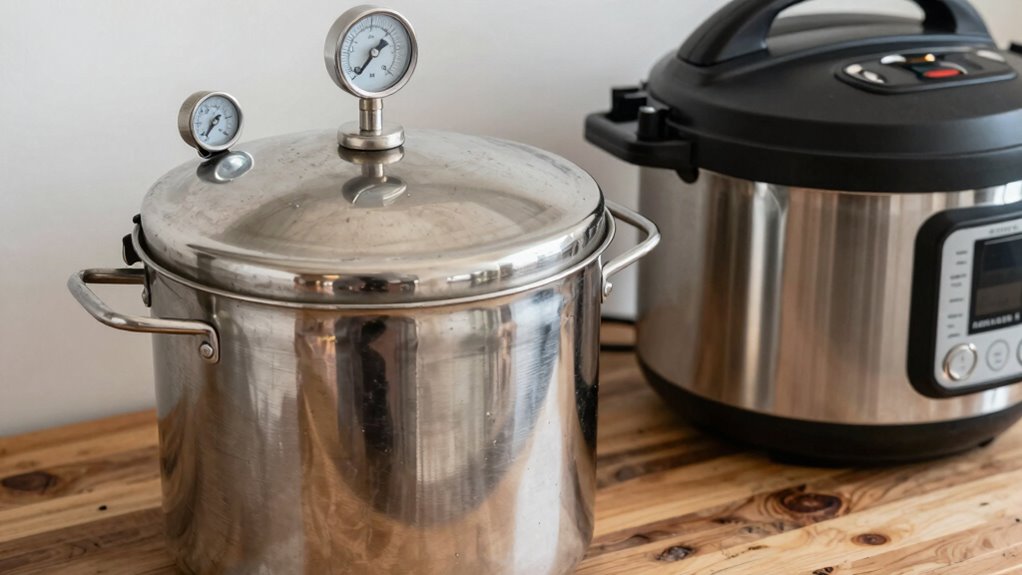
When choosing between pressure canners and pressure cookers, understanding their differences is essential for safe and effective food preparation. Although they look similar and both use pressure to cook or process food, their purposes and designs set them apart. Pressure canners are specifically built for food preservation, allowing you to safely process low-acid foods like vegetables, meats, and jams to eliminate bacteria and spores that cause spoilage. Pressure cookers, on the other hand, are primarily designed for quick cooking of meals, saving you time in the kitchen. They don’t typically meet the strict safety standards required for canning, which makes them unsuitable for preserving food long-term.
One of the biggest distinctions lies in safety standards. Pressure canners are engineered with multiple safety features, including thick walls, weighted or dial gauges, and venting systems, to precisely control internal pressure during the canning process. These features help ensure that the food reaches the necessary temperature to destroy harmful microorganisms, making the process safe for long-term storage. In contrast, pressure cookers are meant for short-term cooking and generally lack the specialized safety mechanisms needed for canning. Using a standard pressure cooker for food preservation can lead to unsafe conditions, risking under-processing and potential bacterial growth. Additionally, the importance of proper pressure regulation cannot be overstated, as it is critical for ensuring food safety during canning. Proper pressure control is vital to achieving consistent results and preventing accidents during the preservation process. Furthermore, understanding the differences in design helps to clarify why each device is suited for its specific purpose. It’s also crucial to follow canning guidelines carefully to prevent food safety issues.
Food preservation requires strict adherence to safety standards, and that’s why pressure canners are the preferred choice. They are built to maintain consistent pressure levels, which is crucial when processing low-acid foods. The ability to reach and sustain the correct pressure ensures that your canned foods are safe to store for months or even years. Pressure cookers, although effective for preparing meals quickly, do not provide the same level of control or safety features for long-term food preservation. Relying on them for canning can result in improperly processed foods, which may pose health risks. Proper canning techniques are essential to ensure food safety and quality.
As an affiliate, we earn on qualifying purchases.
Frequently Asked Questions
Can a Pressure Cooker Be Used as a Pressure Canner?
A pressure cooker isn’t suitable for pressure canning because it lacks the capacity and specific features needed for safe food preservation. Using it for canning can compromise kitchen safety and proper cooking techniques. Pressure canners are designed to maintain precise pressure and temperature levels, ensuring food safety. If you attempt to use a pressure cooker, you risk underprocessing or overprocessing, which can lead to unsafe food, so always choose the right equipment for canning.
What Safety Features Differentiate Pressure Canners From Cookers?
Pressure canners have safety features like safety valves that release excess pressure, preventing dangerous buildup. They also include locking mechanisms that guarantee the lid stays securely in place during processing, avoiding accidental opening under pressure. These features are designed specifically for home canning safety, unlike pressure cookers, which focus more on cooking efficiency. Always check that your pressure canner has these safety features before use to ensure safe canning.
Are Pressure Canners Suitable for Non-Food Canning Tasks?
Think of your pressure canner as a versatile tool, not just a food protector. While it’s designed mainly for canning, you can explore alternative uses and non-food applications, like sterilizing medical or craft items. It’s like turning a kitchen hero into a multi-tasker, but make certain to adjust settings carefully and avoid cross-contamination. Always follow manufacturer guidelines to ensure safety when using it beyond food preservation.
How Long Do Pressure Canners Typically Last?
You can expect your pressure canner to last around 10 to 15 years with proper care. Material durability plays a big role—stainless steel models tend to last longer than aluminum. Storage considerations are important; keep it in a dry, cool place to prevent rust and damage. Regularly check the gasket and valves, and follow manufacturer guidelines to extend its lifespan and guarantee safe, effective canning every time.
Can Pressure Canners Be Used on Induction Stoves?
Think of your pressure canner as a sturdy ship, and your induction stove as a powerful lighthouse. Yes, pressure canners can be used on induction stoves if they’re induction-compatible. This guarantees maximum cooking efficiency, as the magnetic base heats quickly and evenly. Always check the manufacturer’s label to confirm induction compatibility. When aligned, your canner and stove work harmoniously, making your canning process safe and efficient.
food preservation pressure canner
As an affiliate, we earn on qualifying purchases.
As an affiliate, we earn on qualifying purchases.
Conclusion
Understanding the differences between pressure canners and pressure cookers is like knowing the distinct roles of a chef’s knife and a spatula—each is essential, but for different tasks. Pressure canners are built for safety and preserving food, while pressure cookers are designed for quick cooking. By choosing the right tool, you’ll guarantee your kitchen runs smoothly and your food turns out perfectly, just like a well-orchestrated symphony.
As an affiliate, we earn on qualifying purchases.
As an affiliate, we earn on qualifying purchases.
NFL season / tailgating Picks
team gear
As an affiliate, we earn on qualifying purchases.