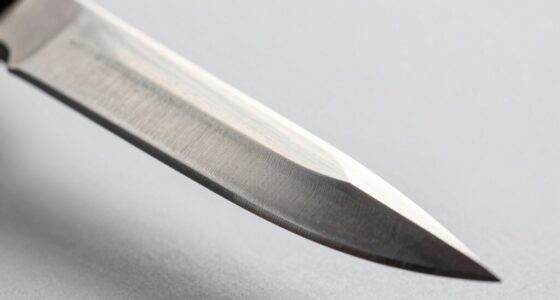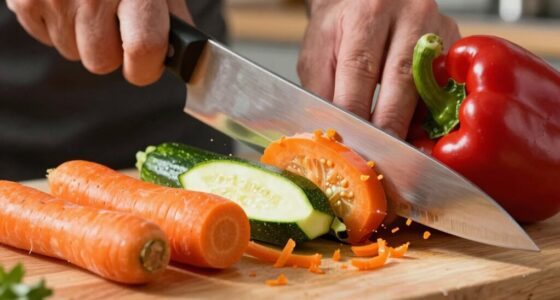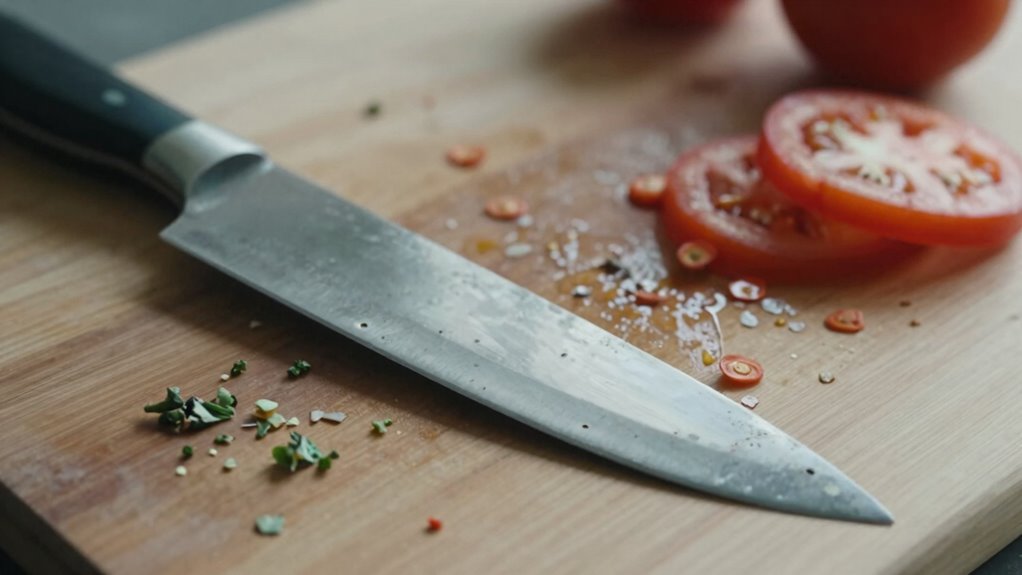

Dull knives slow you down because you have to use more force to cut through ingredients, making the process take longer. They also increase the risk of slipping and accidentally cutting yourself since they’re less predictable and harder to control. Plus, you’ll likely need to re-cut foods, wasting time and effort. Proper maintenance keeps your knives sharp and safer, helping you work faster and more confidently—if you want to learn how to improve your knife skills, keep going.
Key Takeaways
- Dull knives require more force, slowing down food preparation and increasing fatigue.
- Using dull blades increases slipping risk, leading to potential injuries.
- Imprecise cuts from dull knives cause re-cutting, wasting time and effort.
- Dull blades cause uneven pressure, raising the likelihood of accidents.
- Frequent re-sharpening and cautious handling are needed, reducing overall efficiency.
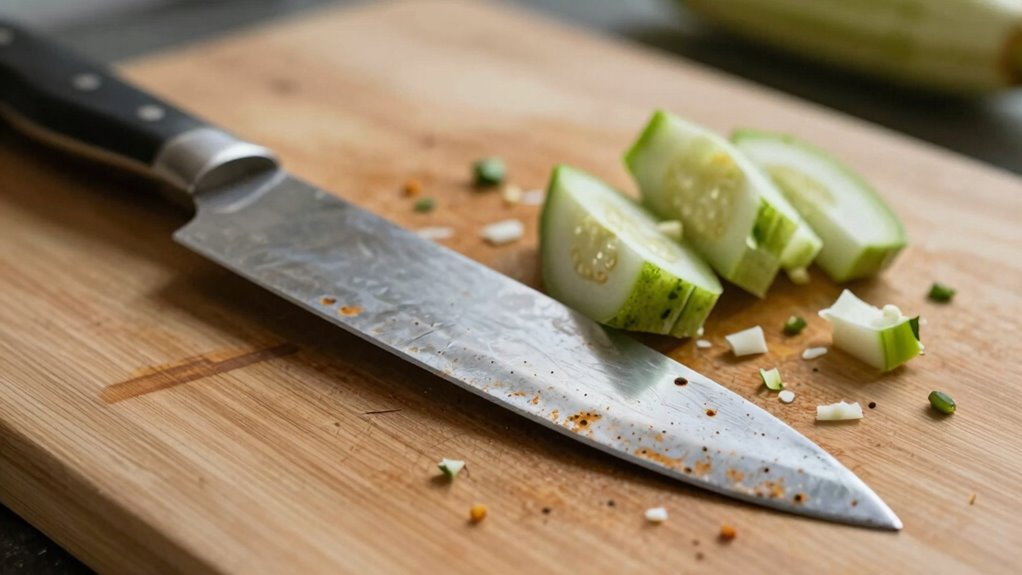
A dull knife might seem harmless, but it actually wastes your time and increases your risk of injury. Trying to cut through tough ingredients with a blunt blade requires more force, which can lead to slips and accidents. When your knife isn’t sharp, you often have to press harder, losing control and risking cuts. To avoid this, always pay attention to your technique. Keep your fingers tucked away, use a stable cutting surface, and don’t rush. Taking these safety precautions helps you maintain control, even with a dull blade. Remember, a sharp knife requires less force, so you’re less likely to slip and cut yourself.
A dull knife wastes time and raises safety risks—keep your blades sharp for faster, safer cooking.
Many people overlook safety precautions when handling dull knives, assuming they’re less dangerous. But the truth is, a dull knife is more unpredictable. It’s less precise, so you might accidentally slip off your target or apply uneven pressure, which increases the chance of injury. To avoid this, always pay attention to your technique. Keep your fingers tucked away, use a stable cutting surface, and don’t rush. Taking these safety precautions helps you maintain control, even with a dull blade. Remember, a sharp knife requires less force, so you’re less likely to slip and cut yourself. Regular knife maintenance can prevent these issues and keep your blades performing optimally. Incorporating proper sharpening techniques into your routine ensures your knives stay effective and safe to use. Additionally, understanding the proper storage of knives helps prevent dulling and accidental injuries when handling them. Using the right cutting techniques also reduces unnecessary strain on the blade and enhances safety.

Intelitopia Complete Knife Sharpening Stone Set – Dual Grit Whetstone 400/1000 3000/8000 Knife Sharpener with Leather Strop, Flattening Stone, Bamboo Base, 3 Non-slip Rubber Bases & Angle Guide
【Complete Knife Sharpening Stone Kit】You don't need to be a Pro to sharpen your blades, all you need…
As an affiliate, we earn on qualifying purchases.
As an affiliate, we earn on qualifying purchases.
Frequently Asked Questions
How Often Should I Sharpen My Kitchen Knives?
You should sharpen your kitchen knives every 1-2 months, depending on usage. Regular honing with sharpening tools helps maintain their edge, but for a truly sharp blade, periodic sharpening is crucial. Store your knives properly to prevent dulling from damage. Using quality sharpening tools ensures safety and efficiency, so keep your knives in good condition to save time and reduce the risk of accidents.
Can Dull Knives Cause More Hand Fatigue?
Dull knives can definitely cause more hand fatigue. Think of trying to cut tough meat with a dull blade; your hand works harder to apply pressure, straining your grip. An ergonomic grip helps, but a dull blade reduces your blade sensitivity, forcing you to exert extra effort. Regular sharpening keeps your knife sharp, making cutting easier and reducing fatigue. This way, you can cook comfortably without risking hand strain or injury.
What Is the Best Way to Maintain Sharp Knives?
The best way to maintain sharp knives is through regular knife honing, which realigns the blade’s edge and keeps it sharp longer. Use a honing steel after every few uses, and always practice proper blade protection by storing knives in a knife block or on a magnetic strip. Avoid dishwasher cleaning, as it dulls blades faster. Proper maintenance preserves your knife’s sharpness, reduces cutting effort, and extends its lifespan.
Are Ceramic Knives Less Prone to Dullness?
You bet they are less prone to dullness. Ceramic knives boast remarkable durability, especially regarding edge retention, meaning they stay sharp longer than traditional metal blades. This saves you time and effort in the kitchen. However, keep in mind that their brittleness can lead to chipping or breaking if mishandled. But overall, their sharpness and longevity make them a smart choice for precise slicing and dicing.
How Do Dull Knives Affect Food Presentation?
Dull knives negatively impact your food presentation by ruining knife aesthetics and disrupting plating precision. As you cut, dull blades tear instead of slice cleanly, causing uneven edges and smudges on delicate items like garnishes or thin slices. This sloppy appearance diminishes the visual appeal of your dish. Using sharp knives guarantees smooth cuts, maintaining the integrity of your presentation and impressing guests with professional-looking plating.
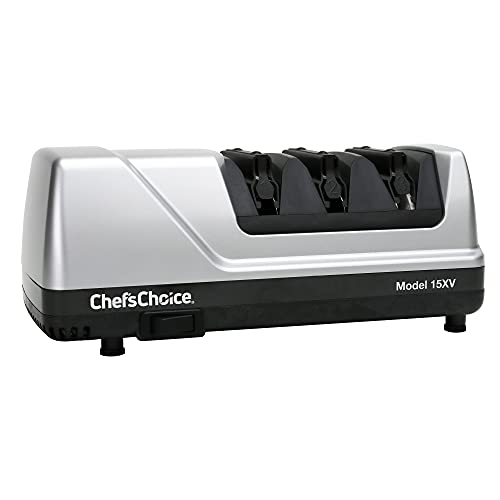
Chef’sChoice 15XV EdgeSelect Professional Electric Knife Sharpener with 100-Percent Diamond Abrasives and Precision Angle Guides for Straight Edge and Serrated Knives, 3-Stage, Gray
CONVERT YOUR KNIVES: Ideal for converting traditional 20-degree factory edges of household knives into high performance Trizor XV…
As an affiliate, we earn on qualifying purchases.
As an affiliate, we earn on qualifying purchases.
Conclusion
Using dull knives not only slows you down but also increases your risk of injury—something nearly 70% of kitchen accidents involve dull blades. Keeping your knives sharp saves time and keeps you safe in the kitchen. Don’t overlook the importance of regular sharpening; it’s a simple step that makes a big difference. Stay vigilant, sharpen your knives often, and enjoy safer, more efficient cooking every time.

Utopia Kitchen Knife Sharpener Rod 12 Inch, Professional Honing Rod for Knife Sharpening with Hanging Hook, Black
Premium Steel Construction – The steel rod is made of carbon steel and plated with nickel-chrome; the fine…
As an affiliate, we earn on qualifying purchases.
As an affiliate, we earn on qualifying purchases.
Chef’sChoice 15XV EdgeSelect Professional Electric Knife Sharpener with 100-Percent Diamond Abrasives and Precision Angle Guides for Straight Edge and Serrated Knives, 3-Stage, Gray
CONVERT YOUR KNIVES: Ideal for converting traditional 20-degree factory edges of household knives into high performance Trizor XV…
As an affiliate, we earn on qualifying purchases.
As an affiliate, we earn on qualifying purchases.