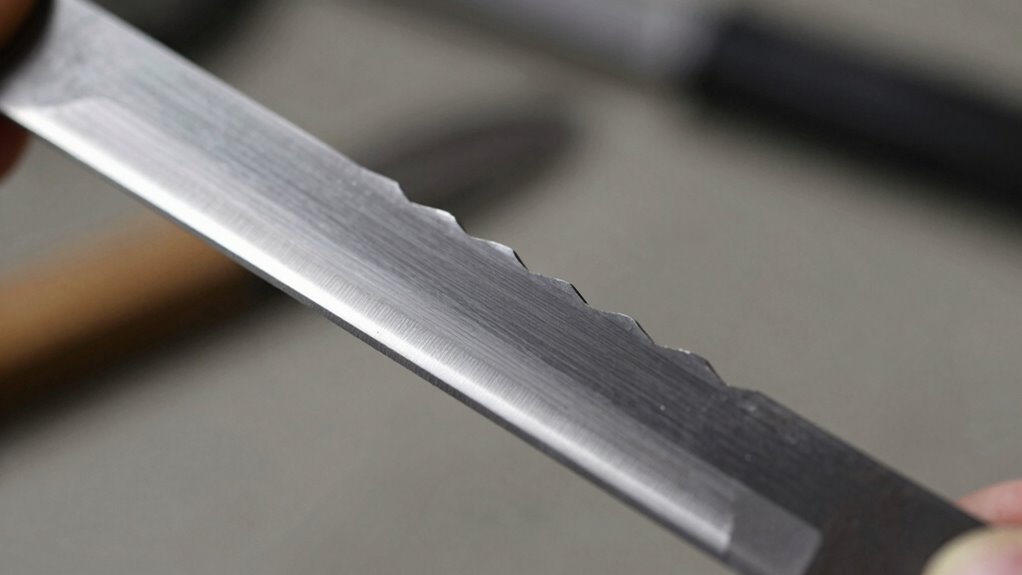

The main angle mistake that makes home sharpening harder is holding the blade at an inconsistent or incorrect angle. When you don’t maintain a steady, proper angle, it creates jagged or uneven edges, making future sharpening more difficult and less effective. Rushing or relying on intuition often leads to this problem. If you keep practicing proper technique and calibration, you’ll improve your results and keep your blades sharper longer—something you won’t want to miss.

Get kitchen staples and gadgets delivered free — and shop member deals
- Fast, free delivery on millions of items
- Access to Prime Big Deal Days deals on October 6–7
- Prime Video, Amazon Music and more included
Key Takeaways
- Holding the blade at an inconsistent or incorrect angle causes uneven edges, making sharpening more difficult.
- Using uncalibrated guides or tools can lead to improper sharpening angles, increasing effort.
- Rushing or relying on intuition instead of maintaining a steady angle results in poor edge quality.
- Failing to re-calibrate sharpening tools regularly causes angle deviations and uneven edges.
- Inconsistent angles require more frequent touch-ups, complicating the sharpening process.

Have you ever struggled with a dull blade or a poorly sharpened tool? If so, chances are you’re not paying enough attention to the angle you’re using during sharpening. The angle you hold your blade at directly impacts edge consistency — that is, how uniformly sharp and durable your edge will be. When you don’t maintain a consistent angle, your edge becomes uneven, leading to chips, dull spots, and a shorter lifespan. This inconsistency makes your sharpening efforts less effective and more frustrating. To avoid this, it’s essential to focus on maintaining a steady, precise angle, which starts with proper tool calibration.
Tool calibration is about setting up your sharpening tools right from the start. Whether you’re using a sharpening guide, whetstone, or electric sharpener, ensure that your equipment is aligned and functioning as intended. For example, if your guide isn’t properly calibrated, you might be unintentionally altering the angle as you sharpen. This small variation can quickly turn into a big problem, making it harder to achieve a sharp, durable edge. Before you begin, double-check your tools’ settings, and if you’re using a manual guide, make sure it’s locked in place and correctly aligned with the manufacturer’s recommended sharpening angle. Proper calibration minimizes the risk of inconsistent edge angles, which is critical for maintaining edge consistency across the entire blade. Additionally, understanding the importance of angle precision can help you develop better sharpening habits. Developing good technique consistency is equally important in achieving optimal results.
Consistently maintaining the correct sharpening angle also helps prevent unnecessary wear on your tools, saving you time and effort in the long run. When you sharpen without paying close attention to your angle, you risk creating an edge that’s jagged or uneven. Over time, this results in more frequent touch-ups and less effective cuts. It’s tempting to rush through the process or rely on intuition, but precision matters. Use a steady hand, and constantly check your progress by inspecting the edge. If you notice any uneven spots or dull patches, you might be holding your tool at inconsistent angles. Developing a consistent sharpening technique and taking the time to re-calibrate your setup will greatly improve your results. Remember, a well-calibrated tool and a steady, correct angle lead to a smooth, even edge — making your sharpening efforts more successful and less frustrating. Paying attention to proper technique and understanding your tools’ calibration needs can significantly enhance your sharpening experience.
As an affiliate, we earn on qualifying purchases.
Frequently Asked Questions
How Can I Tell if My Sharpening Angle Is Correct?
You can tell if your sharpening angle is correct by observing your blade’s durability and sharpness over time. If it stays sharp longer and cuts smoothly, your angle is likely right. Use consistent sharpening techniques, like maintaining the same angle throughout, and check for even bevels. An incorrect angle wears down the blade faster and reduces its lifespan, so pay close attention to the consistency of your technique.
What Tools Are Best for Maintaining the Proper Angle?
You should use a sharpening guide or jig to maintain the proper angle consistently. These tools help you follow the correct sharpening techniques, ensuring your blade stays at the right angle during each stroke. Regular tool maintenance, like cleaning and checking your guides, keeps them effective. Investing in quality sharpening stones or honing rods also aids in precise angle control, making your sharpening process smoother and more effective over time.
Does the Type of Blade Affect the Ideal Sharpening Angle?
Ever wonder if your blade material influences the sharpening angle? Yes, it does. Different blades, like high-carbon steel or ceramic, require specific sharpening techniques and angles for best performance. Harder materials often need a more precise, consistent angle to avoid damage. By understanding your blade’s material, you can choose the right sharpening technique, making your job easier and ensuring your blades stay sharp longer.
How Often Should I Check My Sharpening Angle During Use?
You should check your sharpening angle regularly, especially after every few strokes or when you notice the blade isn’t cutting well. Blade material influences how often you need to verify this angle—softer steels might need more frequent checks. Use proper sharpening techniques, maintaining consistent angles, to avoid mistakes. Consistent checks help prevent dull edges and guarantee your blade stays sharp longer, making the entire process smoother and more effective.
Can Incorrect Angles Cause Damage to the Blade?
Incorrect angles during sharpening can definitely harm your blade, reducing its durability and compromising sharpening precision. When you don’t maintain the proper angle, you risk removing too much metal or creating an uneven edge, which weakens the blade over time. This damage makes the blade more prone to chipping or dulling quickly. To keep your blades sharp and durable, always focus on maintaining a consistent, correct sharpening angle.
As an affiliate, we earn on qualifying purchases.
Conclusion
So, next time you sharpen your knife, remember that tiny angle mistake could be the secret to your frustration. It’s a subtle detail, yet it holds the power to make or break your sharpening success. Are you ready to uncover the truth behind this overlooked error? Stay tuned, because mastering this small adjustment might just change everything—your knives, your confidence, and maybe even your entire approach to sharpening. The next revelation is closer than you think.
As an affiliate, we earn on qualifying purchases.
As an affiliate, we earn on qualifying purchases.
NFL season / tailgating Picks
team gear
As an affiliate, we earn on qualifying purchases.