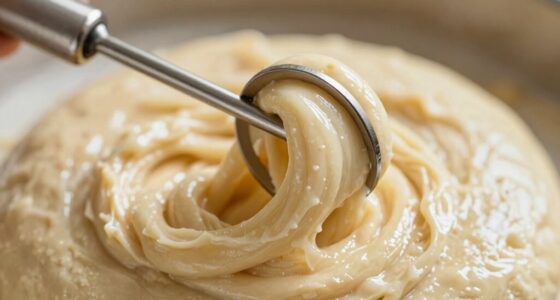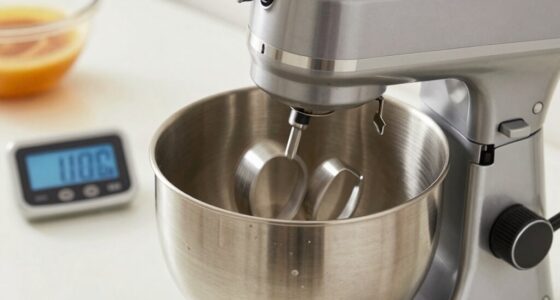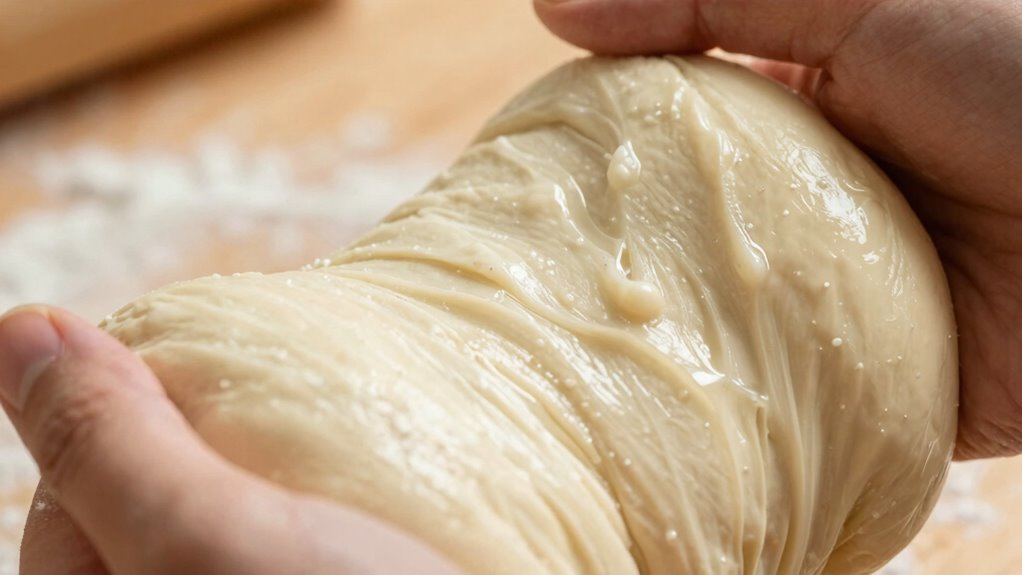

To tell if your bread dough is kneaded enough, feel for a smooth, slightly tacky texture that’s elastic and resilient. Gently stretch a small piece—if it extends without tearing and bounces back, you’re on the right track. You can also perform the windowpane test: stretch a tiny piece into a thin, translucent membrane without ripping. Recognizing these signals guarantees your dough has developed proper gluten; keep exploring to master the details.
Get ready for Prime Big Deal Days — try Prime free
Exclusive member deals on October 6–7, plus fast free delivery. Cancel anytime.
As an affiliate, we earn on qualifying purchases.
Key Takeaways
- The dough should be smooth, slightly shiny, and cohesive, indicating proper gluten development.
- Perform the windowpane test; the dough should stretch thin without tearing.
- The dough should bounce back when gently pressed, showing elasticity.
- It should feel tacky but not sticky, with a resilient and springy texture.
- When stretched, it should extend without tearing immediately, demonstrating sufficient kneading.
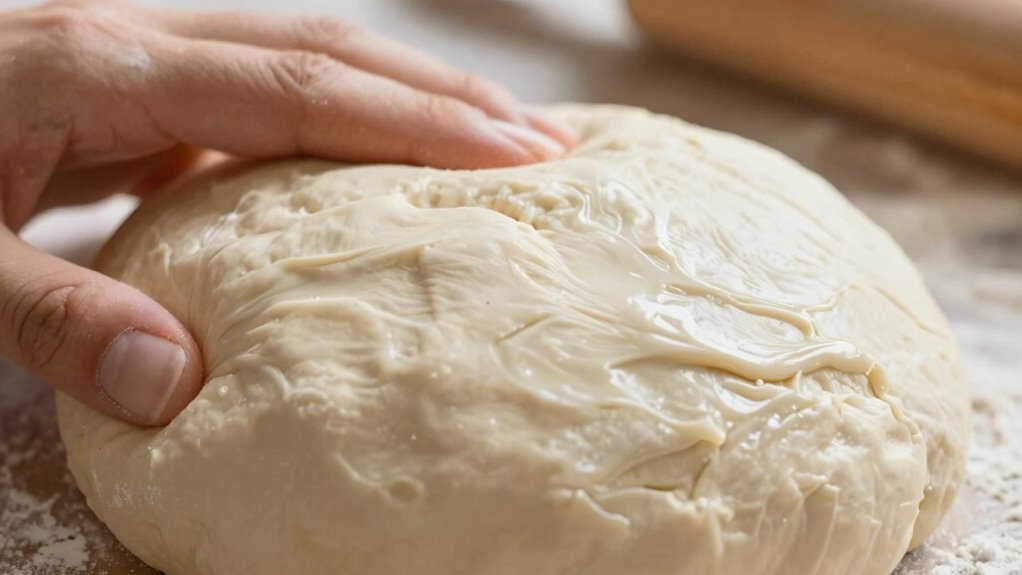
Kneading bread dough is a crucial step that influences the final texture of your bread, but knowing exactly when it’s done can be tricky. The key lies in understanding how gluten development and dough elasticity work together during kneading. As you work the dough, you’re encouraging gluten strands to form, which give the bread structure and strength. When the gluten network is sufficiently developed, the dough becomes smooth, elastic, and resilient. These are signs you’ve kneaded enough.
To check if your dough has reached the right level of gluten development, look at its elasticity. When you gently stretch a small piece of dough, it should extend without tearing immediately. It will feel stretchy and spring back when you let go. This bounce-back indicates that the gluten network is strong enough to hold gas produced during fermentation, which is essential for a light, airy loaf. If the dough tears easily or feels flat and floppy, it needs more kneading to strengthen the gluten strands.
Another way to tell if your dough is properly kneaded is by performing the windowpane test. Take a small piece of dough and gently stretch it out into a thin, translucent membrane. If the dough can be stretched thin enough without ripping, it’s a clear sign that gluten development is complete. This test is especially helpful because it gives you a visual confirmation. If the dough tears before reaching that thin, transparent stage, it still needs more kneading. Additionally, being familiar with the gluten formation process can help you develop a better intuition for when your dough is perfectly kneaded. Developing an understanding of dough elasticity can also guide your kneading process more effectively. Recognizing the dough’s texture and how it responds to gentle handling can further refine your kneading skills, ensuring consistent results.
The feeling of dough’s smoothness also indicates readiness. Properly kneaded dough should be tacky but not sticky, smooth, and slightly shiny. It should feel cohesive and springy under your fingers. When you press it with your finger, it should bounce back gently. These tactile clues tell you that the gluten network is well-formed and that the dough has achieved good elasticity. Paying attention to the dough’s texture and how it responds to gentle handling can help you determine the perfect point to stop kneading.
As an affiliate, we earn on qualifying purchases.
Frequently Asked Questions
Can Over-Kneading Ruin Bread Dough?
Over-kneading can definitely ruin bread dough. It leads to over kneading pitfalls like tough, dense bread and texture deterioration. When you knead too much, gluten becomes overly developed, making the dough stiff and difficult to shape. You’ll notice the dough resisting stretching and the final bread losing its lightness. To prevent this, stop kneading once the dough is smooth, elastic, and slightly tacky, ensuring a perfect rise and texture.
Does Kneading Time Vary by Bread Type?
Did you know that kneading time can vary from 8 to 15 minutes depending on bread type? You’ll notice differences in bread texture and gluten development, which are key to the final result. For softer bread like brioche, less kneading is needed, while denser loaves like whole wheat require longer. Adjust kneading time based on the dough’s feel, ensuring proper gluten development for ideal texture.
How Does Humidity Affect Kneading?
Humidity impact your kneading process because higher moisture levels can make dough more sticky, requiring less kneading to develop gluten. Conversely, low humidity causes moisture absorption from the dough, making it drier and harder to work with, so you might need to knead longer or add a bit of water. Adjust your kneading time based on humidity to achieve the right dough consistency without over- or under-working it.
Is Hand Kneading Different From Machine Kneading?
Hand kneading differs from machine kneading because you rely on manual techniques and your intuition to judge dough consistency. With manual techniques, you feel the dough’s elasticity and smoothness, which helps determine when it’s kneaded enough. Using kneading tools like a stand mixer offers consistent, efficient results but may lack the tactile feedback. Both methods work well, but hand kneading allows you to better sense the dough’s readiness.
Can You Knead Bread Dough Too Little?
Yes, you can knead bread dough too little, which affects gluten development and dough elasticity. Insufficient kneading leaves the gluten strands underdeveloped, resulting in a dough that’s less stretchy and doesn’t trap gas well. This leads to bread with a denser crumb. To avoid this, knead until the dough is smooth, elastic, and slightly tacky, indicating proper gluten formation and peak dough elasticity for a good rise.
As an affiliate, we earn on qualifying purchases.
Conclusion
Once your dough has reached that gentle, elastic touch, it’s like nature’s little secret—ready to rise and shine. Trust your instincts; if it feels just right, you’ve probably done enough. Remember, overworking can be like a faint whisper of regret, so cherish the moment your dough whispers back with that perfect bounce. With a little patience and a keen touch, you’ll find yourself creating bread that’s truly worth savoring. Happy baking!
As an affiliate, we earn on qualifying purchases.
bread making kneading accessories
As an affiliate, we earn on qualifying purchases.
As an affiliate, we earn on qualifying purchases.
Fall Picks
fall essentials
As an affiliate, we earn on qualifying purchases.