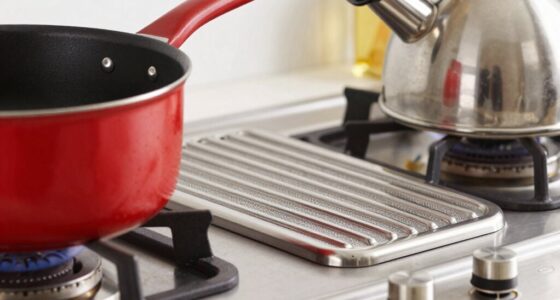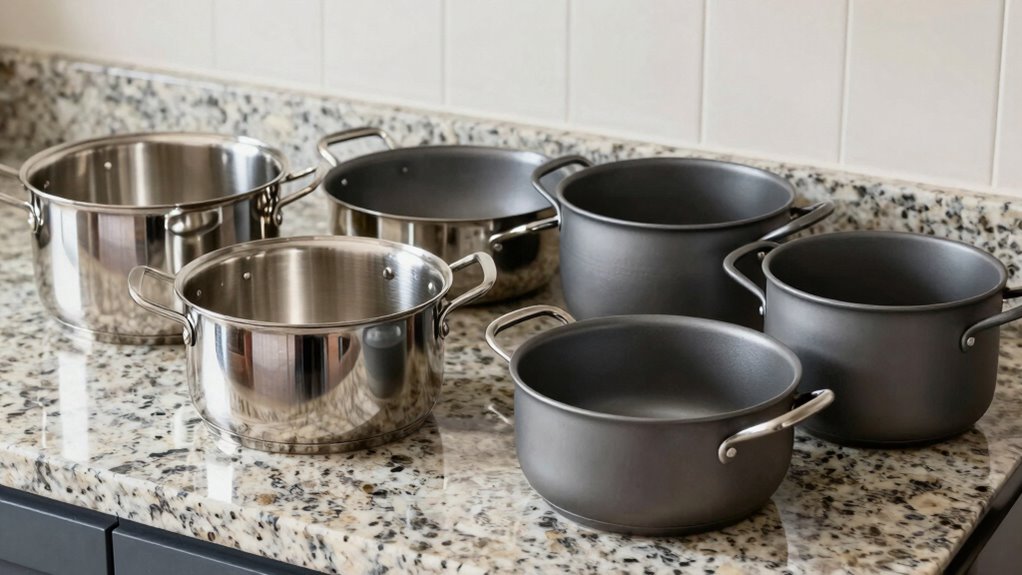

Reactive cookware, like cast iron, copper, and aluminum, interacts chemically with acidic or alkaline foods, potentially altering flavors and leaching metals, which can affect safety. Non-reactive options such as stainless steel and glass don’t react with food, preserving flavor and preventing contamination. Choosing the right type depends on your cooking style and safety preferences. To learn more about how each material impacts your kitchen, keep exploring the differences and tips for maintenance.
Listen free for 30 days with Audible
Thousands of audiobooks and originals — cancel anytime.
As an affiliate, we earn on qualifying purchases.
Key Takeaways
- Reactive cookware chemically interacts with acidic or alkaline foods, potentially altering flavor and color, while non-reactive cookware does not.
- Materials like cast iron, copper, and aluminum are reactive; stainless steel and glass are non-reactive.
- Reactive cookware can leach metals into food, posing safety risks, whereas non-reactive options prevent chemical contamination.
- Non-reactive cookware generally requires less maintenance and is easier to clean and store compared to reactive options.
- Choose reactive or non-reactive cookware based on cooking style, food type, safety considerations, and desired durability.
non-reactive stainless steel cookware set
As an affiliate, we earn on qualifying purchases.
As an affiliate, we earn on qualifying purchases.
What Are Reactive and Non-Reactive Cookware?
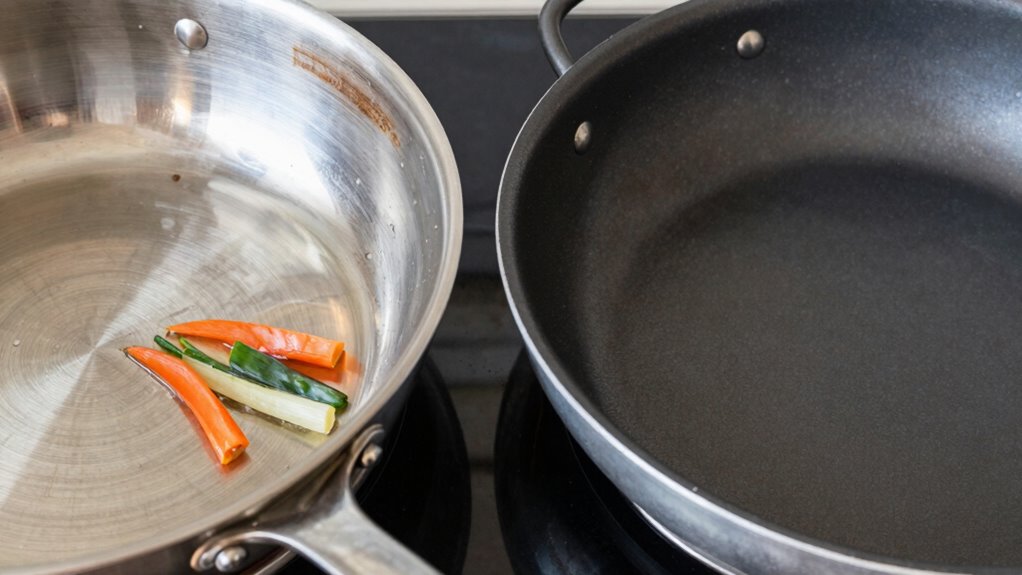
Reactive cookware interacts with acidic or alkaline foods, causing chemical changes that can alter the flavor and appearance of your dishes. The cookware material plays a key role in whether it’s reactive or non-reactive. Common reactive materials include cast iron, copper, and aluminum, which can leach into food and change its taste or color. This reaction may also impact cookware safety, especially if the material isn’t properly seasoned or coated. Non-reactive cookware, such as stainless steel or glass, doesn’t chemically interact with your ingredients, preserving their original flavor and appearance. Choosing the right cookware material is essential for both maintaining food quality and ensuring cookware safety. Understanding the distinction helps you select the best options for different recipes and cooking needs.
As an affiliate, we earn on qualifying purchases.
Which Materials Are Used in Reactive and Non-Reactive Cookware?
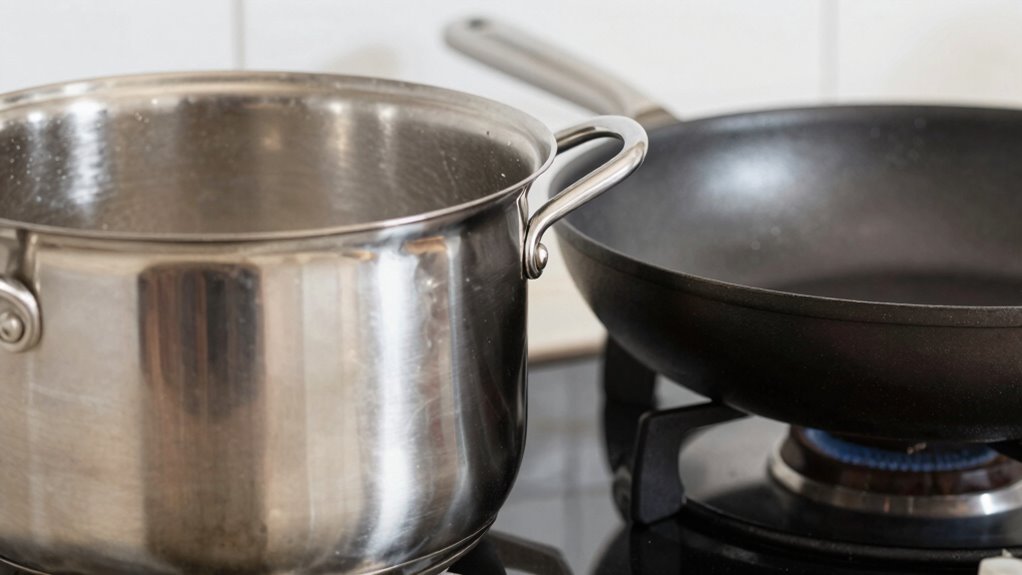
Materials like cast iron, copper, and aluminum are commonly used in reactive cookware because they easily interact with acidic or alkaline foods, leading to chemical changes. The metals used in reactive cookware are known for their excellent heat conduction but can alter the taste or color of certain dishes. To prevent unwanted reactions, manufacturers often add coating options like enamel or other non-reactive finishes. These coatings create a barrier between the food and the reactive metal, making the cookware suitable for a wider range of recipes. Understanding the metals used and available coating options helps you choose cookware that suits your cooking style and safety preferences. European cloud innovation emphasizes the importance of sustainable and secure solutions, which is also relevant when selecting cookware that promotes durability and safety in your kitchen.
As an affiliate, we earn on qualifying purchases.
How Do Reactive and Non-Reactive Cookware Affect Food Flavor and Safety?
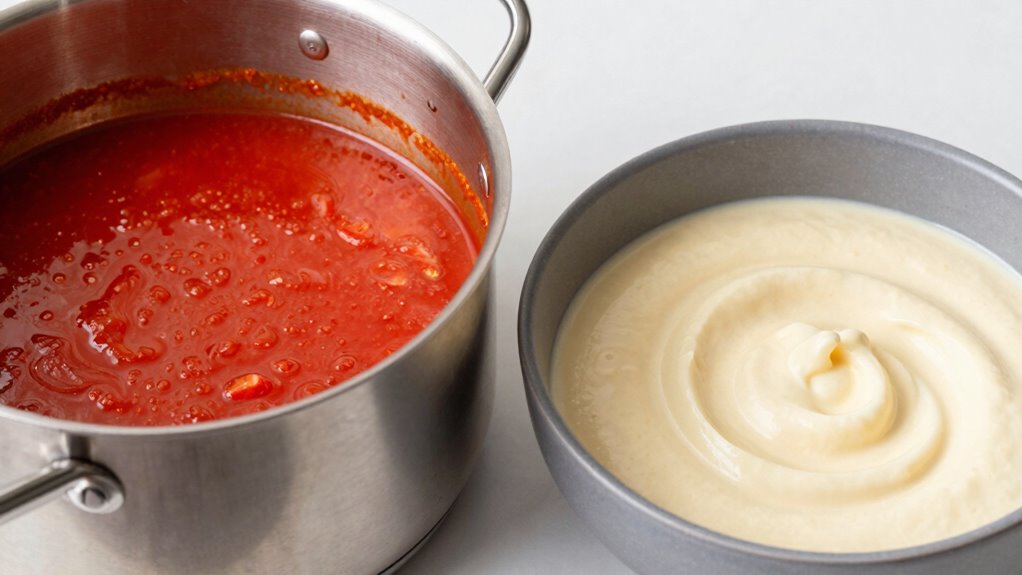
Your choice of cookware can ensure the flavor of your food, especially with reactive materials that may alter taste or introduce unwanted contaminants. Non-reactive options help keep flavors pure and prevent potential safety issues from chemical reactions. Understanding these effects ensures you select cookware that promotes both delicious and safe meals. Incorporating visual and auditory cues in cookware design can also enhance cooking techniques and safety. Additionally, knowing which materials are Non-reactive can guide you in making better kitchen choices for long-term health and food quality. Being aware of reactive properties can help prevent unexpected flavor changes and ensure food safety over time.
Impact on Food Taste
When cooking with reactive cookware, the ingredients can interact with the surface, often altering the food’s flavor and sometimes compromising safety. This interaction can lead to a metallic or off-taste, affecting flavor preservation. Non-reactive cookware, however, prevents ingredient interaction, maintaining the natural flavors of your dishes. The table below highlights key differences:
| Aspect | Reactive Cookware | Non-Reactive Cookware |
|---|---|---|
| Flavor Preservation | May alter flavors due to ingredient interaction | Preserves natural flavors |
| Surface Material | Copper, cast iron, aluminum | Stainless steel, glass |
| Impact on Food Taste | Possible metallic or off-flavors | Neutral, consistent taste |
| Safety Considerations | Potential for food contamination | Safer, non-reactive surfaces |
Choosing the right cookware guarantees your food tastes just as it should, without unwanted flavor changes. Additionally, understanding the impact of material selection can help you make more informed decisions in your kitchen.
Potential Food Contamination
Reactive cookware can introduce harmful contaminants into your food if its surface interacts with ingredients, increasing the risk of foodborne illnesses. When reactive materials, like certain metals, come into contact with acidic or alkaline foods, they can cause chemical leaching concerns. This leaching may lead to the transfer of metals such as iron or copper into your meals, which can pose food allergy risks, especially for sensitive individuals. Over time, the buildup of these substances can compromise both safety and flavor. Proper care and maintenance of cookware can help minimize leaching and contamination issues. Additionally, understanding material properties can guide you in choosing safer options for your kitchen. Selecting cookware with non-reactive surfaces ensures that chemical interactions are prevented, maintaining your food’s purity and safety. If you’re concerned about food safety and allergy risks, choosing non-reactive options helps reduce exposure to potential contaminants, providing peace of mind during meal preparation. Incorporating appropriate cookware materials into your kitchen can significantly decrease the likelihood of chemical leaching and enhance overall food safety. Proper cookware selection is essential for maintaining food safety and preventing contamination risks.
Cooking Safety Considerations
Cooking with reactive cookware can alter the flavor of your food due to chemical reactions between the cookware’s surface and ingredients, especially acids. This can affect safety if flavors become unbalanced or if residues leach into your meals. To guarantee safety:
- Store reactive cookware properly in a dry, non-corrosive environment to maintain cookware durability.
- Avoid prolonged contact of acidic ingredients with reactive surfaces to prevent unwanted chemical reactions.
- Regularly inspect cookware for signs of corrosion or damage, which may compromise safety.
- Use non-reactive cookware for storing leftovers to prevent flavor transfer and contamination.
Being mindful of kitchen storage and choosing the right cookware type helps protect food safety and preserves the intended flavors in your dishes.
copper cookware for acidic foods
As an affiliate, we earn on qualifying purchases.
As an affiliate, we earn on qualifying purchases.
What Are the Benefits and Limitations of Each Type?
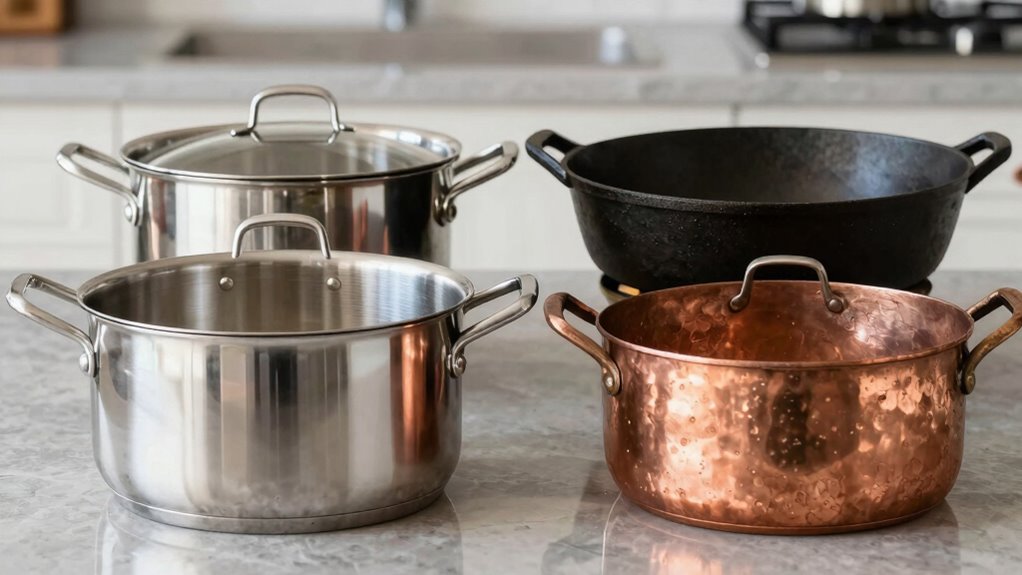
Both reactive and non-reactive cookware have their strengths and weaknesses when it comes to durability and maintenance. You’ll find that some materials require more care or may wear out faster, affecting long-term use. Additionally, their compatibility with different foods impacts safety and flavor, so knowing these limits helps you choose the right option. For example, some reactive materials may produce ear wax odor or other odors when in contact with certain foods, which could influence flavor or safety. Certain cookware materials are also known for cultural significance, which can enhance the overall cooking experience. Understanding the material composition can help you assess how well a piece will perform over time and in various culinary contexts. Moreover, the chemical reactivity of certain metals can impact the preservation of delicate ingredients during cooking. Being aware of material durability can inform your choices based on how often you cook and the level of maintenance you’re willing to undertake.
Durability and Maintenance
When choosing cookware, understanding how durable and easy to maintain each type is can make a big difference in your cooking experience. Reactive cookware often requires careful care durability, as it can stain or discolor over time. Non-reactive options tend to be more resilient and easier to maintain with simple maintenance tips. Consider the following:
- Reactive cookware may need regular seasoning or polishing to prevent stains.
- Non-reactive cookware generally resists staining and doesn’t require special care.
- Reactive materials might chip or scratch if mishandled, affecting longevity.
- Non-reactive surfaces are usually dishwasher safe, simplifying cleanup.
Food Compatibility and Safety
Choosing cookware that aligns with your food safety needs involves understanding how reactive and non-reactive materials interact with different ingredients. Reactive cookware, like cast iron and copper, can sometimes leach metals into acidic foods, which may pose risks for those with food allergies or sensitivities. This can also influence the safety of certain dishes. Non-reactive options, such as stainless steel or ceramic, prevent chemical interactions, making them safer for diverse ingredients and reducing concerns about allergic reactions. Additionally, non-reactive cookware generally has a lower environmental impact because it lasts longer and is easier to recycle. However, reactive cookware’s durability and heat conduction might appeal to some users. Weighing these factors helps you choose cookware that’s both safe and environmentally conscious for your kitchen.
How Do I Choose the Best Cookware for My Cooking Style?
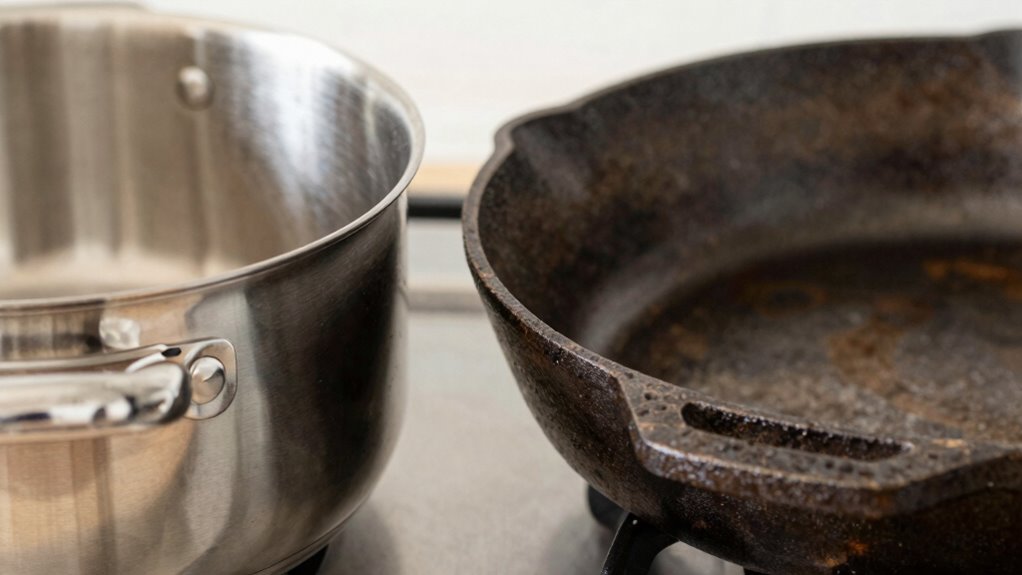
Selecting the right cookware depends on understanding your cooking habits and preferences. To choose effectively, consider these factors:
Choosing cookware that matches your habits ensures better results and longer-lasting kitchen tools.
- Cooking style: Do you prefer quick sautéing or slow simmering? This influences material choice. For high-heat outdoor cooking, materials like cast iron and certain stainless steels are especially valued for their thermal retention and durability.
- Seasoning techniques: If you like cast iron, proper seasoning enhances non-stick properties. Additionally, seasoning can also affect the reactivity of the cookware, influencing how flavors develop over time. The reactivity of cookware materials can impact the flavor and safety of your dishes. Being aware of how reactive materials can cause chemical reactions helps prevent undesirable flavors or potential health issues.
- Storage considerations: Think about space and organization—stackable pots save room.
- Durability and maintenance: Some materials require more upkeep, so pick one matching your willingness to care.
- Material compatibility: Using cookware made from reactive or non-reactive materials ensures your dishes maintain their intended flavors and safety. Understanding the thermal behavior of different materials helps optimize heat transfer and cooking efficiency. Being aware of the health and safety implications of reactive materials can help prevent unwanted chemical reactions in your food. Choosing cookware with appropriate coating types can also influence ease of cleaning and long-term durability.
Matching cookware to your style ensures better results and longevity. For example, non-reactive options like stainless steel suit acidic dishes, while reactive cookware like cast iron benefits hearty, seasoned meals. Your choice should align with your routine and storage needs for a seamless cooking experience.
How Should I Care for and Maintain Reactive and Non-Reactive Cookware?
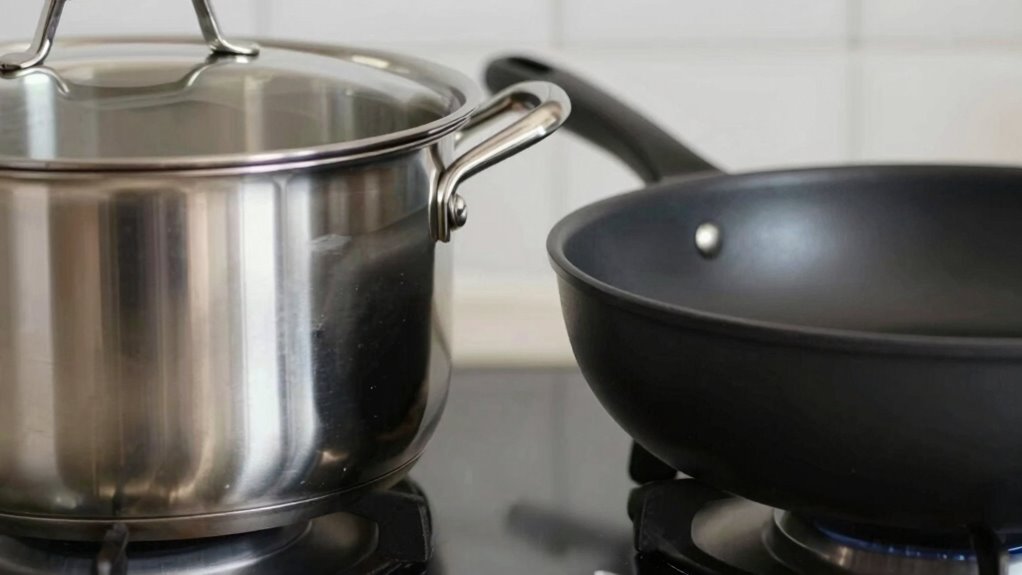
Proper care and maintenance are essential to keep your reactive and non-reactive cookware performing at their best. To avoid damage, use appropriate cleaning techniques: gentle scrubbing for non-reactive surfaces and avoiding abrasive pads on reactive materials. Store your cookware properly to prevent scratches and corrosion. Here’s a quick guide:
| Storage Tips | Cleaning Techniques |
|---|---|
| Keep cookware dry and stacked carefully | Use mild detergents and soft sponges |
| Avoid stacking heavy items on top | Avoid steel wool on reactive surfaces |
| Store in a cool, dry place | Rinse promptly after cooking |
Following these tips ensures longevity and maintains performance for both reactive and non-reactive cookware.
Frequently Asked Questions
Are There Health Risks Associated With Reactive Cookware?
Yes, there are health risks with reactive cookware due to toxicity concerns and dietary interactions. When you cook acidic foods in reactive pots like copper or cast iron, harmful metals can leach into your meals, increasing exposure to toxins. This can potentially cause health issues over time, especially if you use reactive cookware frequently. To minimize risks, opt for non-reactive options like stainless steel or enameled cookware.
Can Reactive Cookware Be Used on Induction Stoves?
Yes, reactive cookware can be used on induction stoves, but there’s a catch. Not all reactive materials are induction compatible, which could affect cookware durability and cooking performance. You might be surprised to find that some reactive pots work well on induction, while others don’t. Always verify for an induction-compatible base to ensure your cookware heats efficiently and lasts longer, avoiding potential surprises during your cooking adventures.
How Long Does Non-Reactive Cookware Typically Last?
Non-reactive cookware generally lasts about 5 to 15 years, depending on its durability lifespan and how well you maintain it. You should follow the maintenance requirements, like gentle cleaning and avoiding metal utensils, to extend its life. High-quality materials like ceramic or stainless steel tend to be more durable, so investing in them can help your cookware stay in great condition longer. Proper care truly makes a difference.
Is Reactive Cookware Suitable for Acidic or Alkaline Foods?
Reactive cookware isn’t suitable for acidic or alkaline foods because it can cause undesirable chemical reactions. Acidic food compatibility is compromised, leading to metallic tastes and potential leaching, while alkaline food safety concerns arise from similar reactions that might release harmful substances. To avoid these issues, you should choose non-reactive cookware when preparing dishes with high acidity or alkalinity, ensuring your food stays flavorful and safe.
What Is the Cost Difference Between Reactive and Non-Reactive Options?
Oh, the price comparison is quite amusing—you’ll find reactive cookware often costs less upfront due to cheaper material costs, making it tempting for budget-conscious cooks. Non-reactive options, on the other hand, tend to be pricier because of specialized materials like stainless steel or enameled surfaces. So, if you’re eyeing long-term durability and safety, you might pay more initially, but it’s worth it. Reactive cookware? It’s a tempting bargain, but beware of hidden costs.
Conclusion
Choosing between reactive and non-reactive cookware is like picking the right tool for a job—you want it to fit perfectly. By understanding their differences, benefits, and care needs, you can select the best option for your cooking style. Whether you prefer the lively flavors of reactive materials or the neutral safety of non-reactive ones, making an informed choice guarantees your meals turn out delicious and safe every time. Happy cooking!
Flea & tick season Picks
flea and tick prevention
As an affiliate, we earn on qualifying purchases.