Your garlic burns early because it’s often added directly to hot oil or cooked at too high a temperature, causing rapid browning and burning. Improper storage can also dry it out, making it more prone to burning. To prevent this, gently warm the oil before adding garlic, manage the heat carefully, and consider roasting garlic first for a mellower flavor without burning. Keep these tips in mind to improve your cooking—more details can help you master this issue.
Key Takeaways
- Adding garlic directly into very hot oil causes rapid burning before other ingredients cook.
- Using finely chopped garlic increases surface area, leading to quicker burning if not carefully managed.
- Cooking garlic at high heat or without proper temperature control accelerates browning and burning.
- Improper storage, such as dryness or exposure to air, makes garlic more prone to burning during cooking.
- Not warming the oil gently or roasting garlic first can cause it to burn quickly once added to hot oil.
If you’ve ever added garlic to hot oil only to find it burns almost instantly, you’re not alone. It’s a common frustration in the kitchen, especially when you’re eager to infuse your dishes with that rich, aromatic flavor. The key to preventing this from happening lies in understanding how garlic roasting and garlic storage play a role in controlling its cooking process. When garlic is fresh and well-stored, it’s less likely to burn quickly because it contains the right moisture and structure. If your garlic is old or has been stored improperly—exposed to air or extreme temperatures—it can dry out or become more prone to burning when heated. Proper garlic storage, in a cool, dark place, helps retain its moisture and flavor, making it easier to control the cooking process and avoid those bitter, burnt bits that ruin your dish. Additionally, choosing the right garlic variety can influence how quickly it cooks and burns, further helping you prevent overcooking. Ensuring that garlic is stored in an appropriate environment can also extend its shelf life and maintain its optimal quality.
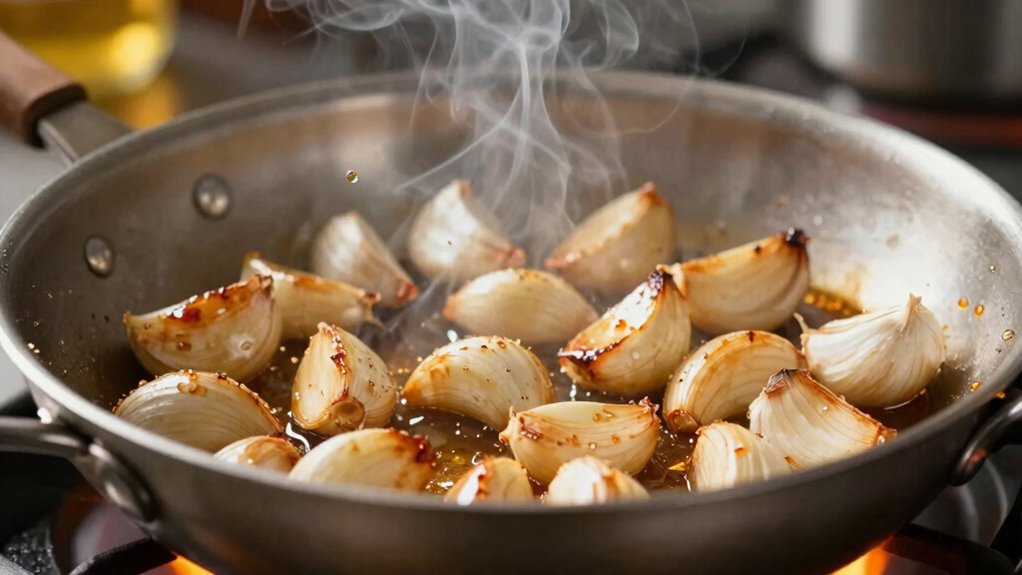
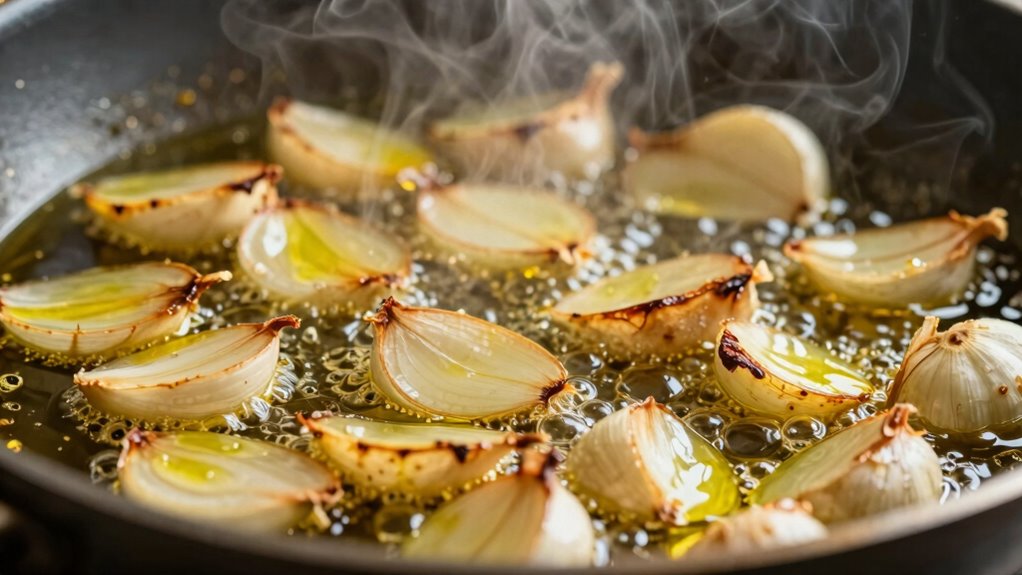
When you’re ready to cook, it’s crucial to pay attention to how you introduce garlic to heat. Adding it directly into hot oil can cause rapid burning, especially if the oil is too hot or if the garlic is chopped too finely. One way to prevent this is to start by gently warming the oil and then adding the garlic, allowing it to slowly release its aroma without scorching. Alternatively, you can garlic roast, which involves cooking garlic at a low temperature in the oven until it’s soft and golden. Garlic roasting not only reduces the risk of burning but also enhances its natural sweetness and mellow flavor. Proper garlic roasting technique ensures the garlic develops a rich, mellow flavor without bitterness. Once roasted, garlic can be added later in the cooking process or used as a spread, sidestepping the issue of burnt garlic altogether. Using proper heat management during cooking further helps prevent rapid burning by controlling how quickly the garlic cooks and browns. Paying attention to heat control during cooking is essential for achieving perfectly cooked garlic without burning.
As an affiliate, we earn on qualifying purchases.
Frequently Asked Questions
Can Garlic Burn Even if Cooked on Low Heat?
Yes, garlic can burn even on low heat if you don’t use proper cooking techniques. When you add garlic too early or leave it unattended, its delicate flavor quickly turns bitter. To preserve its garlic flavor, stir frequently and add garlic later in the cooking process. Using a lower heat setting or a wider pan helps prevent burning, ensuring your garlic enhances the dish without turning bitter.
Does the Type of Garlic Affect Burning?
Think of garlic varieties as different characters in a play, each with its own temperament. Some varieties, like softer, milder types, are less prone to burning, while robust, pungent ones can catch fire quickly. Your cooking techniques also matter — using gentle heat and proper timing prevents burning. Choosing the right garlic variety and adjusting your method helps keep it from scorching, ensuring your dish turns out flavorful without bitterness.
How Does Garlic Size Influence Burning?
Smaller garlic pieces tend to burn faster because their surface area is greater, absorbing heat quickly. Fresh garlic, especially when stored improperly, can be more prone to burning, as its moisture content affects heat absorption. To prevent burning, slice larger cloves evenly, and store garlic properly in a cool, dry place. This way, you control how quickly it cooks and avoid that bitter, burnt taste.
Is It Better to Add Garlic Early or Late?
It’s better to add garlic later in the cooking process to preserve flavor and prevent burning. Adding it early can cause it to burn, leading to bitter tastes and undesirable texture changes. When you add garlic toward the end, you keep its bright, aromatic flavor intact and avoid overcooking, which can make it mushy or bitter. This simple step guarantees your dish retains the perfect garlic flavor without risking burnt bits.
Can Using Oil Prevent Garlic From Burning?
Using oil can help prevent garlic from burning by providing a buffer that slows heat absorption, giving you more control over cooking. It also enhances flavor, making your garlic taste richer and more aromatic. Make certain to heat the oil gently before adding garlic, and stir constantly to avoid burning. This technique guarantees your garlic releases its flavor without turning bitter, resulting in a delicious, well-balanced dish.
As an affiliate, we earn on qualifying purchases.
Conclusion
So, next time you cook garlic, remember that heat and timing are key. Over 70% of home cooks accidentally burn garlic because they add it too early or use high heat. By paying close attention and adding garlic later, you’ll prevent that bitter, burnt taste. With a bit of practice, you’ll turn your dishes from scorched to savory, impressing everyone at the table. Keep experimenting, and soon, garlic will be your secret weapon, not your kitchen mishap.
As an affiliate, we earn on qualifying purchases.
As an affiliate, we earn on qualifying purchases.