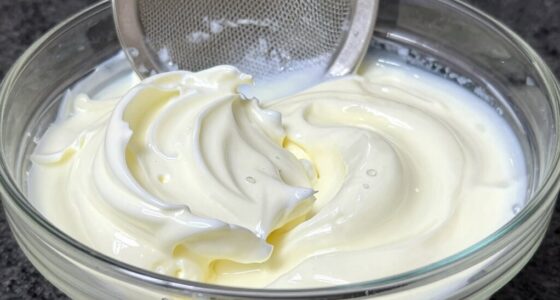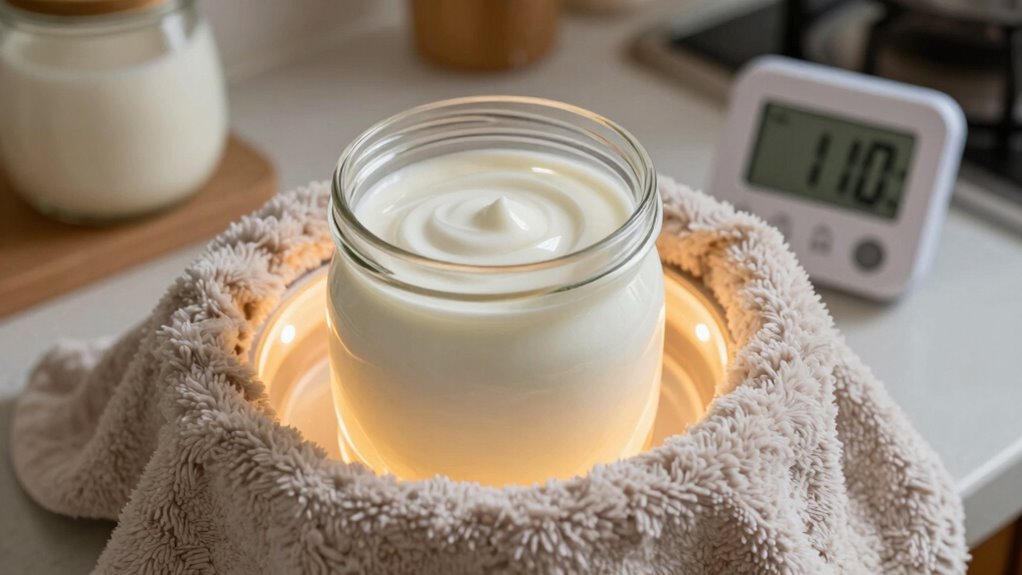

To make perfect homemade yogurt, keep the temperature between 110°F and 115°F (43°C to 46°C). If it gets too hot above 120°F (49°C), the bacteria die, stopping fermentation and ruining the texture and flavor. Conversely, if it’s too cold below 110°F, fermentation slows or halts, resulting in weak yogurt. Maintaining consistent warmth is key, so explore proven methods to keep your yogurt at the ideal temperature for delicious results.

Get kitchen staples and gadgets delivered free — and shop member deals
- Fast, free delivery on millions of items
- Access to Prime Big Deal Days deals on October 6–7
- Prime Video, Amazon Music and more included
Key Takeaways
- The ideal temperature range for homemade yogurt is between 110°F and 115°F (43°C to 46°C).
- Temperatures above 120°F (49°C) kill beneficial bacteria, halting fermentation.
- Below 110°F (43°C), bacteria become sluggish, leading to weak fermentation and runny yogurt.
- Maintaining consistent temperature with a yogurt maker or insulation ensures proper fermentation.
- Precise temperature control is essential for yogurt’s texture, flavor, and probiotic content.
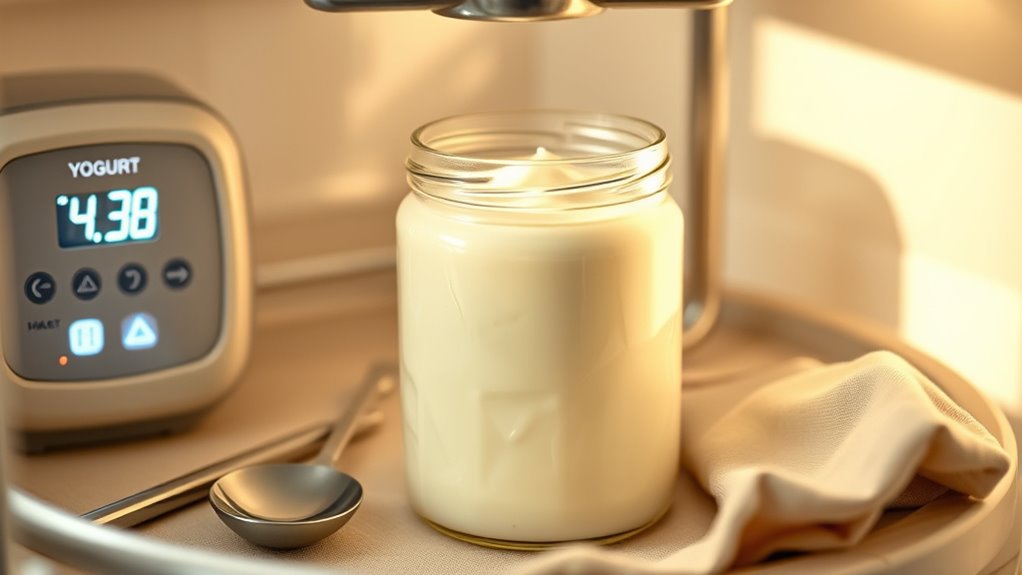
Making homemade yogurt is a simple and rewarding process that allows you to enjoy fresh, creamy yogurt tailored to your taste. One of the most essential factors in achieving perfect yogurt is maintaining the right temperature during the fermentation process. If you get the temperature right, you’ll foster the growth of beneficial probiotics that give your yogurt its health benefits and tangy flavor. But if the temperature drifts too high or too low, it can compromise the fermentation process, resulting in yogurt that’s either too thin, too sour, or not set properly.
The ideal temperature range for making yogurt usually falls between 110°F and 115°F (43°C to 46°C). Staying within this range encourages the bacteria—primarily *Lactobacillus bulgaricus* and *Streptococcus thermophilus*—to thrive and multiply. These bacteria are vital for converting milk sugars into lactic acid, which curdles the milk and gives yogurt its characteristic texture and tang. When you keep the temperature in this perfect range, you promote a steady fermentation process, ensuring the beneficial probiotics develop fully and evenly.
If the temperature gets too high, say above 120°F (49°C), you risk killing the bacteria, halting the fermentation process altogether. This results in unfermented milk or a very weak yogurt with little flavor and fewer beneficial probiotics. Conversely, if the temperature drops below 110°F, the bacteria become sluggish, slowing down the fermentation process or stopping it entirely. This can lead to a runny texture, weak flavor, or incomplete fermentation, which means you won’t get the full health benefits or the desired consistency.
Maintaining a consistent temperature is key. You can achieve this by using a yogurt maker, which is designed to keep the milk within the perfect range. If you don’t have a yogurt maker, a warm spot in your house, like inside an oven with the light on or wrapped in a thick towel, can work. Just be sure to monitor the temperature carefully with a thermometer. For best results, check the milk’s temperature before adding the starter culture, then monitor throughout the fermentation period to ensure it stays within the ideal range.
yogurt maker with temperature control
As an affiliate, we earn on qualifying purchases.
As an affiliate, we earn on qualifying purchases.
Frequently Asked Questions
Can I Make Yogurt Without a Yogurt Starter?
You can’t make authentic yogurt without yogurt cultures or starter alternatives, as they provide the essential bacteria needed for fermentation. Without these, your milk won’t ferment properly, and you’ll miss out on that creamy texture and tangy flavor. If you don’t have a starter, try using a small amount of store-bought plain yogurt with live cultures or explore natural starter alternatives like kefir or certain fermented foods to kickstart the process.
How Long Can Homemade Yogurt Be Stored Safely?
Think of your homemade yogurt as a treasured letter—its shelf life depends on proper care. You can safely store it for about 1 to 2 weeks in the fridge. Watch for spoilage indicators like sour smell, mold, or separation. After that, the risk of spoilage increases, and it’s best to discard. Keep it sealed and cold to preserve freshness and enjoy your yogurt safely.
Is It Possible to Make Yogurt in a Microwave?
Yes, you can make yogurt in a microwave. Start with microwave sterilization by heating your container and utensils to guarantee cleanliness. Place the milk in the microwave and heat it to the right temperature, then let it cool slightly. Add your starter culture, mix well, and keep the milk at a consistent temperature using the microwave’s gentle heat or a warm spot. This method helps achieve the desired yogurt consistency efficiently.
What Are Common Signs of Spoiled Homemade Yogurt?
You’ll notice your homemade yogurt might be telling you it’s reached its farewell if it develops a sour smell and a slimy texture. These signs suggest it’s time to say goodbye to your batch, as microbial activity has shifted. Trust your senses—if it smells off or feels unusually slimy, it’s best to discard it. Always prioritize safety over a leftover treat, and enjoy your next batch with fresh confidence!
Can I Reuse Homemade Yogurt as a Starter for the Next Batch?
Yes, you can reuse homemade yogurt as a starter for your next batch. During yogurt fermentation, the live starter cultures in your previous yogurt will continue to ferment and produce new yogurt. Just guarantee the yogurt is fresh and has a good amount of active cultures. Keep the temperature consistent for proper fermentation, and avoid reusing too much, as it may weaken the starter cultures over time.
digital food thermometer for yogurt fermentation
As an affiliate, we earn on qualifying purchases.
As an affiliate, we earn on qualifying purchases.
Conclusion
Just like a delicate dance, making perfect homemade yogurt depends on finding the right temperature rhythm. I once watched a friend’s batch turn gooey because she rushed the process—her yogurt was a total flop. Remember, maintaining that ideal temperature range is your secret weapon for creamy, tangy yogurt every time. When you master it, you’re not just making yogurt—you’re crafting a delicious, homemade masterpiece. Trust the process, and enjoy every spoonful!
insulated yogurt fermentation container
As an affiliate, we earn on qualifying purchases.
As an affiliate, we earn on qualifying purchases.
As an affiliate, we earn on qualifying purchases.
NFL season / tailgating Picks
team gear
As an affiliate, we earn on qualifying purchases.