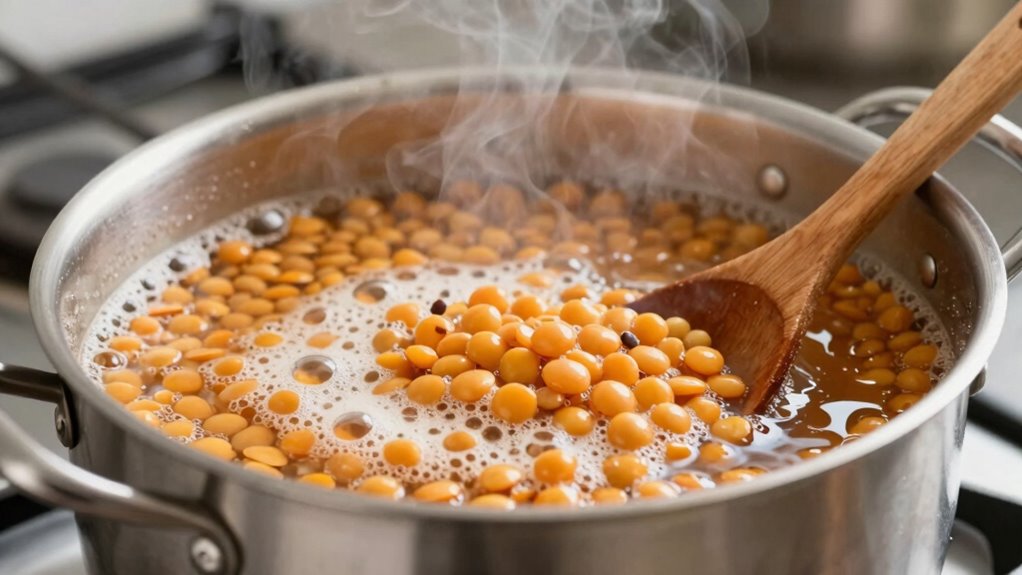

To prevent lentils from foaming over, rinse them thoroughly before cooking to remove dirt and excess debris. Use about three cups of water per cup of lentils and cook on a gentle simmer rather than a vigorous boil. Adding a little oil or butter can help reduce foam, and placing a wooden spoon across the pot or leaving the lid slightly ajar allows steam to escape. Keep an eye on the process to avoid spills and learn more tips to perfect your lattice.
Key Takeaways
- Rinse lentils thoroughly to remove dirt and reduce foam formation during cooking.
- Use ample water (about 3 cups per cup of lentils) and keep the heat at a gentle simmer.
- Add a teaspoon of oil or butter to the cooking water to help prevent foam buildup.
- Leave the lid slightly ajar or place a wooden spoon across the pot to allow steam to escape.
- Monitor cooking closely and adjust heat to avoid vigorous boiling that causes spills.

Cooking lentils is a simple process that can add nutritious, flavorful ingredients to many dishes. Before you get started, it’s helpful to understand some basics about lentil nutrition and the different lentil varieties available. Lentils are packed with protein, fiber, iron, and various essential nutrients, making them a healthy choice for any meal. They come in a variety of types, such as brown, green, red, and black, each with unique textures and cooking times. Knowing these differences can help you select the best lentil for your recipe.
Lentils are nutritious, versatile, and come in various types with unique textures and cooking times.
When you’re ready to cook, rinsing your lentils thoroughly under cold water is a *vital* first step. This removes dirt and any debris, and it can also help reduce foam during boiling. To prevent lentils from foaming over when cooking, you should start with a generous amount of water or broth—typically about 3 cups of liquid for every 1 cup of lentils. Bring the liquid to a boil over high heat, then reduce it to a gentle simmer. This gentle heat helps control foaming and reduces the chances of a messy boil-over.
Adding a bit of oil or butter to the cooking water can also help minimize foam formation, as the fat creates a barrier that inhibits foam from rising too high. Another effective trick is to place a wooden spoon or a lid slightly ajar on top of the pot. The wooden spoon can break the surface tension of the foam, preventing it from spilling over the sides. Alternatively, leaving the lid slightly off allows steam to escape, which also reduces foam buildup.
Different lentil varieties may have slightly different cooking times, but generally, they all benefit from a controlled simmer rather than a vigorous boil. For example, red lentils tend to cook faster and break down more easily, making them ideal for soups and purees, while green or brown lentils hold their shape better and are perfect for salads or side dishes. Knowing these differences allows you to adjust cooking times appropriately and avoid overflows. Additionally, incorporating auditory cues like listening for the gentle bubbling can help you monitor the process and prevent foaming issues.

GXONE Large Serving Spoons,304 Stainless Steel Cooking Spoon with Heat Resistant Wooden Handle,Silver/12.4Inch
【PREMIUM QUALITY】This metal big cooking spoon made of high quality thickened 304 stainless steel to ensure long-lasting use…
As an affiliate, we earn on qualifying purchases.
As an affiliate, we earn on qualifying purchases.
Frequently Asked Questions
Can I Prevent Lentil Foaming Without Using a Lid?
Yes, you can prevent lentil foaming without using a lid by employing foam suppression techniques. Start by rinsing the lentils thoroughly after soaking to remove surface starch, which causes foaming. During cooking, stir frequently and skim off foam with a spoon as it appears. These steps help manage foam effectively, keeping your lentils from foaming over without needing a lid, and ensure a smooth cooking process.
Do Different Lentil Types Foam Differently When Cooking?
They say “variety is the spice of life,” and it’s true for lentil varieties too. Different lentil types, like green, brown, or red, foam differently when cooking. For example, green lentils tend to produce more foam due to their higher protein content, while red lentils generally foam less. Knowing the foam behavior of each variety helps you manage boiling better and avoid messy overflows.
How Does Adding Oil Affect Foam Formation?
Adding oil during cooking can interfere with foam formation by creating a barrier that suppresses the release of surface bubbles. This oil interference helps reduce foam buildup, preventing it from spilling over and making cleanup easier. Just a small amount of oil stirred into the water is enough to help control foam, ensuring your lentils cook smoothly without messy boil-overs.
Is Soaking Lentils Before Cooking Effective in Reducing Foam?
Soaking lentils before cooking can help reduce foam because it benefits your preparation process by softening the beans and removing some surface impurities. To maximize these soaking benefits, rinse the lentils thoroughly and soak them for at least 2-4 hours. This simple preparation tip can lead to a less foamy cooking experience, helping you avoid boil-overs and making your lentil dishes easier to manage.
What Are Natural Ingredients That Reduce Foaming?
Foam reduction is like calming a storm in your pot using natural remedies. You can add a teaspoon of oil or a pinch of salt to reduce foaming naturally, acting like a soothing balm. These ingredients help break down the surface tension, preventing foaming over. Using natural remedies not only keeps your lentils from spilling but also maintains their flavor and nutritional value, making cooking easier and mess-free.

Cook N Home Nonstick Stockpot with Lid 10.5-Qt, Deep Cooking Pot Cookware Canning Stock Pot with Glass Lid, Black
Perfect Heat Distribution: Made of thick gauge aluminum, the non-stick stockpot provides even heat conduction and prevents hot…
As an affiliate, we earn on qualifying purchases.
As an affiliate, we earn on qualifying purchases.
Conclusion
Now that you know how to cook lentils without them foaming over, you’re practically a culinary wizard! With just a few simple tricks, you’ll reveal the secret to perfectly cooked lentils every time—no more kitchen messes or frantic stovetop scrambles. Imagine a world where your lentils stay calm, collected, and ready to elevate any dish. So go ahead, conquer that pot of lentils, and make your kitchen the envy of all food lovers everywhere!

Nutiva Coconut Oil for Cooking and Baking – Butter Flavor Perfect for Making Movie Theater Popcorn, Baked Goods, Bread – Non-Dairy Alternative for Keto, Vegan, and Paleo Diets – 29floz
BUTTERY TASTE WITHOUT DAIRY: Savor the rich, creamy goodness of Nutiva Organic Coconut Oil blended with non-dairy butter…
As an affiliate, we earn on qualifying purchases.
As an affiliate, we earn on qualifying purchases.
lentil cooking starter kit
As an affiliate, we earn on qualifying purchases.
As an affiliate, we earn on qualifying purchases.