The blending time considerably impacts your coconut milk’s flavor and texture. Shorter blending (about 1-2 minutes) preserves the natural aroma and results in a lighter, delicate flavor. Longer blending releases more oil and makes the milk creamier, but it can also lead to overprocessing, bitterness, or greasiness. Finding the right balance ensures rich, flavorful coconut milk. Keep exploring to discover the perfect blending duration for your desired result.

Get kitchen staples and gadgets delivered free — and shop member deals
- Fast, free delivery on millions of items
- Access to Prime Big Deal Days deals on October 6–7
- Prime Video, Amazon Music and more included
Key Takeaways
- Short blending (1-2 minutes) preserves delicate coconut aroma and natural flavor for lighter coconut milk.
- Extending blending time increases creaminess and richness by releasing more coconut oil.
- Overblending can cause bitterness, greasiness, and diminish freshness, impacting flavor quality.
- Using brief, controlled blending helps balance flavor extraction without overprocessing.
- Adjust blending duration based on desired flavor intensity and texture—short for subtle, longer for creamy.
As an affiliate, we earn on qualifying purchases.
Does Longer Blending Make Coconut Milk Creamier or Overprocessed?

Does blending coconut pulp longer necessarily make your coconut milk creamier? Not always. Extended blending can break down more coconut moisture, resulting in a thicker, creamier texture, but it can also lead to overprocessing. The blending noise signals when the mixture is thoroughly broken down, so listening carefully helps avoid overdoing it. Too much blending may release excessive oils and fats, making your milk overly dense or greasy. Additionally, prolonged blending can introduce unnecessary heat, which might affect the flavor and freshness. If you blend just enough to release the coconut moisture without overdoing it, you’ll achieve a balanced, creamy consistency. Proper blending technique ensures optimal results without damaging the delicate flavors and textures. Being mindful of energy-efficient methods can help preserve the freshness and quality of your homemade coconut milk.
As an affiliate, we earn on qualifying purchases.
How Blending Duration Affects Coconut Milk Flavor and Texture

The length of blending considerably influences both the flavor and texture of your homemade coconut milk. If you blend for a shorter time, you’ll get a lighter, more delicate flavor with a thinner consistency. Longer blending breaks down the coconut flesh further, resulting in a richer taste and creamier texture, but it can also develop a slight bitterness if overdone. Different coconut oil variations, like refined or virgin, can subtly affect flavor profiles during blending. For best results, monitoring the blending duration helps achieve the desired balance between richness and smoothness. Using a blender speed setting appropriately can also impact the final product’s quality, ensuring optimal extraction and texture. For alternative blending methods, using a food processor or immersion blender may require different durations to achieve ideal results. Longer blending can enhance coconut oil extraction, adding depth to the flavor, but beware of overprocessing, which might introduce unwanted grittiness. Adjusting blending time based on desired richness and texture allows for more control over the final product. Additionally, paying attention to the type of coconut used can influence the overall flavor and consistency of your coconut milk.
As an affiliate, we earn on qualifying purchases.
What’s the Best Blending Time for Rich, Delicious Coconut Milk?

To achieve a rich, flavorful coconut milk, aim for a blending time that balances thorough coconut flesh breakdown with the prevention of overprocessing. Typically, blending for about 1 to 2 minutes ensures you extract enough nutrients, including the beneficial coconut oil benefits, without turning the mixture too thick or bitter. Longer blending may release more oil, enhancing creaminess and flavor, but can also cause a greasy texture. Proper blending maximizes coconut milk uses, whether for cooking, smoothies, or baking. Keep in mind that overblending can diminish freshness and alter consistency. Finding the optimal blending duration is essential to extract maximum flavor while maintaining desired texture. Find a sweet spot that fully breaks down the coconut flesh while maintaining a smooth, rich texture. This way, your homemade coconut milk will be flavorful, versatile, and ideal for all your culinary needs. Additionally, using a vetted magnifying lamp can help you better see the coconut flesh and ensure thorough blending. Understanding AI ethics can inspire new innovations in culinary technology, such as advanced blenders or safety features.
As an affiliate, we earn on qualifying purchases.
Tips to Maximize Flavor Extraction When Blending Coconut

To get the most flavor from your coconut, start with fresh coconut flesh for a richer taste. Make sure to blend for the ideal amount of time—neither too short nor too long—to extract maximum flavor. Consider adding flavor enhancers like a pinch of salt or a splash of vanilla to boost the coconut’s natural aroma. Additionally, using proper blending techniques and having a well-designed kitchen setup can help create an environment that supports efficient and enjoyable blending experiences. Paying attention to ingredient quality and optimal blending duration ensures you get the best possible flavor from your coconut. Incorporating storage tips can also help preserve coconut freshness for future use.
Use Fresh Coconut Flesh
Ever wondered how to get the most flavor out of fresh coconut flesh when blending? Start with quality coconut flesh by selecting firm, moist pieces with minimal discoloration. The right coconut flesh guarantees richer flavor and creamier milk. When blending, use the appropriate equipment—a sharp, sturdy blender helps break down the flesh efficiently. To maximize flavor extraction, keep these tips in mind:
- Choose fresh, ripe coconut flesh for vibrant taste.
- Cut into small pieces to ease blending and release more oils.
- Blend in short, controlled bursts to prevent overheating and preserve flavor.
- Using high-quality blending equipment can also significantly improve extraction efficiency and flavor preservation, similar to how proper mount alignment benefits deep-sky imaging clarity.
- Incorporating visual and auditory cues during blending can enhance your ability to gauge the texture and extraction process, ensuring optimal flavor. Additionally, maintaining a consistent blending speed can help optimize the flavor extraction process for richer results.
Optimal Blending Duration
Finding the perfect blending time is key to maximizing flavor extraction from coconut flesh. Blend for too short a time, and you won’t release all the nutritional benefits; too long, and the texture may become bitter. Aim for about 1-2 minutes for a smooth, flavorful milk. During ideal blending, the coconut’s oils and nutrients release effectively, enhancing taste and nutritional benefits. To visualize the process, consider this table:
| Short Blend | Ideal Blend | Overblend |
|---|---|---|
| Less flavor | Rich flavor | Bitter taste |
| Less nutrients | Max nutrients | Potential bitterness |
| Texture coarse | Creamy | Overly thick |
Using proper storage techniques after blending preserves flavor and nutrition, ensuring your homemade coconut milk stays fresh and beneficial longer.
Incorporate Flavor Enhancers
Adding flavor enhancers during blending can considerably boost the richness and depth of your homemade coconut milk. To maximize flavor extraction, consider these tips: 1. Use spice infusions** like cinnamon sticks, cardamom pods, or vanilla beans to add warmth and complexity. Let them steep briefly before blending for better infusion. 2. Incorporate natural sweetness enhancements such as dates, maple syrup, or honey to enrich the flavor profile without overpowering the coconut. 3. Add aromatic herbs or zest like lemon or lime peel to introduce fresh, vibrant notes that complement the coconut’s natural taste. Additionally, paying attention to nutritional content can help you tailor flavors that support overall family well-being. Incorporating flavor extraction techniques during blending can further enhance the overall flavor profile of your coconut milk. Considering temperature control during blending can also influence how well flavors are released and integrated, and using precise blending timing can help optimize both flavor and texture. Properly controlling blending speed** can also improve flavor release and consistency.
Common Mistakes That Lead to Overprocessing Coconut Milk
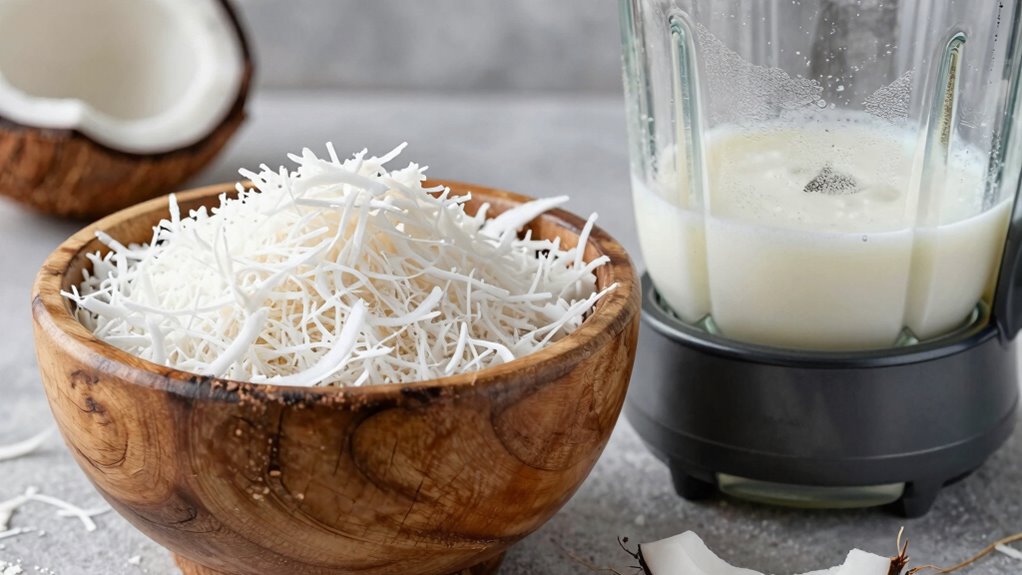
One common mistake that leads to overprocessing coconut milk is blending or squeezing the coconut mixture for too long. Overdoing it can break down the fats and proteins, resulting in a thin, watery texture and reduced flavor. When you overprocess, you risk harming coconut milk preservation, making it more prone to spoilage. To avoid this, choose blending equipment suited for gentle, efficient processing—high-powered blenders can quickly overwork the mixture if not carefully monitored. Pay attention to your blending times to prevent overprocessing. Shorter, controlled blending preserves the natural creaminess and flavor, ensuring your homemade coconut milk stays fresh longer and maintains ideal texture. Proper equipment selection and mindful processing are key to creating delicious, well-preserved coconut milk. Additionally, understanding proper storage techniques can further extend the shelf life of your homemade coconut milk.
How to Experiment With Blending Times to Perfect Your Coconut Milk
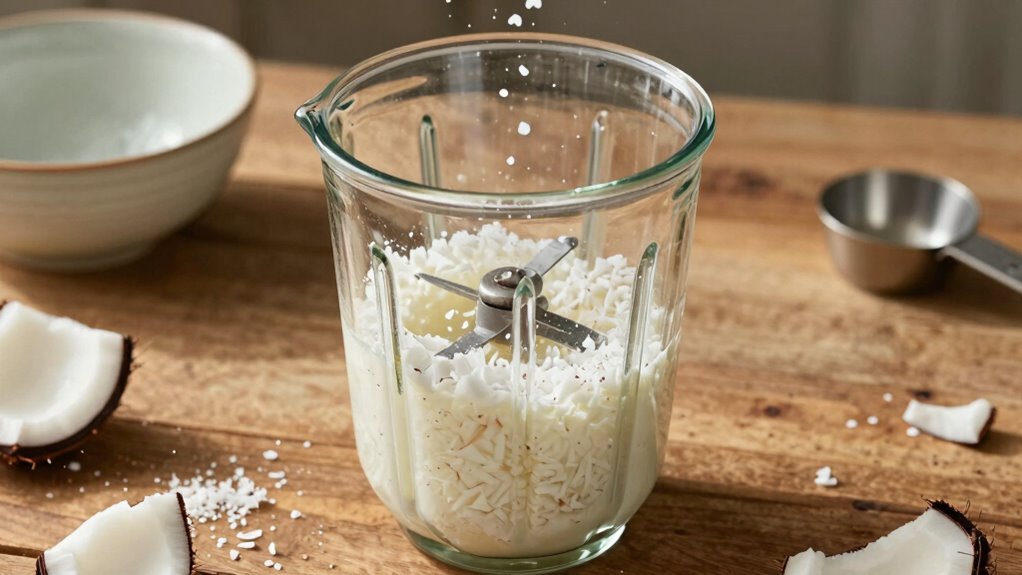
To find the perfect coconut milk, start by blending briefly for a lighter flavor, then increase the time for a richer, creamier result. Keep an eye on the texture, adjusting your blending time until it’s smooth but not overly thick. Experimenting with different durations helps you customize the flavor and consistency to your preference.
Short Blending for Light Flavor
Ever wondered how shorter blending times can give your coconut milk a lighter, more delicate flavor? Cutting down your blending time preserves the coconut aroma’s subtlety and enhances blending efficiency. To achieve this, try these tips:
- Use minimal blending, around 1-2 minutes, to prevent overpowering flavors.
- Keep the blender at a low speed to maintain a gentle mix.
- Taste the milk midway; if the flavor feels light enough, stop blending to avoid over-processing.
This approach results in a coconut milk with a softer, more refined taste, perfect for delicate dishes or beverages. Short blending preserves the natural aroma, ensuring your coconut milk remains light and fresh, while still maximizing blending efficiency.
Longer Blending for Richness
While shorter blending times highlight a light, delicate flavor, extending your blend can unseal a richer, creamier coconut milk. Longer blending breaks down more of the coconut shell and fibers, releasing additional coconut oil that enhances richness. As you blend longer, you’ll notice a thicker, more luscious texture that’s ideal for cooking or baking. Keep in mind, over-blending can sometimes introduce a slight oiliness, so experiment with incremental time increases to find your perfect balance. Using a powerful blender helps ensure you extract maximum flavor and creaminess from the coconut. By adjusting your blending duration, you control the depth of flavor and texture, making your homemade coconut milk uniquely suited to your preferences.
Adjusting Time for Texture
Adjusting your blending time is key to achieving the perfect coconut milk texture. Shorter blending times yield a thinner, more watery milk, while longer times create a creamier, richer consistency. To experiment effectively, consider these steps:
- Test different blending durations to find the ideal balance between smoothness and thickness.
- Use alternative blending methods, like pulsing or using a food processor, to see how texture changes.
- Store coconut milk properly in airtight containers to maintain freshness, especially if you plan to let it sit and settle before blending again.
Frequently Asked Questions
Can I Blend Coconut Milk With Other Ingredients for Added Flavor?
Yes, you can blend coconut milk with other ingredients for added flavor. Incorporate flavor enhancements like vanilla, cinnamon, or a touch of sweetener, and experiment with ingredient combinations such as fruits, spices, or herbs. Just blend your chosen ingredients with the coconut milk to create a richer, more flavorful drink or recipe. This allows you to customize your coconut milk to suit your taste and enhance your culinary creations.
How Does the Type of Coconut Affect Blending Time and Flavor?
The type of coconut considerably impacts blending time and flavor. Fresh, mature coconuts with thick coconut fiber require longer blending to extract rich flavor and creamy consistency. Younger coconuts have softer flesh, blending quicker with a milder flavor. The coconut fiber content influences flavor intensity; more fiber adds a robust, earthy taste, meaning you may need to blend longer for a smoother milk with a richer flavor profile.
Is There a Risk of Bacteria Growth With Longer Blending?
Think of blending coconut as a delicate dance, where too long, and bacteria might join in. While bacterial growth is a concern with extended blending, keeping it under 20 minutes guarantees blending safety. If you blend longer, bacteria could develop, especially if the environment isn’t clean. To stay safe, blend just enough to get a smooth texture, and refrigerate your coconut milk promptly.
Does Blending Time Influence the Shelf Life of Homemade Coconut Milk?
Yes, blending time can influence the shelf life of your homemade coconut milk. The longer you blend, the more air and heat are introduced, which may slightly increase the spoilage risk. This can reduce your storage duration, so it’s best to blend just enough to achieve your desired texture. Proper storage in an airtight container in the refrigerator extends shelf life and minimizes spoilage risk, keeping your coconut milk fresh longer.
Can I Use a Blender Versus a Food Processor for Better Results?
Think of your blender and food processor as two different musical instruments—each can produce beautiful results. A blender generally offers better blending speed and smoother texture for coconut milk, while a food processor might leave it a bit chunkier. For the creamiest, most consistent coconut milk, you should use a blender. It breaks down the coconut flesh more efficiently, giving you a richer, more refined result.
Conclusion
Ultimately, the perfect coconut milk hinges on your blending timing, balancing creaminess with flavor. But what if the ideal moment isn’t as straightforward as it seems? As you experiment with different durations, you’ll uncover nuances that can transform your homemade batch from good to extraordinary. Stay curious and attentive—sometimes, the smallest adjustments can unseal the richest, most satisfying coconut milk you’ve ever tasted. Are you ready to discover your perfect blend?
Fall Picks
fall essentials
As an affiliate, we earn on qualifying purchases.