To prevent splatter when using an immersion blender, keep the blades fully submerged and start blending at low speeds, gradually increasing as needed. Use containers with high sides and secure lids to contain messes, and chop ingredients into smaller pieces for smoother blending. Maintain a steady hand and smooth movements to avoid sudden splashes. If you want to master cleaner, safer blending techniques, there’s more helpful guidance to discover.

Get kitchen staples and gadgets delivered free — and shop member deals
- Fast, free delivery on millions of items
- Access to Prime Big Deal Days deals on October 6–7
- Prime Video, Amazon Music and more included
Key Takeaways
- Keep blades fully submerged and move the blender slowly in steady, controlled circles.
- Use containers with high sides and secure lids to contain splashes.
- Start blending at low or medium speed, gradually increasing to prevent sudden splashes.
- Employ splash guards and spill-resistant containers for added surface protection.
- Maintain a steady hand and consistent rhythm, avoiding abrupt movements or speed changes.
As an affiliate, we earn on qualifying purchases.
Why Does Your Immersion Blender Splash?
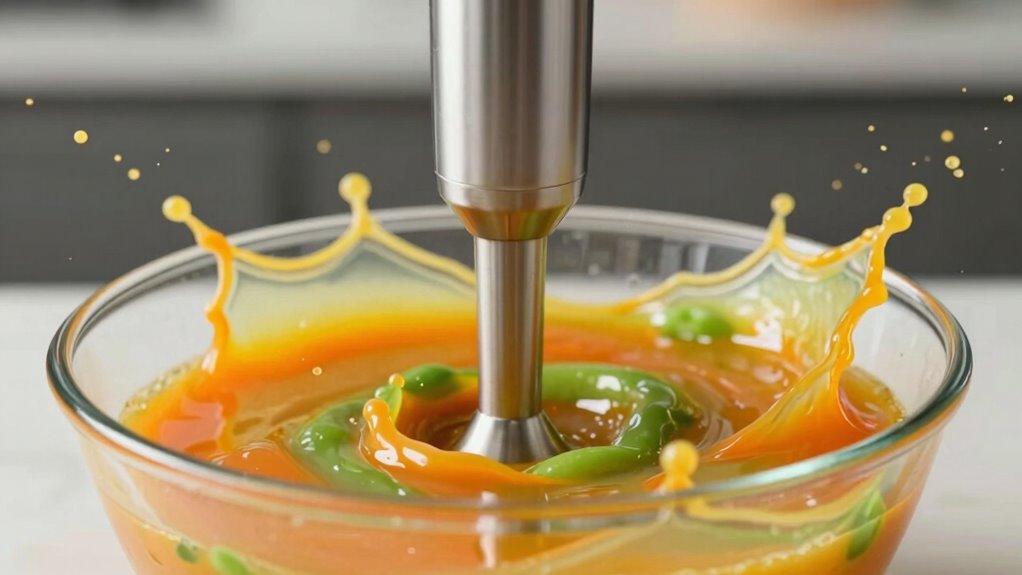
When you use an immersion blender, splashing often happens because the blades rapidly spin through liquids, creating turbulence. This turbulence can cause liquids to splash out, especially if you immerse the blender too deep or start blending at high speed. Overloading the blender can also lead to the motor overheating, which not only risks damaging the device but also compromises immersion blender safety. When the motor gets too hot, it may shut off or become less efficient, prompting you to handle it carefully. To prevent splattering, avoid running the blender at full speed immediately and keep the blades below the liquid surface. Proper technique and cautious operation help protect your device and ensure a safe, mess-free blending experience. Additionally, employing energy-efficient appliances like modern immersion blenders can reduce power consumption and enhance safety during use. Being aware of modern kitchen technology features can further improve blending safety and efficiency. Using connected kitchen devices that monitor motor temperature or blending performance can also help prevent overheating and splattering.
As an affiliate, we earn on qualifying purchases.
Master the Proper Technique for Splash-Free Blending
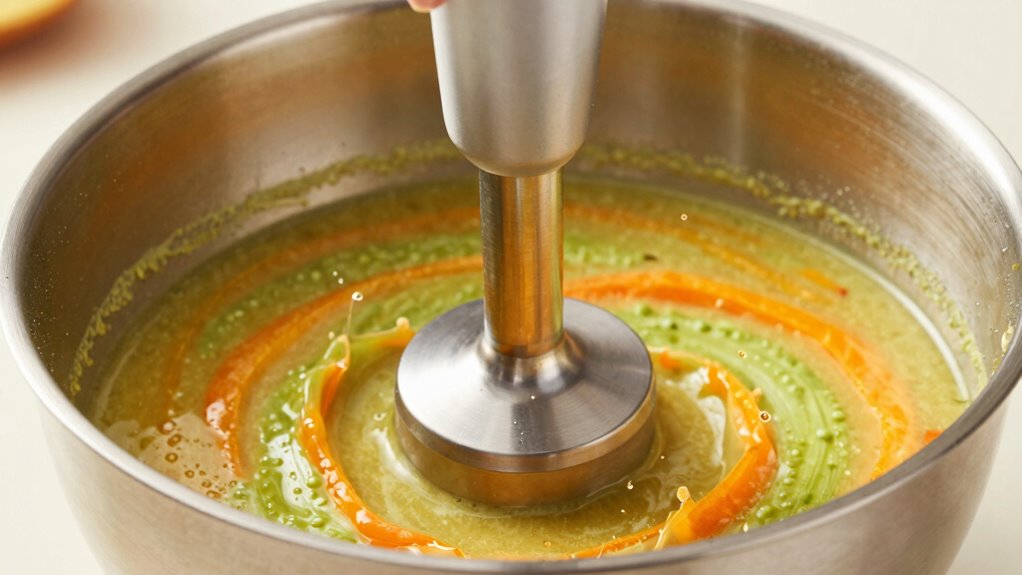
To achieve a splash-free blending experience, it’s essential to master the proper technique. Keep your blender steady and move it slowly in a circular motion to prevent splattering. Always keep the blender fully submerged in the ingredients to minimize splashes and maintain blender safety. Avoid pressing too hard or lifting the blender out suddenly, which can cause messes and damage the appliance. Regular appliance maintenance, such as cleaning the blades and ensuring the motor is functioning properly, helps keep your immersion blender in top shape and reduces splatter risks. Practice smooth, controlled movements to improve your technique over time. Additionally, understanding the importance of safe handling practices can help prevent accidents and prolong your appliance’s lifespan. Being mindful of technique consistency ensures a more efficient and cleaner blending process. Proper blender positioning and technique can significantly reduce the chances of splatter and make your blending more efficient. Incorporating proper ingredient preparation, such as chopping ingredients into smaller pieces, can also minimize splattering and make blending easier. Paying attention to blender speed settings can help you control the blending process more precisely and reduce messes. By focusing on proper handling and caring for your device, you’ll blend efficiently without creating unnecessary messes.
As an affiliate, we earn on qualifying purchases.
Preparing Ingredients and Containers to Reduce Mess

Preparing your ingredients and containers before blending is key to minimizing mess. Using high-quality ingredients ensures smoother blending and reduces splatter caused by uneven textures. Choose a container with the right size—wide enough to allow movement without overflowing. Smaller containers can cause splatter if ingredients hit the sides abruptly. To help visualize, consider this table:
| Ingredient Quality | Container Size | Best Practice |
|---|---|---|
| Fresh, firm produce | Wide, deep bowl | Use a tall, narrow container |
| Smooth sauces | Large enough | Keep ingredients below the rim |
| Uniform cuts | Appropriate size | Avoid overfilling |
| Precise measurements | Suitable volume | Prevent overflow spills |
Additionally, selecting the appropriate auditory cues during blending can help maintain control and reduce splatter, especially when working with stubborn ingredients. Being aware of motor control and adjusting your speed accordingly can further minimize messes. Implementing a steady hand technique can also greatly improve your blending results and reduce accidental splashes. Developing a consistent blending rhythm can help maintain control and prevent splattering. Incorporating adaptive blending settings on your appliance can also optimize performance and reduce messes.
immersion blender with safety features
As an affiliate, we earn on qualifying purchases.
As an affiliate, we earn on qualifying purchases.
Tools and Accessories to Keep Your Kitchen Clean
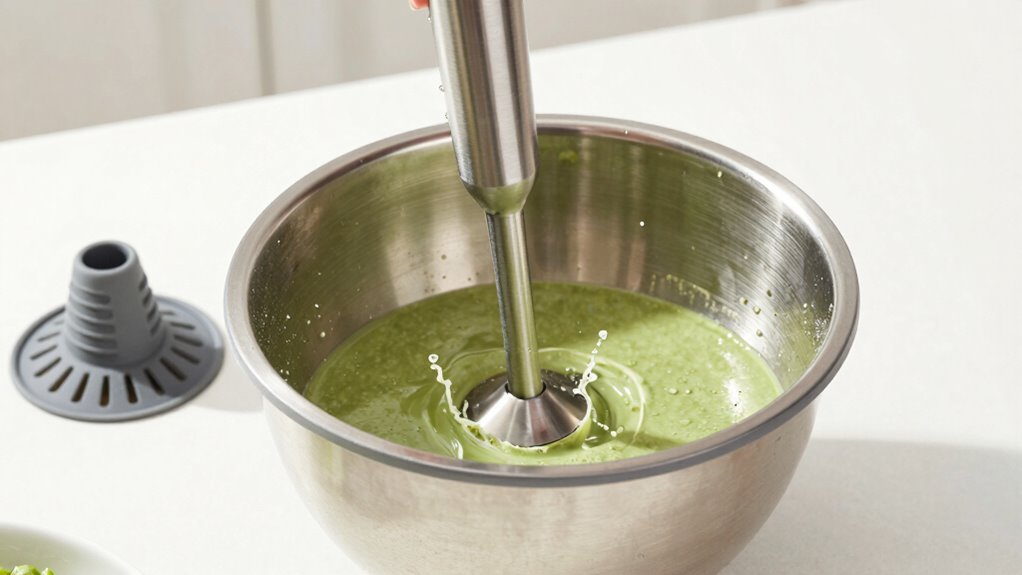
Using tools like protective splash guards and spill-resistant containers can considerably reduce messes while blending. Cleaning brush attachments make cleanup quick and easy, keeping your workspace tidy. These accessories help you maintain a cleaner, more efficient kitchen environment. Incorporating multi-functional gear can also optimize your prep process and prevent unnecessary spills. Additionally, choosing appliances with effective filtration systems can help contain splatter and improve overall cleanliness. Employing safety features designed to minimize splatter can further enhance your kitchen safety and cleanliness. Understanding safe installation practices can help ensure your equipment operates safely, reducing the risk of splatter during use. Implementing proper maintenance routines can also extend the lifespan of your blender and prevent leaks or splatter issues.
Protective Splash Guards
Protective splash guards are essential tools that help keep your kitchen clean while you blend. A well-designed splash guard features an effective splash guard design that contains splatters and prevents messes. Using a splash guard enhances immersion blender safety by reducing the risk of hot liquids splattering onto your skin or surrounding surfaces. These guards are easy to attach and remove, making clean-up simple. They also allow you to blend more confidently, knowing you’re minimizing splatter. When choosing a splash guard, look for one that fits your immersion blender model snugly and is made from durable, heat-resistant materials. Incorporating a splash guard into your blending routine keeps your workspace tidy and ensures safer, more controlled blending experiences. Understanding safety features in kitchen tools can further improve your blending experience and prevent accidents. Additionally, selecting a splash guard with adjustable height can help accommodate various mixing tasks and container sizes. Selecting a guard with easy cleaning features can further streamline your post-blending cleanup process, especially if it includes dishwasher-safe components for effortless maintenance. For added convenience, consider guards that feature non-slip grips to keep them securely in place during use.
Spill-Resistant Containers
Spill-resistant containers are essential accessories that help you maintain a clean and organized kitchen when blending. Choosing the right container shape is vital; wider bases provide stability, while taller, narrower shapes minimize splatter. Consider ingredient density—thicker ingredients stay contained better, reducing the chance of splashes. Using these containers allows you to blend directly inside without worrying about spills spilling over the sides. They fit snugly on your countertop or mixing station, keeping messes contained. For best results, select a container with high sides and a secure lid if you need to pause blending. This approach not only prevents splatter but also keeps your workspace tidy, making cleanup easier and your blending process more efficient.
Cleaning Brush Attachments
A cleaning brush attachment is a practical tool that makes it easier to keep your immersion blender and surrounding surfaces spotless. It simplifies cleaning, guaranteeing your device stays in top condition and reducing splatter risk during use. To maintain your attachment, follow simple cleaning tips: rinse immediately after use, remove any stuck food, and dry thoroughly. Regular attachment maintenance prolongs its lifespan and guarantees optimal performance. Use the brush to reach into crevices and remove residue effectively. Here’s a quick visual guide:
| Cleaning Tips | Attachment Maintenance |
|---|---|
| Rinse immediately | Check for wear and tear |
| Use warm, soapy water | Store in a dry place |
| Remove stuck food with brush | Avoid harsh abrasives |
| Dry thoroughly | Regularly inspect for damage |
| Sanitize occasionally | Replace if damaged |
Practice Slow, Steady Blending for Better Control

To keep splatter to a minimum, focus on maintaining a steady speed when blending. Gentle, controlled movements help you avoid sudden splashes and keep the process smooth. Practicing slow, deliberate motions gives you better control and results in less mess.
Maintain Steady Speed
Maintaining a steady speed while using your immersion blender is essential for controlling splatter. Consistent speed control helps you blend ingredients smoothly without sudden movements that can cause splattering. Different immersion blender types offer various speed settings, so choose one with adjustable control for better precision. When you keep a steady pace, you avoid jerky motions that can fling liquids outward. Start at a low or medium speed and increase gradually if needed, always maintaining a smooth motion. This approach minimizes splatter and ensures even blending. Remember, quick changes in speed can disrupt control and lead to messes. By focusing on a consistent speed, you’ll improve your technique and keep your workspace cleaner.
Use Gentle Movements
Using gentle movements while blending helps you stay in control and reduce splatter. Slow, steady motions prevent the immersion blender from kicking up ingredients, promoting safety and easier kitchen appliance maintenance. Keep your hand firm but relaxed, moving the blender in a smooth, circular pattern. This technique minimizes mess and ensures even blending.
| Tip | Benefit |
|---|---|
| Use light pressure | Prevents splatter and protects the motor |
| Keep steady speed | Maintains control and safety |
| Move slowly | Reduces splatter risk |
| Avoid sudden jerks | Protects your appliance and ingredients |
| Stay focused | Ensures safe blending and better results |
Troubleshooting Splashing Problems and How to Fix Them

Splashing with an immersion blender often happens when the blender is pressed too deeply into the liquid or operated at too high a speed. To troubleshoot this, start by adjusting your technique—keep the blender near the surface and use lower speeds. Wearing safety gear like goggles or an apron can protect you from splatters while you fix the issue. Guarantee your kitchen is well-organized, with ingredients and tools within easy reach, so you don’t rush or overreach. Check that the blender’s blades are clean and unobstructed. If splashing persists, try pulsing the blender instead of running it continuously. These steps help minimize splatter and improve control, making your blending safer and tidier.
Frequently Asked Questions
Can Using a Lid Prevent Splatter When Blending?
Using a lid can definitely improve splatter control when blending with an immersion blender. While the lid’s effectiveness varies depending on its fit and design, it helps contain splatters and keeps your workspace cleaner. Just make sure the lid is secure and leaves enough room for the blades to operate efficiently. This simple step can save you cleanup time and make the blending process less messy.
Does the Type of Container Affect Splashing Risk?
Ever wondered if your container choice impacts splashing? Yes, it does! The container shape and material considerations play a big role in splatter risk. Wide, tall containers with smooth sides help contain splashes better, while narrow or oddly shaped ones might increase mess. Glass or plastic materials are generally fine, but sturdy, non-slip bases prevent accidental tipping. Choosing the right container keeps your blending cleaner and safer.
How Does Ingredient Consistency Influence Splatter?
Your ingredient consistency greatly influences splatter risk. If your ingredients are too thick or chunky, they can cause splashing when blended, especially if the texture isn’t smooth enough. Similarly, cold ingredients tend to be firmer, increasing splatter chances, while warmer, more fluid ingredients reduce it. To prevent messes, guarantee your ingredient texture is smooth and at a moderate temperature before blending, allowing for a controlled, splash-free process.
Are There Specific Brands of Immersion Blenders Less Prone to Splashing?
Did you know that nearly 80% of users trust brands with strong reputations for quality? When choosing an immersion blender less prone to splashing, look for those with top-rated ergonomic design and reliable brand reputation. Brands like Breville and All-Clad are known for their durability and innovative features, making them excellent options. These models offer better control, reducing splatter and ensuring safer, cleaner blending experiences.
Can Adjusting Blending Speed Minimize Splatter Effectively?
Yes, adjusting the blending speed can effectively minimize splatter. Use the speed control to start at a lower setting, allowing you to stabilize the immersion blender and avoid sudden splashes. As you get comfortable, gradually increase the speed. Employ a steady blending technique, keeping the blender tip submerged and moving slowly, to prevent splatter and achieve smooth results without mess.
Conclusion
Think of using your immersion blender like steering a boat through calm waters—you want smooth control without causing waves. When you follow these tips, you’ll glide through your blending tasks effortlessly, avoiding splatters that can turn your kitchen into a mess. I once watched a friend master her blender technique, and her dishes turned out flawless—proof that with patience and practice, you can keep your kitchen clean and your food perfect. Keep blending confidently!
NFL season / tailgating Picks
team gear
As an affiliate, we earn on qualifying purchases.