To prevent herbs from bruising when you chop, handle them gently and use sharp, lightweight knives to make clean cuts. Choose soft cutting boards like wood or plastic, and chop in small batches to avoid overhandling. Wrap herbs in damp paper towels or refrigerate in airtight containers immediately after harvesting. If you want more tips to keep your herbs vibrant and damage-free, keep exploring for expert advice and techniques.

Get kitchen staples and gadgets delivered free with Prime
- Fast, free delivery on millions of items
- Prime Video, Amazon Music and more included
- Member-only deals all year
Key Takeaways
- Use a sharp, lightweight knife to make clean cuts and reduce tissue damage.
- Chop herbs gently with a rocking motion, avoiding excessive force or tearing.
- Select appropriate cutting tools and surfaces, such as wooden or plastic boards, to absorb pressure.
- Work with manageable herb amounts to maintain control and prevent crushing.
- Store herbs properly in damp paper towels or airtight containers to preserve freshness before chopping.
sharp lightweight herb chopping knife
As an affiliate, we earn on qualifying purchases.
As an affiliate, we earn on qualifying purchases.
Why Herb Bruising Happens When You Chop Them
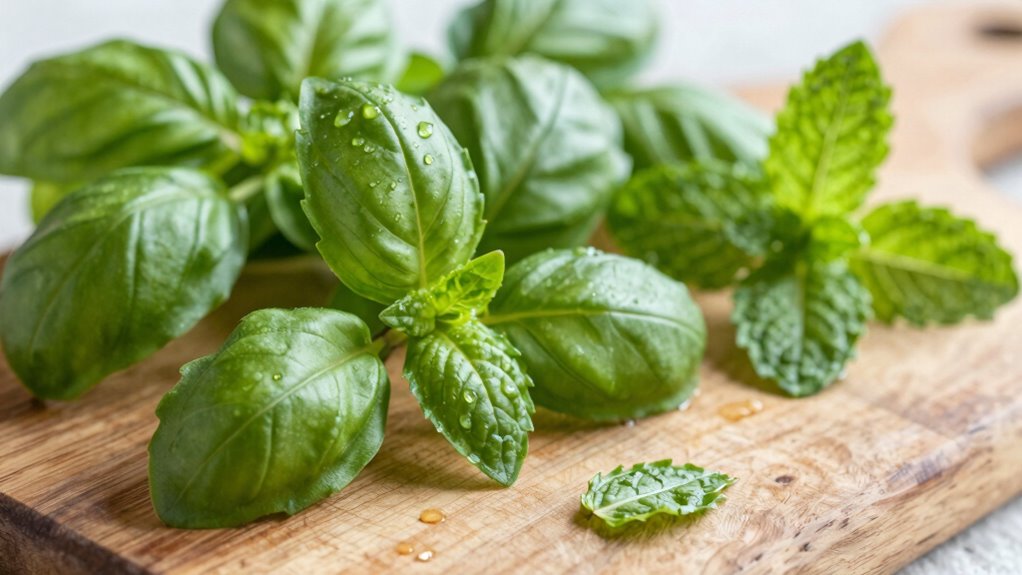
Herb bruising occurs because the cell walls in the leaves are delicate and easily damaged when you cut or chop them. When you break these cells, herb enzymatic activity kicks in, causing the release of compounds that lead to browning and discoloration. Proper post-harvest handling is essential to minimize this damage; if herbs aren’t handled gently, their cell structures become more vulnerable. Chopping too forcefully or with dull knives can rupture cells unnecessarily, accelerating bruising. Additionally, exposure to air during processing speeds up enzymatic reactions that cause discoloration. To keep herbs looking fresh and vibrant, handle them carefully after harvest, use sharp knives, and avoid bruising the leaves, which triggers enzymatic activity that degrades their appearance. Incorporating energy-efficient tools and techniques can further reduce damage and preserve herb quality. Using proper storage methods immediately after harvesting also helps maintain their freshness and reduces bruising during preparation. Being mindful of cutting techniques can significantly prevent unnecessary tissue damage and prolong herb shelf life. Moreover, understanding how enzymatic activity is triggered can help you develop more effective handling and processing methods. Additionally, controlling factors like temperature and humidity during storage can further slow down enzymatic reactions and preserve the herbs’ appearance.
herb storage containers airtight
As an affiliate, we earn on qualifying purchases.
As an affiliate, we earn on qualifying purchases.
How to Choose Fresh, Healthy Herbs to Minimize Damage
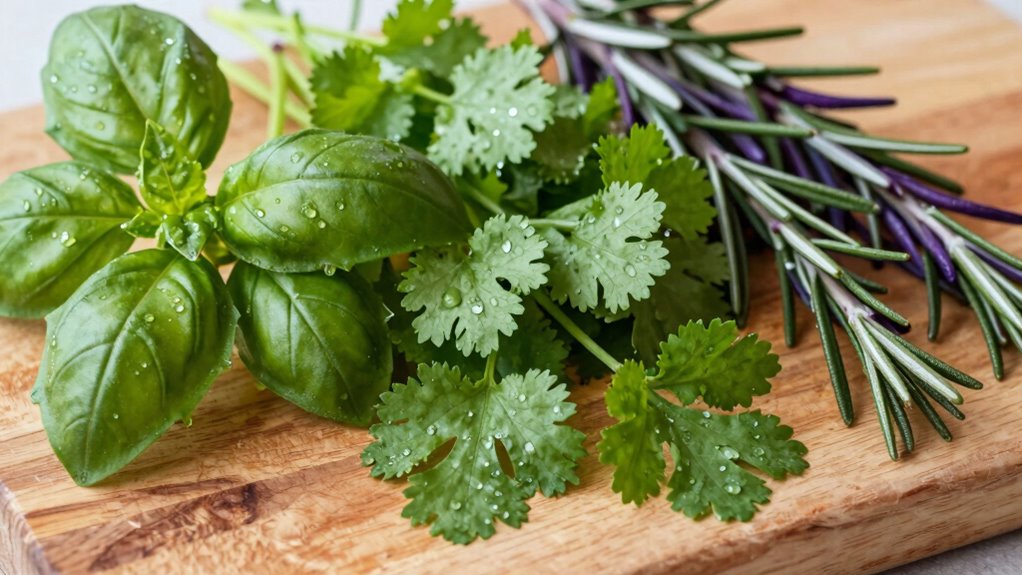
Choosing fresh, healthy herbs starts with inspecting their appearance carefully. Look for vibrant, green leaves without discoloration or wilting, as these indicate good herb freshness. Avoid herbs with brown spots, slimy textures, or wilted stems, which suggest spoilage or age. Fresh herbs are more resilient and less likely to bruise during chopping. Proper herb storage is key; keep herbs in a damp paper towel or airtight container in the fridge to maintain their crucial moisture. Additionally, understanding the mechanics of French press can help in handling herbs gently to prevent bruising during preparation. When shopping, consider the post-harvest handling practices, as they significantly influence herb quality and durability. Check for signs of dehydration or drying out before purchasing or storing. Selecting herbs in peak condition minimizes unnecessary damage when you chop, ensuring better flavor and presentation. Being aware of herb tenderness can also guide you in choosing herbs that are less prone to bruising and easier to prepare. By choosing fresh herbs and storing them correctly, you’ll reduce the risk of bruising and keep your herbs looking and tasting their best.
damp paper towels for herb storage
As an affiliate, we earn on qualifying purchases.
As an affiliate, we earn on qualifying purchases.
Pick the Right Knives and Cutting Boards for Herbs
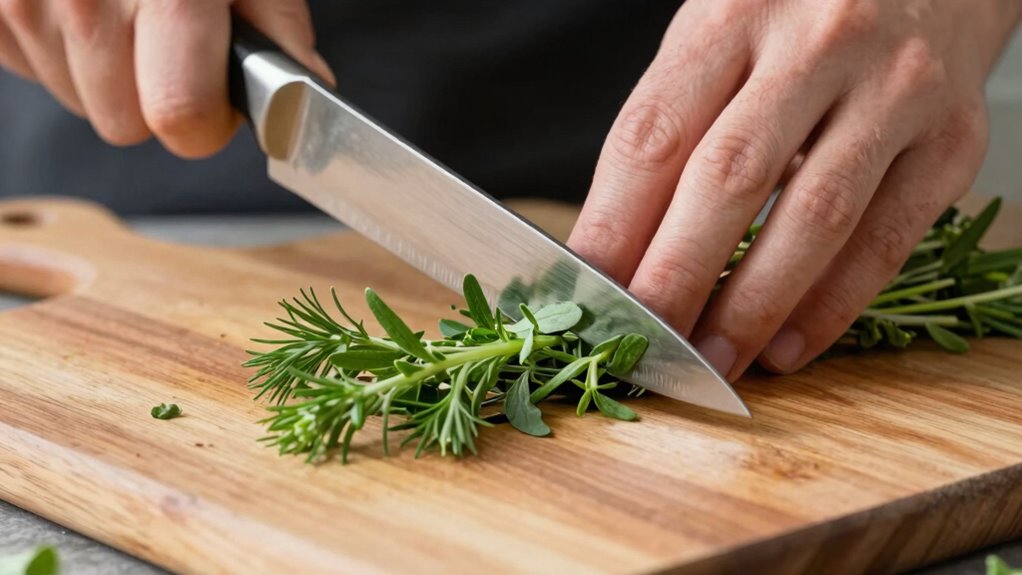
Using the right knives and cutting boards makes a significant difference when chopping herbs, as it helps guarantee herb preservation and prevents bruising. Opt for sharp, lightweight knives like paring or chef’s knives with thin blades—they allow for precise cuts that minimize tissue damage. When choosing cutting boards, consider materials such as wood or plastic; these surfaces are gentler on herbs compared to harder options like glass or stone. Wooden cutting boards are particularly good because they absorb some of the pressure, reducing the likelihood of bruising. Avoid overly hard or slippery surfaces, which can cause tearing or crushing. Selecting the right tools ensures cleaner cuts and better herb preservation, keeping your herbs fresh and vibrant when you chop. Additionally, using appropriate cutting techniques can further minimize damage and maintain herb quality.
As an affiliate, we earn on qualifying purchases.
Use Gentle Cutting Techniques to Prevent Bruising
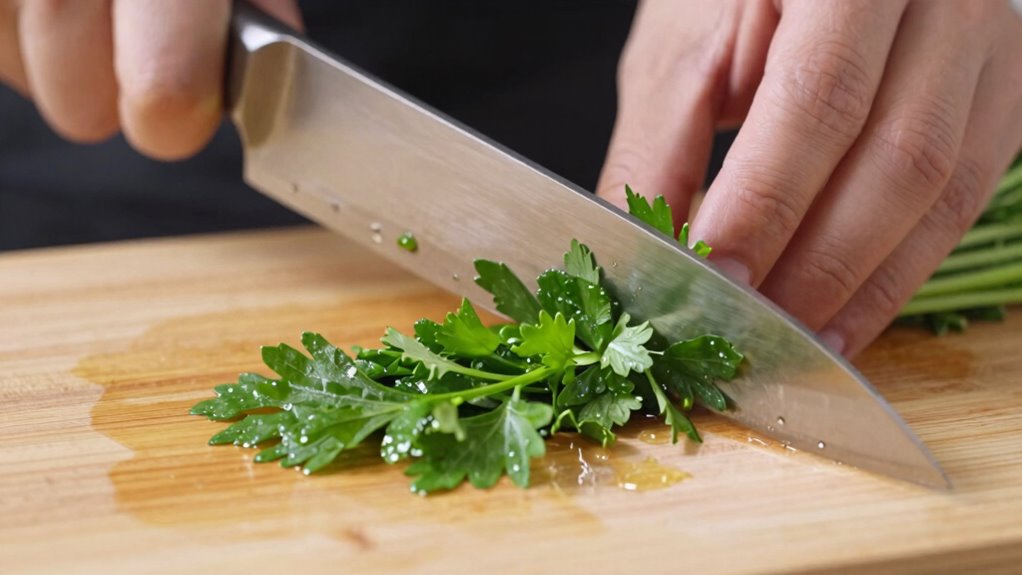
Using gentle cutting techniques helps minimize herb bruising and maintains their freshness. Make certain your knives are sharp and clean to guarantee smooth cuts with less pressure. When chopping near the root, be especially careful to avoid applying excessive force. Additionally, handling herbs with care and avoiding rough tearing can further preserve their delicate structure. Incorporating quality tools into your kitchen can significantly improve your herb preparation and prevent damage. Choosing suprem fabric for your kitchen accessories or apparel can also contribute to a more durable and eco-friendly culinary environment. Being aware of the water quality used in washing herbs can also impact their longevity and freshness. Moreover, understanding cryptocurrency trends can help you make informed investment decisions, much like selecting the right tools ensures better herb handling.
Use Sharp, Clean Knives
A sharp, clean knife is essential for preventing herb bruising, as dull blades crush delicate leaves instead of slicing through cleanly. Using a sharp knife promotes better herb preservation by reducing damage during chopping. When your knife is well-maintained, you’ll experience cleaner cuts that help herbs stay fresh longer. Keep your knives sharp and properly sanitized to avoid introducing bacteria that can spoil herbs. Here are four key tips for using your knife effectively:
- Regularly hone your blades to maintain sharpness.
- Use a stable cutting board to avoid slips.
- Apply gentle, even pressure while chopping.
- Store knives properly to prevent dulling.
- Maintaining proper cutting techniques can also help minimize bruising and preserve herb quality. Additionally, understanding blade maintenance can extend the lifespan of your knives and ensure consistent cutting performance.
Following these steps ensures minimal bruising, better herb storage, and vibrant, flavorful herbs in every dish.
Apply Gentle Pressure
After ensuring your knife is sharp and clean, focus on applying gentle pressure as you cut. Using gentle pressure helps preserve herb tenderness and prevents bruising. Pressing too hard can crush delicate leaves and cause them to turn brown, affecting both appearance and flavor. Instead, let the sharpness of your knife do the work by guiding it smoothly through the herbs with minimal force. This technique reduces stress on the plant cells, keeping them intact and fresh. Pay attention to your hand movements, maintaining a steady, controlled motion. Additionally, being mindful of your cutting techniques can further help prevent damage and maintain the herbs’ quality during preparation. Incorporating professional culinary techniques can further enhance your results and prevent damage during preparation. Remember that practicing gentle handling can significantly improve your herb preparation skills and reduce bruising. To achieve optimal results, consider herb storage tips that help keep herbs resilient and less prone to damage before chopping.
Cut Herbs Near Root
Have you ever noticed how herbs bruise easily near their roots? When you perform root cutting during herb trimming, it can stress the plant and cause bruising. To prevent this, use gentle cutting techniques near the root area. Here are four tips to keep in mind:
- Use sharp scissors or a knife for clean cuts.
- Avoid pulling or tearing during herb trimming near the roots.
- Make smooth, deliberate cuts rather than forcing through tough stems.
- Limit root cutting to necessary sections to minimize stress.
- Being aware of the safety of LED face masks can help you maintain a healthy routine that supports overall plant care and personal skin health. Additionally, understanding proper piercing care and hygiene helps prevent infections that could affect your plants’ health indirectly.
Cut Herbs in Small Batches for Better Handling
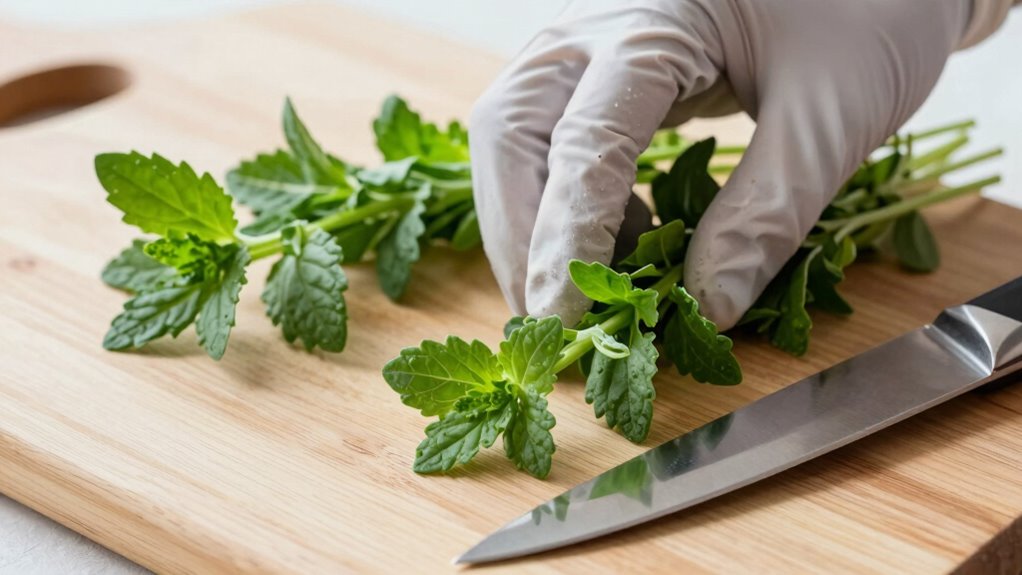
Chopping herbs in small batches makes handling easier and reduces the risk of bruising. When you work with manageable amounts, you gain better control over your herb handling, preventing unnecessary pressure that can damage delicate leaves. Use proper chopping techniques by holding the knife securely and making gentle, even cuts. Avoid overloading your cutting board, as this can cause herbs to become compressed and bruised. Small batches allow you to focus on each herb’s texture and fragility, maintaining freshness and flavor. This method also minimizes the chance of crushing herbs unnecessarily. By chopping in small portions, you ensure even, clean cuts, and keep herbs looking vibrant and fresh, making your prep safer, more efficient, and less damaging to the herbs’ delicate structure.
Best Chopping Methods for Different Types of Herbs

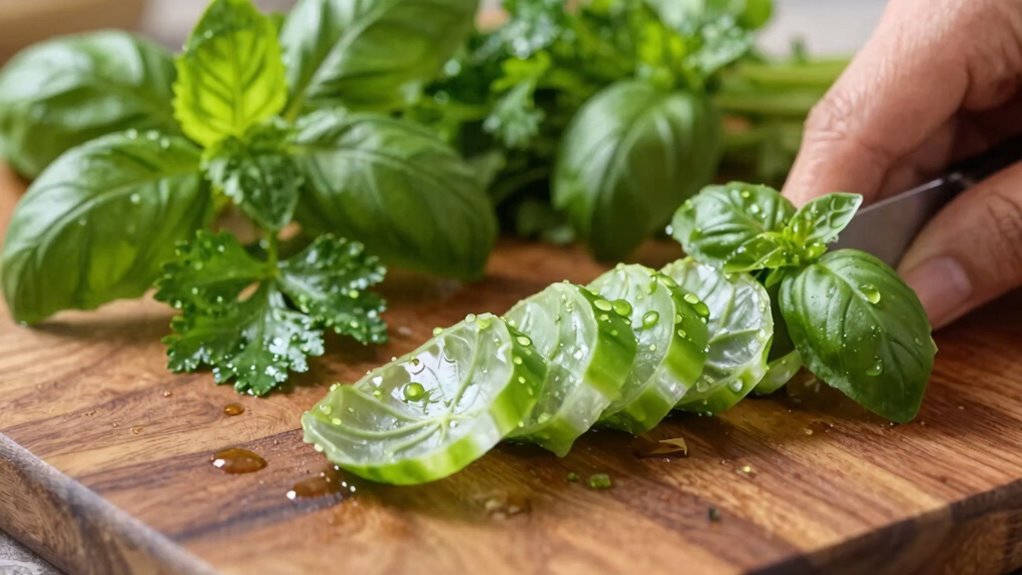
Using proper cutting techniques and choosing the right knife can make a big difference when chopping herbs. Soft herbs like basil and parsley need gentle slicing, while sturdier ones like rosemary may require a sharper, heavier knife. Selecting the appropriate tool helps prevent bruising and keeps your herbs looking fresh.
Use Proper Cutting Techniques
To keep herbs from bruising when you chop, selecting the right technique for each type is essential. Proper cutting methods minimize damage and preserve flavor. First, verify your herbs are fresh and well-stored, as this helps reduce fragility. Use gentle, controlled motions instead of force. For delicate herbs like basil or cilantro, cut with a rocking motion, keeping blades sharp. For sturdier herbs like rosemary or thyme, a brisk chop works best. Here are four key tips:
- Use a sharp knife to prevent crushing herbs.
- Avoid tearing by slicing gently.
- Chiffonade leafy herbs to reduce bruising.
- Maintain even, consistent cuts for uniform herb pieces.
Choose Suitable Knife Types
Choosing the right knife type makes a significant difference in how well you can chop herbs without bruising them. For delicate herbs like basil or parsley, opt for a sharp paring or utility knife, which gives you better control and reduces pressure. Use a chef’s knife for sturdier herbs like rosemary or thyme, but guarantee your blade is well-maintained to prevent tearing. Proper knife maintenance, including regular sharpening, keeps cuts clean and gentle. Additionally, store your herbs properly to prevent bruising before chopping; keeping them in herb storage containers or wrapped in damp paper helps preserve their structure. Using the appropriate knife for each herb type minimizes damage, making chopping smoother and maintaining freshness. This approach helps keep herbs vibrant and flavorful longer.
Protect Herbs During Prep With Freezing or Wrapping
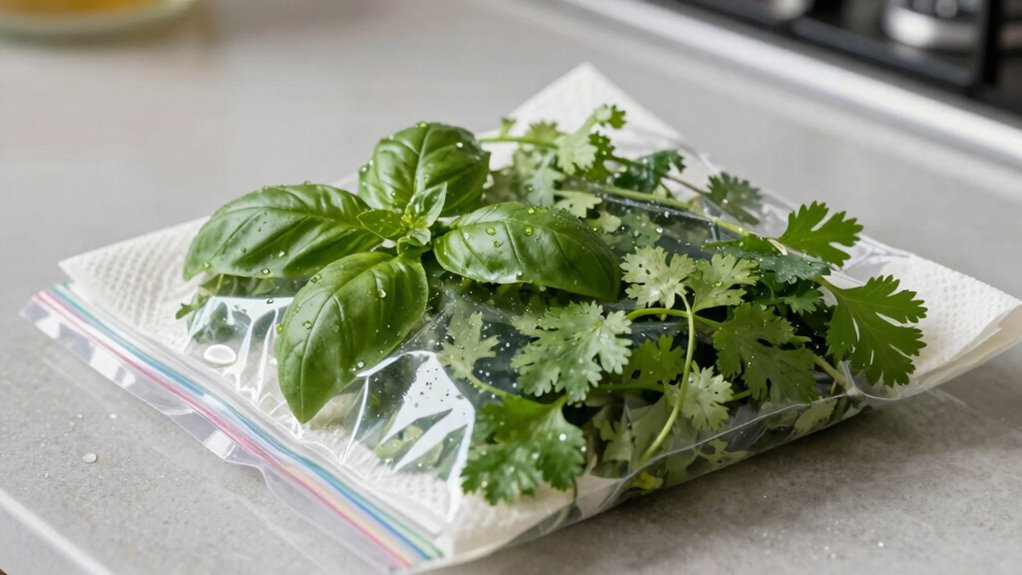
Protecting herbs during prep is essential to prevent bruising, and one effective method is freezing or wrapping them properly. Proper herb preservation helps maintain freshness and flavor while minimizing damage. When using freezing techniques, ensure herbs are clean, dry, and wrapped tightly to avoid freezer burn. Wrapping herbs in damp paper towels or airtight containers also shields delicate leaves during chopping.
Proper wrapping and freezing protect herbs from bruising and preserve freshness during prep.
Here are four tips to enhance herb preservation:
- Use airtight containers to prevent exposure to air.
- Freeze herbs in small portions for quick access.
- Wrap herbs in plastic wrap or foil for added protection.
- Thaw herbs gently to avoid crushing fragile leaves.
Following these steps reduces bruising risks and keeps herbs fresh longer during prep.
How to Spot Signs of Bruising and Reduce Its Appearance
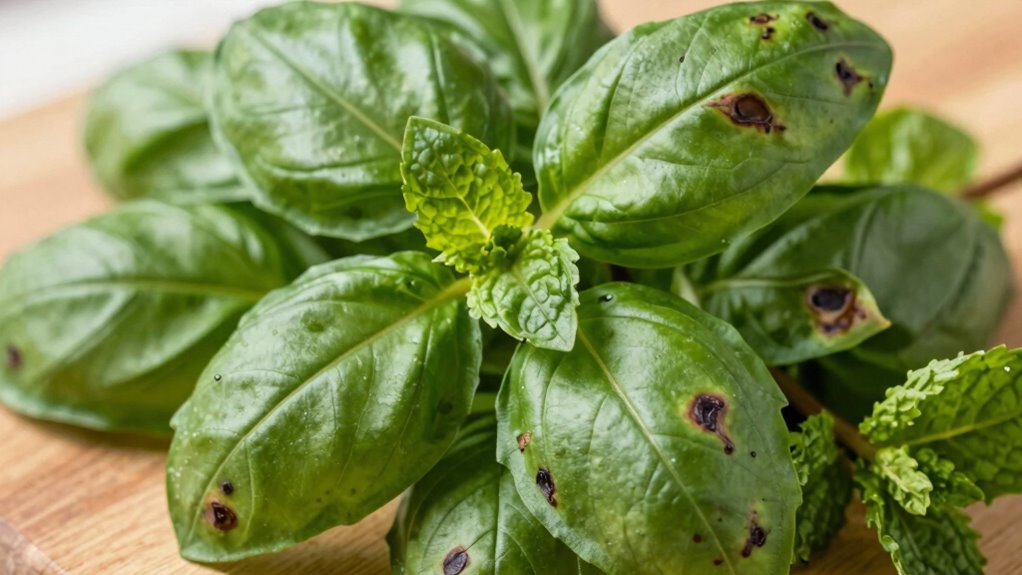
Look closely at your herbs for early signs of bruising, like discoloration or soft spots. Once you spot these, you can take quick steps to minimize the damage. Acting fast helps keep your herbs fresh and their appearance appealing.
Recognize Early Signs
Have you ever noticed darkened spots or a mushy texture on your herbs after chopping? Recognizing early signs of bruising helps you maintain freshness and ensures kitchen safety. Being attentive allows you to guarantee further damage and keeps your herbs looking vibrant. Here are key indicators to watch for:
- Discoloration around the edges or stems
- Soft or slimy textures when touched
- Unusual wilting or drooping
- Reduced aroma or flavor intensity
Minimize Bruising Clearly
Spotting early signs of bruising is the first step in minimizing its appearance. Once you notice slight discoloration or soft spots, act quickly to prevent further damage. Proper herb storage can help reduce bruising; keep herbs in a cool, damp environment to maintain their integrity. When chopping, use sharp knives to minimize cell damage, which leads to bruising. To further prevent bruising, handle herbs gently—avoid crushing or pressing too hard. After chopping, consider lightly rinsing herbs in cold water and patting them dry to reduce stress on the leaves. Applying a quick, gentle massage or wrapping herbs in a damp paper towel can also help lessen visible bruising. Consistent bruising prevention techniques ensure your herbs stay fresh and visually appealing.
Store Chopped Herbs Properly to Keep Them Fresh and Vibrant
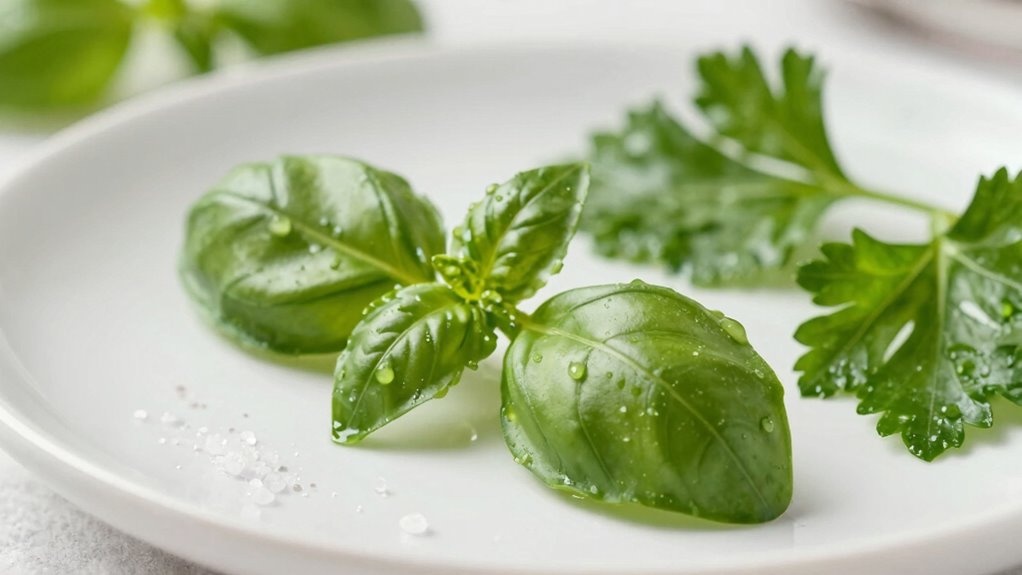
To keep chopped herbs fresh and vibrant, proper storage is essential. Effective herb storage ensures maximum freshness preservation and prevents bruising. Follow these tips for best results:
- Use airtight containers or resealable bags to limit air exposure.
- Line containers with damp paper towels to maintain moisture without overwatering.
- Store herbs upright in a glass of water, like flowers, covered loosely with a plastic bag.
- Keep herbs in the refrigerator’s crisper drawer, where humidity is controlled.
These steps help preserve the herbs’ flavor, color, and texture, making sure your chopped herbs stay vibrant longer. Proper herb storage not only extends freshness but also maintains quality, so your herbs are always ready to use at their best.
Troubleshooting Herb Bruising: Quick Fixes and Tips
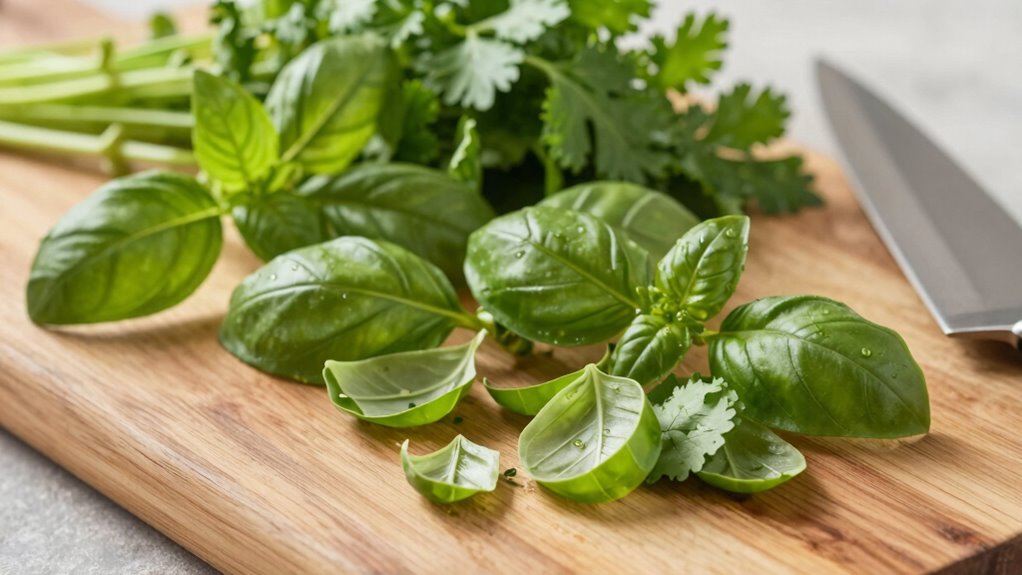
When you notice your herbs starting to bruise after chopping, acting quickly can save their appearance and flavor. First, gently rinse the herbs with cold water to remove any debris that might cause further damage. Then, use a clean kitchen towel or paper towel to pat them dry carefully—moisture helps reduce additional bruising. For immediate fixes, lightly tossing the herbs with a splash of olive oil or lemon juice can help minimize color change and keep them fresh. Proper herb storage plays a role too; store bruised herbs in an airtight container in the fridge to slow down deterioration. Keep your kitchen tools sharp and clean to make clean cuts, which reduce bruising during chopping. Quick, attentive steps like these help preserve your herbs’ quality.
Frequently Asked Questions
Can Soaking Herbs Before Chopping Prevent Bruising?
Soaking herbs before chopping can help reduce bruising, as it softens the leaves and minimizes damage. Proper herb storage keeps herbs fresh longer, making them less fragile. Make sure your knife is sharp; dull blades crush herbs instead of cleanly slicing them, increasing bruising. Soaking briefly in cold water, combined with sharp knives and proper storage, guarantees your herbs stay fresh, vibrant, and unbruised when you chop.
Does the Type of Cutting Motion Affect Herb Bruising?
You might find it ironic, but your cutting technique directly impacts herb resilience. Using a gentle, rocking motion helps prevent bruising, while harsh slicing damages delicate cells. Opt for a sharp knife and a careful, controlled cut to maintain freshness. Quick, aggressive chopping can crush herbs, causing bruising and loss of flavor. So, your best bet to keep herbs pristine is to master a gentle, precise cutting technique.
Are There Specific Herb Varieties More Prone to Bruising?
Some herb varieties are more prone to bruise susceptibility, like basil, mint, and delicate herbs such as chervil and cilantro. These herbs have softer structures, making them easier to damage during chopping. To minimize bruising, handle these varieties gently, use sharp knives, and chop with a gentle motion. Being aware of their fragility helps you avoid bruising, keeping your herbs fresh and visually appealing for your dishes.
How Does Humidity Impact Herb Fragility During Prep?
Think of your herbs as delicate dancers on a humid stage. High humidity causes their fragility to increase, making them more prone to bruising during prep. To keep them graceful, focus on proper herb storage and moisture control. Maintain a cool, dry environment to prevent excess moisture, which weakens herb tissue and heightens fragility. By controlling humidity, you help your herbs stay resilient and fresh, ready for your culinary performance.
Can Using a Food Processor Damage Delicate Herbs?
Using a food processor can damage delicate herbs because it chops them quickly and forcefully, leading to bruising and loss of flavor. To keep herbs fresh and intact, store them properly in herb storage containers and make sure your knife is sharp, which makes gentle, precise cuts. Regular knife sharpening helps prevent crushing herbs, while proper storage minimizes their fragility, ensuring you preserve their aroma and appearance when chopping or preparing.
Conclusion
To keep your herbs vibrant and bruise-free, handle them gently and choose quality tools. Remember, over 70% of home cooks have accidentally bruised herbs during prep, often due to haste or improper technique. By following these tips, you’ll preserve their flavor and appearance. With a little care, your herbs will stay fresh and beautiful, elevating every dish you make. Happy chopping!
NFL season / tailgating Picks
team gear
As an affiliate, we earn on qualifying purchases.