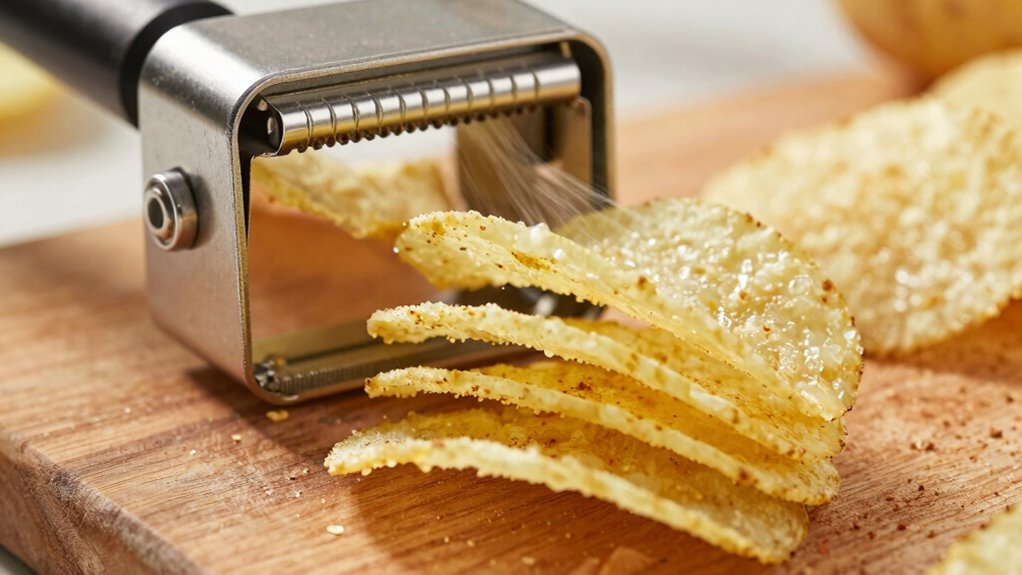

To get even slices for chips without breaking them, start by choosing a sharp, high-quality knife or a mandoline with adjustable thickness. Stabilize your potatoes or vegetables by trimming flat surfaces and using a damp cloth or non-slip mat underneath. Keep your slices uniform by maintaining steady, controlled motions and avoiding rushing. Proper technique, sharp tools, and safety precautions help prevent breakage. Want to see detailed tips on perfect slices every time? Keep going to learn more.
Key Takeaways
- Use a sharp, well-maintained knife or slicer to ensure clean, even cuts without applying excessive force.
- Stabilize irregular or fragile ingredients with a flat surface and gentle pressure before slicing.
- Slice at a consistent thickness, adjusting your technique and equipment to maintain uniformity.
- Use proper slicing techniques, guiding the knife with controlled, smooth motions and keeping fingers safe.
- Keep blades sharp and avoid rushing to prevent uneven slices and minimize the risk of breaking delicate chips.

Fullstar 2-in-1 Handheld Mandoline Slicer for Kitchen – 4 Thickness Settings Vegetable Food Onion Slicer, Julienne Blade, Stainless Steel Guard, Easy to Use, Sharp Blades, Veggie Slicer & Fruit Cutter
4 Thickness Settings – The only handheld mandoline slicer for kitchen with 4 adjustable thickness options (1mm, 2mm,…
As an affiliate, we earn on qualifying purchases.
As an affiliate, we earn on qualifying purchases.
Why Even Slices Matter for Perfect Chips

Getting even slices is essential for making perfect chips because uneven slices can cause inconsistent cooking and texture. Different potato varieties vary in moisture content and starch levels, affecting how they cook and crisp. Choosing the right potato with the ideal slicing thickness ensures uniformity, which is vital for even frying. Thicker slices might take longer to cook and can be soggy inside, while thinner slices can burn quickly. Consistent slicing thickness allows heat to penetrate evenly, resulting in chips that are crispy on the outside and tender on the inside. Additionally, paying attention to potato varieties and maintaining uniform slices helps achieve the best possible texture and flavor. Proper knife techniques can also make a significant difference in achieving these even slices. Moreover, using appropriate kitchen tools can greatly improve slicing consistency and efficiency. Recognizing the importance of slice thickness can help you fine-tune your process for perfect results every time. Ensuring the right slicing equipment is also crucial for maintaining precision and safety during preparation.
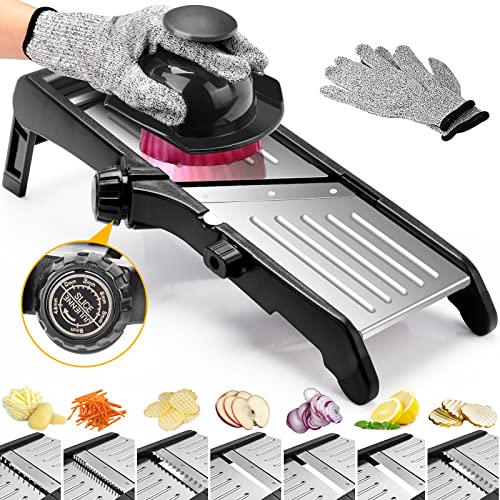
Mandoline Food slicer for kitchen, Adjustable Stainless Steel Mandoline Vegetable slicer, Food slicer Onion Potato Chip French Fry, 7 in-1 Adjustable Blade, Including 1 Pair of Gloves
【Mandoline Slicing tool】 Unlike traditional slicers that require handling blades to change settings, this model lets you switch…
As an affiliate, we earn on qualifying purchases.
As an affiliate, we earn on qualifying purchases.
How to Choose the Best Knife or Slicer for Even Cuts
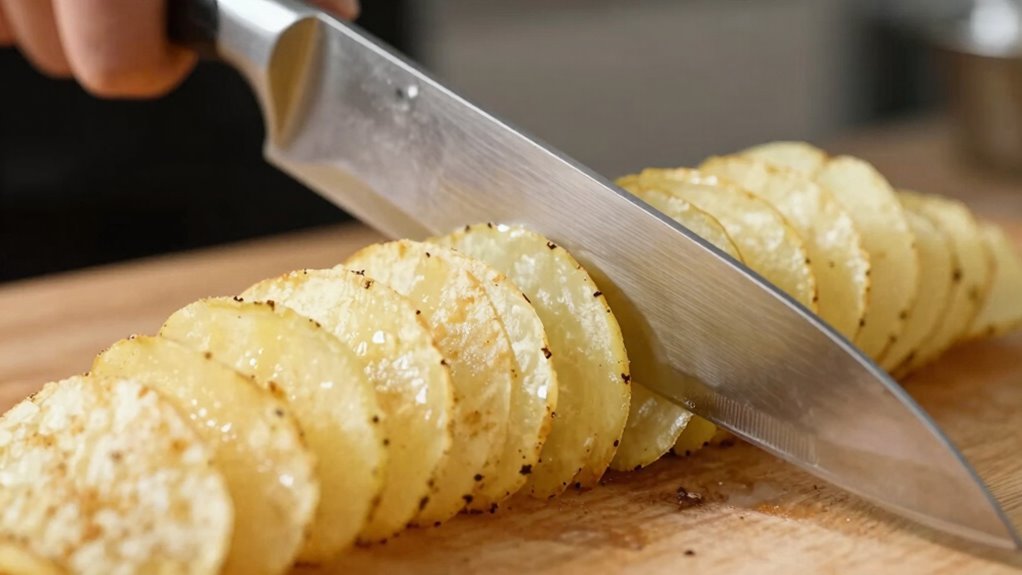
Choosing the right knife or slicer makes all the difference when aiming for even potato slices. You want a tool with excellent knife sharpness to ensure clean, precise cuts without exerting too much force. A sharp blade reduces slipping and uneven slices, giving you consistent thickness every time. When selecting your slicer, consider blade material; stainless steel blades are durable, rust-resistant, and maintain sharpness longer. For manual knives, opt for a high-quality, well-balanced option with a comfortable grip. If you prefer an electric slicer, look for one with adjustable thickness settings and a sturdy blade made from quality material. Additionally, understanding cutting techniques can help you achieve more uniform slices and improve your overall results. Using proper technique and safety measures can prevent accidents and improve precision. The right combination of knife sharpness and blade material helps you achieve uniform slices effortlessly, making your chips look professional and cook evenly.

HOSHANHO Kitchen Knife in Japanese High Carbon Steel, Professional High-Class Chef's Knife 8 inch, Non-slip Ultra Sharp Cooking Knives with Ergonomic Handle
【High-End Japanese Steel Chef's Knife】 HOSHANHO chef's knife is made of Japanese high carbon steel 10Cr15CoMoV, 2x of…
As an affiliate, we earn on qualifying purchases.
As an affiliate, we earn on qualifying purchases.
Preparing Your Vegetables and Potatoes for Slicing
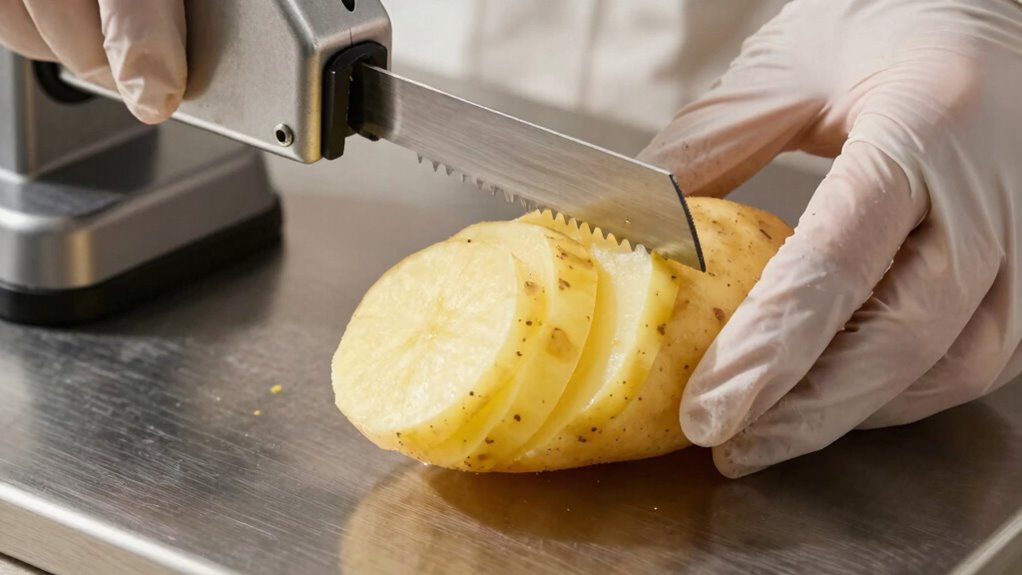
To guarantee your slices are even and consistent, start by thoroughly washing your vegetables and potatoes to remove dirt and debris. Proper ingredient selection is key—choose firm, fresh produce for easier slicing. Next, ensure your knife is sharp; dull blades require more force and can cause uneven cuts or slipping. Regular knife sharpening keeps your blade in excellent condition, making slicing safer and more precise. If you notice resistance or jagged edges, take a moment to sharpen your knife before proceeding. Preparing your vegetables by trimming stems or irregular ends helps create a stable base, reducing the risk of uneven slices. By carefully selecting ingredients and maintaining your knife, you’ll set a solid foundation for achieving perfectly even chips.
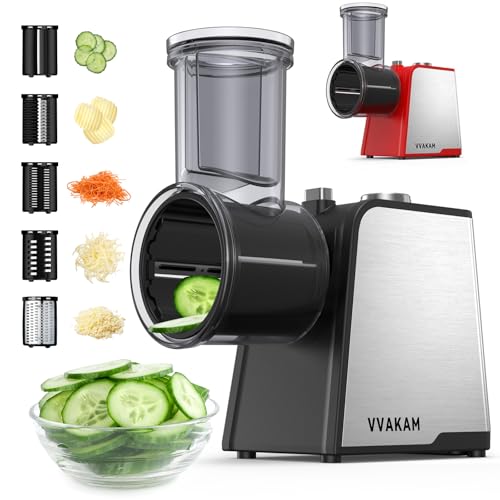
VVAKAM Electric Cheese Grater,300W DC Motor Salad Maker,Electric Slicer Shredder with 5 Different Shapes of Blades,Electric Vegetable Cutter for Potato,Carrot,Black
Powerful Performance: Unleash your culinary creativity with our cheese grater electric equipped with a 300W DC motor! More…
As an affiliate, we earn on qualifying purchases.
As an affiliate, we earn on qualifying purchases.
How to Slice Without Breaking Your Chips: Proper Technique Tips
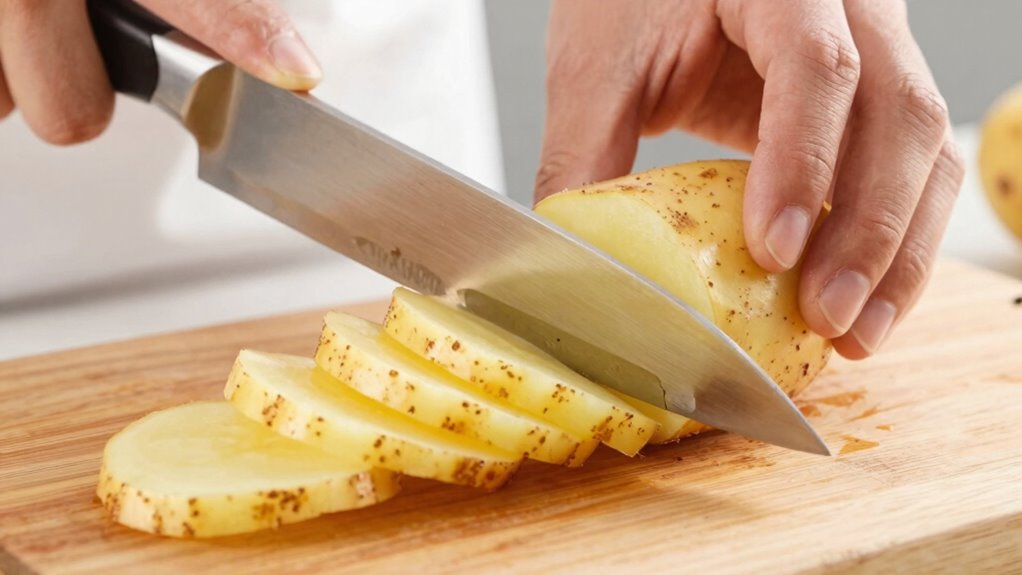
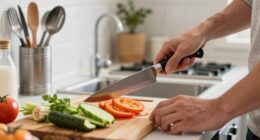
Even with well-prepared vegetables, slicing them without breaking your chips requires careful technique. Focus on proper slicing techniques to maintain even thickness and prevent breakage. Keep your knife sharp; dull blades increase the risk of tearing or crushing the chips. Use a smooth, controlled motion, applying steady pressure without forcing the cut. Proper knife handling involves gripping the handle firmly and guiding the blade with your knuckles, not your fingertips, to ensure safety and precision. Maintain a consistent angle and pace to achieve uniform slices. Avoid rushing; patience helps you control the pressure and movement. Practicing proper cutting techniques improves accuracy and reduces breakage. Ensuring your workspace ergonomics can also help reduce fatigue and maintain control for cleaner cuts. Developing a steady hand position is essential for consistent slices and minimizing breakage. Additionally, adjusting your cutting surface can provide better stability and safety during slicing. Using consistent pressure distribution across the blade can further prevent chips from breaking. Over time, your slicing techniques will improve, reducing breakage and producing consistently even chips ready for cooking or presentation.
Using a Mandoline or Slicing Tool for Consistent Results

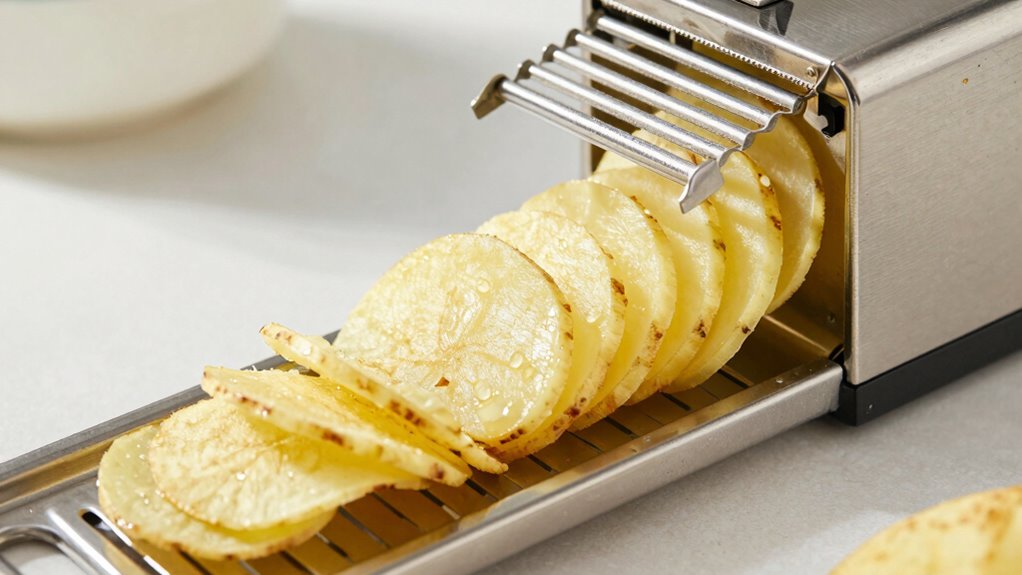
Using a mandoline or slicing tool can substantially improve your consistency and efficiency when preparing chips. These tools allow you to set vegetable thickness precisely, ensuring each slice is uniform, which is key for even cooking and crispness. Proper slicer calibration is essential; double-check the thickness setting before starting to avoid uneven slices. Adjust the slicer to match your desired chip thickness, typically around 1/8 inch. Using a mandoline with adjustable blades helps maintain consistency across multiple slices, reducing the risk of breaking or uneven pieces. Make sure to stabilize the vegetable and use the hand guard to protect your fingers. Calibrating your slicer is a crucial step to ensure uniform results every time. With the right tool and calibrated settings, you’ll achieve evenly sliced chips quickly and effortlessly, elevating your snack game.
Handling Fragile or Irregular-Shaped Ingredients Safely

When working with fragile or irregularly shaped ingredients, it’s essential to use the right cutting tools to prevent accidents. You should stabilize the ingredients carefully to avoid slips and uneven slices. Maintaining a controlled slicing speed helps protect both the food and yourself from mishaps. Using a sharp knife or appropriate slicer ensures cleaner cuts and reduces the force needed, minimizing the risk of breakage or injury. Additionally, employing proper grip techniques can improve safety and accuracy during slicing. For added stability, consider using a cutting board with non-slip features to keep ingredients secure during preparation. Knowing how to handle knife safety techniques effectively is key to maintaining control and preventing mishaps. Being aware of knives and cutting tools can also help you select the most suitable equipment for different ingredients, reducing the chance of damage or injury.
Use Proper Cutting Tools
Handling fragile or irregular-shaped ingredients requires the right tools to guarantee safety and precision. Use a sharp, high-quality blade to ensure clean cuts and maintain consistent slicing thickness. A dull blade increases the risk of slipping and damaging the ingredient, which can cause uneven slices or breakage. Choose a knife or slicer designed for delicate items, such as a serrated knife for soft fruits or a mandoline for uniform thickness. Always check the blade sharpness before starting, and sharpen or replace it as needed. Proper tools make slicing easier, safer, and more accurate, especially when dealing with fragile or oddly shaped ingredients. When selecting your equipment, consider body jewelry measurements to ensure your tools are appropriate for the task. Investing in the right equipment helps you get even slices without risking damage or injury. For instance, selecting the appropriate juice extraction techniques can help prepare ingredients gently without damaging their structure. Additionally, understanding auditory processing can improve your ability to focus and perform precise cuts, especially in noisy environments.
Stabilize Ingredients Carefully
To prevent slips and accidents, it’s essential to stabilize fragile or irregular-shaped ingredients before slicing. Ensuring ingredient stability keeps your hand steady and reduces the risk of uneven cuts. Use a damp cloth or non-slip mat beneath softer ingredients to prevent slipping. For irregular shapes, create a flat surface by trimming one side, giving you a stable base. Secure the ingredient with your guiding hand, fingers curled inward to avoid cuts. This careful stabilization enhances slicing precision, allowing you to make even, uniform slices without crushes or breaks. Take your time to position ingredients properly; rushing can compromise both safety and quality. When you prioritize stabilization, you’ll achieve cleaner slices and safer handling, even with the most delicate or oddly shaped ingredients. Incorporating proper stabilization techniques and understanding kitchen safety practices ensures safer, more accurate cuts every time.
Maintain Controlled Slicing Speed
Maintaining a steady slicing speed is key to safely managing fragile or irregular-shaped ingredients. Move the knife smoothly and consistently, avoiding sudden jerks that could cause breakage. Your slicing speed should be slow enough to maintain control, especially when working with delicate produce. Keep the blade sharp; a dull blade requires more force, increasing the risk of slips and uneven slices. A sharp blade glides effortlessly through ingredients, giving you better precision and reducing pressure. Pay attention to your rhythm—rushing can lead to uneven slices or accidents, while a controlled pace ensures safety and even results. By adjusting your slicing speed and keeping your blade sharp, you protect fragile ingredients and achieve clean, consistent slices without breaking them.
Troubleshooting Common Slicing Problems and How to Fix Them
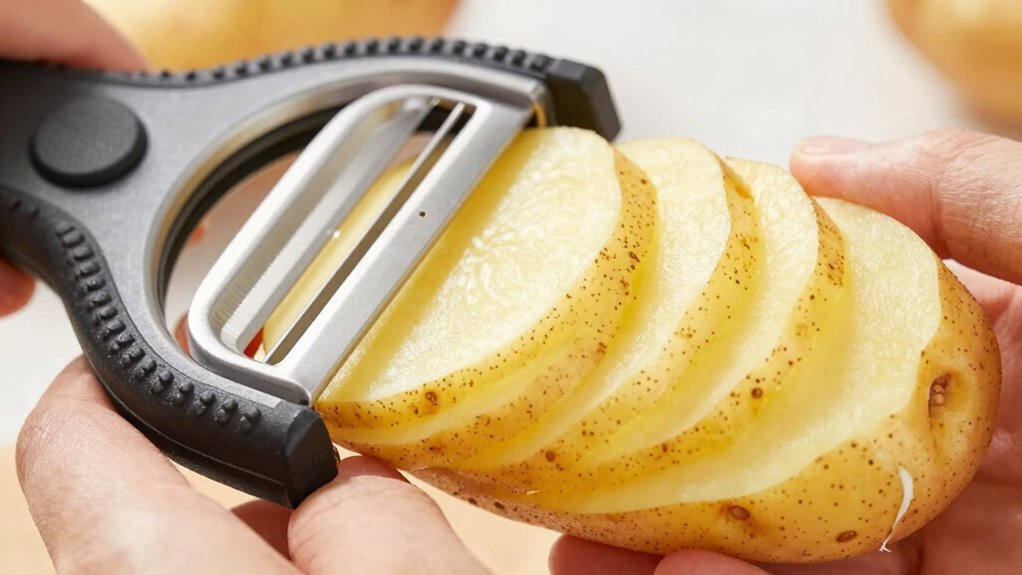
Slicing potatoes evenly can be tricky, especially when your slices are uneven or too thick. To fix this, start with proper blade maintenance—dull blades cause uneven cuts, so sharpen or clean your blade regularly. Next, pay attention to ingredient moisture; overly wet or dry potatoes can slip or resist slicing, so pat them dry if needed. If slices aren’t consistent, try these steps:
Keep blades sharp and potatoes dry for perfect, even slices every time.
- Check your blade sharpness—a dull blade makes uneven cuts.
- Adjust your slicing speed—too fast can cause slipping, too slow can result in inconsistent thickness.
- Ensure even ingredient moisture—moisture impacts glide and grip, affecting slice uniformity.
Addressing these issues guarantees smooth, even slices, giving you perfect chips every time.
Safety Tips for Slicing Like a Pro
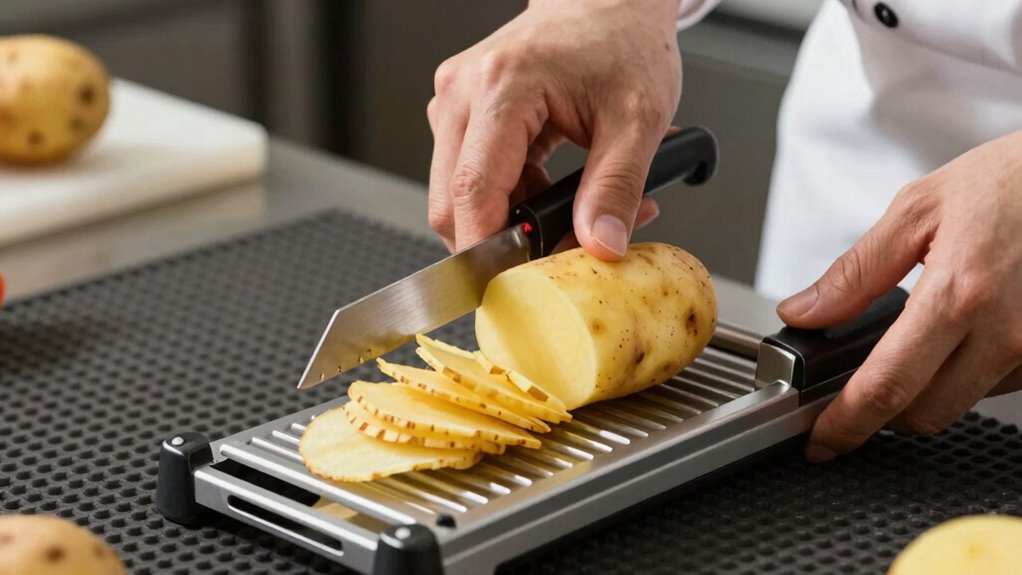
When working with sharp blades, safety should always come first to prevent accidents and injuries. Always practice proper knife safety by keeping your fingers tucked under and using a firm grip. Choose a stable cutting board to prevent slipping; wood or thick plastic boards work best. Make certain your cutting surface is secure and free from moisture or debris. Use a sharp knife—dull blades require more force and are more likely to slip. Keep your work area clean and well-lit so you can see clearly. Store knives safely when not in use, preferably in a knife block or sheath. Always pay attention and avoid distractions while slicing. Following these safety tips helps you cut confidently and reduces the risk of accidents.
Cleaning and Maintaining Your Slicing Equipment for Best Results
After mastering safe slicing techniques, keeping your equipment in top shape guarantees consistent results and extends its lifespan. Proper knife maintenance and slicer calibration are key to perfect chips every time. To make certain peak performance, focus on these essential steps:
- Regularly sharpen and clean your knives to prevent dull blades that tear chips.
- Calibrate your slicer often, ensuring even slices and accurate thickness.
- Clean all parts thoroughly after each use to prevent residue buildup and corrosion.
Frequently Asked Questions
Can I Use a Regular Kitchen Knife for Even Slicing?
Yes, you can use a regular kitchen knife for even slicing, but make certain you’re practicing proper knife safety. Use a sharp knife to make clean cuts and apply steady slicing techniques, keeping your fingers tucked away from the blade. Maintain a stable cutting surface and slice with a smooth, controlled motion to prevent breaking chips or uneven pieces. With careful handling, your regular knife can deliver precise, even slices every time.
What’s the Ideal Thickness for Chips to Prevent Breaking?
You should aim for a uniform thickness of about 1/8 inch for your chips, which helps prevent breaking. This ideal slice size balances crispness and durability, making them less likely to snap during frying or baking. Use a sharp knife or mandoline to maintain consistent thickness throughout. By focusing on creating an even, uniform thickness, you’ll ensure your chips cook evenly and achieve the perfect crunch every time.
How Do I Prevent Slices From Sticking Together?
To prevent slices from sticking together, you should focus on preventing moisture buildup and using proper storage containers. Make sure your chips are completely cooled before storing, and keep them in airtight containers to avoid humidity. Adding a silica gel packet or a paper towel inside the container can help absorb excess moisture. Store the container in a cool, dry place, and avoid stacking too many chips to keep them crisp and separate.
Are There Specific Vegetables That Are Easier to Slice Evenly?
Like a seasoned chef from a vintage kitchen, you’ll find that vegetable varieties like zucchini, cucumbers, and carrots are easier to slice evenly. Stick with uniform sizes and use proper slicing techniques, such as a sharp knife and steady hand, to achieve consistent slices. These vegetables tend to be firm yet tender, making them ideal for even cuts. Practice makes perfect, and soon you’ll be slicing like a pro!
How Can I Store Sliced Chips to Keep Them Fresh?
To keep your sliced chips fresh, store them in an airtight container. Layer the chips with parchment paper between slices to prevent sticking and maintain crispness. Make sure the container is sealed tightly after each use, and keep it in a cool, dry place. This way, your chips stay crisp longer, and you avoid sogginess or spoilage. Regularly check and reseal to preserve their freshness effectively.
Conclusion
Achieving perfectly even slices for your chips is easier than you might think. With the right tools, gentle techniques, and a little patience, you can transform simple ingredients into culinary works of art. Remember, every slice is a small step toward greatness—so don’t rush the process. Embrace the journey of mastering your craft, and soon your chips will be the envy of all. Happy slicing, and enjoy the delicious results!