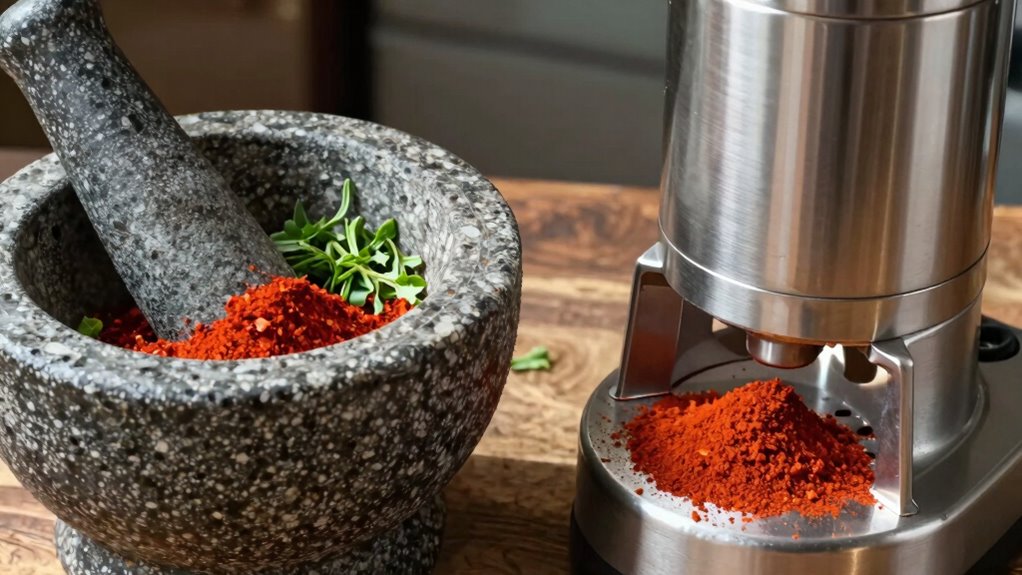

When you grind masala with a blade grinder, it produces a fine, uniform powder quickly and conveniently, but might slightly diminish the aroma and natural oils. Using a stone mortar and pestle takes more effort but releases more aromatic oils, resulting in richer flavor and a coarser texture. Each method changes the final taste and aroma of your masala—exploring these differences can help you choose the best technique for your ideal flavor. Keep going to discover more about how each method influences your masala.

Get kitchen staples and gadgets delivered free — and shop member deals
- Fast, free delivery on millions of items
- Access to Prime Big Deal Days deals on October 6–7
- Prime Video, Amazon Music and more included
Key Takeaways
- Blade grinders produce a fine, uniform powder quickly, while stone grinders offer coarser, more textured masala.
- Stone grinding preserves aromatic oils better, enhancing flavor and fragrance compared to blade grinding.
- Blade grinders generate heat that may slightly diminish essential oils, affecting aroma, unlike stone methods which stay cooler.
- Stone (mortar and pestle) allows manual control over coarseness, influencing the masala’s texture and flavor release.
- Blade grinders are faster and more convenient for large batches; stone grinding offers a traditional, aromatic, sensory experience.
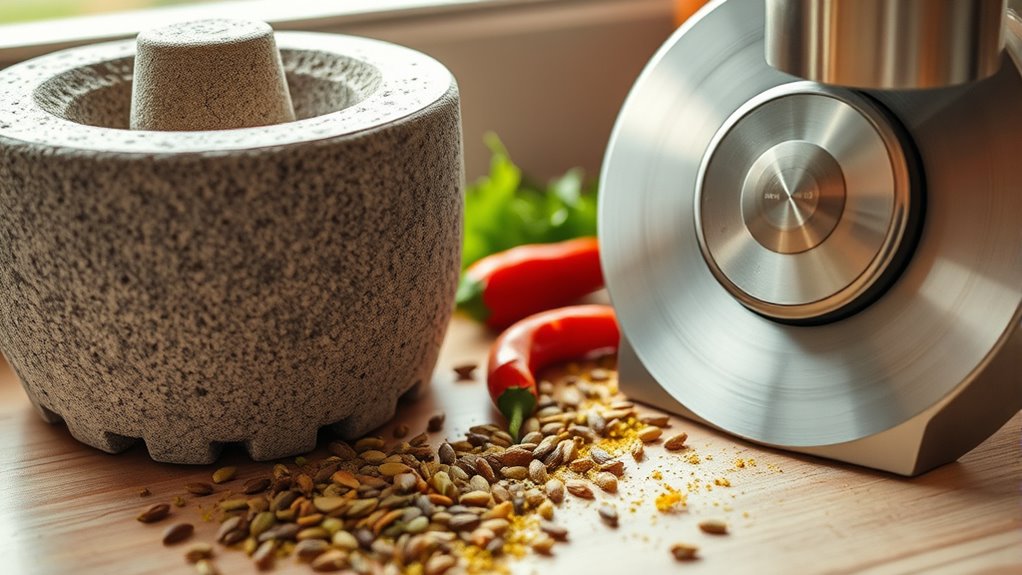
Grinding masala at home is a simple way to enhance the flavor of your dishes and guarantee freshness in every bite. Whether you choose an electric grinder or a traditional mortar and pestle, the method you pick influences the texture, aroma, and overall taste of your spice blend. An electric grinder offers convenience and speed, making it ideal for busy mornings or when you need to prepare large quantities quickly. Simply load your dried spices into the chamber, press a button, and within seconds, you’ve got a fine, uniform powder. This method preserves the essential oils well enough for most recipes, but some purists argue it can slightly diminish the depth of aroma compared to traditional methods.
Grinding masala at home boosts flavor and freshness with quick electric or traditional methods.
On the other hand, a traditional mortar and pestle provides a tactile experience that some cooks swear by. Using a mortar, you can manually grind spices, controlling the coarseness and flavor release with each twist and pound. This process tends to produce a coarser, more textured masala, which can add a richer, more robust flavor profile to your dishes. The manual effort involved also heats the spices less, helping preserve their natural oils and aroma better than many electric grinders. Plus, a mortar and pestle require no electricity, making them perfect for outdoor cooking or when you want to avoid noise. Additionally, traditional grinding methods are often favored for their ability to better release the aromatic oils, resulting in a more fragrant spice blend. Using a mortar and pestle can also be more eco-friendly, as it reduces reliance on electrical appliances.
Choosing between an electric grinder and a traditional mortar depends on your priorities. If you value speed and consistency, an electric grinder is your best bet. It’s easy to clean, requires minimal effort, and can grind different spices to a fine powder in seconds. However, if you enjoy the ritual of cooking and want a masala with a more complex flavor, a mortar allows you to control each grind, releasing more aromatic oils with every pound. It’s also more versatile for small batches or when you need a coarser grind for specific recipes.
Both methods have their merits, but ultimately, the best choice hinges on your cooking style. An electric grinder is perfect for everyday use when convenience matters most. Meanwhile, a traditional mortar offers a more sensory-rich experience, giving you control over the texture and aroma of your masala. Whichever method you choose, grinding masala at home ensures your spices stay fresh and vibrant, elevating your cooking to new heights.
As an affiliate, we earn on qualifying purchases.
Frequently Asked Questions
Which Method Preserves the Most Aroma and Flavor?
You preserve the most aroma and flavor when you use a stone grinder. It generates less grinding noise, which helps retain the spice’s essential oils and freshness, extending their spice shelf life. Unlike blade grinders, stone grinding keeps the spices’ natural oils intact, resulting in richer aroma and flavor. This method guarantees your masala stays vibrant longer, giving your dishes a more authentic taste.
How Does Grinding Time Affect Spice Potency?
Think of grinding time as the spark that ignites spice potency. The longer you grind, the more the spices release essential oils, boosting flavor and aroma, but it also raises grinding temperature, which can reduce spice shelf life. Shorter grinding preserves volatile oils, maintaining potency longer, while extended grinding can diminish these qualities. Adjust your timing to balance flavor intensity with longevity, ensuring your masalas stay vibrant and potent.
Can Using Different Blades Alter the Spice Texture?
Using different blades can definitely alter the spice texture. A versatile blade, like a stainless steel or ceramic one, offers a range of textures from coarse to fine, depending on your grinding needs. On the other hand, a stone blade, known for its durability, tends to produce a more consistent, slightly coarser grind. So, choose based on whether you want smooth or chunky masala, keeping in mind blade versatility and stone durability.
Is Stone Grinding Better for Traditional Recipes?
Stone grinding is definitely better for traditional recipes, as it preserves the essence of cultural authenticity and grinding tradition. Think of it as revealing the secret to flavors so deep they could rival a treasure chest. You get a more aromatic, textured masala that truly honors the culinary heritage. While it takes longer, the enhanced flavor and authentic experience make it worth every effort.
What Cleaning Practices Ensure Hygiene for Both Tools?
To guarantee hygiene, you should follow proper cleaning techniques for both tools, adhering to sanitation standards. After use, rinse the stone or blade thoroughly with warm water and scrub with a brush to remove residue. Avoid soap on stone if it’s porous, but use mild soap on blades. Dry completely before storing to prevent mold or rust. Regularly sanitize with vinegar or alcohol to maintain hygiene and longevity of your grinding tools.
As an affiliate, we earn on qualifying purchases.
Conclusion
Whether you choose a blade or stone, grinding masala at home transforms your kitchen into a fragrant, lively space. Imagine the aroma swirling around you as spices turn into a vibrant, textured paste, each method adding its own charm. With a simple twist or a steady grind, you reveal flavors that sing in your dishes. So, embrace the process, enjoy the sensory dance, and let your homemade masala bring warmth and richness to every bite.
As an affiliate, we earn on qualifying purchases.
As an affiliate, we earn on qualifying purchases.
Evergreen bestsellers Picks
bestsellers
As an affiliate, we earn on qualifying purchases.