
If your onions aren’t browning, the issue might be with how you store and cook them. Too much moisture from damp onions causes steaming instead of caramelization, and overcrowding traps steam, preventing color development. Using low or inconsistent heat can also slow or stop browning altogether. Choosing the right onion variety and ensuring they’re fresh helps, too. Keep these tips in mind, and you’ll discover why your onions aren’t turning golden.

Get kitchen staples and gadgets delivered free with Prime
- Fast, free delivery on millions of items
- Prime Video, Amazon Music and more included
- Member-only deals all year
Key Takeaways
- Excess moisture from damp onions causes steaming, preventing proper caramelization and browning.
- Using onions that are old or improperly stored reduces natural sugars needed for browning.
- Cooking at too low or uneven heat hampers caramelization, resulting in pale onions.
- Overcrowding the pan traps steam, hindering browning and leading to soggy onions.
- Choosing less sweet onion varieties or undercooked onions diminishes the browning and caramelization process.
As an affiliate, we earn on qualifying purchases.
Why Won’t My Onions Turn Golden? Common Causes Explained

If your onions aren’t turning golden when you cook them, several factors could be at play. One common issue is onion storage; if onions are stored in humid or warm environments, they may become less flavorful and resist browning. Proper onion slicing is also vital—thick or uneven slices can prevent even caramelization. Additionally, using wet or damp onions can hinder browning, as excess moisture steams rather than fries the onions. Make sure you’re slicing onions uniformly and drying them if they’re damp. Freshness matters too—older onions might not caramelize well due to reduced natural sugars. Proper storage conditions can significantly influence onion quality and browning ability. Using the right cooking temperature is crucial; if the heat isn’t high enough, onions won’t caramelize properly. Also, understanding thermal conductivity of your cookware can help you achieve more consistent results when frying onions. For best results, consider using quality cookware with good heat distribution to ensure even browning. By paying attention to how you store your onions and how you prepare them, you can improve your chances of achieving that perfect golden hue when cooking. Leveraging technological integration, such as digital tools or apps, can also help you better understand and optimize your cooking techniques for perfect results.
non-stick frying pan for caramelizing onions
As an affiliate, we earn on qualifying purchases.
As an affiliate, we earn on qualifying purchases.
How Heat and Temperature Influence Onion Caramelization

Understanding the right temperatures is key to perfect caramelized onions. Too high heat can burn them quickly, while too low slows down the process and prevents proper browning. By managing your heat carefully, you’ll get that sweet, golden result every time. Proper piercing care and hygiene also ensures your cooking environment stays safe and clean, preventing contamination or spoilage. Using an airless paint sprayer for cleaning tools and surfaces after cooking can help maintain a hygienic kitchen environment. Additionally, maintaining consistent temperatures can be influenced by understanding kitchen thermometers and their proper use. Maintaining appropriate temperature control during cooking is essential for achieving the desired caramelization without compromising food safety. Recognizing how heat and temperature influence the caramelization process allows for better control and results.
Optimal Temperatures for Caramelization
Achieving perfect caramelization hinges on controlling the right temperature; too low, and the onions won’t develop their rich, golden-brown color, while too high can cause them to burn quickly. Different onion varieties, like yellow or sweet onions, require slightly different heat levels to caramelize evenly. Store onions properly—cool, dry, and well-ventilated—to maintain their moisture and prevent premature spoilage, which can impact how they caramelize. Generally, aiming for a temperature between 320°F and 340°F (160°C to 170°C) allows for steady, even caramelization without burning. If the heat is too low, onions will stay translucent and won’t reach that desirable deep brown. Too high, and they’ll scorch before developing their full sweetness and caramel color. Proper contingency plans can also help manage unexpected fluctuations in heat during cooking. Additionally, understanding credit card insights can be useful for purchasing quality kitchen equipment or ingredients needed to perfect your caramelization process.
Impact of High Heat
How does high heat influence onion caramelization? When you cook onions over high heat, the intense temperature accelerates the Maillard reaction and sugar breakdown, leading to faster caramelization. However, if the heat is too high, it can cause the onions to burn or char before they develop that rich, sweet flavor you’re aiming for. Proper onion storage before cooking is key—keeping onions at the right temperature helps retain their moisture, which promotes even cooking and better flavor development. High heat can also drive off moisture quickly, concentrating sugars and intensifying sweetness, but only if monitored carefully. Too much heat risks uneven browning, so controlling temperature is essential for achieving that perfect, deep color and complex flavor you want in caramelized onions. Additionally, using free floating techniques can help you maintain consistent heat distribution for optimal results. Maintaining a steady, moderate temperature can prevent burning and ensure the onions cook evenly throughout. Employing temperature control methods such as adjusting the heat or stirring frequently also aids in achieving consistent caramelization. Moreover, understanding the thermal properties of onions can help in selecting the right cooking approach for ideal results. Being mindful of heat transfer can further improve your control over the caramelization process, leading to better flavor and texture.
Temperature Control Tips
Controlling the temperature while cooking onions is essential for perfect caramelization. Keep your stove at a steady medium or low heat; high temperatures can burn the onions before they develop their natural sweetness. Proper onion storage guarantees they’re dry and firm, which helps them cook evenly. When you cut onions, use sharp knives and precise techniques to create uniform slices—thin, even cuts promote consistent browning. Avoid overcrowding the pan, as this lowers heat and hampers caramelization. If onions aren’t browning properly, slightly adjust the heat rather than turning it up too high. Maintaining a consistent temperature allows the natural sugars in onions to slowly caramelize, resulting in that rich, golden-brown color and sweet flavor you’re aiming for. Temperature regulation can help monitor and maintain the ideal cooking temperature for perfect results. Additionally, understanding heat distribution in your cookware can further improve control over the caramelization process. Being aware of cooking surface characteristics can help you choose the best pan for even heat conduction.
As an affiliate, we earn on qualifying purchases.
Does Moisture Stop My Onions From Caramelizing?

Moisture can considerably hinder your onions from caramelizing because it prevents them from developing the deep, golden-brown color you’re aiming for. When onions contain excess water, they tend to steam rather than brown, which stalls the caramelization process. To avoid this, guarantee your pan is dry before adding onions and don’t overcrowd it, as overcrowding traps steam. Different onion varieties, like sweet or yellow, have varying moisture levels, so be mindful of their water content. Proper pan seasoning also helps create a non-stick surface that promotes even browning without sticking or steaming. Removing excess moisture early and managing the cooking environment are key to achieving rich, caramelized onions. Additionally, understanding the science of caramelization can help you optimize your cooking techniques for better flavor development. Controlling moisture during cooking is essential for developing those complex, savory flavors that come with proper caramelization. Being aware of the moisture content of your ingredients can further improve your caramelization results. Moreover, selecting appropriate onion varieties with lower water content can make the caramelizing process more efficient and consistent.
As an affiliate, we earn on qualifying purchases.
Does Your Pan and Cooking Method Affect Browning?

The type of pan you use and how you cook can make a big difference in browning your onions. A heavy-bottomed pan guarantees even heat, while the right temperature helps develop those rich, caramelized flavors. Keep in mind that moisture and oil levels also play vital roles in achieving the perfect golden color.
Pan Material Impact
Choosing the right pan material can profoundly influence how onions brown during cooking. The pan’s material affects heat distribution and retention, which are essential for achieving even browning. For example, stainless steel pans heat quickly but may cause uneven cooking, while cast iron retains heat longer, promoting better caramelization. Non-stick pans can prevent sticking but often don’t develop the necessary surface for deep browning. Also, consider how you store your onions, as moisture and temperature impact their readiness for cooking. Proper onion storage ensures they’re dry and at room temperature, improving how they react to heat.
- Cast iron offers excellent heat retention for even browning
- Stainless steel heats quickly but unevenly
- Non-stick prevents sticking but may hinder caramelization
- Copper provides precise temperature control
Cooking Temperature Effects
Your cooking temperature and the method you choose directly influence how well onions brown. If you cook at too low a temperature, the onions won’t develop that rich, caramelized color; instead, they’ll remain pale and soggy. Conversely, high heat can quickly scorch them or cause uneven browning. Proper onion storage ensures the onions are dry and firm, which helps achieve better browning. Using the right cooking method—like sautéing over medium-high heat—promotes even caramelization. Also, seasoning plays a role: adding salt early can draw out moisture, aiding browning, but too much heat can cause them to burn before they brown. Adjust your temperature carefully, and choose a method suited to your stove and pan to bring out ideal flavor and color.
Moisture and Oil Role
Moisture content and the type of oil you use considerably impact how well onions brown during cooking. High moisture levels can prevent proper caramelization, leading to soggy, unstylish onions. The onion variety also matters; sweet onions with higher sugar content caramelize faster, enhancing browning. Using oils with high smoke points, like avocado or grapeseed, helps achieve better browning without burning. To improve your results:
- Use drier onions for better browning.
- Choose oils suited for high heat.
- Opt for onion varieties with lower moisture but higher sugar content.
- Avoid overcrowding the pan, which traps moisture and steams onions instead of browning them.
Adjusting moisture levels and selecting the right oil based on onion variety can make a significant difference in achieving that perfect golden-brown color.
Do Onion Type and Freshness Impact Caramelization?

The type of onion and its freshness considerably influence how well it caramelizes. Different onion varieties have varying sugar levels and cell structures, which affect browning. Sweet onions, like Vidalia or Walla Walla, contain more natural sugars, making them easier to caramelize to a rich, golden brown. Conversely, yellow or red onions may take longer and require more patience. Proper onion storage is essential—fresh onions retain moisture and have higher sugar content, promoting better caramelization. Older onions or those stored improperly tend to dry out or become mushy, hindering browning. Using fresh, high-quality onions and choosing the right variety guarantees your onions caramelize evenly and develop complex flavor without staying pallid. Proper selection and storage are key to achieving that perfect caramelized onion.
Troubleshooting: What to Do When Onions Stay Pale

When onions remain pale despite cooking, it often indicates issues with heat, sugar content, or cooking time. Different onion varieties have varying natural sugars, and poor storage conditions can reduce sweetness, making caramelization harder. To fix this, consider the following:
Pale onions during cooking suggest heat, sugar, or storage issues; choose sweeter varieties and cook slowly.
- Use a sweeter onion variety, like Vidalia or Walla Walla
- Increase cooking temperature gradually to prevent burning
- Extend cooking time to allow sugars to develop
- Store onions in a cool, dry, well-ventilated place to maintain ideal sugar levels
Easy Tips for Perfectly Caramelized, Golden Onions Every Time

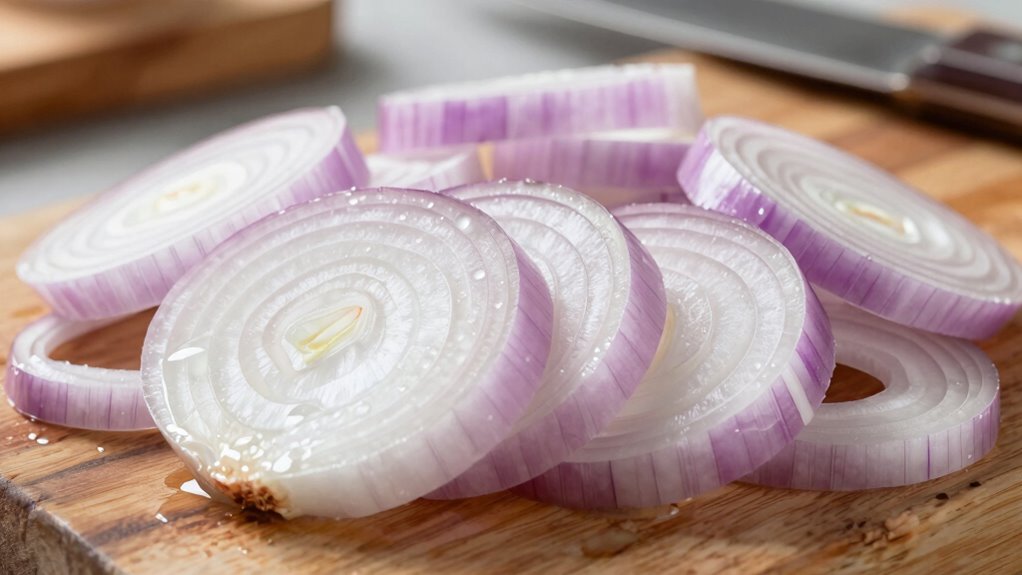
Getting perfectly caramelized, golden onions every time is all about patience and technique. Start by storing your onions in a cool, dry place away from direct sunlight to keep them fresh and prevent premature sprouting. Slice them evenly for consistent cooking. Use a good quality pan and cook over medium-low heat; rushing the process can cause burning or uneven browning. Stir frequently to ensure even caramelization. As they cook, consider spice pairings like thyme, bay leaves, or a pinch of sugar to enhance their sweetness. Remember, the key is slow, steady heat and patience. Proper onion storage and mindful spice pairings help develop their natural sugars, leading to perfectly caramelized, golden onions every time without the frustration.
Frequently Asked Questions
Can Adding Sugar Help Onions Brown Better?
Adding sugar can help onions brown better by enhancing caramelization, which brings out a richer, sweeter flavor. When you sprinkle a small amount of sugar while cooking, it speeds up the browning process through caramelization, making your onions more flavorful and appealing. Just be careful not to add too much, as it can make the onions overly sweet. A little sugar can truly enhance your dish by sweetening onions naturally.
Does Using Oil Versus Butter Affect Caramelization?
Ever wondered if oil vs butter impacts caramelization? It does! Oil has a higher smoke point, allowing you to cook onions at higher temperatures without burning, which enhances caramelization factors. Butter adds flavor but burns faster, potentially hindering even browning. So, if you want deep, rich caramelized onions, using oil gives you more control and better results. Do you prefer flavor or perfect caramelization?
How Does Altitude Influence Onion Browning?
Altitude effects your onion browning because higher elevations have lower atmospheric pressure, which causes water to evaporate faster. This speeds up caramelization, making onions brown quicker but possibly uneven if not watched carefully. You should lower the heat to prevent burning and stir more often. At lower altitudes, the higher pressure slows water loss, requiring longer cooking times for proper browning. Adjust your heat and timing accordingly.
Can Pre-Cooking Onions Prevent Browning Issues?
Pre-cooking onions can help prevent browning issues by reducing their moisture content and altering enzymes responsible for browning. For example, if you store a sweet onion variety for a week before cooking, pre-sautéing or blanching can minimize browning during subsequent use. This method works especially well with onions stored in humid conditions or that have high water content, ensuring they stay vibrant and flavorful in your dishes.
Is There a Difference in Browning Between Organic and Non-Organic Onions?
Yes, there’s a difference in browning between organic and non-organic onions. Organic onions often have a different composition, including higher levels of natural sugars and fewer preservatives, which can influence browning. You might notice organic onions brown more quickly when cooking because of these organic differences in their composition. Keep an eye on them and adjust your cooking time accordingly to prevent over-browning or burning.
Conclusion
If your onions refuse to turn golden, don’t give up hope—they might be secretly plotting to stay pale forever! With the right heat, moisture control, and patience, you’ll reveal their true caramelized potential. Soon, you’ll be wielding a skillet so powerful, it’ll turn even the most stubborn onions into luscious, golden masterpieces. So keep experimenting, stay persistent, and watch your onions transform from plain to perfection—your kitchen will thank you!
NFL season / tailgating Picks
team gear
As an affiliate, we earn on qualifying purchases.