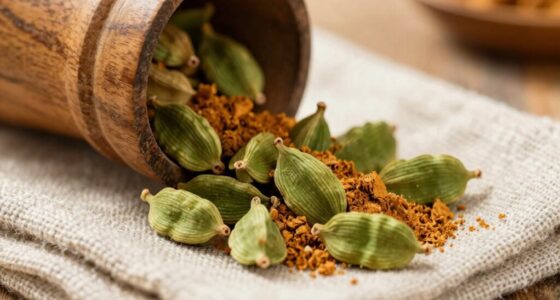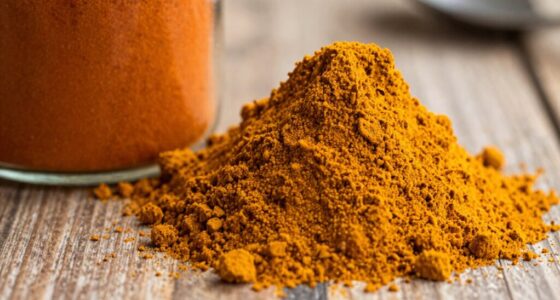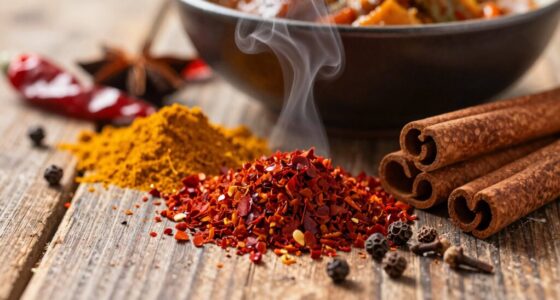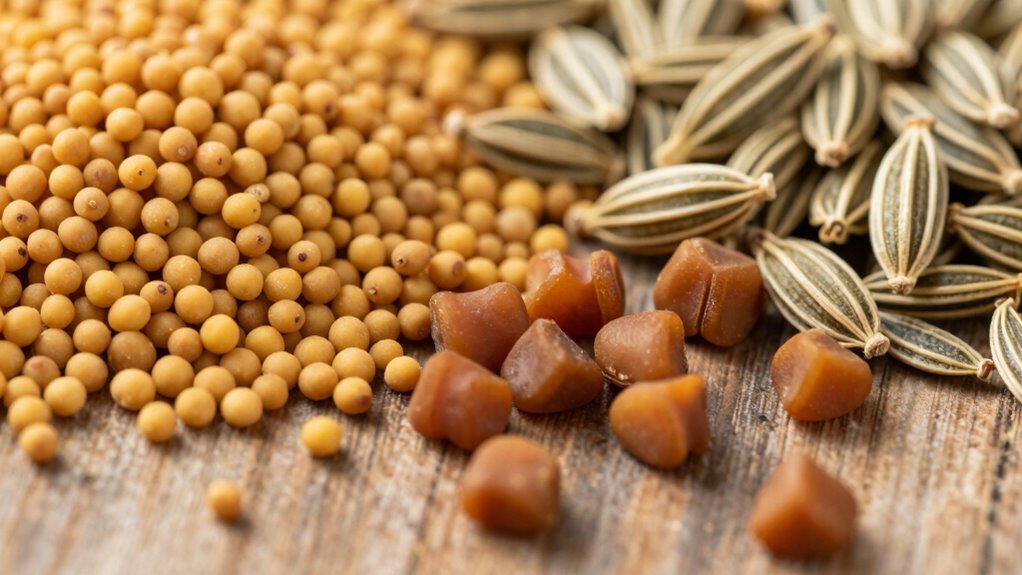

Mustard seeds add a sharp, pungent aroma and a spicy, tangy heat that enhances curries, pickles, and salads. Fennel seeds bring a sweet, licorice-like aroma, brightening baked goods, spice blends, and teas with their aromatic sweetness. Fenugreek offers a warm, earthy flavor and supports digestion, blood sugar regulation, and overall health. Each adds unique depth and nutrition to your dishes—discover how to incorporate them for more exciting, healthful meals.

Get kitchen staples and gadgets delivered free with Prime
- Fast, free delivery on millions of items
- Prime Video, Amazon Music and more included
- Member-only deals all year
Key Takeaways
- Mustard seeds add sharp, pungent aroma, versatile spiciness, and enhance flavor in oils, pickles, and salads.
- Fennel seeds contribute a sweet, licorice-like aroma, brightening dishes with aromatic sweetness and crunch.
- Fenugreek offers warm, earthy, slightly bitter flavor, enriching hearty, spicy, and Indian curries.
- Mustard seeds provide nutrients like selenium and omega-3s, supporting immune and heart health.
- Fennel and fenugreek offer health benefits like digestion aid, anti-inflammatory properties, and blood sugar regulation.
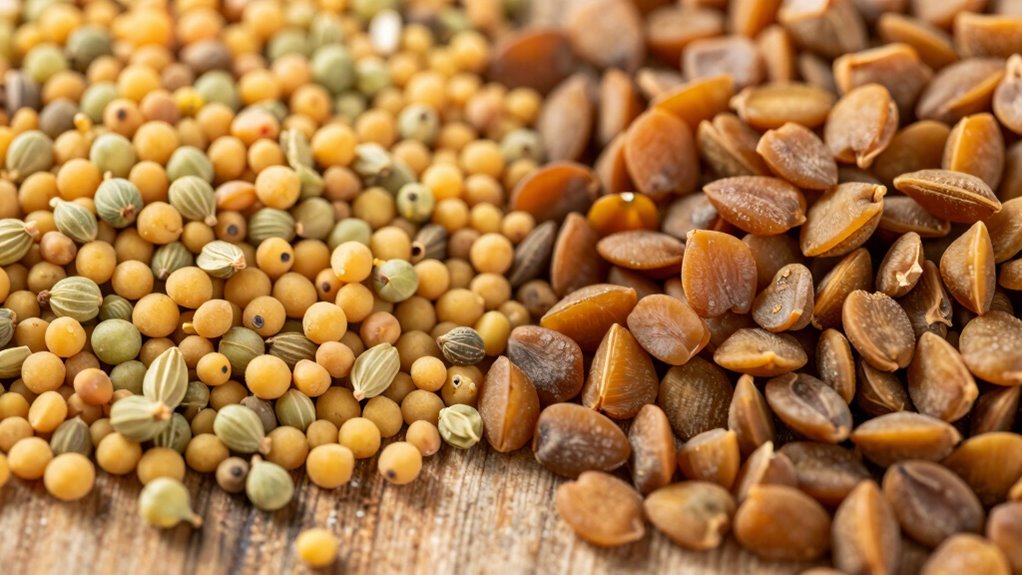
If you’re exploring the world of spices, mustard seeds, fennel, and fenugreek stand out as versatile and flavorful options. Each of these adds a unique dimension to your dishes, offering both culinary versatility and impressive nutritional benefits. Mustard seeds, for example, are a staple in many cuisines, from Indian curries to European pickles. When you crack open a jar, you’ll notice their sharp, pungent aroma, which instantly elevates any dish. They act as a flavor enhancer, releasing a spicy, tangy heat when cooked or ground into a powder. Their culinary versatility allows you to use them in both tempering oils at the start of cooking or as a seasoning to sprinkle over salads and roasted vegetables. Beyond flavor, mustard seeds are packed with nutrients, including selenium, magnesium, and omega-3 fatty acids, which support your immune system, heart health, and inflammation reduction.
Mustard seeds add a sharp aroma and versatile flavor, enhancing dishes and boosting immune and heart health.
Fennel seeds, on the other hand, bring a sweet, licorice-like aroma that brightens up both savory and sweet dishes. Their culinary versatility shines in baked goods, spice blends, and teas, where they add a subtle, aromatic sweetness. Fennel’s crunchy texture and distinct flavor make it a popular choice for flavoring sausages, stews, and pickles. Nutritionally, fennel seeds are a treasure trove of fiber, antioxidants, and vitamins like vitamin C, which boost your immune function and promote healthy skin. Their diuretic properties help with digestion and bloating, making fennel a natural remedy for gastrointestinal discomfort.
Fenugreek introduces a warm, slightly bitter flavor that’s essential in Indian cooking, especially in spice blends like curry powders and masalas. Its culinary versatility allows it to be used both as a spice and a supplement, whether in seed form or as dried leaves. Fenugreek’s earthy taste complements rich, hearty dishes, while its nutritional benefits include high levels of protein, fiber, iron, and B vitamins. These nutrients support your energy levels, blood health, and digestion. Fenugreek is also known for its potential to regulate blood sugar levels, making it beneficial for those managing diabetes.
Together, mustard seeds, fennel, and fenugreek offer more than just flavor; they provide a range of health benefits that can improve your overall well-being. Their culinary versatility makes them easy to incorporate into everyday meals, helping you enjoy flavorful dishes while also reaping their nutritional rewards. Whether you’re seasoning a simple stir-fry or crafting a complex curry, these spices are powerful tools that add depth, aroma, and healthful qualities to your cooking.
organic mustard seeds for cooking
As an affiliate, we earn on qualifying purchases.
As an affiliate, we earn on qualifying purchases.
Frequently Asked Questions
Can These Seeds Be Used Interchangeably in Recipes?
You can’t really swap mustard seeds, fennel, and fenugreek interchangeably because they each bring distinct flavors and textures to your dishes. Think about their flavor pairings and how they complement different ingredients. Use cooking techniques suited to each seed—like tempering mustard seeds for a punch or roasting fennel for sweetness. Substituting one for another may alter your dish’s overall taste, so choose wisely based on the recipe’s flavor profile.
Are There Any Health Risks Associated With Excessive Use?
Excessive use of mustard seeds, fennel, or fenugreek can pose health risks, like digestive discomfort or allergic reactions. While each offers unique nutritional benefits and culinary versatility, moderation is key. Overconsumption might lead to issues such as blood sugar fluctuations or hormonal imbalances. To enjoy their benefits safely, incorporate them in balanced amounts, and consult a healthcare professional if you have existing health concerns or sensitivities.
How Should Each Seed Be Stored for Maximum Freshness?
To keep your mustard seeds, fennel, and fenugreek fresh, store them in airtight containers away from heat, light, and humidity. Use glass or metal jars for ideal storage techniques, ensuring they’re sealed tightly after each use. Keep them in a cool, dark place like a pantry or cupboard. Proper storage techniques will greatly preserve their freshness, aroma, and flavor, allowing you to enjoy their full benefits and taste in your cooking.
Do They Have Any Significant Allergenic Properties?
An ounce of prevention is worth a pound of cure. These seeds can cause allergenic reactions, especially in those sensitive to mustard or related plants. Cross reactivity concerns mean someone allergic to one may react to others, so always check labels and consult a doctor if you’re unsure. If you have known allergies, it’s best to avoid these seeds or test carefully to prevent any adverse effects.
Which Seed Is Best for Boosting Digestion Naturally?
Fennel seeds are your best choice for boosting digestion naturally. They offer significant digestive benefits by soothing the stomach, reducing bloating, and easing gas. Compared to mustard seeds and fenugreek, fennel is gentler and more effective for digestive support. Seed comparisons show fennel’s calming properties make it ideal for promoting overall gut health, making it a smart addition to your diet if you’re seeking natural digestive aid.
As an affiliate, we earn on qualifying purchases.
Conclusion
As you sprinkle mustard seeds, fennel, and fenugreek into your dishes, imagine the warm, aromatic glow spreading through your kitchen, awakening your senses. Each seed brings a unique story—bold, sweet, or earthy—that transforms simple ingredients into something memorable. With every pinch, you’re crafting more than a meal; you’re weaving a tapestry of flavors that comfort and excite. Embrace these tiny treasures and let their magic turn your cooking into a heartfelt experience.
fenugreek seeds for Indian cooking
As an affiliate, we earn on qualifying purchases.
As an affiliate, we earn on qualifying purchases.
As an affiliate, we earn on qualifying purchases.
NFL season / tailgating Picks
team gear
As an affiliate, we earn on qualifying purchases.