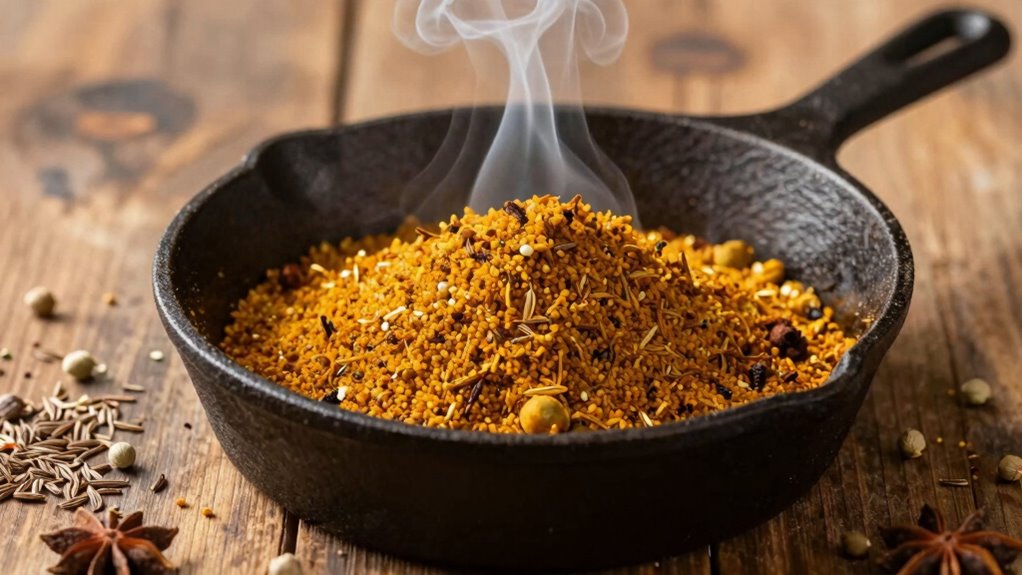

Toasting spices boosts their flavor and aroma by activating essential oils, making your dishes more vibrant. But if you over-toast, you risk burning them, which leads to bitterness and destroys valuable nutrients. Proper technique involves using moderate heat, stirring frequently, and removing spices once fragrant. Keeping an eye on the process guarantees you get the best flavor without diminishing health benefits. If you want to master the art, there’s more to discover on how to do it right.
Key Takeaways
- Toasting activates essential oils, enhancing spice flavor and aroma, but over-toasting can cause bitterness and flavor loss.
- Proper toasting preserves antioxidants and nutrients, while excessive heat destroys beneficial compounds.
- Monitoring heat and timing prevents burning, which can negatively impact taste and nutritional value.
- Even toasting ensures consistent flavor development and prevents uneven burning or charring.
- Proper storage after toasting maintains the spices’ aroma, flavor, and nutritional benefits over time.
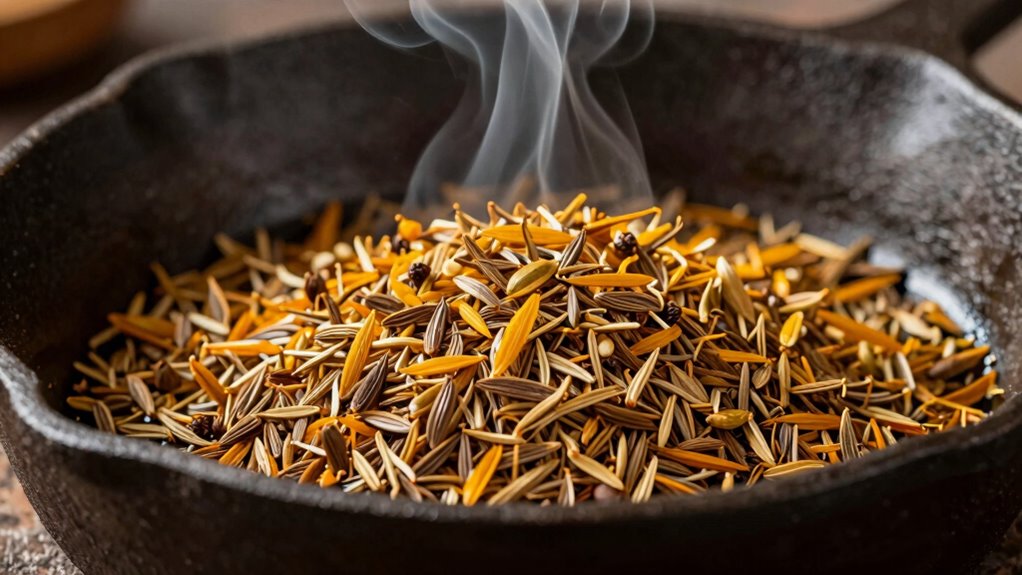
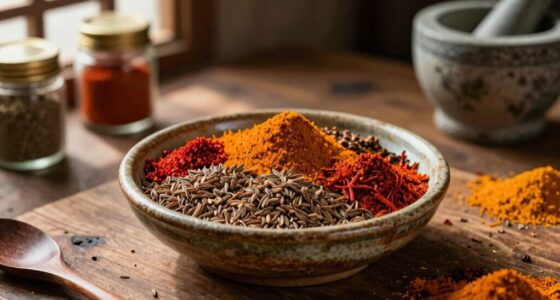
Toasting spices can elevate their flavor and aroma, making your dishes more vibrant and complex. When you toast spices, you’re activating essential oils that bring out deeper, richer notes, transforming a bland spice into one bursting with character. This process isn’t just about flavor—it also helps with nutrient preservation. While some nutrients can degrade with heat, proper toasting can preserve certain antioxidants and beneficial compounds, ensuring you get more nutritional value from your spices.
Toasting spices enhances flavor, aroma, and preserves antioxidants for richer, more vibrant dishes.
However, the process needs careful attention. If you toast your spices too long or at too high a temperature, you risk burning them. Burned spices become bitter and can overpower your dish, destroying the delicate balance of flavors you aim to achieve. Over-toasting also diminishes the nutritional benefits, as excessive heat can destroy sensitive vitamins and antioxidants. So, you need to keep a close eye on your spices, toasting them just until they emit a fragrant aroma, which signals they’ve reached their peak flavor potential. Proper toasting techniques are essential for maximizing both flavor and nutritional benefits. Additionally, understanding the chemical changes that occur during toasting can help you better control the process and avoid undesirable results. Recognizing the signs of burning during toasting can prevent you from overdoing it and ruining your spices.
Monitoring the temperature and timing closely during toasting is crucial to achieve optimal results and prevent overcooking. The way you toast your spices matters. Using a dry skillet over medium heat allows you to control the process more effectively. You should stir frequently to prevent hotspots that cause uneven toasting. When you smell that warm, toasted aroma, it’s usually a sign you should remove the spices from heat immediately. This quick removal stops the process from going too far and helps preserve both flavor and nutrients. Proper monitoring during toasting ensures you don’t accidentally cross the point of optimal flavor development. Another tip is to toast spices in small batches. This ensures even heat distribution and prevents overcooking. Once toasted, let the spices cool before grinding or adding them to your dish. This step locks in their enhanced aroma and flavor, while also ensuring you don’t accidentally burn them during handling. Properly toasted spices can be stored in airtight containers for weeks, maintaining their enhanced qualities and nutritional benefits over time. Additionally, consistent heat control is key to achieving evenly toasted spices without risking charring or flavor loss.
As an affiliate, we earn on qualifying purchases.
Frequently Asked Questions
What Spices Are Best Suited for Toasting?
You should toast spices like cumin, coriander, cinnamon sticks, and peppercorns, as they develop a richer spice aroma through proper toasting. Use even toasting techniques in a dry skillet over medium heat, stirring constantly to prevent burning. Keep a close eye, since some spices can quickly go from fragrant to burnt. Toasting enhances their flavor, but overdoing it can result in a bitter taste that dulls the spice’s natural aroma.
How Long Should Spices Be Toasted for Optimal Flavor?
You should toast spices for about 1 to 3 minutes, keeping a close eye on the spice aroma and toasting duration. As the aroma intensifies and becomes fragrant, it’s a sign they’re ready. Be careful not to over-toast, as this can lead to bitterness. Stir constantly to guarantee even toasting, and remove the spices once they emit a strong, fragrant aroma to maximize flavor without burning.
Can Over-Toasting Ruin Spice Flavor?
Yes, over-toasting can ruin spice flavor by burning the spices, which destroys their delicate aroma development and can produce a bitter, acrid taste. When you toast spices too long, their flavor enhancement diminishes, and you risk losing the nuanced notes that make them special. To avoid this, keep a close eye during toasting, remove them promptly once they become fragrant, and prevent burning for peak flavor and aroma.
Is Toasting Necessary for All Spices?
Toasting isn’t necessary for all spices, but it can greatly enhance their flavor and reveal unique aroma profiles. You might choose to toast spices for flavor enhancement, especially in dishes like curries or roasted vegetables. However, be cautious—over-toasting can diminish health benefits and produce bitterness. For some spices, like delicate herbs, toasting isn’t recommended. Trust your taste and experiment to find the right balance for your dishes.
How Should Toasted Spices Be Stored?
Did you know toasted spices can lose their flavor within a month? To keep their aroma and potency, store your toasted spices in airtight containers, away from direct sunlight and heat. Use glass jars or metal tins for ideal storage techniques. Properly stored, toasted spices generally have a shelf life of up to six months, but for best flavor, check them regularly and replace when they lose their scent or flavor.
As an affiliate, we earn on qualifying purchases.
Conclusion
Toasting spices can transform their flavor, revealing rich, aromatic notes that elevate your dishes. But beware—overtoasting can turn those vibrant flavors bitter. Did you know that a study found properly toasted spices can increase their antioxidant activity by up to 30%? So, pay close attention and toast with care. A little attention now can make your cooking truly stand out, ensuring you get the perfect balance of aroma and taste every time.
As an affiliate, we earn on qualifying purchases.

Alpha Grillers Instant Read Meat Thermometer Digital, Cooking, Food, Grill
- Fast Response Time: Reads temperature in 1-2 seconds
- Versatile Use: Suitable for grilling, baking, frying, and more
- Easy to Read Display: Bright blue backlight for clear readings
As an affiliate, we earn on qualifying purchases.
As an affiliate, we earn on qualifying purchases.