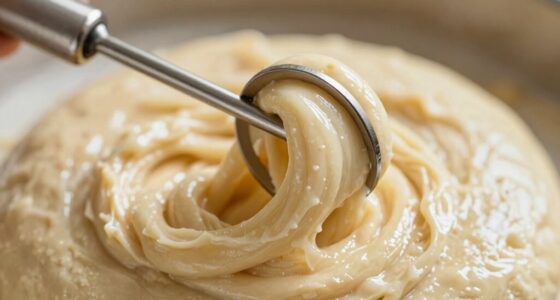
Allowing your flatbread dough to rest for at least 20 to 30 minutes helps relax the gluten, making it much easier to roll out smoothly and evenly. During this time, moisture redistributes within the dough, improving its elasticity and pliability. This window also reduces tearing and uneven stretches, resulting in a more manageable dough surface. For even better results, resting up to an hour can further enhance workability. Keep going to discover tips that will perfect your dough handling.
Listen free for 30 days with Audible
Thousands of audiobooks and originals — cancel anytime.
As an affiliate, we earn on qualifying purchases.
Key Takeaways
- Rest dough for at least 20-30 minutes to relax gluten and improve pliability.
- Cover the dough with a damp cloth or plastic wrap during resting to prevent drying.
- Extending resting time up to 1 hour further relaxes gluten, making rolling easier.
- Proper resting creates a smoother, more even surface for easier shaping and rolling.
- Patience during resting reduces tearing and results in a better, more manageable flatbread dough.
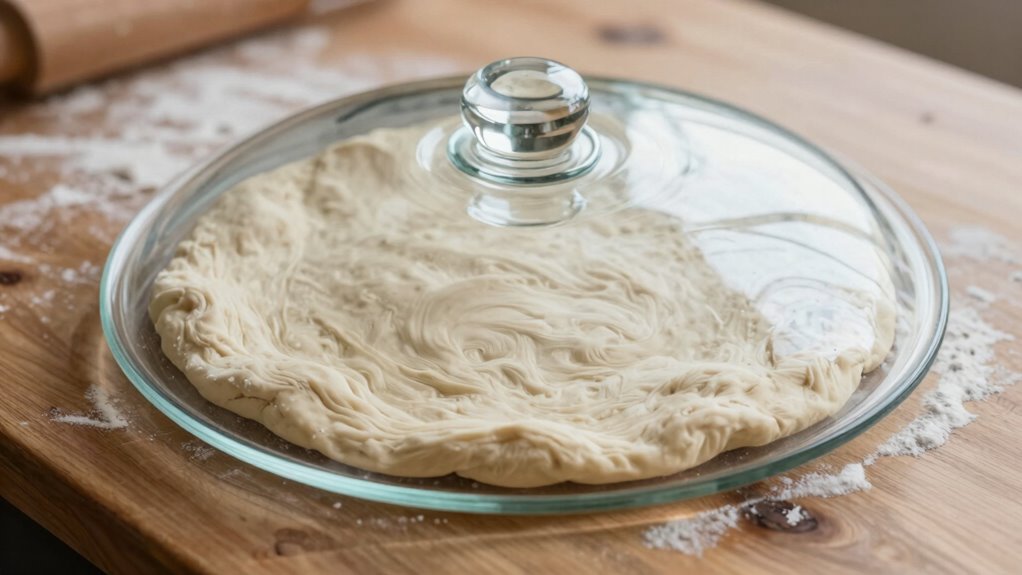
Resting the flatbread dough is an essential step that allows the gluten to relax, making the dough easier to roll out and shaping more manageable. When you give the dough time to rest, you’re fundamentally giving the gluten strands a break, so they don’t spring back when you try to flatten it. This results in a smoother, more even surface, which is key whether you’re making a simple flatbread or a base for a more complex dish. During this resting period, the moisture redistributes within the dough, leading to improved elasticity and easier handling. It also reduces the risk of tearing or stretching the dough unevenly, which can be frustrating when you’re trying to prepare your perfect pizza or flatbread.
Resting the dough relaxes gluten, making it easier to shape and preventing tearing for a perfect flatbread.
The ideal resting window varies depending on your recipe, but generally, allowing the dough to sit for at least 20 to 30 minutes is recommended. If you have more time, resting it for up to an hour can enhance its workability even further. During this time, you should cover the dough with a damp cloth or plastic wrap to prevent it from drying out. This simple step keeps the surface moist and pliable, which is key to achieving a uniform thickness when rolling. The more relaxed the gluten, the less tension you’ll encounter as you shape your flatbread, making the process smoother and more predictable.
Once rested, you’ll find it much easier to incorporate your favorite pizza toppings. Whether you’re adding fresh vegetables, cheeses, meats, or herbs, a properly rested dough provides a stable base that holds toppings without sagging or tearing. This stability is especially important when applying baking techniques that require high heat or extended baking times. A well-rested dough can support the toppings better, resulting in a crisp, evenly baked flatbread. Plus, the relaxed gluten creates a tender, yet sturdy crust that complements a variety of toppings and flavors.
In terms of baking techniques, patience during the resting window pays off. Rushing this step often leads to uneven textures and difficulties in shaping. When you respect the resting period, you set yourself up for a successful bake — with a beautifully textured crust and toppings that stay in place. So, next time you make flatbread, remember that giving your dough the right amount of rest is key. It’s a simple step that makes a big difference, ensuring your final creation is both delicious and easy to handle.
As an affiliate, we earn on qualifying purchases.
Frequently Asked Questions
Can I Use a Different Type of Container for the Resting Window?
Yes, you can use alternative containers for the resting window. Material options include plastic bowls, glass containers, or even covered ceramic dishes. Just make sure the container is large enough to hold the dough comfortably and has a tight-fitting lid or plastic wrap to keep the dough moist. Avoid metal bowls if possible, as they may react with the dough, affecting its texture and flavor.
How Long Is Too Long to Let the Dough Rest?
They say “too much of a good thing can be bad,” and that’s true for dough resting times. You shouldn’t let your dough ferment for over 24 hours, as it can weaken gluten development and cause over-fermentation. Extended resting can lead to a sour taste or a sticky texture, making your dough harder to roll out. Keep an eye on your dough to guarantee perfect gluten development and flavor.
Does the Resting Window Affect the Dough’s Flavor?
Yes, the resting window impacts your dough’s flavor. During dough fermentation, enzymes break down starches and proteins, which enhances flavor development. The longer you let the dough rest (within reason), the richer and more complex its flavor becomes. However, over-resting can lead to sourness or a yeasty taste. So, keeping an eye on the resting time helps balance flavor development while maintaining the dough’s ideal texture.
Can I Rest Multiple Batches of Dough Together?
Yes, you can rest multiple batches of dough together, but pay attention to dough elasticity and resting temperature. Keep each batch covered to prevent drying out and guarantee even resting. Combining batches may slightly alter the textures, so monitor elasticity to maintain flexibility. Resting at a consistent temperature helps all batches develop flavor and gluten structure uniformly, making them easier to roll later on.
Is the Resting Window Necessary for All Types of Flatbreads?
The resting window isn’t necessary for all flatbreads, but it substantially improves dough elasticity and gluten development, making rolling easier. If your dough feels tough or resists shaping, resting helps relax the gluten, resulting in a softer, more pliable texture. For quicker recipes, you can skip it, but for better consistency and easier handling, giving your dough a resting period is highly recommended.
As an affiliate, we earn on qualifying purchases.
Conclusion
By letting your flatbread dough rest during that window, you make it as manageable as a well-worn book. This simple step relaxes the gluten, making rolling out smoother and less sticky. Think of the resting period as your secret weapon—turning a tough task into a breeze. So, don’t skip it; patience now pays off with perfectly tender, evenly rolled flatbreads that impress every time.
As an affiliate, we earn on qualifying purchases.
As an affiliate, we earn on qualifying purchases.
NFL season / tailgating Picks
team gear
As an affiliate, we earn on qualifying purchases.