Tamarind is a tropical fruit with a flavor that’s both tangy and sweet, offering a rich, layered taste with hints of umami. It comes from Africa but is now widely cultivated in Asia and Central America. You can enjoy it in sauces, drinks, or desserts, and it also offers health benefits like vitamins and antioxidants. Curious about how to pick, store, or cook with tamarind? There’s much more to discover below.

Get kitchen staples and gadgets delivered free — and shop member deals
- Fast, free delivery on millions of items
- Access to Prime Big Deal Days deals on October 6–7
- Prime Video, Amazon Music and more included
Key Takeaways
- Tamarind is a tropical fruit native to Africa, cultivated widely in India, Southeast Asia, and Central America.
- It features a complex flavor profile combining tartness, mild sweetness, and umami undertones.
- Used in diverse culinary applications, from sauces and beverages to desserts and spicy condiments.
- Rich in vitamins, minerals, and antioxidants, offering various health benefits like immune support and digestion aid.
- Proper storage of fresh and dried tamarind preserves its flavor, quality, and extends shelf life.
As an affiliate, we earn on qualifying purchases.
What Is Tamarind and Where Does It Come From?

Have you ever wondered what tamarind really is and where it originates? Tamarind is a fruit that grows on a tropical tree native to Africa, but today, it’s widely cultivated across India, Southeast Asia, and Central America. Tamarind cultivation involves growing these trees in warm, well-drained soils, often in orchards or farms. During tamarin harvesting, you’ll notice the ripe pods turning brown and splitting open, revealing the sticky, dark pulp inside. This pulp is what’s used in cooking and making sauces. The trees produce pods year-round in suitable climates, making tamarind a sustainable crop for many regions. Understanding its origin and cultivation processes helps you appreciate this versatile fruit even more.
As an affiliate, we earn on qualifying purchases.
What Does Tamarind Taste Like? (Flavor: Sour, Sweet, Umami)

Ever wonder what tamarind really tastes like? Its flavor is a delightful blend of tartness and sweetness, creating a unique flavor complexity. The tartness provides a sour punch that wakes up your palate, while the sweetness balances it out smoothly. Sometimes, you’ll notice an umami undertone that adds depth. This combination makes tamarind versatile in both savory and sweet dishes. Here’s a quick flavor profile:
| Aspect | Description | Effect on Taste |
|---|---|---|
| Tartness | Bright, tangy, puckering | Refreshes and sharpens flavors |
| Sweetness | Mild, caramel-like | Softens the overall profile |
| Umami | Earthy, savory note | Adds depth and richness |
| Overall | Complex, layered flavor | Keeps your taste buds intrigued |
Additionally, the color accuracy of tamarind in various dishes can influence your perception of freshness and quality.
As an affiliate, we earn on qualifying purchases.
How Do You Choose Quality Tamarind? (Fresh, Paste, Dried)

Choosing high-quality tamarind starts with understanding its different forms—fresh pods, paste, or dried fruit—and knowing what to look for in each. When selecting fresh tamarind, focus on pods that are plump, firm, and free of cracks or mold, indicating proper tamarind cultivation and careful tamarind harvesting. For paste, opt for products with a rich, dark color and minimal additives, which reflect good quality and proper processing. Dried tamarind should be sticky yet pliable, with a deep brown hue. Keep in mind, quality begins at the source—healthy trees and careful harvesting guarantee better flavor and texture. By paying attention to these details, you’re more likely to pick tamarind that’s vibrant, flavorful, and true to its sour-sweet potential.
As an affiliate, we earn on qualifying purchases.
How Do You Use Tamarind in Cooking? (Common Uses and Tips)

Tamarind adds a tangy depth to many dishes, and you can use it in various ways. Try adding tamarind paste to your curries or sauces for a rich, sour flavor, or mix it into beverages for a revitalizing twist. Experiment with these common uses to enhance your cooking with tamarind’s unique taste.
Tamarind Paste in Curries
Adding tamarind paste to curries imparts a tangy depth that balances rich flavors and enhances the overall dish. When using tamarind in curries, it’s important to consider its origins—tamarind harvesting and cultivation influence the quality and flavor intensity. Properly prepared tamarind paste offers a consistent, concentrated sourness that complements spices and meats.
- Use a teaspoon of paste to start, adjusting to taste for perfect acidity.
- Dissolve the paste in warm water before adding to ensure smooth incorporation.
- Incorporate tamarind early in cooking to develop its full flavor.
- Store homemade or store-bought paste in a cool, dark place to preserve freshness.
Understanding tamarind cultivation helps you appreciate its complex flavor profile and how best to incorporate it into your curries.
Using Tamarind in Sauces
Wondering how to incorporate tamarind into your sauces? Tamarind adds a tangy depth that balances sweet and sour flavors beautifully. To use it, mix tamarind paste or concentrate into your sauce, adjusting the amount based on the desired tartness. Keep in mind that tamarind offers health benefits like antioxidants and fiber, making your sauce not only flavorful but nutritious. Incorporating vintage kitchen tools or retro-inspired cookware can also add a charming touch to your culinary space. Here’s a quick guide:
| Tamarind Type | Best For | Tips |
|---|---|---|
| Tamarind Paste | Thick sauces, marinades | Use sparingly; rich flavor |
| Tamarind Concentrate | Quick flavor boost | Dilute before use |
| Tamarind Powder | Dry rubs, seasoning blends | Rehydrate with warm water |
Using tamarind thoughtfully can also help you develop a more complex flavor profile, which can enhance the overall depth of your dishes. Additionally, learning about its culinary versatility can inspire you to experiment with new recipes and techniques. Tamarind’s health benefits can add an extra layer of value to your culinary creations.
Tamarind for Beverages
Tamarind’s unique tangy flavor also makes it a popular ingredient in beverages, offering a revitalizing and flavorful twist. You can use tamarind to create invigorating drinks that highlight its sour-sweet profile. To do this, soak tamarind pulp in warm water, then strain out the seeds and fibers. The resulting extract can be mixed with sugar, lime, or mint for a cool, tangy beverage. Tamarind medicinal properties are often believed to aid digestion and boost immunity, making it a healthy addition. When exploring tamarind in drinks, consider its role in traditional tamarind cultivation practices, which ensure quality and flavor. Popular beverages include tamarind juice, agua de tamarindo, and tamarind-flavored cocktails. These drinks offer a vibrant way to enjoy tamarind’s complex taste.
What Are the Health Benefits of Tamarind?
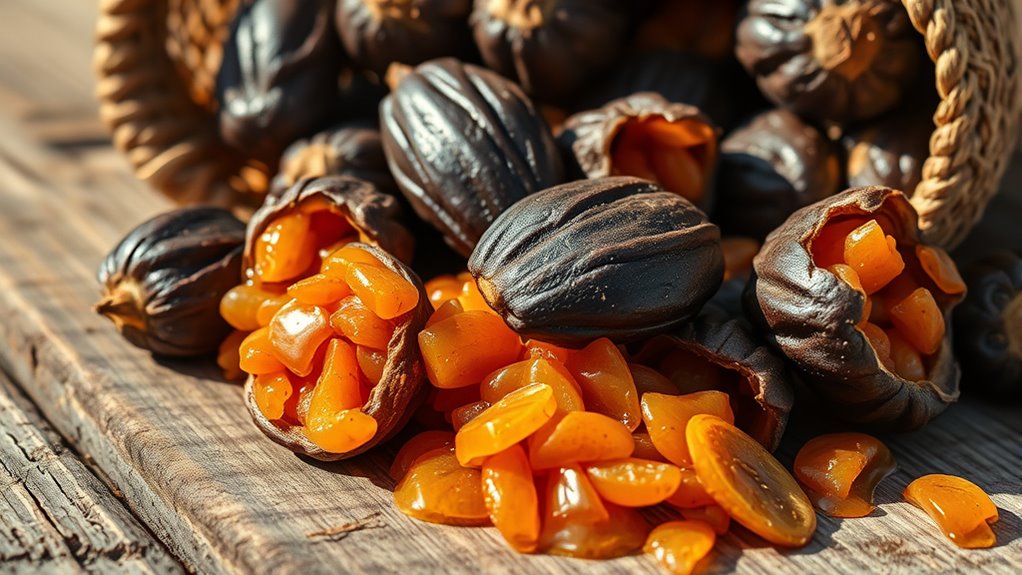
Have you ever considered how tamarind can boost your health? Tamarind offers impressive health benefits thanks to its rich nutritional advantages. It’s packed with vitamins like B-complex and vitamin C, which support your immune system and energy levels. Tamarind is also a good source of minerals such as magnesium, potassium, and iron, helping maintain healthy blood pressure and red blood cell production. Its natural antioxidants combat free radicals, reducing inflammation and lowering the risk of chronic diseases. Additionally, tamarind contains anti-inflammatory compounds that may help alleviate joint pain and swelling. Tamarind aids digestion by promoting enzyme activity and relieving constipation. Its antimicrobial properties can even support oral health. Moreover, understanding the nutritional composition of tamarind can help you maximize its health benefits. Incorporating tamarind into your diet can also promote digestive health and improve gut function. The presence of dietary fiber in tamarind plays a significant role in maintaining overall gut health, making it a versatile addition to a balanced diet. Furthermore, the presence of bioactive phytochemicals enhances its potential to fight oxidative stress, contributing to overall well-being. Overall, incorporating tamarind into your diet provides a flavorful way to enhance your well-being and enjoy its numerous nutritional advantages.
What Are Some Creative Tamarind Recipes to Try?

You can explore a variety of creative tamarind recipes that elevate its unique flavor. Try making invigorating tamarind beverages and juices, spicy dips and sauces, or sweet desserts that highlight its versatility. These options let you enjoy tamarind in exciting and delicious ways. Additionally, experimenting with culinary techniques can help you create even more innovative dishes that showcase tamarind’s complex profile. Incorporating flavor balancing strategies can further enhance the depth and appeal of your tamarind-based creations.
Tamarind Beverages and Juices
Are you looking for delicious ways to enjoy tamarind in your drinks? Tamarind beverages and juices offer an invigorating twist on this versatile fruit. You can experiment with flavors inspired by tamarind cultivation and its rich tamarind history. Try blending tamarind pulp with citrus for a tangy, sweet sip or mixing it into iced teas for a unique flavor. Here are some creative tamarind recipes to try:
- Tamarind limeade with a hint of mint
- Spiced tamarind juice with cinnamon and ginger
- Sweet tamarind smoothie with coconut milk
- Tamarind and pineapple agua fresca
These drinks highlight tamarind’s complex flavor profile, making your beverages both exciting and satisfying. Incorporating connected fitness technology and wellness practices can also enhance relaxation while enjoying these refreshing drinks.
Spicy Tamarind Dips and Sauces
Spicy tamarind dips and sauces bring a bold, tangy kick to any dish, blending the fruit’s natural acidity with fiery flavors. Tamarind’s rich history and cultivation techniques influence its versatility in spicy condiments. You can craft a simple, fiery tamarind chutney or experiment with more complex blends that include chili, garlic, and lime. These sauces elevate grilled meats, seafood, or even roasted vegetables. Here are some ideas to inspire your creativity:
| Sauce Type | Key Ingredients |
|---|---|
| Tamarind-Chili Dip | Tamarind paste, red chili, garlic, vinegar |
| Spicy Tamarind Relish | Tamarind, jalapeños, onion, cumin |
| Fiery Tamarind Sauce | Tamarind, cayenne, ginger, honey |
Experiment with tamarind’s history and cultivation to develop your own signature spicy sauce. Tamarind’s cultivation techniques contribute significantly to its distinctive flavor profile. Understanding whole‑home backup power options can ensure you’re prepared for any situation beyond the kitchen.
Sweet Tamarind Desserts
Sweet tamarind desserts offer a delightful way to enjoy the fruit’s natural tang and sweetness in innovative ways. You can incorporate tamarind cultivation insights and its nutritional content into your recipes for added health benefits. Creative tamarind desserts include revitalizing chilled tamarind sorbet, chewy tamarind candies, or tangy tamarind-glazed pastries. These desserts highlight tamarind’s versatility, balancing sourness with sweetness. Plus, understanding tamarind’s nutritional content helps you create healthier options that still deliver on flavor. Exploring eco-friendly harvesting techniques can further enhance the sustainability of your tamarind-based creations. Tamarind’s rich nutritional profile, including antioxidants and vitamins, makes it a smart addition to your dessert repertoire. Additionally, experimenting with at-home preservation methods can help you enjoy tamarind flavors year-round. Considering the benefits of sustainable travel practices, sourcing tamarind responsibly supports environmental conservation efforts. Incorporating knowledge about tamarind cultivation can also help you select the best quality fruit for your recipes. Whether you’re making a tropical fruit salad with tamarind dressing or a simple tamarind syrup over ice cream, the possibilities are endless for satisfying your sweet tooth with this complex fruit.
How Can You Store Tamarind to Keep It Fresh?

To keep tamarind fresh, proper storage is essential. Start by choosing airtight containers or resealable plastic bags to prevent exposure to air and moisture, which can shorten its shelf life. If you have fresh tamarind pods, store them in the refrigerator’s crisper drawer to maintain their moisture and flavor. For dried tamarind, keep it in a cool, dark place away from direct sunlight, ideally in an airtight jar. When stored correctly, fresh tamarind can last up to two weeks in the fridge, while dried tamarind can stay good for several months. Proper storage tips are especially important because they help control the thermal behavior of tamarind, ensuring it stays fresh and flavorful until you’re ready to use it again.
Frequently Asked Questions
Are There Any Notable Regional Variations in Tamarind Flavor?
Yes, there are notable regional variations in tamarind flavor influenced by cultural preferences. In India, tamarind tends to be more tangy and robust, reflecting local taste preferences, while in Southeast Asia, it often has a sweeter, milder profile. In Mexico, you might find a balanced mix of sour and sweet, shaped by regional culinary traditions. These differences showcase how cultural influences shape tamarind’s flavor profile across regions.
Can Tamarind Be Used as a Natural Food Preservative?
Yes, you can use tamarind as a natural preservative. Its antimicrobial properties help inhibit bacteria and fungi, extending food shelf life. Picture adding tamarind to sauces, pickles, or marinades, where it not only enhances flavor but also acts as a natural preservative. Its acidity creates an environment hostile to spoilage organisms, making tamarind a versatile, natural option for preserving foods while adding a unique, tangy taste.
Is Tamarind Safe for People With Nut Allergies?
If you have a nut allergy, tamarind is generally safe, but you should be cautious due to nut allergy concerns. Some products might have cross reactivity risks if processed with nuts or in facilities handling nuts, which could trigger reactions. Always check labels carefully, or consult your allergist before trying tamarind. When in doubt, choose certified nut-free options to stay safe and avoid any allergic reactions.
How Long Does Homemade Tamarind Paste Last?
You might find it surprising, but homemade tamarind paste typically lasts about two weeks in the fridge if stored properly in an airtight container. Its shelf life depends on refrigeration and cleanliness during preparation. While some folks extend it up to a month, always check for signs of spoilage like mold or sour smell. To maximize storage duration, consider freezing portions for longer-term use without compromising flavor or safety.
Are There Traditional Drinks or Beverages Made With Tamarind?
You’ll find that traditional drinks like tamarind agua fresca, tamarind juice, and tamarind lemonade highlight its tart, sweet flavor. Tamarind beverages are popular in many cultures, especially in Southeast Asia, India, and Latin America. You can enjoy these traditional drinks chilled, often combined with sugar, lime, or spices to balance the sourness. They’re invigorating and perfect for hot weather or as a unique twist on classic beverages.
Conclusion
Tamarind’s tangy flavor is both a vibrant splash and a subtle whisper in your dishes. Its complex balance of sour, sweet, and umami can transform simple ingredients into culinary art. Like a hidden gem tucked inside a rough shell, its true magic lies in how it surprises and delights, turning everyday meals into memorable experiences. Embrace tamarind, and let its rich depth elevate your cooking from ordinary to extraordinary.
Fall Picks
fall essentials
As an affiliate, we earn on qualifying purchases.