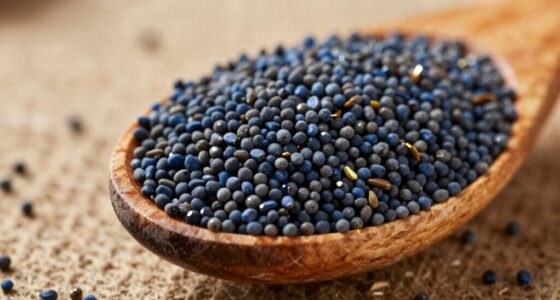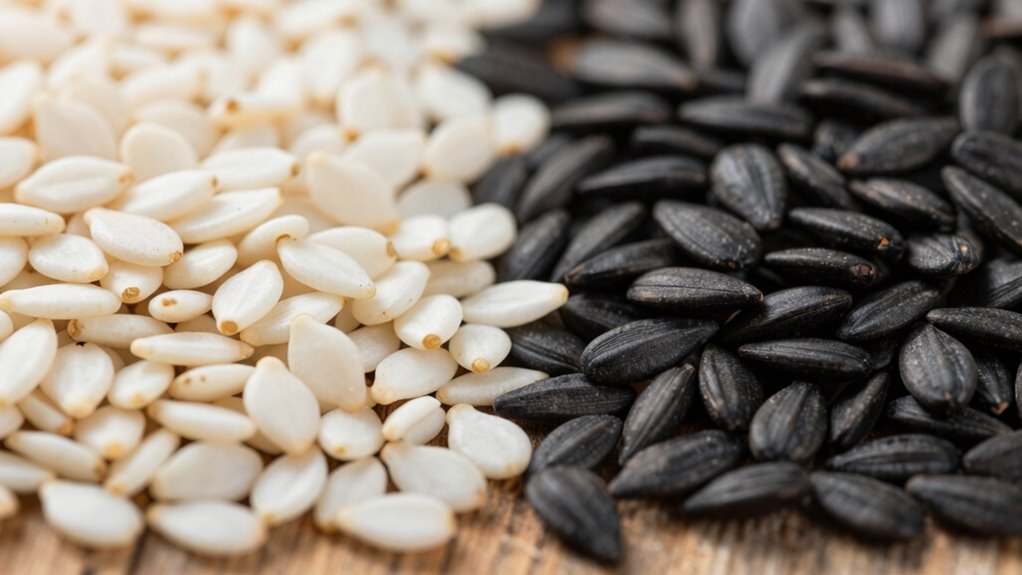

When comparing white and black sesame seeds, you’ll find differences beyond flavor. Black seeds pack more nutrients like calcium, iron, magnesium, and antioxidants, making them a healthier choice if you’re focused on nutrition. They also add a striking visual contrast and a bolder, earthier taste ideal for Asian dishes or desserts. White seeds are milder and more versatile, blending easily into baked goods and salads. Exploring these differences further reveals how each seed can enhance your recipes in unique ways.
Key Takeaways
- Black sesame seeds contain higher levels of calcium, iron, magnesium, and antioxidants compared to white sesame seeds.
- White sesame seeds are milder and more versatile, commonly used in Western dishes, while black seeds have a bold, earthy flavor suited for Asian cuisine.
- Black sesame seeds add visual contrast and depth to dishes, often used as a garnish or in desserts; white seeds blend seamlessly into recipes.
- Toasting enhances the flavor of both seed types, with black seeds developing a more pronounced, nutty aroma.
- Nutritional differences make black sesame seeds especially beneficial for those seeking higher mineral intake and antioxidant properties.

When choosing sesame seeds, you might notice two main varieties: white and black. While they look quite different, they also have distinct nutritional differences and culinary uses that can influence your choice. Understanding these differences helps you pick the right seeds for your recipes and health goals.
Nutritionally, white and black sesame seeds are quite similar, but subtle variations exist. White sesame seeds tend to contain slightly fewer antioxidants compared to their black counterparts. Black sesame seeds are richer in certain nutrients like calcium, iron, and magnesium, making them a good choice if you’re aiming to boost your mineral intake. Additionally, black seeds have higher levels of lignans, compounds linked to antioxidant properties, which may support your overall health. Both types are good sources of healthy fats, protein, and fiber, but if you’re focusing on nutrient density, opting for black sesame might give you a slight edge. That said, the differences aren’t drastic, so both are beneficial additions to a balanced diet.
Culinary uses also differ between white and black sesame seeds. White sesame seeds are more common in Western cooking, often used in baking, sprinkled over bagels, or added to salads and stir-fries. Their mild, nutty flavor blends seamlessly into a variety of dishes, making them versatile for both sweet and savory recipes. Black sesame seeds, on the other hand, have a more robust, slightly bitter flavor that lends depth to Asian cuisine, especially in desserts like black sesame ice cream, mochi, or fillings for pastries. They’re also popular in Asian soups and rice dishes, where their striking color adds visual appeal. Because of their strong flavor, black sesame seeds are often used as a finishing touch rather than an ingredient mixed throughout.
If you’re experimenting in the kitchen, white sesame seeds are your go-to for a subtle, unobtrusive flavor that complements most dishes. Black sesame seeds, however, bring a more pronounced taste and visual interest, perfect when you want to add a bold flavor or striking appearance. Both seeds can be toasted to enhance their flavor, but black seeds tend to release more of their earthy aroma when toasted. Whether you choose white or black sesame seeds depends on your taste preferences and the dish’s aesthetic. Either way, incorporating these seeds into your meals can boost flavor, texture, and nutritional value.

Badia Organic Black Sesame Seed 2.5 oz – Whole Black Sesame Seeds for Cooking, Baking & Garnishing – Rich, Nutty & Crunchy Flavor
100% Certified Organic: High-quality black sesame seeds grown without synthetic pesticides or additives
As an affiliate, we earn on qualifying purchases.
As an affiliate, we earn on qualifying purchases.
Frequently Asked Questions
Are Black Sesame Seeds More Nutritious Than White Ones?
Black sesame seeds are generally more nutritious than white ones due to higher levels of antioxidants, calcium, and iron. These nutritional differences can enhance your health benefits, such as supporting bone strength and boosting immunity. By choosing black sesame seeds, you get a richer source of nutrients that can improve your overall well-being. Incorporate them into your diet for a tasty and healthful boost.
Which Sesame Seed Variety Is More Suitable for Baking?
You’ll find white sesame seeds are more suitable for baking, as they’re easier to work with and blend seamlessly into recipes. Think of it like harvesting and roasting sesame seeds; white ones tend to have a milder flavor that enhances baked goods without overpowering. Their uniform size and texture make them ideal for sprinkling on bread or buns. Remember, “a good workman never blames his tools,” so choose the best seeds for your baking needs.
Do Sesame Seeds Need Special Storage Conditions?
You should store sesame seeds in an airtight container in a cool, dark place to keep them fresh. Follow storage tips like keeping them away from sunlight and heat, which can cause them to go rancid. Proper storage extends their shelf life, typically up to six months for raw seeds, and even longer if refrigerated or frozen. Regularly check for signs of spoilage, such as a bitter smell or mold.
Can Sesame Seeds Be Grown at Home Easily?
Growing sesame seeds at home is like planting a tiny treasure chest—you can definitely do it with some patience. With home cultivation, you’ll need well-drained soil, plenty of sunlight, and regular watering. DIY sprouting is simple and rewarding, allowing you to enjoy fresh seeds in salads or baking. Just keep an eye on them as they grow, and soon you’ll have your own little sesame garden thriving indoors or outdoors.
Are There Any Health Risks Associated With Consuming Sesame Seeds?
You might face health risks if you have a nut allergy or gastrointestinal issues when consuming sesame seeds. They can cause allergic reactions, including hives or more severe symptoms, especially in sensitive individuals. Additionally, eating large amounts may lead to stomach discomfort, bloating, or constipation. Always check labels if you’re allergic, and start with small portions to see how your body reacts before adding sesame seeds to your diet regularly.

McCormick Culinary Whole Sesame Seed, 16 oz – One 16 Ounce Container of Hulled Whole White Sesame Seeds Perfect for Noodle Dishes, Sushi, Stir-Fries and Coating for Meat and Fish
NUTTY, MILD FLAVOR: McCormick Culinary Whole Sesame Seeds feature a nutty, mild flavor that will add an unrivaled…
As an affiliate, we earn on qualifying purchases.
As an affiliate, we earn on qualifying purchases.
Conclusion
So, next time you choose between white and black sesame seeds, remember that their differences go beyond flavor. While black seeds are often believed to contain higher antioxidants, studies show both types offer health benefits, just in different ways. It’s not just a matter of color or taste—you’re tapping into unique nutritional profiles. So, trust the science, experiment with both, and enjoy the rich variety these tiny seeds bring to your meals.

Kevala Organic Black Toasted Sesame Seeds – Unhulled Seeds for Baking and Cooking, Roasted Black Sesame for Asian Cuisine, Contain Unsaturated Fats and Lignans, Convenient Resealable Bag, 2 lb, 32 oz
Expert-approved quality: A trustworthy option for many diets. Our seeds are USDA Organic certified, Kosher, and non-GMO Project…
As an affiliate, we earn on qualifying purchases.
As an affiliate, we earn on qualifying purchases.

1 X New Asvell Plastic Sesame Grinder Made In Japan, White
The Package length of the product is 4.9999999949 inches
As an affiliate, we earn on qualifying purchases.
As an affiliate, we earn on qualifying purchases.