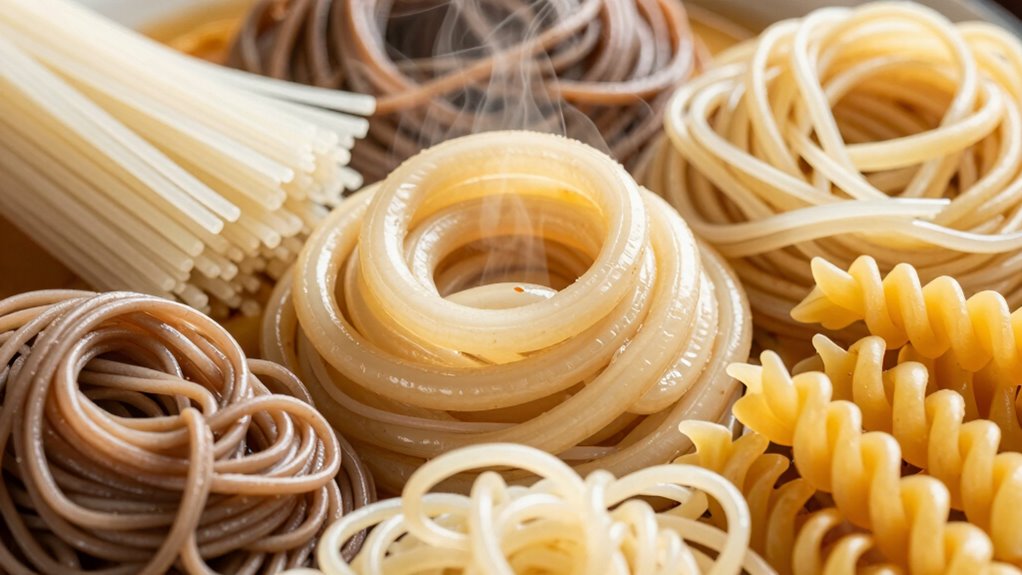

Noodles across cultures vary greatly in texture, shape, and cooking methods to suit local tastes and ingredients. You’ll find thick, chewy noodles for hearty dishes and delicate thin noodles for quick meals. Shapes are designed to hold sauces or complement specific dishes, and cooking times range from quick blanching to long boiling. These differences reflect their cultural origins and culinary innovations. Keep exploring to discover how these unique qualities tell fascinating stories from around the world.
Key Takeaways
- Noodle textures range from chewy to delicate, tailored to regional dishes and ingredients.
- Shapes are designed to suit specific culinary uses, such as thick for hearty sauces or thin for quick cooking.
- Cooking times vary based on desired texture, from prolonged boiling for softness to brief cooking for firmness.
- Different cultures adapt noodles with unique preparation methods reflecting local culinary traditions.
- Fusion and innovation lead to diverse noodle dishes blending multiple cultural flavors and techniques.
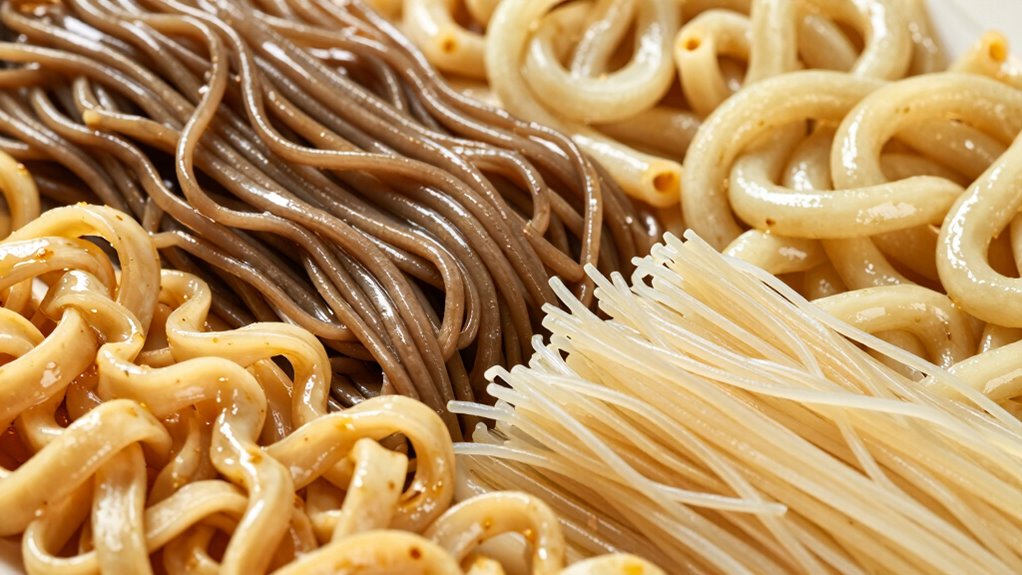
Have you ever wondered how a simple strand of noodle can tell such diverse stories across cultures? It’s fascinating to see how noodles, despite their basic form, adapt to different culinary traditions, flavors, and dietary needs worldwide. When you explore these variations, you realize that noodles aren’t just about sustenance—they’re about cultural expression and innovation. Their textures and shapes are tailored to match local ingredients and eating habits, creating a rich tapestry of culinary diversity. In some regions, the noodles are thick and chewy, designed to hold hearty sauces or broths, while in others, they’re thin and delicate, perfect for quick stir-fries or light soups. The logic behind their cooking varies as well—some require long boiling times for softness, while others are meant to be cooked briefly to retain a firm bite.
Noodles tell diverse stories through textures, shapes, and cooking methods that reflect local traditions and culinary creativity.
Fusion flavors have become a hallmark of modern noodle dishes, blending ingredients from multiple culinary traditions. You might find soba noodles infused with spicy kimchi or spaghetti tossed with soy-based sauces and fresh herbs, reflecting a globalized approach to food. These fusion flavors not only showcase creativity but also demonstrate how noodles serve as a versatile canvas for culinary experimentation. They adapt easily to new ingredients, allowing chefs and home cooks alike to craft dishes that honor multiple cultural influences. This blending of flavors exemplifies how noodles evolve beyond their origins, creating new taste experiences that resonate across borders. Additionally, the versatility of noodles makes them an ideal medium for exploring culinary innovation, encouraging chefs to push the boundaries of traditional recipes.
Dietary adaptations are another critical aspect of noodle diversity. Whether you’re vegetarian, vegan, gluten-free, or have specific allergies, there’s likely a noodle type suited for your needs. For instance, rice noodles cater to gluten-free diets, while chickpea or lentil-based noodles provide protein-rich alternatives for vegans. Traditional wheat-based noodles can be modified with whole grains or added fiber to meet modern health standards. Additionally, the development of gluten-free options has expanded the accessibility of noodles for people with dietary restrictions. This innovation shows how the food industry continuously responds to changing nutritional needs and preferences. These adaptations make noodles accessible to a broad range of dietary preferences, ensuring that everyone can enjoy their comforting qualities. As global awareness about dietary restrictions grows, so does the innovation within noodle production, allowing everyone to partake in dishes that are both satisfying and safe for their lifestyles.
Ultimately, noodles are more than just a simple food. They’re a reflection of cultural exchange, culinary ingenuity, and dietary inclusivity. Their textures, shapes, and cooking methods reveal stories of tradition and innovation, inviting you to experience the world through a single, versatile ingredient. Whether you’re savoring a traditional bowl or experimenting with fusion flavors, understanding these differences deepens your appreciation for what noodles represent—a universal food that unites diverse culinary worlds.
As an affiliate, we earn on qualifying purchases.
Frequently Asked Questions
How Do Regional Ingredients Influence Noodle Flavors Globally?
Regional ingredients greatly influence noodle flavors worldwide by shaping regional flavor profiles and ingredient influence. You’ll notice how local spices, herbs, and vegetables add unique tastes, making each noodle dish distinct. For example, Asian noodles often feature soy or sesame, while Italian varieties incorporate olive oil and herbs. These ingredients reflect local agriculture and culture, transforming simple noodles into authentic dishes that celebrate regional flavors everywhere you go.
Are There Traditional Rituals Associated With Noodle Preparation?
Did you know that in some cultures, eating noodles during celebrations symbolizes longevity? You participate in ritualistic cooking, where specific techniques and ingredients carry symbolic meaning. For example, in China, pulling hand-made noodles is a tradition that represents strength and unity. These rituals aren’t just about preparing food—they’re about honoring history, community, and beliefs, making noodle preparation a meaningful act passed down through generations.
How Do Climate and Geography Affect Noodle Types?
Climate and geography greatly influence noodle types through climate adaptation and geographic diversity. In warmer regions, you see rice noodles suited for humid environments, while wheat noodles thrive in cooler areas with drier climates. Mountainous areas may favor hearty, thicker noodles, whereas coastal regions often produce lighter, thinner varieties. Your choice of noodle depends on local ingredients and climate, shaping the unique culinary traditions across different cultures.
What Are the Health Benefits of Different Noodle Varieties?
Imagine each noodle type as a different superhero, offering unique health benefits. Whole grain noodles pack more fiber and nutrients, aiding digestion and promoting heart health. Rice noodles are gluten-free, ideal for dietary considerations like gluten intolerance. Soba, made from buckwheat, provides antioxidants and protein, supporting immune health. Choosing the right variety lets you enjoy flavorful meals while boosting your nutritional content, making every bite both tasty and nourishing.
How Have Modern Innovations Changed Traditional Noodle Recipes?
Modern innovations have transformed traditional noodle recipes through fusion techniques and flavor infusions. You’ll notice chefs blending culinary styles, combining ingredients from different cultures, creating unique textures and tastes. These innovations lead to new varieties, like spicy Asian-inspired noodles with Italian herbs or gluten-free options infused with unexpected flavors. As a result, traditional recipes evolve, offering exciting culinary experiences while still honoring their roots.
As an affiliate, we earn on qualifying purchases.
Conclusion
As you savor each noodle, remember they’re threads woven from countless stories across the globe, dancing in your bowl like a symphony of tradition and innovation. Their textures, shapes, and cooking secrets ripple through time, connecting cultures like a delicate tapestry. So, let every bite be a journey—a flavorful voyage that ties past and present, familiar and foreign—reminding you that in every slurp, you’re partaking in a shared, delicious universe of culinary kinship.
As an affiliate, we earn on qualifying purchases.
traditional Japanese soba noodles
As an affiliate, we earn on qualifying purchases.
As an affiliate, we earn on qualifying purchases.