When you add about 1.5 tablespoons of salt per pound of pasta in 4 to 6 quarts of water, you’ll create a solution that’s roughly 1 to 2 percent salinity—just salty enough to boost flavor without overwhelming. This level allows the pasta to absorb seasoning evenly, enhancing its taste as it cooks. If you want to discover how different salt levels affect your pasta, keep exploring the details below.
Key Takeaways
- Salty pasta water typically has a salinity of about 1-2%, achieved with 1 to 1.5 tablespoons of salt per pound of pasta.
- Properly salted water enhances pasta flavor and ensures even seasoning during cooking.
- Too little salt results in bland pasta; too much can make it overly salty and unbalanced.
- Salt dissolves thoroughly, creating a uniform briny solution that infuses pasta from the inside out.
- The goal is to mimic seawater’s salinity, ensuring the pasta absorbs flavor without overpowering it.

Have you ever wondered why adding salt to boiling water is a essential step when cooking pasta? It’s more than just a tradition or a way to flavor the noodles; it directly impacts the pasta’s final taste and texture. The key lies in understanding pasta water salinity, which refers to how salty the water becomes during cooking. When you add salt, it dissolves into the water, creating a briny solution that infuses the pasta as it cooks. But how salty should this water be? That’s where optimal salt levels come into play. Too little salt, and your pasta may taste bland; too much, and it can become overly salty and unbalanced.
Getting the perfect pasta water salinity isn’t complicated, but it does require some attention. Most chefs recommend aiming for about 1 to 1.5 tablespoons of salt per pound of pasta, added to about 4 to 6 quarts of water. This ratio results in water with an approximate salinity of 1-2%, which is enough to enhance flavor without overwhelming it. When you boil water with this amount of salt, the salt dissolves thoroughly, creating a consistent salinity that guarantees the pasta absorbs flavor evenly. This helps the pasta develop a richer taste, as it’s seasoned from the inside out, rather than relying solely on the sauce afterward.
You might wonder why not just salt the sauce instead of the water. While seasoning the sauce is important, salting the cooking water is equally essential. The pasta absorbs some of that salty water as it cooks, so the initial salinity influences the overall flavor. If you under-salt, your pasta can turn out dull and underwhelming. If you over-salt, it risks becoming overly salty, making it hard to balance with the sauce later. Striking the right balance ensures your pasta hits that ideal flavor profile.

6-Ounces Glass Spices Shaker With Perforated Stainless Steel Top And Parmesan Cheese Shaker With Slotted Stainless Steel Top/Set of 2/Bulk Swirl Retro Style Dispensers With Lids/Salt & Pepper Shakers
Versatile Spice Shaker Set: Includes two 6oz glass shakers – one with a slotted stainless steel top and…
As an affiliate, we earn on qualifying purchases.
As an affiliate, we earn on qualifying purchases.
Frequently Asked Questions
Can I Reuse Salted Pasta Water for Other Recipes?
Yes, you can reuse salted pasta water for other recipes. It adds flavor to soups, stews, or sauces because of the salt absorption during cooking. Just make certain you don’t add too much salt initially, as it might make your dish overly salty. Reusing this water can enhance your dishes’ pasta flavor and save you time while adding a subtle, salty depth.
How Does Water Temperature Affect Salt Dissolution?
Water temperature greatly affects salt dissolution because higher temperatures increase salt solubility and speed up dissolving. As you heat water toward its boiling point, salt dissolves more efficiently, ensuring your pasta water becomes salty quickly. When water is cold, salt dissolves slowly or not at all. So, for quick and thorough dissolving, keep the water near its boiling point, optimizing both salt solubility and cooking time.
Is There a Difference Between Sea Salt and Table Salt in Pasta Water?
Yes, there’s a difference between sea salt and table salt in pasta water. Sea salt has larger salt crystals and contains more minerals, which can subtly influence flavor. Table salt has smaller crystals and is usually refined, making it dissolve faster and deliver a more consistent salinity. You might prefer sea salt for a richer taste, but table salt guarantees precise salinity, especially when measuring by volume.
Should I Adjust Salt Amount for Different Pasta Types?
Think of pasta types like different musical instruments; each needs a different tune. You should adjust salt amounts because thinner or delicate pasta may need less salt to prevent overpowering, while hearty shapes can handle more. I once used less salt for angel hair, and it tasted bland, but with rigatoni, it was perfect. So, customize your salt adjustment based on the pasta type for the best flavor.
How Does Salt Concentration Influence Pasta Texture?
You’ll notice that higher salt concentrations in your pasta water increase salt penetration, which helps maintain pasta firmness. When the water is adequately salted, the pasta absorbs some salt, slightly reinforcing its structure and preventing it from turning mushy. Conversely, too little salt can make your pasta softer and less flavorful. Adjust the salt depending on your preferred pasta firmness, ensuring the salt penetrates evenly for the perfect texture.
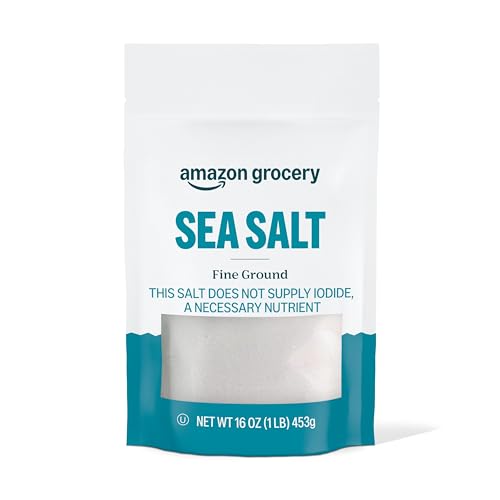
Amazon Grocery, Sea Salt, Fine Ground, 16 Oz
One 16 ounce resealable bag of Fine Ground Sea Salt
As an affiliate, we earn on qualifying purchases.
As an affiliate, we earn on qualifying purchases.
Conclusion
Think of salted water as the ocean your pasta swims in—a vast, flavorful sea that flavors every strand. When you add just the right amount of salt, you’re not just seasoning; you’re setting the stage for a perfect dish, a symbol of balance and harmony. So, next time you boil pasta, remember you’re inviting it into a miniature ocean, where every bite echoes the depth and richness of the sea itself.

Magnetic Measuring Spoons Set Stainless Steel with Leveler, Stackable Metal Tablespoon Measure Spoon for Baking, Measuring Cups and Spoon Set Kitchen Gadgets Apartment Essentials Fits in Spice Jars
Accurate Measuring Spoons Set: Designed stainless steel double-headed spoons set and a leveler,black plastic label on the magnetic…
As an affiliate, we earn on qualifying purchases.
As an affiliate, we earn on qualifying purchases.

Kaizen Italian Sea Salt Discs for Pasta Water – Precise Sea Salt Portions from Trapani, Sicily – Easy Drop-In Salting for Pasta, Vegetables & Boiling – 14.1 Oz (Pack of 1)
PERFECTLY PORTIONED SEA SALT DISCS – Each pre-measured disc delivers the ideal amount of premium Italian sea salt,…
As an affiliate, we earn on qualifying purchases.
As an affiliate, we earn on qualifying purchases.