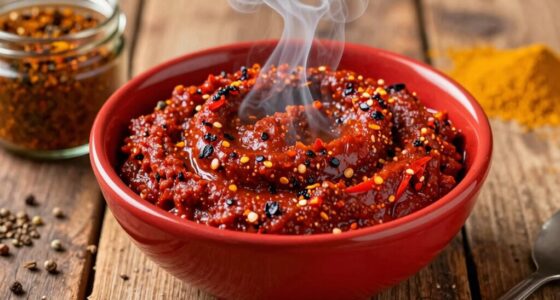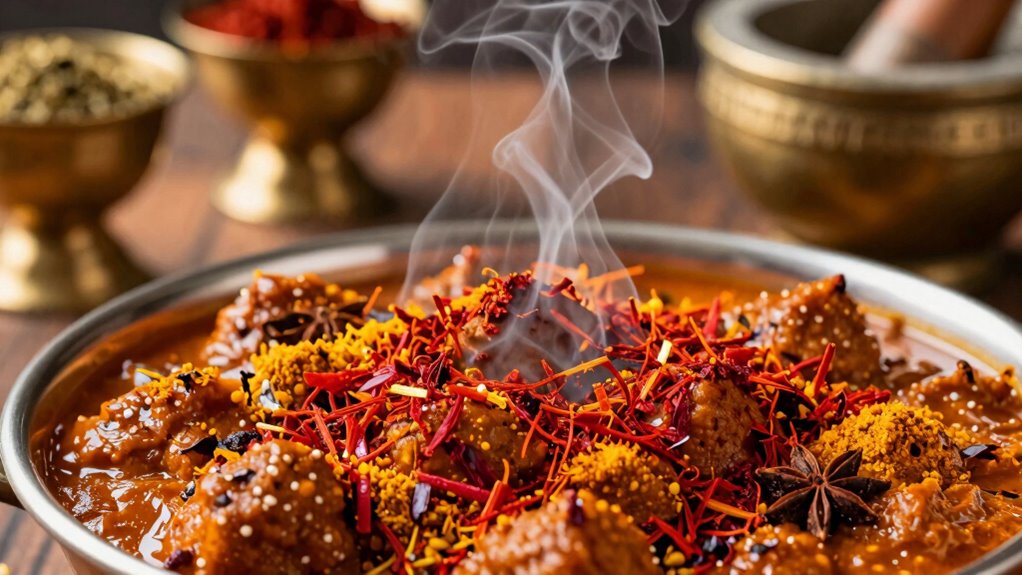

Smoked paprika can add a smoky warmth to Indian dishes, but it works best in regions like Gujarat and Rajasthan where smoky flavors are already part of the cuisine. In North Indian curries, it might clash with traditional flavors, so use it sparingly or as a subtle enhancer. If you’re curious about how to incorporate it thoughtfully into various dishes, more useful tips await you.

Get kitchen staples and gadgets delivered free — and shop member deals
- Fast, free delivery on millions of items
- Access to Prime Big Deal Days deals on October 6–7
- Prime Video, Amazon Music and more included
Key Takeaways
- Smoked paprika can enhance dishes with smoky depth but is best used sparingly in North Indian curries to avoid clashing with traditional flavors.
- It works well in Western Indian recipes like Rajasthani or Gujarati dishes that incorporate roasted spices or smoky elements.
- Avoid using smoked paprika in authentic tandoori marinades or dairy-rich North Indian curries, where it may disrupt regional flavor profiles.
- Use smoked paprika as a substitute for roasted or charred ingredients when traditional smoky elements are unavailable.
- Incorporate smoked paprika thoughtfully, tasting gradually to ensure it complements rather than overwhelms the dish’s authentic taste.
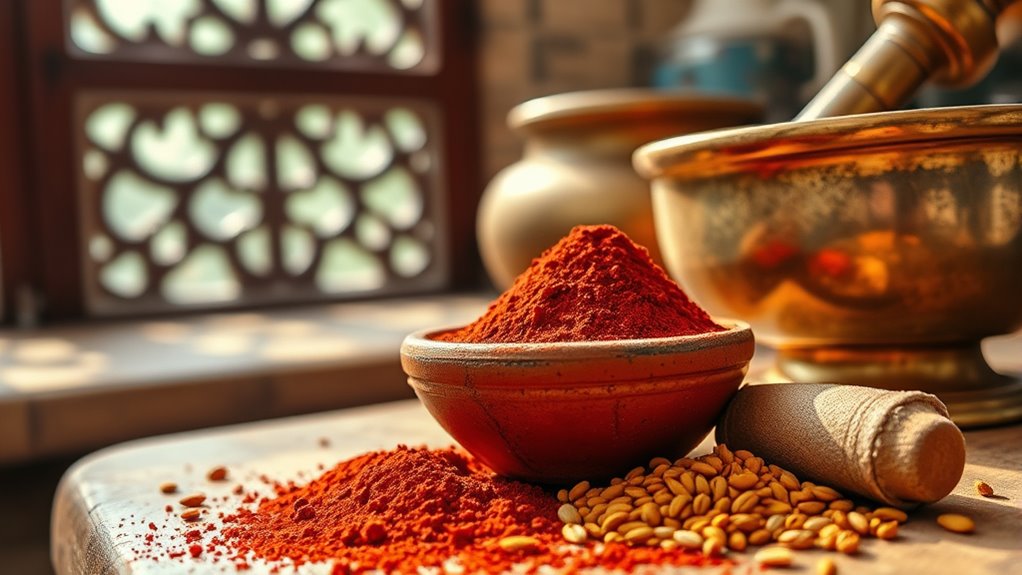
Have you ever wondered how smoky, rich flavors find their way into Indian dishes? One interesting method is using smoked paprika, which can add depth and warmth to your cooking. However, understanding where it works best requires recognizing the significance of regional flavor and spice substitution. Indian cuisine varies widely across regions, each with its own unique spice profiles and traditional ingredients. While smoked paprika offers a distinctive smoky note, it doesn’t always align with the authentic flavors of every regional dish. For instance, in North Indian curries, which often rely on rich dairy, aromatic spices, and fresh herbs, smoked paprika can sometimes feel out of place if not used carefully. It might interfere with the traditional flavor profile, making the dish taste more Western than Indian.
In contrast, certain regional dishes, especially those from parts of Western India like Gujarat or Rajasthan, may be more receptive to the addition of smoked spices. These regions often use smoky elements—such as roasted spices or charred ingredients—to build flavor. In such cases, smoked paprika can act as a spice substitution that enhances the dish without overwhelming it. When experimenting, think about the overall flavor profile you want to achieve. If a recipe calls for traditional smoky elements like roasted cumin or charred garlic, substituting or supplementing with smoked paprika might work well. It’s a way to add that smoky depth, especially if you can’t find traditional ingredients or want to streamline your spice pantry.
However, it’s vital to be mindful of the quantity you use. Because smoked paprika has a potent flavor, adding too much can dominate the dish and obscure the authentic regional taste. Start with a small amount and taste as you go. This way, you preserve the integrity of the original flavor while introducing a subtle smoky undertone. Keep in mind that spice substitution isn’t just about replacing one ingredient with another; it’s about complementing and respecting the dish’s regional flavor. Using smoked paprika in a tandoori marinade, for example, might change its traditional character, so consider whether it enhances or detracts from the authenticity. Understanding regional flavor profiles is key to making successful substitutions and respecting culinary traditions.
smoked paprika for Indian cooking
As an affiliate, we earn on qualifying purchases.
As an affiliate, we earn on qualifying purchases.
Frequently Asked Questions
Can Smoked Paprika Replace Traditional Indian Spices Entirely?
No, smoked paprika can’t replace traditional Indian spices entirely. Its smoky flavor profile differs considerably from typical Indian spices like turmeric, cumin, or coriander, which contribute to regional authenticity. While smoked paprika adds a unique depth, it doesn’t replicate the complex spice blends and aromatic qualities essential to authentic Indian dishes. Relying solely on smoked paprika would alter the traditional flavor profile and compromise regional authenticity.
How Does Smoked Paprika Affect the Color of Indian Dishes?
When you add smoked paprika to Indian dishes, it transforms the color, turning your plate into a fiery canvas that enhances its visual appeal. It deepens reds and oranges, giving a warm, smoky hue that draws the eye. This spice acts like a painter’s brush, enriching your dish’s vibrant palette and making it more enticing, without overpowering traditional colors. Your dish becomes a feast for both the eyes and the palate.
Is Smoked Paprika Suitable for Vegetarian Indian Recipes?
Yes, smoked paprika suits vegetarian Indian recipes. It adds a rich, smoky flavor that enhances dishes like chana masala or vegetable curries. If you’re aiming for vegan substitutions, smoked paprika can replace traditional spices for depth. Combine it with cumin, coriander, or garam masala to create authentic spice combinations. Just remember, use it sparingly to avoid overpowering the dish’s natural flavors, and enjoy experimenting!
What Are the Health Benefits of Using Smoked Paprika in Indian Cooking?
You might think smoked paprika’s just for flavor, but it actually offers health perks too. Its antioxidant properties help fight free radicals, boosting your immunity. Plus, it contains vitamins like A, E, and some B’s, supporting your skin, eyes, and energy levels. So, while you add smoky depth to your Indian dishes, you’re also giving your body a gentle health boost—who knew seasoning could be so beneficial?
How Long Does Smoked Paprika Retain Its Flavor in Indian Recipes?
Smoked paprika typically retains its flavor for about 1 to 2 years if stored properly. To maximize its storage duration and flavor retention, keep it in an airtight container away from direct sunlight and heat. Over time, its smoky aroma and vibrant color fade, so it’s best to replace it once you notice a loss in potency. Regularly check your spice to ensure you get the freshest flavor in your Indian recipes.
Indian spice blend with smoked paprika
As an affiliate, we earn on qualifying purchases.
As an affiliate, we earn on qualifying purchases.
Conclusion
While smoked paprika can add a charming depth to Indian dishes, it’s best to use it thoughtfully. Think of it as a gentle whisper rather than a loud proclamation—enhancing flavors without overpowering traditional warmth. When used sparingly, it can subtly elevate your cooking, offering a new twist. But remember, sometimes the most beautiful harmony comes from respecting the classic notes. Let your dishes breathe, and enjoy the subtle dance of flavors.
Rajasthani spice mix with smoked paprika
As an affiliate, we earn on qualifying purchases.
As an affiliate, we earn on qualifying purchases.
smoked paprika substitute for Indian dishes
As an affiliate, we earn on qualifying purchases.
As an affiliate, we earn on qualifying purchases.
NFL season / tailgating Picks
team gear
As an affiliate, we earn on qualifying purchases.